
Last time we talked about printing as the technological environment of the Scientific Revolution. Starting from this lesson, we will formally enter the period of the Scientific Revolution.
Last time we mentioned that, when talking about the Scientific Revolution, we must at least distinguish three lines of development: first, astronomy; second, physics. These two lines converge in Newton, and can together be called the tradition of the mathematical sciences; this also constitutes the so-called “main line” of the Scientific Revolution in the usual sense. The third is alchemy and magic. This line stretches back farther than Copernicus and Newton; although its emblematic result is the rise of chemistry, its significance is by no means limited to chemistry.
There is also the line of Baconian science, that is, the establishment of the natural history and inductive-experimental method. We already mentioned this in the last class, and after we finish discussing electromagnetism and even biology, we may have to come back to it.
There is also the mathematical line. I am planning to treat this as a separate topic, so for the moment I will not discuss it within the period of the Scientific Revolution.
Finally, there is also a line in the social environment: from the medieval universities, to the rise of scientific institutions such as learned societies and journals after the Scientific Revolution, to the reform of the modern university system, and so on. This line is obviously also very important, but we will place it after the Enlightenment and discuss it as a whole then.
I mention so many lines of development, on the one hand, as a preview of the later lectures; on the other hand, to suggest that the so-called “Scientific Revolution” is in fact an extremely tangled affair. As the historian of science Principe said: “If you ask ten historians of science what the essence, time span, and impact of the Scientific Revolution were, you may get fifteen answers.”
What exactly is the Scientific Revolution, and even more fundamentally, did such a Scientific Revolution really happen? This is a highly contentious issue. When we spoke about the Middle Ages, we also noted that many of the allegedly revolutionary achievements of modern scientists actually had their foundations in medieval scholastic philosophy. If we enlarge the scale and look at historical details, we find that every new discovery stands on the shoulders of earlier thinkers.
In any case, “history” itself does not contain continuity or rupture as such. So-called continuity theories or rupture theories, and all kinds of lines of development, are all historiographical strategies of historians. The question “Was there really a Scientific Revolution?” has no definite answer. The key lies in the sense in which we speak of the Scientific Revolution, and in what significance this concept has for our understanding of history.
In our general history of science, the basic function of the concept of the “Scientific Revolution” is nothing more than to provide a marker of periodization: the “Middle Ages” roughly span the fifth to the fifteenth century, and the period of the Scientific Revolution is roughly the sixteenth and seventeenth centuries. This period can also be called the early modern period (or the early modern era; in English, modern can be translated either as “modern” or “early modern”). But whether we say “revolution” or “modern,” there is always an implication of some sort of “rupture.”
Even if this rupture is merely imagined, that imagination itself arose at the time. As we said before, after the Renaissance, Europeans increasingly began to distinguish themselves from the “Middle Ages.” Every era is the “modern age” of the people living in it, but only modern people use this concept to identify themselves. Scientists of the early modern period also often believed that they were living in, or moving toward, a radically new era. Many works from that time had “new” in their titles—for example, last time we mentioned the new instrument and the great compendium of new astronomy. Although early modern scientists in fact benefited greatly from medieval scholastic philosophy, they themselves often deliberately or inadvertently ignored these sources; they tended to praise the ancients, belittle the Middle Ages, and be full of confidence in themselves.
During this period, science indeed underwent tremendous change. One can say that it was the period in which what we now call “science” truly took shape. People’s understanding of nature, knowledge, and humanity itself underwent earth-shaking transformations. Whatever disagreements there may be about how to reconstruct this process of change, it is entirely fitting to use the label “Scientific Revolution” for this era.
Of course, we must not understand this concept narrowly—for example, by imagining that this supposed “overturning” was some one-shot, instantaneous, all-around transformation. In fact, the whole process was far more complicated than that.
The word “revolution” originally meant rotation. Only in the seventeenth and eighteenth centuries was it gradually used to signify a political overthrow or a revolutionary scientific discovery. It was not until the twentieth century that historians of science began to use the concept of “Scientific Revolution” explicitly.
There are also two ways of using the concept of the Scientific Revolution. One is capitalized and singular, referring specifically to that one Scientific Revolution, namely the roughly sixteenth- and seventeenth-century history from Copernicus to Newton. The other is lowercase and plural, referring to revolutionary changes in different fields. This broader concept of scientific revolutions was developed by the famous historian and philosopher of science Thomas Kuhn. We recommended Kuhn’s The Structure of Scientific Revolutions in the very first class. His theory of scientific revolutions completely overturned the traditional view of scientific development as a linear process of the continual accumulation of knowledge, and it has had a profound influence on modern history of science and philosophy of science.
Kuhn deliberately used the word “revolution.” He pointed out that the reason this word is helpful for understanding the history of science is that it allows us to establish an analogy with the concept of “political revolution.” He believed that the antecedents, consequences, and developmental process of a scientific revolution are very much like those of a political revolution.
First, revolution originates in “crisis”: “Political revolutions are normally precipitated by a growing sense among some members of a political community that the existing institutions have failed adequately to respond to problems posed by an environment that they have in part created. In much the same way, scientific revolutions are initiated by a growing sense, also restricting attention to some small subdivision of the scientific community, that an existing paradigm has ceased to function adequately in the exploration of an aspect of nature to which that paradigm itself had previously led the way. In both political and scientific development the sense of malfunction that can lead to crisis is a prerequisite to revolution.”
The catalyst of scientific revolution is crisis. That sounds like a tautology, but Kuhn also points out that this so-called “crisis” is often a judgment made after the fact. In reality, when a scientific paradigm is functioning normally, it is just like when a political regime is functioning normally: it is always confronted with certain “puzzles.” The regime must continually devise ways to solve them, and indeed one of the basic duties of a regime as a regime is precisely to solve all sorts of problems. There are always some problems and contradictions that have not been solved in time. People hope that the regime will keep working hard, exploring, and eventually solve these problems. Sometimes the problems are eventually solved, and then they become achievements of the regime, filling people with confidence. But at other times, problems that remain unsolved for too long make people increasingly disappointed in the regime, and then revolution begins to ferment in these crises.
Next, Kuhn points out that “…the aim of political revolutions is to change political institutions in ways that those institutions themselves forbid. Consequently the success of a political revolution necessitates the partial abandonment of one set of institutions in favor of another, …”
This analogy suggests that a “scientific revolution” is a destructive overturning of tradition. It abolishes some lines of thought and methods that tradition has recognized as reasonable, and replaces them with new models that tradition did not permit. In other words, revolution no longer seeks help from the old regime; it no longer hopes to solve problems within the framework of the old system, but instead hopes to establish a new system and seek solutions within a different framework. In the “normal” stage of science, just like a politically stable regime, there is a relatively stable set of patterns. Although these patterns cannot once and for all dissolve every problem and contradiction, whenever a new problem arises there is always a set of rules and routines for how to understand and deal with it. In the stage of normal science, the routines by which scientists view and handle problems are called “paradigms.” These include a whole set of explicit and tacit conceptual frameworks and norms of behavior. The stability of this “paradigm” makes it possible for scientific research to progress cumulatively and become a public enterprise; otherwise everyone would have to start from scratch to build all kinds of routines, and scientists would never be able to come together. A scientific revolution, precisely, is not a simple kind of “progress,” because it requires overturning the entire routine. A new way of solving problems may be fundamentally forbidden under the old paradigm; therefore only under the new paradigm do people regard it as progress, whereas measured by the old paradigm, it is a destruction.
Kuhn then goes on to say: “But at the transitional point the society is not fully under the rule of institutions at all. … An increasing number of men, often the most talented, become increasingly alienated from political life and behavior. As the crisis deepens, many of these men commit themselves to some concrete proposal for the reconstruction of society in a new institutional framework. At that point society is divided into competing camps or parties, one seeking to defend the old institutional constellation, the others seeking to institute some new one.”
This compares the configuration of a revolutionary process: during the period when the old normal order begins to collapse and the new normal order has not yet been established, the academic world is chaotic, different schools compete with one another, and the boundaries of disciplines are broken down. Even in the twentieth century, when we look at the early emergence of revolutionary theories such as relativity or quantum mechanics, physicists seem more like philosophers; whereas in ordinary normal periods, scientific work looks more like engineering than philosophy. This pluralization and blurring of boundaries are characteristics of scientific revolution.
Kuhn then says: “And when this polarization has occurred, political solutions to the crisis must fail. Because the parties to a revolution differ among themselves about the institutional matrix within which political change is to be achieved and evaluated, because they do not recognize any supra-institutional framework for the resolution of revolutionary differences, and because they cannot agree on the use of any non-institutional means for appraising the competing institutions, they can only argue the issue in terms of the relative effectiveness of competing means of mass persuasion, and often resort to force. Though revolutions have played a vital role in the evolution of political institutions, that role is no more essential than the role that they play in the evolution of scientific institutions.”
This analogy suggests that the eventual victor in a scientific revolution often prevails not because it is more “scientific,” but because it must appeal to a complex social and psychological environment. In fact, the different factions in a revolution each put forward their own set of norms, each with its own standards for determining what is more scientific, but there is no standard standing above all standards to judge which standard is more standard. Unless we stand at today’s vantage point and judge events from centuries ago, we can say that Copernicus won because he was more correct or more scientific than Ptolemy. But here “more correct” and “more scientific” use our present-day scientific standards; these standards are neither Ptolemy’s nor Copernicus’s, but ours. So we seem to be able to make an objective judgment between the two of them, but in fact this is nothing more than a matter of our perspective. At the time, such a hindsight standard did not exist. The spread of the Copernican system depended to a large extent on precisely that “relative effectiveness of competing means of mass persuasion.”
Finally, there is another analogy: the asymmetry between the birthplace of a revolution and the range of its influence. A political revolution may be launched by just a small group of people in a very small area—say, the capital or the court—against a specific problem, such as taxation, but its impact is global. Just as the Copernican Revolution arose from “scientists’ solution to a problem that appears trivial on the surface but is highly technical,” yet its ultimate impact was “to fundamentally alter people’s attitudes toward basic problems in everyday life.”
My course asks everyone to think more and read more, rather than memorize, so I do not place much emphasis on purely factual knowledge in history of science; I am more willing to discuss these theoretical questions. So before I begin a detailed discussion of the Scientific Revolution, I have put Kuhn up front, hoping that while you learn the relevant content of the Scientific Revolution, you will also carry a sense of inquiry: what exactly is the Scientific Revolution, what did it overturn, and what did it establish?
Let us begin with Copernicus (1473–1543). He was born in Poland. In his twenties he went to Italy to study, and studied canon law, medicine, and jurisprudence respectively at the University of Bologna, the University of Padua, and the University of Ferrara. After finishing his studies, he returned to Poland and served as a cleric at a cathedral, which was roughly equivalent to a local administrative official. He studied monetary theory and proposed the theory that bad money drives out good money, what we now call Gresham’s law; in fact, Copernicus was half a century earlier than Gresham. He also practiced medicine and was a famous local physician. But his achievements in astronomy made everything else seem insignificant.
By the way, Copernicus’s famous book has long been translated in Chinese as《天体运行论》, but this is a mistranslation. In fact, the title should be rendered literally as On the Revolutions of the Celestial Spheres. The earliest Chinese translation seems to have been《天旋论》, which also seems not bad, but to call it “celestial bodies” is a misunderstanding, because in Copernicus’s system the planets were still embedded in crystalline spheres as they revolved, and all the fixed stars were still embedded in the sphere of the fixed stars. This title reflects Copernicus’s historical limitations, and translating it faithfully is a respect for history.

During his time at the University of Bologna, Copernicus came into contact with some astronomers influenced by Pythagoreanism or Platonism, and then began to study astronomy. Around 1514, he wrote a summary of his thoughts and proposed the idea of a heliocentric system. Before De revolutionibus orbium coelestium was published, his ideas had already circulated within a certain circle, and many people hoped that he would soon produce a complete version, but he kept delaying.
Those who expected and urged Copernicus to produce a complete system included the pope of the time. In 1515, the Church asked Copernicus for his opinion on calendar reform. Copernicus replied that the first thing needed was a more accurate measurement of the length of the solar year, and that this required a more perfect astronomical system. By 1533, the pope’s private secretary had relayed the outlines of Copernicus’s system to the pope and some cardinals. Pope Clement VII was very pleased to hear it. A cardinal, Schönberg, wrote to Copernicus saying, “I hear that you advocate the motion of the earth; that the sun occupies the lowest position, and is therefore the center of the universe, … I have also heard that you have provided an explanation for this astronomical system, … therefore I strongly implore you to make your discovery known to the scholarly world.”
In 1538, the University of Wittenberg sent a young astronomer who had heard of his fame to study with Copernicus. The response was very good, and Copernicus finally agreed to entrust the publication of his work to this young man. In the end, the book was taken over by the Lutheran pastor Osiander and formally published in 1543, which, it is said, Copernicus saw only on his deathbed.
The reason Copernicus delayed so long was obviously not some obstruction by religious authorities or the like. Mainly, he himself had a rather conservative temperament and always feared that his doctrine would seem too new and that others would not accept it. So he deliberately cited many ancient authorities, including the Pythagoreans and Aristarchus, in order to show that heliocentrism had ancient precedents. Of course, printing had only become widespread not long before, and scholars’ sense of priority was probably not very strong. Copernicus himself lived quite well and was already somewhat famous, so there was no need to create more variables for himself.
But after De revolutionibus orbium coelestium circulated, it did not initially provoke much criticism, because those who first encountered it were mainly the highly technical circle of astronomers. Of course, most of them did not believe in heliocentrism, but they still admired Copernicus, because he displayed mathematical skill no less superb than Ptolemy’s. For example, Reinhold rejected the motion of the earth on the one hand, but on the other hand used Copernicus’s mathematical tools to compile the Prutenic Tables. Finally, the new calendar promulgated in 1582, the Gregorian calendar (that is, our present Gregorian calendar), was based on the Prutenic Tables, which indirectly promoted the spread of the Copernican system. It was not until 1610, owing to the growing influence of Copernican theory and pressure from the Protestants, that the Roman pope listed heliocentrism as heresy, and in 1616 placed De revolutionibus orbium coelestium on the Index of Forbidden Books.
The initial attitude of astronomers—admiring yet skeptical—is easy to understand. As we have said, Ptolemaic astronomy was in fact no longer some pursuit of the world of Ideas, but merely a mathematical tool that submitted to observation. The astronomer’s work was mostly to use mathematical instruments to calculate the positions of the planets, without insisting on whether the wheels, epicycles, and eccentric points posited by these tools really existed. Many people understood the Copernican system in this way as well: that is, “heliocentrism” was only a “hypothesis,” and the greatest significance of this hypothesis was that it made calculation convenient, so we could use it, whether or not it was true.
In the anonymously appended preface that the publisher Osiander quietly added to De revolutionibus orbium coelestium, this “instrumentalist” position was stated explicitly: “These hypotheses need not be true, nor even probable; it is enough if they yield a calculus consistent with the observations—let no one expect anything certain from astronomy, for astronomy cannot furnish such things. Nor should he take as truths the ideas put forward for another purpose, lest on leaving this study he become more foolish than when he began.”
But this was obviously not Copernicus’s own attitude, because in line after line Copernicus himself expressed a pursuit of the truth of heliocentrism, so much so that Kepler, unaware of the details, simply concluded that this foolish preface had been forged. Copernicus believed that the chief problem with Ptolemy was precisely his abandonment of Plato’s ideal of “saving the appearances,” his use of ugly mathematical tools without caring about truth. Copernicus lamented that God created humans in his own image; and if not for the purpose of making us strive to become more like God, then what was it for? Yet for so many years astronomers still had failed to give a convincing account of the motion of this world-machine, and this machine had been created for us by the best and most exact of all artisans. (Quoted via Infinite and Perspective)
So, simply fitting the data was obviously not Copernicus’s demand. In fact, we know there are many mathematically equivalent theoretical tools that can fit the same data, such as the case Apollonius discovered: in some circumstances, the eccentric-circle model and the epicycle-deferent model are equivalent. Hence Copernicus appealed to the pursuit of truth through the application of axiomatic principles established on the basis of some insight into the essence of nature. The formulation of these “principles” could not rely entirely on fitting observational data; rather, it seems to have required appeal to some kind of intellectual intuition. Copernicus said, “The philosopher seeks truth by means of the reason permitted by God, and I shall, with God’s help, carry forward the study of these matters.” On the other hand, this may also have been influenced by Hermeticism, which likewise emphasized that through intellectual intuition, through spiritual insight, one could discover the principles of nature.
This powerful confidence in human rational capacity, this new attitude toward the pursuit of truth, is what distinguished Copernicus and the modern scientists after him from medieval and Arabic scholars.
But Copernicus, after all, did not move too far beyond his age. The mathematical system he actually provided still stood at a considerable distance from his demand for the pursuit of truth. We often say that the Copernican system is simpler and more accurate than the Ptolemaic system, but this is true only under certain conditions. The simplicity of the Copernican system is mainly embodied in the popular, qualitative description of the heliocentric system he gave in the introductory chapter. We know that once the Sun is placed at the center, we no longer need eccentric circles or epicycles to explain qualitatively the phenomena of planetary stations and retrograde motion; it is also easy to explain why Mercury and Venus never move very far from the Sun (their maximum elongations are 28 degrees and 48 degrees, respectively), and why their periods of revolution are the same as the Sun’s—because their orbits lie inside Earth’s orbit. Moreover, under the heliocentric system, the order of Venus and Mercury is also determined (Mercury is innermost, Venus next).
But when it came to providing specific mathematical models, the epicycles came back. Copernicus did indeed eliminate Ptolemy’s ugly “equant” (the eccentric point of uniform motion), but he still retained the epicycle-deferent model and the eccentric-circle model, and he also used mathematical tools such as the Arabic “Tusi couple” that we mentioned earlier. Although this solved the problem of the inner planets’ positions and the ordering of the planets, it also brought extra problems, namely a lack of agreement in physics and the failure to observe stellar parallax.
We know that if the Earth revolves around the Sun, then when we look at the same point in the starry sky in two opposite seasons, the angle relative to the observer should be different, just as the same object appears displaced when seen with the left eye and the right eye respectively. If this angular difference cannot be observed, then either Earth in summer and winter is actually not changing position, or else the object we are observing is at a distance astonishingly great compared with the distance Earth travels in summer and winter. That would also mean that the stars are unimaginably far away, and that the solar system appears extremely tiny and lonely in the universe.
Copernicus adopted this explanation, but as things stood then, this explanation still seemed rather weak, even a bit like forcing a point.
As for the accuracy of astronomical prediction, Copernicus also did not do better than Ptolemy. Of course, the Prussian star table compiled under the Copernican system was indeed more accurate than the Alfonsine Tables compiled by the Spaniards centuries earlier on the basis of the Ptolemaic system, but this was mainly thanks to the newly accumulated observational data, not because the Ptolemaic system could not do it. If Ptolemy had been given more precise data to adjust his model, he might not have done worse than Copernicus; in fact, Copernicus himself did not pay much attention to empirical observation. Moreover, in some respects the Prussian star table was even less accurate than the Alfonsine Tables.
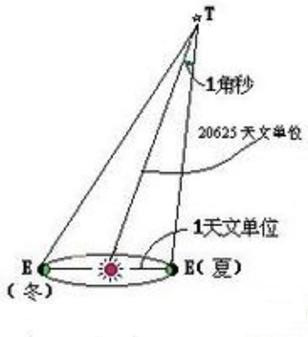
The question is, how was Copernicus’s theory actually accepted at the time? Clearly, this was not at all like the way popular science books tend to portray it, with the supporters of Copernicus being on the side of “science” and the opponents on the side of “superstition.” In fact, from a purely rational standpoint, it seems that Copernicus’s supporters were the more unreasonable ones.
The European scholarly world accepted Copernican theory in two respects. On the one hand, as I mentioned earlier, some people did not accept heliocentrism, but admired and borrowed its mathematical tools. We also mentioned last time that the greatest significance of the Copernican system was less that it provided a correct theory than that it provided another theory to serve as a point of reference. The spread of the Copernican system encouraged other scholars to put forward, compare, or improve the systems they themselves endorsed.
On the other hand, there was a kind of “irrational” acceptance of heliocentrism: many people may not have had the ability at all to digest the technical details of the Copernican system, but simply promoted it forcefully. It is rather like how the Nazis forcefully appropriated Darwin’s theory of evolution to promote their own political ideas. There were similar cases at the time, the classic one being Bruno. As mentioned last time, Bruno was a religious heretic; he worshiped the Sun, worshiped magic, opposed the doctrine of the Trinity, and held that Jesus Christ was not some Son of God but a magician, and that his miracles were nothing but magic—magic that I too could have. Although he promoted Copernicus, he was unpopular at the time and was accused by others of not understanding Copernicus at all. He himself also often despised mathematics, and probably was far from being able to master the technical details of the Copernican system.
In the end, Bruno was burned at the stake by the Church in 1600. The nominal reason, of course, was religious heresy (and that was not unjust), while the more direct reason was political, because he offended too many people. In any case, it had nothing to do with his advocacy of Copernican doctrine. We know that Copernicus himself was only listed as a heretic ten years later.
But Bruno was not without contributions to the history of science. On the one hand, his bold imagination of an infinite universe opened up new lines of thought (Copernicus’s universe was still closed and finite). Of course, the theological problems caused by an infinite universe were also what led him toward heresy (for example, if there are countless earths, do the humans on other planets have original sin, and do they have the salvation of Jesus Christ…).
On the other hand, people like him did indeed raise the visibility and influence of Copernican doctrine. What later figures such as Kepler and Galileo supported was not a Copernican system that was simply a scientific theory. The core of the Copernican system may not have been how accurate its mathematical tools were, but rather the confidence it gave people: confidence in human rational capacity, confidence in the harmonious simplicity of nature, confidence in the pursuit of truth. This confidence is utterly unreasonable, and often rested on the influence of the magical traditions of Hermeticism, but without these irrational driving forces, if everyone had calmly analyzed the matter, Copernican doctrine might never have become popular at all.
 Bruno
Bruno
As Kuhn said, the significance of the Copernican system lies not in what Copernicus himself said, but in what he led others to say. Copernicus opened up a space of thought and left behind many contradictions and omissions, and these were left to the next several generations of astronomers and physicists to break through one by one.
Although Copernicus himself did not shatter the crystal spheres, once he set the Earth in motion, he at least shattered the Greek cosmological idea of a division between the heavens and the earthly realm. For the Greeks, the division between heaven and earth had significance not only in astronomy, but also in physics and ethics.
The man who finally broke the crystal spheres may have been Tycho Brahe. As we mentioned last time, he was the pinnacle of naked-eye astronomy. In 1572 he discovered a new star and proved that it was a fixed star rather than a planet, thereby breaking the doctrine that the heavens are immutable. In 1577 he observed a comet and proved that it was farther away than the Moon, thereby breaking the crystal spheres, because the orbit of a comet meant that it had to pass through layer upon layer of crystal spheres. How was this proved? By observing parallax. Fixed stars do not show observable parallax; comets and planets do show daily parallax. Daily parallax is unrelated to whether the Earth moves; it is equivalent to viewing the same star from two points separated by a distance equal to Earth’s diameter. Tycho found that comets have parallax, but less than the Moon’s, and therefore their position is at least farther away than the Moon.
Such observations require no modern instruments whatsoever; in theory, ancient people could also have done them. But the Greeks, who believed that the heavens were immutable, never even thought to require such observations, whereas Tycho was situated within the space of thought opened by Copernicus, so he was able to think of them.
In 1588, Tycho proposed an astronomical system to rival Copernicus, known as the Tychonic system. Put simply, the Tychonic system is the mathematical equivalent of the Copernican system: the Earth remains stationary, the Sun and Moon revolve around the Earth, but the other five major planets all revolve around the Sun (as shown). Of course, since the crystal spheres were gone, the crossing of planetary orbits was no longer much of a problem. Admittedly, the Tychonic system did not look very elegant; the whole universe appeared completely asymmetrical. But in technical terms, the Tychonic system was a compromise that retained the advantages of the Copernican system while avoiding the new problems it brought, and could be called perfect. But clearly, such a cautious compromise often contributes little in the history of science. Tycho’s main contribution was as an observer, and as Kepler’s patron.
Tycho took Kepler on as an apprentice in 1600, and died the following year, but he left Kepler his detailed and precise observational records, especially those concerning Mars.


Kepler (1571–1630) was a fanatical Pythagorean-Platonist, who believed in the harmony of the cosmos and the mysticism of mathematics. The Pythagorean school held that all things are number, and that every number has its mysteries. Kepler believed this too. In his youth he accepted the Copernican theory, and then began to wonder why there were exactly 6 planets revolving around the Sun, and not 7. Because 7 is a better number—for example, there are 7 notes, 7 metals, and God’s creation of the world also took 7 days. What did 6 planets mean? What was the relation between the number 6 and anything else?
Suddenly he thought of it: there are exactly and only 5 regular polyhedra. If we inscribe a regular polyhedron in a sphere, and then inscribe a sphere inside it, and then inside that sphere inscribe another regular polyhedron… layering them one upon another like this, wouldn’t the 5 regular polyhedra just happen to separate 6 spheres? Those 6 spheres would correspond exactly to the 6 planetary spheres, wouldn’t that be perfect? Kepler was overjoyed, believing that he had discovered God’s ingenious design. He wrote this discovery into a book called The Mystery of the Universe (1596) and sent it to the famous astronomer Tycho. Tycho of course did not accept his planetary model, but he noticed the genius and mathematical skill he displayed, and invited him to join him as an apprentice. Kepler initially declined, but in 1600 he went there anyway. Tycho died in 1601,
After obtaining Tycho’s observational data, Kepler immediately abandoned the cosmic model he had devised in his youth—beautiful in appearance, but wildly off the mark—and began trying to find an appropriate model for Kepler’s data. He experimented with various combinations of epicycle models, as well as oval curves and the like, but none matched the data. The closest the model ever came to the data was actually an 8′ error, far smaller than the discrepancy in the Ptolemaic and Copernican systems; by the standards of ancient observational precision, it amounted to a perfect fit. The problem was that Tycho’s observations were more precise, with errors within 4′, so Kepler was not satisfied. The final result is well known: in his 1609 book New Astronomy, Kepler proposed the elliptical orbit and the laws of planetary motion—namely, that planets revolve around ellipses, with the sun at one focus, and that the line joining a planet and the sun sweeps out equal areas in equal times.
Having completely abandoned crystalline celestial spheres, Kepler also tried to give a new physical explanation for why heavenly bodies remained in rotation. Drawing on Gilbert’s writings on magnetism—such as the idea that the earth is a giant magnet—Kepler believed that the sun and all the major planets were also large magnets, and that they sustained their motion under the action of magnetic force.
On the one hand, Kepler rigorously respected empirical observation, but on the other hand he never abandoned his pursuit of theoretical harmony. In a later work, The Harmony of the World (1619), he returned to the theme of a harmonious cosmos. We know that in this book Kepler proposed his third law, namely, that the square of a planet’s orbital period is proportional to the cube of the semi-major axis of its ellipse. This law has little practical observational significance, but it reveals the “harmony” of the cosmos. In fact, The Harmony of the World uses a great deal of musical language and musical notation, and an untrained reader would simply be unable to find where the so-called third law is. In this book he proposed that the motions of the heavenly bodies are in fact a performance of polyphonic music, with the six major planets forming several harmonious and resonant parts. Although his style is rather distinctive, Kepler is representative in spirit: scientists in the early modern period generally believed in the harmony and order of the universe, and believed that this order could be known through human reason.


Finally, let me mention Galileo a bit (1564–1642); when we talk about physics in the next class, we will have to discuss him in detail. Here I will mainly talk about his contributions to astronomy.
Many of Galileo’s contributions to astronomy were connected with his improving and using the telescope. In 1609 he heard that the Dutch had invented the telescope, and he set about making one himself. Pointing this 20× telescope at the sky, he discovered many new phenomena. The following year, he published The Starry Messenger, reporting what he had seen through the telescope—for example, the craters on the moon—and he also discovered four planets that were difficult to see with the naked eye around Jupiter. Galileo, currying favor with his patrons, the Medici family, named them the Medicean stars; they were later identified as Jupiter’s moons. These discoveries dealt a severe blow to the Greek cosmology that believed the heavens were perfect and imperishable, and they lent support to the heliocentric system. Traditionally, the heavens were thought to be flawless, so both the moon and the sun were regarded as perfect spheres; in the Copernican system, among the six major planets, only Earth having one moon orbiting it seemed rather strange, but if each planet might have its own satellites, then the moon itself no longer seemed strange.

The picture below is Galileo’s own sketch of the moon from observation.

Not everyone immediately acknowledged Galileo’s discoveries; some people even said they refused to use the telescope. It should be noted that these opponents were not the kind of utter idiots we usually imagine. In many cases, resisting the telescope seems to have been the more rational choice. For a wondrous instrument like the telescope seems very much like a magician’s mysterious prop, something to be kept at arm’s length. Moreover, making and using it required a certain amount of skill; ordinary people often needed Galileo’s guidance to conduct observations effectively. There is even a record of Galileo once demonstrating to a group of students how to see Jupiter’s moons, only for the demonstration to fail; after all that trouble, everyone said they still could not find them, and Galileo, at a loss, had no choice but to slink away in embarrassment.
This is somewhat like a craze that was popular in China’s scientific circles in the 1980s, namely research into special human abilities. There were many experiments that could “prove” the existence of such abilities, and skeptics were earnestly invited to observe these demonstrations. If you are not an expert magician, you will very likely be unable to spot a professional scam. So the result of the demonstration is that you are forced to admit you saw these phenomena, but your rational mind may still not believe them; then you are denounced by the researchers of special abilities as stubbornly unrepentant and hopelessly bound by the old ways. If you honestly admit that you have seen a demonstration of special abilities, you are forced to become a witness to them, and then they can publicize that some scholar or other has already witnessed our new discovery… So, if you have no confidence in distinguishing magic from fraud, and you do not want to help them endorse it, is the most rational course not to keep your distance from the start and refuse to watch their theatrically solemn demonstrations? Then on what grounds do you simply refuse to believe that the special abilities they demonstrate are real? It seems you have very little basis—basically only some common sense accumulated under the old scientific paradigm. Galileo’s opponents were actually in much the same position: based on their confidence in the common sense of traditional science, and based on their instinctive wariness toward flashy new demonstrations designed to win applause, refusing to watch Galileo’s telescope seems to have been nothing to criticize. In fact, compared with traditional scholastic scholars, Galileo did have a bit of the feel of a slick talker. His prose was obviously not that of a rigorous scholar. He was the first to write important scientific texts in the vernacular—Italian rather than the academic language of the day, Latin—and he wrote them in dialogue form, consciously writing for a general audience.
Of course, one might say that the telescope’s function can be verified: for instance, I can use a telescope to look at things far away on the ground, and then I can personally run out to that distant place to verify my observation; this proves that the telescope really can magnify objects faithfully. But the matter is not so simple. The key question is: what exactly is being “magnified” by the telescope? Is it our visual capacity that is being extended by the telescope, or is nature being brought closer by the telescope? Notice that these are not the same, because the human senses are not perfect. People in antiquity always believed that fallible senses are an obstacle on the road to truth; our senses often missee things, and see things that do not exist. So if the telescope is said to magnify the eye’s capacity, that would mean the defects and illusions of the eye might also be magnified. At the time, Galileo argued about such issues with his friends. Although we now have a settled view, it is obvious that in that era, those who became entangled in such problems were not necessarily doing so out of mere stubborn reverence for the old.
On the contrary, Galileo himself often behaved very stubbornly. He corresponded with Kepler, but insisted on the orthodox circular model and failed to accept Kepler’s elliptical orbits. He also argued with a Jesuit astronomer over whether comets were sublunar or supralunar phenomena. That Jesuit believed Tycho’s observations and held that comets were supralunar, whereas Galileo ignored Tycho and insisted that comets were phenomena below the moon.
In his Italian-language Dialogue Concerning the Two Chief World Systems, a book advocating the Copernican system, he insisted on explaining the tides by Earth’s motion, and regarded the tides as evidence for Earth’s movement (just as the surface of water rises and falls when a bucket is shaken). At one point, the book’s title was even designed to be A Dialogue on the Tides. (Of course, we now know that tides have to do with the moon, and people in antiquity had already long believed that tides were related to the moon.)
Galileo had always maintained a good relationship with Cardinal, and later Pope, Urban VIII. Although the Copernican system was heretical, the pope still agreed that Galileo could publish his works promoting Copernican doctrine, only requiring that he add a preface stating that the earth’s motion was merely a hypothesis and could not be accepted as true until conclusive evidence had been found. Galileo agreed, though he was evidently not very convinced; he probably felt that the tides already counted as sufficiently conclusive evidence. Urban VIII also wanted Galileo to include his own view in the book, namely that “natural phenomena such as the tides may have multiple causes, some of them unknowable, and should not be reduced to a single cause.” Galileo did as requested, but in his dialogue form he arranged for those words to be spoken by a clown who was continually mocked. When the pope saw the book, he was obviously furious, feeling that he had been deceived and humiliated. Moreover, the pope’s own political position was under threat at the time, and he was in a very bad mood, which led to the famous trial of Galileo.
In the end, Galileo was required to renounce heliocentrism under oath; he complied, and there is no record of the folk legend that he touched the ground and muttered, “And yet it moves.” In the end, Galileo did not receive any real punishment; he was merely placed under house arrest in his own villa, where he continued to write and lecture normally. During this house arrest he wrote an even more important work, namely Dialogue Concerning Two New Sciences (material mechanics and dynamics), which we will discuss in the next class.
Further Reading
Principe: “The Scientific Revolution” (Oxford Very Short Introductions)
Kuhn: The Copernican Revolution
Harris: “Infinity and Perspective”
Some Topics
Here I list a few topics, mainly homework or exam questions from Professor Wu Guosheng’s earlier course on the history of science. They can serve as references for students thinking up paper topics. This course requires one reading report and one paper; you may also hand in two papers. If you are confident, or if you really want to slack off, you may also hand in just one paper. Of course, if a paper’s quality is not very high, the grade will definitely be discounted. Regular class attendance is not required either, but students who often speak up in class and become familiar faces will also get extra points for their regular performance.
The midterm reading report or paper can be submitted in the next few weeks. Or, if you already have some ideas about a topic, you can talk them over with me first.
The Basic Features of Hellenistic Science as Seen Through Ptolemaic Astronomy
On the Revolutionary and Conservative Aspects of the Copernican System
The Basic Features of Hellenistic Science as Seen Through Ptolemaic Astronomy
An Attempt to Discuss the Differences Between Ancient Greek Astronomy and Ancient Chinese Astronomy
Why Was Modern Science Able to Emerge in Europe (Rather Than in China or the Islamic World)?
A Discussion of “Should the History of Science Be Classified as X-Rated?” (Scientists’ image is no longer all bright and glorious; there are even many dark sides—should this be unsuitable for children?)
The Relationship Between the Scientific Revolution and Christianity
A Brief Account of the Basic Features of Greek Cosmology and Astronomy
How Is a Whiggish History of Science Possible?
The Similarities and Differences Between Modern Science and Classical Greek Science
Why Do We Say Ancient Greece Is the Source of Science?
Translated from the Chinese original with AI assistance. The original text is authoritative.