
Introduction
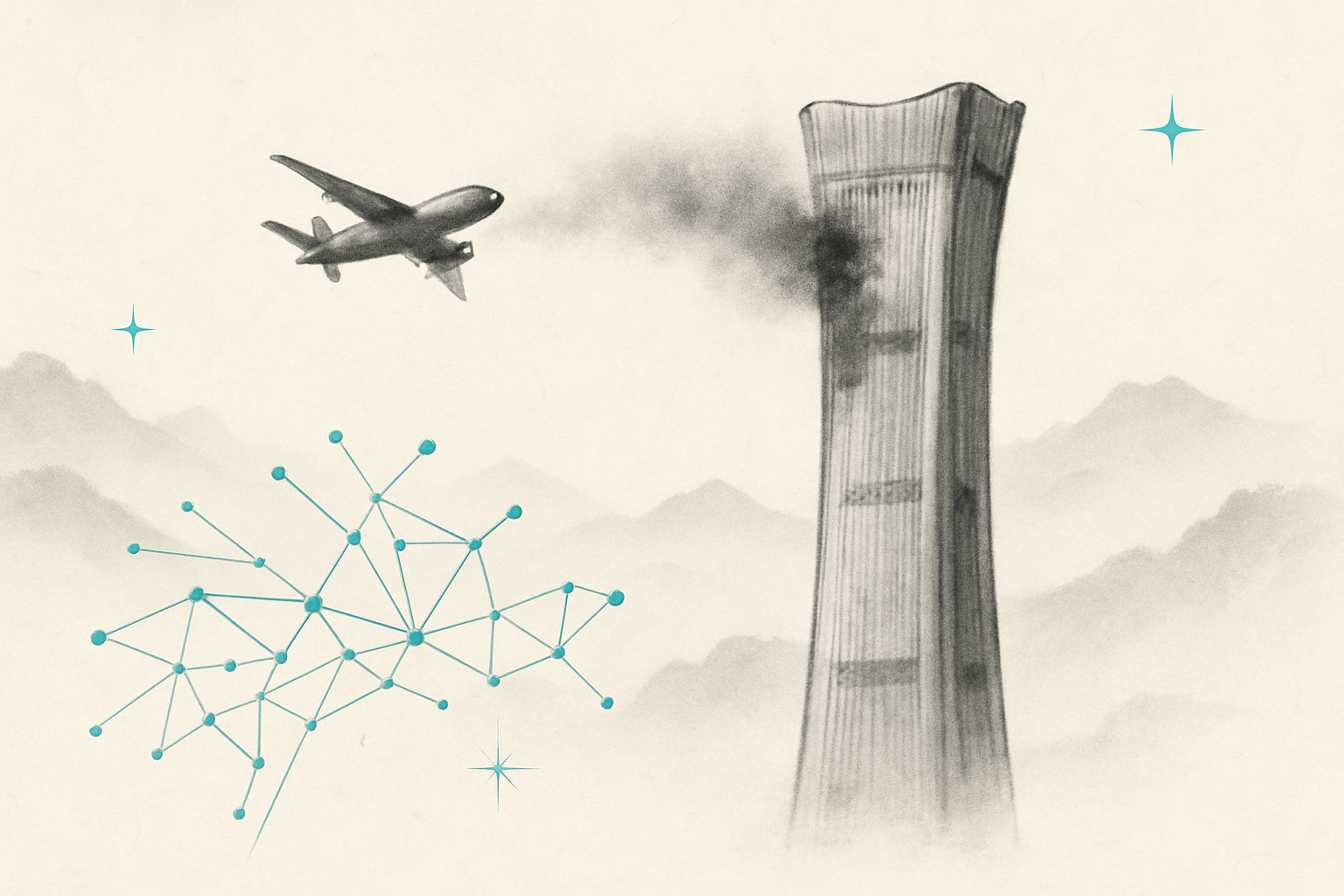
After the Beijing CITIC Tower, “China Zun,” was struck by a small aircraft, low-altitude flight safety once again became a public issue. But in the view of technology philosophy researcher Hu Yilin, this accident should not be understood only as a low-altitude economy risk; it should be discussed within a much larger problem: whenever a new technology moves into mass use, society always tightens control in the name of safety, but whether that control is effective, who bears its costs, and who enjoys its benefits are often far more worth asking than the question of “whether we need safety” itself.
After the China Zun accident, low-altitude safety was pushed into the spotlight
According to an official notice from Chaoyang District in Beijing, at 17:55 on June 26, a single-engine, two-seat light sport aircraft collided with a high-rise building while flying near the East Third Ring Road in Chaoyang District. There was only one person on board, the pilot, who has died; 13 people on the scene were injured, and the circumstances of the accident are still under further investigation by the competent authorities. Based on现场 images and flight-tracking information, several media outlets identified the building as the Beijing CITIC Tower, that is, “China Zun”; the Associated Press reported that the aircraft involved was a Sunward SA 60L Aurora, registration number B-12PP.
“China Zun” stands about 528 meters tall, making it one of Beijing’s tallest buildings, located in the Beijing Central Business District. After the accident, discussion quickly intensified around light aircraft, urban airspace management, supertall building safety, and the disclosure of on-site information. It is worth noting that Beijing is, in the first place, a city with very strict airspace controls. Beijing’s 2026 regulations on unmanned aerial vehicles make clear that the entire administrative area of Beijing is a controlled airspace for unmanned aerial vehicles, and all outdoor flight activities require an application; the Beijing Municipal Public Security Bureau had previously also stated that no drone flight activities may be carried out in controlled airspace without approval.
It is precisely against this background that Hu Yilin believes the real significance of the China Zun accident lies not simply in whether the low-altitude economy should develop, but in a common dilemma that all new technologies encounter between marketization and safety regulation.
Safety regulation often harms ordinary users, yet may still fail to stop those who are truly dangerous
Hu Yilin said that the China Zun accident reflects not only the marketization problem of the low-altitude economy, but can also be extended to the marketization and regulation of AI and all other new technologies.
He proposed a judgment: “Safety regulation is always more effort than effect, and what is often harmed by regulation is the reasonable use of ordinary people; those truly dangerous behaviors may not necessarily be effectively controlled.”
In his view, Beijing’s restrictions on ordinary people’s use of drones are already extremely strict, yet when an accident actually occurs, interception and emergency mechanisms do not thereby seem foolproof. Strict control may even produce another kind of backlash: because risk is usually pushed to the “prohibition of use” side, the system may not adequately rehearse the complex scenarios that arise once technology truly enters urban space.
Hu Yilin connects this point to frontier AI regulation. He believes that if the government restricts ordinary people from using the latest technologies in the name of safety, the people most affected are often the majority of ordinary users, researchers, and entrepreneurs; but those with strong malicious intent may not stop just because of a ban. On the contrary, they may circumvent regulation, seek underground channels, and use substitute tools. Unless the blockade reaches the extreme of “nobody can use the new technology,” it cannot truly isolate risk; and if it really goes that far, technological development itself is suppressed as well.
In other words, safety regulation cannot simply ask “did it reduce risk?” It must also ask: whose risk did it reduce? Whose opportunities did it sacrifice? And do the people being restricted really gain corresponding safety benefits from the restriction?
The distributive justice of technological bans: who loses freedom, and who retains privilege?
In Hu Yilin’s view, one of the most easily overlooked issues in many new-technology regulatory policies is whether the harms and benefits are fair.
He believes that when a ban tends to suppress the freedom of one group while preserving for another group the privilege of first use of new technologies, one must ask: do the suppressed people likewise enjoy the greater benefits brought by “safety”? If the answer is no, then the policy is not just a safety policy; it is also a mechanism of social distribution.
He further points out that if the benefits of maintaining safety are also concentrated more among the rich and the privileged, then the system has structural inequality. The privileged can both enjoy the conveniences brought by new technologies first and reduce the uncertainty brought by the popularization of new technologies through regulation; ordinary people are in the opposite position: they neither enjoy the dividends of new technologies nor are they truly freed from risk, because technological risks often descend upon everyone in a relatively equal manner.
This is also the key reason he opposes simple prohibition. The issue is not just “how strict is the control,” but how regulation redistributes social opportunities. The more likely a new technology is to bring structural change, the less its regulation can be discussed solely from the perspective of the safety departments.
The dangerousness of new technologies is often precisely the force with which they break old orders
Hu Yilin does not deny that low-altitude flight, AI, gunpowder, or printing all have dangerous qualities. On the contrary, he believes that new technologies are profound precisely because they change both the risk structure and the social structure at the same time.
He said: “Historically speaking, every innovation in new technology is an opportunity for a reshuffling of social strata and a reversal of fortune for the lower classes.” In his view, printing made heterodox ideas easier to spread, increasing the danger as seen by the old order, but it also thereby dismantled the monopoly of knowledge; gunpowder is obviously dangerous, and both the lower classes and the rich can be blown to death, but under the same risk, the castles and knightly armed forces that sustained the old aristocratic order are more easily broken.
If gunpowder were banned from spreading on the grounds of danger, and only dignitaries were allowed to control it, then gunpowder would not only fail to break the old strata, but would instead strengthen the privileged strata. Hu Yilin believes that this historical analogy can help us understand today’s new technologies: danger is not sufficient reason for prohibition, because many technologies that truly change social structure are dangerous by their very nature.
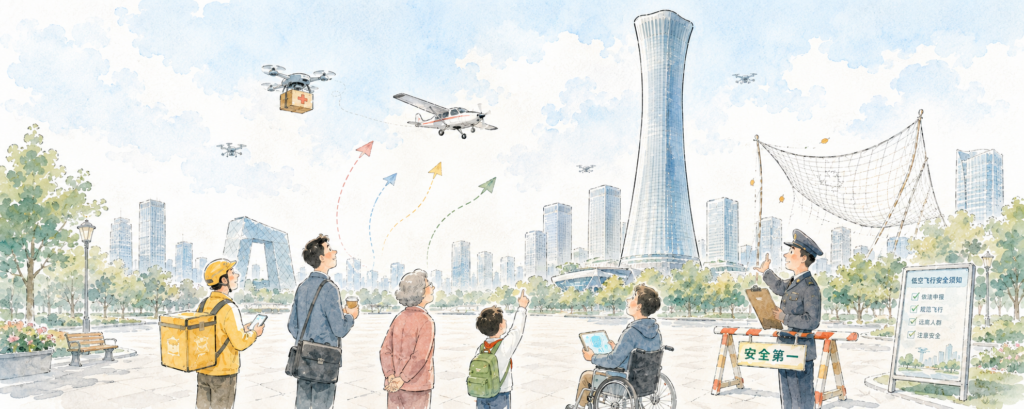
Therefore, neither the low-altitude economy nor AI technology should be understood only from the perspective of safety. Drones have already shown, in war, the ability of the weak to resist the strong and reshape military order; in peacetime scenarios, the low-altitude economy may also improve transportation in remote areas, serve people with limited mobility, increase the efficiency of urban delivery, and even improve certain high-density living environments where the lower classes cluster. AI is the same: it may allow people with fewer resources to obtain cheaper assistance in education, writing, programming, design, and research, thereby weakening the barriers of advantage originally formed by elite universities, capital, and personal networks.
Of course, Hu Yilin does not think that new technologies are naturally on the side of the lower classes. Technology can also be reabsorbed by capital, platforms, and state power. But he emphasizes that new technologies at least disrupt the old order and create new opportunities for mobility. Precisely for this reason, targeted control over the spread of new technologies in the name of safety may, on the surface, seem to be “for the good of the people,” but in substance it may be harmful both to technological progress and to social evolution.
It is not that we do not want safety, but that safety cannot be allowed to become the only frame of reference
Hu Yilin acknowledges that in an era of rapid technological development, social governance does indeed face difficulties. Low-altitude flight requires airspace rules, flight qualifications, accident investigations, insurance liability, and emergency mechanisms; AI also requires institutional arrangements concerning privacy, fraud, attacks, discrimination, and the attribution of responsibility. The problem is that governance cannot be reduced to prohibition, and even less can safety and stability be elevated into principles that override everything else.
What particularly alarms him is the formation of technological privilege in the name of safety. Ordinary people are excluded from new technologies, while the wealthy, large institutions, and privileged departments continue to use them first; ordinary people therefore lose opportunities without truly obtaining higher safety. Such regulation is untenable in ethical terms and also easily leads to institutional rigidity.
“Authoritarian governments like to talk about safety,” Hu Yilin said. In his view, for human civilization, freedom and development are the more fundamental pursuits. The importance of safety lies in the fact that a safe environment is conducive to people’s free life and comprehensive development; if safety itself becomes the highest goal, then we will deviate from the direction that human society should take.
He summed this up with a sharp metaphor: “If we only care about safety and not freedom, then dairy cows in a cattle farm are also very safe, and slaves on a plantation are also very stable, but that is not the direction human society should pursue.”
Conclusion: truly mature governance does not lock new technologies away
The China Zun accident reminds people that urban governance in the low-altitude era is far more complex than the slogan of “developing the low-altitude economy.” Any new technology entering public space must face risks. But Hu Yilin’s viewpoint reminds us that risk governance cannot rely only on the impulse to prohibit, nor can it make the technological opportunities of ordinary people the first object to be sacrificed.
A more mature governance direction should be to bring dangerous behaviors, specific responsibilities, and the consequences of accidents into the institutional framework, rather than driving whole categories of technology out of ordinary people’s lives; it should establish transparent investigations, liability insurance, tiered access, technical standards, and emergency mechanisms, rather than using blanket lockdowns to conceal insufficient governance capacity.
From the low-altitude economy to AI, the issue is always similar: new technologies will bring danger, and they will also bring opportunities for mobility. How a society treats new technologies ultimately reflects not how much it values safety, but whether it is still willing, beyond safety, to believe in freedom, development, and the creativity of ordinary people.
Translated from the Chinese original with AI assistance. The original text is authoritative.