
The allergy season hasn’t even passed before the dust season arrives, my whole state has been low, and the course summary isn’t especially urgent anyway, so I kept dragging my feet and finally finished writing the second course from last semester. (If you want to jump straight to the exam analysis, go to the second half.)
General History of Technology is the course I have taught the most; last semester was already the sixth round, and I also wrote summaries for the first five rounds. Of course, every year there are more or less some new additions. This time, taking last semester’s experience into account, I compressed the first few classes of the semester, removed the Stone Age and East-West technological exchange, and added several classes in the middle and latter part of the semester, as follows:
New content
10. Aircraft
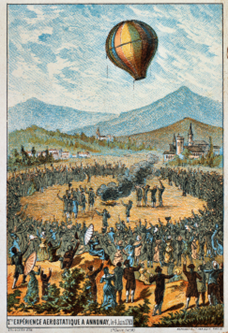
In conjunction with the “Straight Up to the Clouds: The Da Vinci Flight and Engineering Machinery Exhibition” that was still on display at the museum of science and technology at the time, I gave a lecture on the history of flight. Although Da Vinci’s experiments with flying machines were not publicly published in his own day, they can still be seen as a herald of the new era. Da Vinci marks the point at which flight changed from an ancient dream into a subject of science and experiment. What matters about Da Vinci is not merely that he was full of ingenious ideas; the key is that he investigated the mystery of flight through actual engineering and planned experiments. After Da Vinci, especially in the eighteenth century, the dream of flight gathered together frontier achievements in science (such as theories of air and chemistry) and a growing public enthusiasm, setting off a craze that lasted for more than a hundred years. The Montgolfier brothers’ hot-air balloon, the Robert brothers’ hydrogen balloon, Cayley’s flight dynamics, Lilienthal’s gliding practice, all the way to the Wright brothers. The cause of aviation was carried forward by generation after generation of dreamers, after countless honors and sacrifices, and only then finally came to fruition.
After class, a student raised a question, roughly meaning: since airplanes are so strategically valuable, why wasn’t the R&D effort led by the government? (In fact, it is often many “brothers” out there starting a business together.) My answer was: on the one hand, of course the state does provide support—for example, the invention of the balloon was recognized by the French Academy of Sciences, and of course there were rewards; patent protection is also a way the state supports technological invention. But if you want the state to do what the Manhattan Project did—gather a group of people to tackle the problem collectively—that is not very likely. For a national-level project, how high a failure rate and how long a development period can it tolerate? The Manhattan Project succeeded in three years; Apollo took ten; the Two Bombs, One Satellite project, from start to finish, took just over a decade; but airplane development—without even mentioning Da Vinci, just counting from George Cayley, the father of aviation, who published “On Aerial Navigation” in 1809 and laid the aerodynamic theoretical foundation for airplanes, to the Wright brothers’ successful first flight in 1903—took a full hundred years. During that time there were countless failures, and even with the Wright brothers it still had not been successfully commercialized (the Wright brothers’ younger brother sold his company in 1912). Of course, perhaps large government investment could shorten the R&D process, but who knows by how many years? Thirty, or fifty? Can a government really keep investing for decades in a money-burning enterprise whose success date is unknown? Can the government subsidize explorers who have more than a 90% chance of failure? Can the government support performers like Lilienthal? … It is difficult for the government to support these activities, not because it is shortsighted, but because government itself is constrained. A government’s primary duty is always to “maintain stability” rather than to innovate; it must emphasize fairness and order, and must be accountable to taxpayers. If the government is to invest in technological innovation, it is often only suitable for engineering projects with foreseeable short-term results. The Manhattan Project and the Apollo Project were both “projects”: undertakings whose results could more or less be seen before they began, with relatively clear directions and steps. The more uncertain, more risky explorations are better driven by private entrepreneurs and private capital.
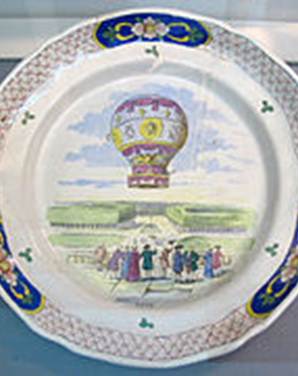
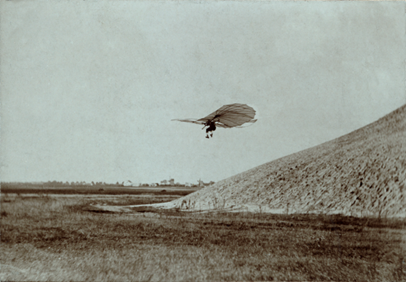
So the question arises: why is it possible for private capital to keep investing for decades in a cause whose practical results cannot be seen? On the one hand, “venture capital” can tolerate a higher failure rate; a 10% success rate is enough to make venture capitalists rich, let alone the fact that even if they fail, private companies can go bankrupt and only bear limited liability. On the other hand, something that shows no practical result to the government does not mean it has no practical result to capital. In fact, blowing up bubbles is one way capital makes a profit: as long as the bubble is blown large enough, even if it provides no real productive capacity, investors can still make money. One way to blow bubbles is to attract public attention. We can see that from balloons to gliders, many flight experiments became social hot topics for a time; just selling tickets could be profitable, and some performances were directly stage plays. For example: “In 1786, in a pantomime about Captain Cook’s journey to Tahiti, Rousewatt made use of the newly invented hot-air balloon, having sparsely dressed actresses descend from the sky onto the stage, and finally displaying the magnificent scene of Captain Cook seemingly ascending in feathered glory. The *Times* commented on it as ‘a performance worthy of the contemplation of every reasonable person.’” There were also many spin-off products (for example, France printed balloon experiments on porcelain plates, snuff boxes, pocket watches, and other goods). Lilienthal maintained cooperation with professional photographers, using photographs to record his gliding practice; this meant that, beyond accumulating experimental experience, his gliding also became part of popular culture, inspiring the interests of countless people, including the young Wright brothers. Alphonse Pénaud invented an aircraft but failed to secure investment and ultimately committed suicide; yet his aircraft model was developed into a toy, inspiring the interests of countless people, including the boyhood Wright brothers… Entertainment, performance, toys—these things that are not “useful”—continuously sustained public enthusiasm, and thus kept the repeatedly failing aviation cause supplied with successors.
At the time this class was taught, the chatgpt craze had not yet erupted; looking back now, the above logic also applies to today’s model of technological innovation. We saw that chatgpt really could provide productive capacity, and even threaten wage workers, so everyone was suddenly shocked, and major domestic enterprises all flocked to do AI. But what was OpenAI doing before that? It was teaching AI to play games; it started having AI play Dota in 2017, and in the end it beat human champions in 2019, and then received investment from Microsoft. Before that, AI such as Google’s AlphaGo was also used to play board games and watch cat videos. I remember that at the time there were also media commentaries saying that, in fact, knowing how to play Go was not very useful, and that it was just hype for the sake of drawing attention. But the problem lies precisely in this “drawing attention”! Balloon performances, commemorative snuff boxes, gliding photo albums, toy airplanes for children… aren’t these all things that “draw attention”? Aside from arousing public enthusiasm, aren’t they also basically useless? Yet without the accumulation in this “pre-useful” stage, how could technology possibly become productive overnight?
12. The Age of Big Science
This chapter was originally supposed to be about the atomic bomb, but later it was changed to “big science,” partly because after reading the book Big Science I felt that this title was just right and could better capture the new relationship between technology and science. Of course, another part of the reason was that the atomic bomb itself is rather difficult to talk about: there are many stories one could tell, but from the angle of the relationship between science and technology, one still ends up turning to the theme of “big science.”
“Big science” refers to a new pattern in which the forces of “government—industry—business—science” are linked together. Unlike in ancient times, when a single well-fed and idle aristocrat could independently pursue exploration, and unlike the modern patterns of brothers partnering up, small workshops, small teams, and small investments, after entering the twentieth century scientific research (especially certain development directions within it) gradually moved away from being “pure” and “simple,” becoming “big” and also “complex.” Such science requires big financial support, mobilizes large numbers of personnel and resources, relies on huge and dangerous machines, and its success or failure may produce major and complex effects on society and nature.
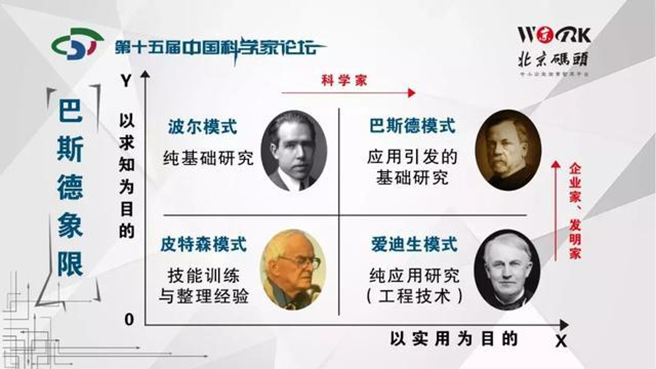
In my review of *Big Science*, together with *Science: The Endless Frontier*, I summarized it this way: “On the one hand, we must acknowledge that in the new era scientists have had no choice but to step out of their ivory towers, lower themselves, and form alliances with politics and capital; on the other hand, the traditional spirit of free and independent science has not become obsolete. To uphold the spirit of free and independent science, one cannot turn a blind eye to the fact that scientific research has already become embroiled in the world of fame and profit; one must confront the complex reality that science, capital, and politics have already formed a ‘complex.’ Under this premise, one should then strive to promote the scientific spirit, and keep the culture of free inquiry in science in balance with the complex environment of fame and profit.”
Besides accelerators and atomic bombs as its representatives, in the second half of the class I also introduced biotechnology. The “big” in biotechnology is not quite the same as in nuclear science: it does not necessarily require large-scale centralized mega-projects, but it is easier to spread rapidly to the general public. I had once taught the “gene technology” lesson in General History of Technology, and I also offered the course Synthetic Biology: Science and Ethics (it seems I forgot to write a summary for that course?). This time I condensed things a bit and touched on genetic modification, gene editing, and synthetic biology.

XIV. Blockchain and the Metaverse
The “blockchain” lecture was added at the end of 2021. At the time, it was the students’ vote that chose this topic, so it may be said to have been fate and circumstance. The process of preparing that class happened to help me sort out carefully my own understanding of NFT, accelerating my process of entering the circle (as a result, perhaps I still ended up losing more than gaining). After a year of scrambling around in the themes of NFT and the metaverse, my thinking has already become fairly mature and systematic, and I now discuss “the metaverse” as a summary of the information revolution. In fact, I have given talks on these related themes many times in different settings, and part of the content has already been organized and published in print media (for example, this piece), but much of it has not yet been written up. I will gradually put it into writing.

Review of the Exam
This time the grading was basically done by the teaching assistants. They were still quite responsible and accurate; I spot-checked part of it and made not many adjustments. The grading scale followed Tsinghua’s earlier recommended distribution, namely that the proportion of A- and above should not exceed 40%; in fact, only a little over 35% were given that grade. Overall, it was rather strict. In previous years I might have made an overall upward adjustment to increase the proportion of excellent grades, but this time I did not, because from the quality of the scripts there was no significant improvement this year over previous years.
Because of the special circumstances of the pandemic, this cohort’s originally planned in-class exam was ultimately changed into a take-home assignment, with an entire winter break added for completion. To prevent “involution,” I added the requirement that the total word count should not exceed 5,000 words. In the past, students would generally choose 3 questions out of 5 during the 2-hour in-class exam, and many could still write 3,000 to 4,000 words (the best scripts can be referred to in the previous year’s summary). A good answer has citations and thought, a focused question, and a clear argument; it is basically a short paper. If students could complete three excellent short papers within 2 hours, then what could they do if given 2 months? The answer was: roughly the same. Even the best was not as good as last year’s A+, and the worst was no worse than last year’s slackers. The 5,000-word anti-involution measure was almost useless; many people just wrote a bit over 2,000 words and felt that was enough to get by. The overall situation disappointed me, so overall the grades were rather ordinary as well.
This time I won’t post exemplary assignments. Below I’ll write out the grading standards the teaching assistants used for each question, along with my own additions.
Answer any 4 of the following questions. The total word count must not exceed 5000 words. Each question is worth 25 points.
1. What is a “city”? Please give a concise definition and explain it in connection with the history of cities.
Teaching assistant standard: if you give a definition of a city, and the explanation based on that definition has some connection to the definition given earlier, you can get the passing score of 15 points. The explanatory part may be narrowly the history of cities, that is, explaining how cities came into being, or broadly the history of cities, that is, the emergence and evolution of cities in China or the West; that will get 18–20 points. Above 20 points requires a clearer overall logic, an explanation closely tied to the definition, and a relatively complete account of the history of cities, such as a rough historical axis running from the Urban Revolution to the Industrial Revolution and then to the modern era, or an explanation by citing famous cities in world history.
Teacher’s comment: In my class, the overly simplistic definition of the city as a “large human settlement” was introduced as a negative example, so naturally one cannot stop there in answering the question. In class I mentioned the ten characteristics Childe listed when defining the “Urban Revolution,” but listing all of them is a bit tedious and not sufficiently “concise.” I then introduced Mumford, emphasizing that the city is the “center of sacred activity,” which is of course the definition I prefer more. But merely saying that sentence is not complete enough either. The best way is still to think freely and combine a concise yet relatively comprehensive definition, such as: a city is “a large human settlement that usually includes large public buildings as centers of sacred activity, and where residents have occupational division of labor and social stratification.” Then this question also requires explaining it in connection with the history of cities. In class I only talked about the “origin” of cities and did not discuss their later historical development, so this part requires the students to improvise on their own. In the section on origins, one can cite palaces, monuments, and other buildings as markers of early cities, and examples such as the specialization of Sumerian cities. In modern cities, although traditional sacred buildings like palaces may no longer be functioning in the old way, modern cities often still play certain roles as centers of sacred symbolism, such as squares, landmark buildings, cultural districts, and so on. Moreover, specialization and stratification are found in both modern cities and the countryside, but they are still far more salient in cities. The modern countryside is no longer an independent, self-sufficient entity; rather, it is interlocked with the city. In this sense, the modern countryside also shares many of the features that were exclusive to cities in ancient times.
2. Macfarlane argues that China did not have a Scientific Revolution because it lacked glass technology. Do you agree? Please give a brief assessment.
Teaching assistant standard: either agreement or disagreement is acceptable; more students disagreed. As long as you explain to some extent the reasons for the position you take, you can get 15 points. Whether you agree or not, if you analyze the meaning of Macfarlane’s statement or present one or two subpoints to argue your position clearly, you can get 18–20 points. Above 20 points requires a more careful interpretation of the sentence in the prompt, that is, explaining why Macfarlane assigns such high value to glass, and, in reference to Western and Chinese history, further arguing that glass is important but not necessary for the Scientific Revolution. In other words, glass is not the main factor (by analogy with the Needham Question; ancient China had almost no geometric foundation supporting the development of optics; differences in aesthetics between China and the West led to different uses; ancient China had very advanced porcelain, so glass was not valued, etc.), or alternatively arguing that glass is necessary for the Scientific Revolution.
Teacher’s comment: In previous semesters, “glass” had been discussed as the theme of a lecture, but this time it was not talked about much; it was taught together with the “mechanical clock” under the heading of the “Middle Ages.” In that year’s PPT, I used a full 17 slides for “glass and science,” whereas this semester I used only one slide. Of course, the key points were all mentioned, but to answer the question well really requires outside reading. This question probably requires discussing three levels: 1. Did ancient China indeed lack glass technology? — More accurately, glass technology developed less in the direction of transparency and more in the direction of imitating jade objects; 2. Is (transparent) glass crucial to the Scientific Revolution? — This is debatable. If we look only at De revolutionibus orbium coelestium and De humani corporis fabrica, the two landmark works marking the beginning of the Scientific Revolution, then glass is actually not important, so we can say that the Scientific Revolution generated European scientists’ demand for glass, rather than glass generating the Scientific Revolution. But if one places greater emphasis on the role of perspective, chemistry, and other disciplines in the narrative of the Scientific Revolution, then the significance of glass becomes more important, and it would not be excessive to say that glass was one of the prerequisites of the Scientific Revolution; 3. Was the lack of transparent glass the main reason China missed the Scientific Revolution? If glass is not a prerequisite of the Scientific Revolution, then this argument is hard to sustain; even if glass were a prerequisite of the Scientific Revolution, one still could not necessarily say that the lack of glass was an important reason China did not have a Scientific Revolution. For example, we can say that a peach tree failed to bear peaches because it “lacked watering,” but if it was not a peach tree at all but a pear tree, then no matter what, it would not bear peaches. To keep insisting “because it lacked watering, the pear tree did not bear peaches,” although it may be valid in formal logic, is still not really getting to the point. So if one briefly argues that China lacked, in some more fundamental sense, the prerequisites for a Scientific Revolution, that also counts as negating Macfarlane’s proposition.
3. What contributions did Galileo make to the rise of modern experimental science?
Teaching assistant standard: a simple listing and explanation of Galileo’s achievements in promoting the emergence of modern experimental science earns 15 points. A brief analysis divided by disciplines (such as mechanics, mathematics, astronomy, etc.), or a simple mention of the historical facts that Galileo made scientific instruments and consciously used them for experiments, such as observing the moon and Jupiter with a self-made telescope, or an answer that is essentially about Galileo’s role in promoting modern science but explained relatively fully, earns 18–20 points. To get above 20 points, one needs to briefly summarize Galileo’s place in modern experimental science, and not limit oneself to discussing only his achievements in various disciplines; one must also consciously explain Galileo’s accomplishments in designing scientific instruments, insisting on experimental methods, and popularizing experimental thinking.
Teacher’s comment: On the slide for Galileo, I wrote just two aspects: “1. Design and manufacture of instruments (such as the telescope, the proportional compass, and the unfinished pendulum clock); 2. Thought experiments and experimental thinking.” Basically, if you explain along those two lines, there’s not much wrong with it. But the slides also mentioned some indirect contributions, such as the fact that on the page before the one on Galileo, I noted that Galileo’s students founded the Accademia del Cimento (literally, the Academy of Experiment), which can be said to have been the first modern scientific society devoted to experimentation; or, later, in the section on the steam engine, I mentioned Galileo’s student, assistant, and editor of his legacy, Torricelli, who continued Galileo’s line of inquiry and completed the mercury barometer experiment. These contributions credited to Galileo’s students can also be counted as Galileo’s indirect contributions to experimental science. In terms of thought, I mentioned “the mathematization of nature,” “seeing the universal in the particular,” and so on. Many students were able to mention these points, but explaining them fluently still requires real understanding.
4. How should we understand the teacher’s view that “Watt did not merely improve the steam engine; he improved ‘improvement’ itself”? Please discuss your thoughts.
Teaching assistant standard: the first half of the sentence is about what specific improvements Watt made to the steam engine, with keywords such as “condensation,” “crankshaft,” and “double-acting.” The second half is the key point, and keywords such as “quantification,” “efficiency,” “collaboration,” and the Lunar Society are where the points are. Most students answered from these two angles, and generally more than 75% of those who chose this question scored 20 points or above.
Teacher’s comment: Watt “improved improvement,” Edison “invented invention” — these are case studies I often bring up. The biggest difference between Watt and his predecessors is that he consciously used quantitative experimentation to carry out improvements, instead of merely relying on inspiration and craft to “tinker and see.” In my book What Is Technology I wrote a passage emphasizing the common ground between Watt and the mathematical experimental sciences:
This idea of improving technology through “quantitative experiments” can hardly be reduced to a simple “artisan tradition of trying things and tweaking them.” In ancient society, artisans’ improvements to technology often arose by chance; progress was slow and it was hard to reproduce precisely or spread rapidly. Watt’s “try it and modify it,” by contrast, was conscious and planned, and the degree of improvement was precisely measured; the methods of improvement were also describable and reproducible. It is hard to say that these new features had nothing to do with the Scientific Revolution as a whole and the cultural currents that accompanied it. In this sense, the Industrial Revolution was also one of the consequences of the “mathematization of nature.” Watt himself understood this point; he taught his son: “Geometry and arithmetic, together with the general science of calculation, are the foundation of all useful sciences; without a full understanding of them, natural philosophy is nothing more than amusement.”
In addition, in the course materials I also contrasted the typical ancient artisan with the modern inventor represented by Watt:
Ancient artisans: little learning, low social status; a flash of inspiration, building behind closed doors; inherited secret skills, kept under wraps; qualitative thinking, focused on function.
Modern inventors: educated, respected; broad communication, drawing on the strengths of many; applying for patents, making ideas public; quantitative calculation, focused on efficiency.
Of course, merely copying my words is not the best approach. The best answers need, on the one hand, to reorganize the ideas in one’s own language, and on the other hand, to draw on more reading materials for support; for example, the 《好奇心改变世界:月光社与工业革命》 I recommended contains more interesting details.
5. Starting from the late eighteenth century, the United States developed rapidly in many technological fields, and in some areas it even led Europe. Before Ford’s production line, what distinctive strengths had American technological development already displayed? Please list some examples and discuss the reasons.
TA standard: If you list 1–2 technologies that the United States led in historically, such as steamboats or Morse code, or technological fields such as energy, communications, or agriculture, and briefly explain the reasons, you can get 15–18 points. If you list a richer range of technologies or fields, and, more importantly, explain the reasons more fully—for example, the close relationship between the United States and Europe, the liberal, relaxed, and pragmatic political and cultural atmosphere, and the vast market and land—you can get 20 points or above.
Teacher’s comment: I previously focused on this question with chatgpt, and my comments were as follows:
Taking the AI’s answers as a whole, the key points were actually very comprehensive. What I myself could think of was no more than standardized production, transportation networks (shipping and railroads), and communication technologies (telegraphs and newspapers). It was only when I saw the AI’s answer that I remembered I had omitted energy technology (oil and water power). Of course, if I thought it over carefully, I might also have remembered it, but AI can clearly provide assistance very quickly. As for the reasons, they are nothing more than pragmatism, market conditions, natural resources, and so on; AI mentioned all of these too. There are also some relatively subjective views that I brought up in class but that AI could not possibly mention—for instance, compared with Britain, the United States lacked skilled workers but had an excess of labor, which made it more suitable for the spread of a dumbed-down mode of production (such as standardized processes). Or, for example, the United States did not go through a long agricultural era; the westward development meant industrialization preceded agriculturalization, and newly reclaimed farmland was from the very beginning adapted to large-scale mechanized cultivation, so modern agriculture developed rapidly without the burden of history… But in fact, the vast majority of students did not mention such views either. It can be said that, in terms of the points raised alone, AI had already reached the standard of excellence.
6. Briefly comment on the significance and limitations of Vannevar Bush’s report (“Science: The Endless Frontier”).
TA standard: A simple analysis of the significance and limitations of Bush’s report is enough to get 15–18 points. First summarize Bush’s report, then analyze its significance in greater detail (promoting scientific and technological innovation, helping to cultivate research talent, etc.) and its limitations (such as an elitist tendency, an overemphasis on the independence of science, and a somewhat crude division between basic and applied science), and the grade can reach 20 points or above.
Teacher’s comment: I listed many of the limitations of Bush’s report in the course materials, and more or less mentioned them in my book review as well, so I won’t dwell on them here. As for the positive significance of Bush’s report, many students answered along the lines of general search results (the kind the TA mentioned), which was of course standard enough. But many students may have only looked for the course materials in a targeted way, and did not notice that in the next class I actually did a callback to it. When discussing the invention of the internet, I mentioned that the internet may be the most典型 example of a result benefiting from the science and technology policy advocated by Bush’s report: “the government blindly pouring in money, unintentionally causing something to grow; scientists enjoying a high degree of autonomy and exploring freely.”
7. What explorations did Leonardo da Vinci make in aircraft design? Suppose Leonardo’s manuscripts on flying machines had been published and circulated at the time—could they have accelerated the invention of the airplane? Briefly state your view.
TA standard: For the first part, simply list Leonardo’s designs for flying machines (keywords: “ornithopter,” “spiral,” “gliding,” etc.). For the second part, whether you agree or not, as long as you state a position and briefly explain the reasons, you can get 15–18 points. As for the first part, if you do not merely list them but explain Leonardo’s designs to some extent, and for the second part, whether or not you think they could have accelerated the invention of the airplane, if you provide relatively detailed reasons (for example, that material inventions and theoretical research at the time were still insufficient to support the birth of the airplane), then you can get 20 points or above.
Teacher’s comment: This question cannot be answered on the basis of the course materials alone. If you could take the exhibition seriously and visit it, you should be able to answer it well. I won’t say more here.
8. The birth of ARPANET was driven simultaneously by military security needs and the need for free sharing. Can you give another example: a technology whose invention and development were driven by multiple seemingly contradictory needs?
TA standard: Judging from everyone’s answers, this was the hardest question. The difficulty was that the teacher asked for only one example, and students often could not give a sufficiently full explanation with just one example; some students even gave several examples, which strictly speaking did not fit the question. In such cases, I would choose whichever example was explained most fully and award points accordingly. If you gave an example and briefly analyzed where the contradictory demands were reflected, you could get 15–18 points. To get 20–22 points, your analysis needed to be more thorough. Students who earned 23–25 points, in addition to meeting the above requirements, also briefly analyzed the ARPANET example mentioned in the prompt—explaining why it could be said to have been driven by both military security and free sharing—and at the end expressed their views on this phenomenon of “the invention and development of technology being driven by multiple seemingly contradictory demands.”
Teacher’s comment: The last question is usually a creative one, with no standard answer, and it is not easy to answer well. Of course, in fact, almost every technology’s invention and development is driven by multiple demands, so examples should be easy to find. In fact, one can also list many by citing cases discussed in class. For example, “the bicycle” simultaneously satisfied different needs for racing, display, commuting, and safety.
Translated from the Chinese original with AI assistance. The original text is authoritative.