
Last class we talked about Hellenistic science, represented by Ptolemaic astronomy; Western classical science reached its peak in the Hellenistic period. The next peak would have to wait until the Scientific Revolution of the 16th and 17th centuries, from Copernicus to Newton. The period in between is relatively less exciting, but our general history course cannot very well skip over it, and this period is also one we are comparatively unfamiliar with.
Before the Scientific Revolution, we must at least discuss three strands: first, the Arabs; second, China; third, Christian Europe. The Arabs took up the torch of Greek science and also made distinctive contributions, laying the groundwork for Europe’s revival. At the same time, China, in a relatively independent way, developed a flourishing scientific and technological civilization; the heyday of Chinese science and technology happened precisely during Europe’s Dark Ages, so we might as well insert a special topic here as well. Finally, we can talk about Europe’s Middle Ages and see whether they were in fact completely dark, and whether Christianity’s role in the rise of modern science was wholly obstructive or had a positive side…
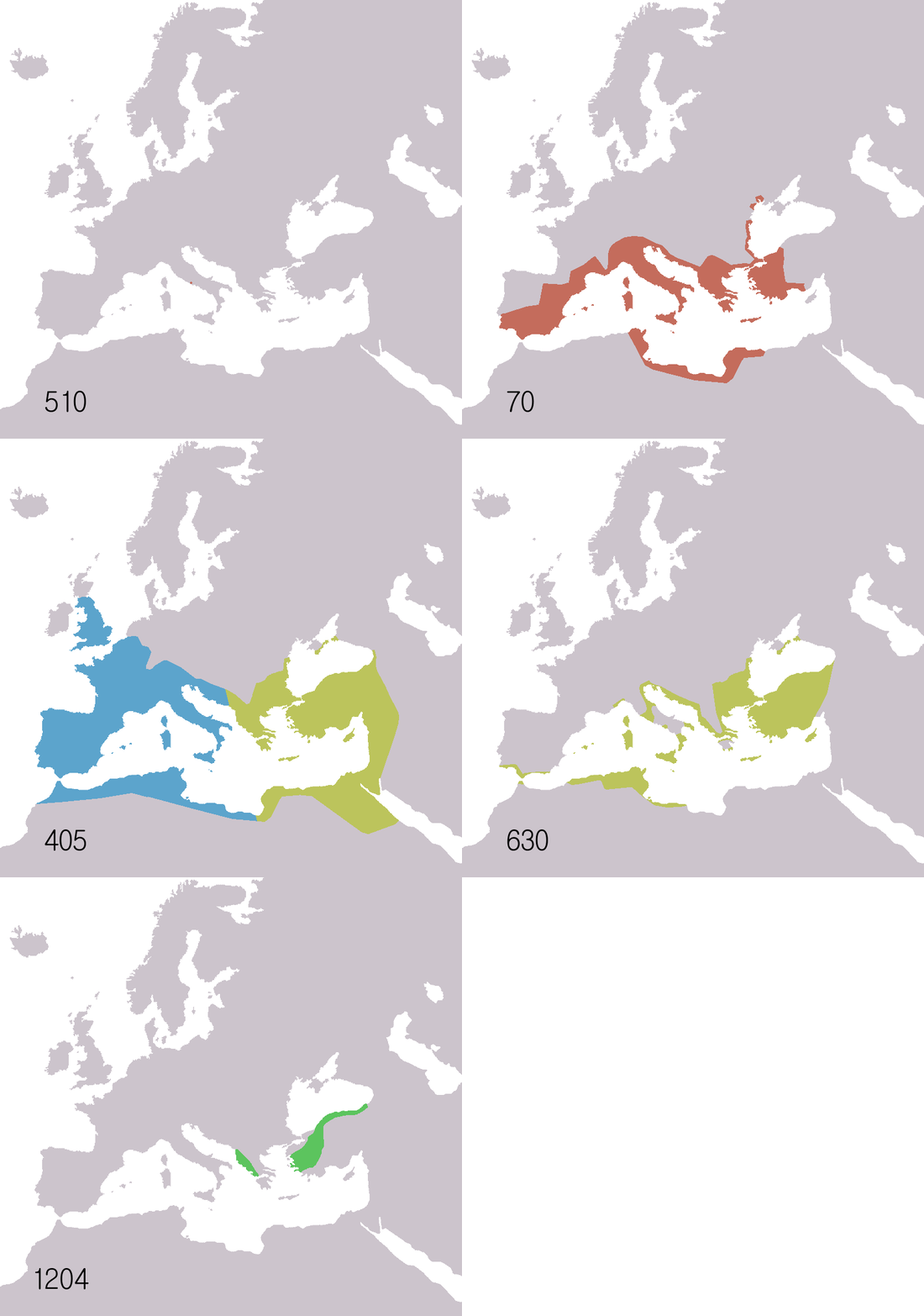
Before turning to the Arabs, we also need to briefly add ancient Rome. According to legend, the ancestor of the Romans was Aeneas, the son of the Greek goddess Aphrodite (called Venus by the Romans). After the Greeks captured Troy, Aeneas escaped, and eventually settled in Rome with his descendants. According to legend and some archaeological evidence, the city of Rome was founded around the 8th century BCE, roughly contemporaneous with the Greek city-states. In 509 BCE, the Romans overthrew their king and established the Roman Republic, with a tripartite separation of powers among the Senate, the consuls, and the tribal assembly. By 275 BCE, the Romans had defeated the Greek city-states in southern Italy and unified the Italian peninsula. Then, beginning in 265 BCE, over the course of more than a hundred years, the Romans conquered Carthage in North Africa through the three Punic Wars, and Macedonia and the Greek peninsula through the four Macedonian Wars. By 30 BCE, Octavian had executed Cleopatra and annexed the Ptolemaic dynasty, and by then Rome controlled all the major Hellenistic regions.
This was also the transitional period in which Rome moved from republic to empire. Octavian himself did not call himself emperor; instead, in 27 BCE he claimed to have restored the republic, styling himself as the first citizen and, as the Senate’s leading senator, that is, the “princeps,” he in fact monopolized supreme power, marking the beginning of the Roman Empire.
After taking control of the Hellenistic regions, the Roman Empire continued its campaigns into Spain and the Danube basin. By around the 1st century CE, the Roman Empire at its height controlled vast territories in Western Asia, North Africa, and much of Europe.
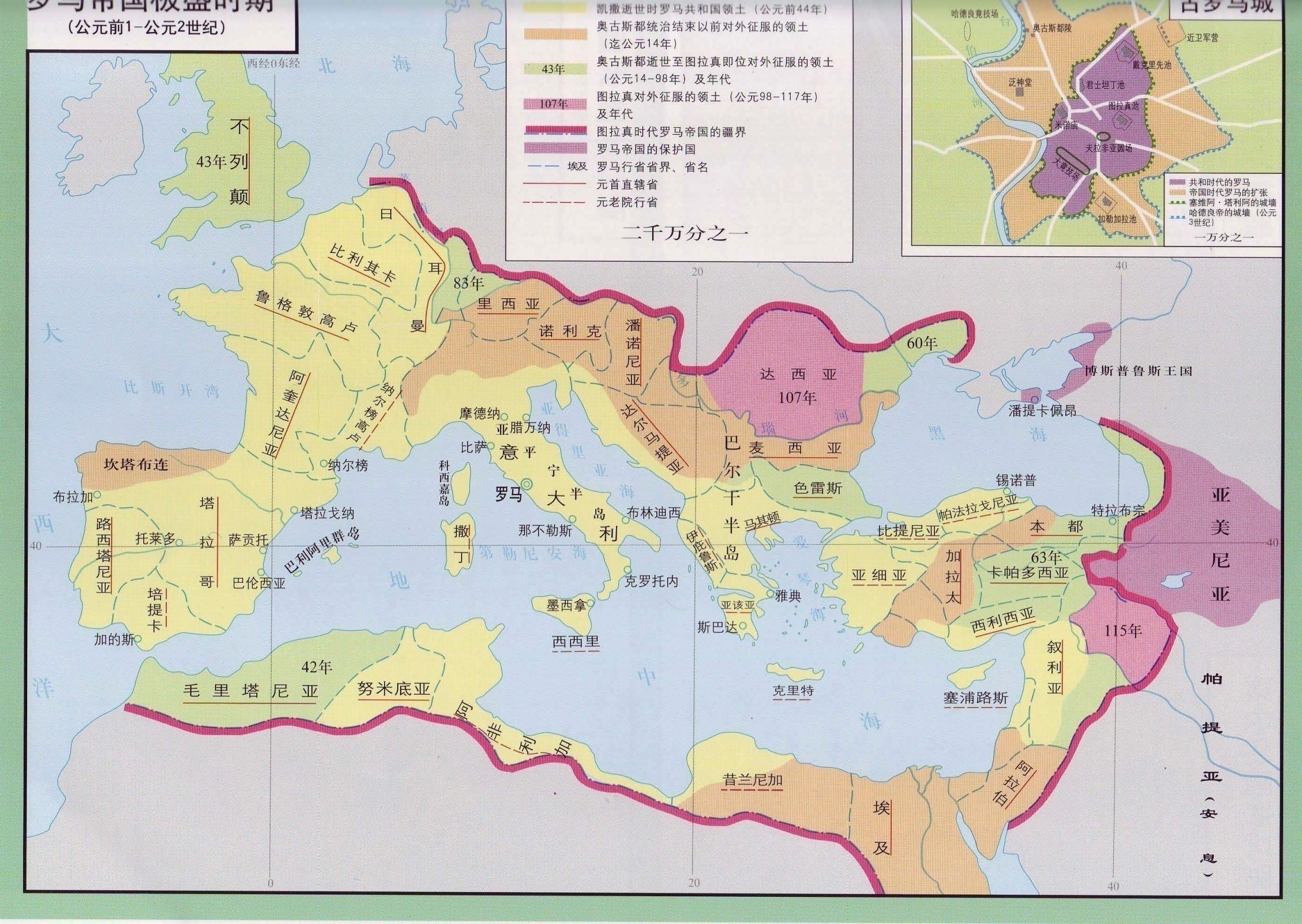 (Wu laoshi lecture notes)
As we mentioned last time, the Hellenistic scientific tradition continued during the Roman Empire. Although the Hellenistic regions were politically incorporated into the Roman Empire, culturally they remained relatively independent. Horace, a Roman writer who died in 8 BCE, has a famous line: the Romans conquered the Greeks militarily and politically, but the conquest in art and thought belonged to the Greeks. (“The Origins of Western Science”)
Greek scholars did not need to learn Latin, but Rome’s upper intellectual class generally mastered Greek. Some Greek scholars came to Roman territory voluntarily or as slaves, while more Roman youths went to Greek regions to study, so Roman science was basically an extension of Hellenistic science.
Take the famous physician Galen, for instance: on the one hand he came out of the Hellenistic scientific tradition; on the other hand, he served the Roman emperor. Politically, of course, he was a Roman, but academically he remained a Greek.
Science carried out by Romans in Latin was extremely meager. From the very beginning, Roman interests and expertise lay in law and the military; there was never the culture of free scholarship characteristic of the Greek city-states. The Roman upper class’s interest in Greek learning was nothing more than interest, and thus they were only interested in the most practical or most superficial parts of Greek scholarship.
Hence Roman translation and introduction of Greek learning were highly selective. For example, in astronomy, Aratus of Soli (died 240 BCE) wrote a poem about constellations and weather, the Phaenomena, which was widely read, whereas people paid no attention to Eudoxus, Hipparchus, and the like.
Roman scholars mainly worked on popularization and encyclopedic compilation. For example, the Latin writer Varro (116–27 BCE) wrote the encyclopedic Nine Books of Disciplines, which established nine liberal arts: grammar, rhetoric, logic, arithmetic, geometry, astronomy, music, medicine, and architecture. Later generations omitted the last two, and the “seven liberal arts” became the basic educational framework of medieval schools.
Varro’s friend Cicero (106–43 BCE), a famous statesman and orator in the late Roman Republic, was also a popularizer of Greek philosophy. He outlined some of the debates in Greek philosophy, synthesized Platonic and Stoic philosophical views, and translated Plato’s Timaeus and Aratus’s Phaenomena. Cicero was rediscovered by Europeans during the Renaissance and had a tremendous influence.
A contemporary, Lucretius (died 55 BCE), is known for his long poem On the Nature of Things, in which, against the backdrop of Epicurus’s atomism, he discusses many topics such as matter and void, the cosmos, the soul, perception, life, earthquakes, and so on,
The most important encyclopedist of the Roman period should be Pliny the Elder (23/24–79 CE), who excerpted 20,000 facts from 2,000 books by about 100 authors and organized them by category into the monumental 37-volume Natural History (Naturalis Historia, also translated as Natural Lore).
Pliny’s Natural History bears some resemblance to Zhang Hua’s Natural Lore of the Jin dynasty in China, and so it is sometimes, not altogether appropriately, translated as Natural Lore. He also recorded many monsters and variant readings without discrimination, but his purpose was quite different. China’s Natural Lore is classified as a kind of zhiguai fiction, whereas Pliny’s Natural History aimed at serious “research.” In his preface, he stressed: “The purpose of the book is to investigate the ‘nature of things,’ for the benefit of practical life and production, rather than merely for literary appreciation over tea and after meals.” The two words in “natural—history” (Naturalis Historia) should be understood according to their original meanings, namely, “the study of the nature of things.” History originally meant a kind of empirically oriented inquiry or investigation; the modern sense of “history” emerged later.
Pliny’s Natural History had a huge influence on Europe after the Renaissance, and we will mention it again in later classes.
Because Rome’s upper intellectuals themselves understood Greek, high-level scholarly discussion generally used Greek directly; what was expressed in Latin was usually popular or summary material. Very few people thought of systematically translating Greek scientific works into Latin. It was not until the 3rd and 4th centuries CE, when the Roman Empire split into the Western Roman Empire and the Eastern Roman Empire and the divide between the Latin West and the Greek East began to widen, that a few farsighted people started consciously translating Greek texts. For example, Calcidius (probably active in the late 4th century) translated Plato’s Timaeus again (Cicero’s translation had been lost in the Middle Ages), and Boethius (480–524) translated several logical works by Aristotle, Euclid’s Elements, Porphyry’s Introduction to Aristotle’s Logic, and so on. But their work came too late. In Boethius’s day, Rome had already been taken by the barbarians, and Boethius, who served under the Ostrogothic king, was eventually executed for treason. From then on, contact between the Latin West and Greek scholarship was almost completely severed. In the ensuing Dark Ages, the only Greek scholarly texts circulating in the Latin West were Plato’s Timaeus, Aristotle’s logic, and a few scattered works. The Greek scientific tradition survived only through the Byzantine Empire and the Arabs.
At its founding, the Roman Empire already lacked legitimacy: on the surface it claimed to be a republic, but in reality it was a dictatorship; yet the dictator’s title was “first citizen,” which meant there was no stable mechanism of succession, and so the Roman Empire remained in danger of fragmentation for a long time. Finally, between 235 and 284, Rome produced more than twenty princes in quick succession. Diocletian, who came to power in 284, finally abolished the principate. No longer calling himself the “first citizen,” he called himself “lord” instead, and even claimed to be the embodiment of Jupiter. Diocletian implemented the “Tetrarchy,” dividing Rome into eastern and western halves, with two emperors on each side, senior and junior. The senior emperor was called Augustus, the junior emperor Caesar; the senior emperor appointed the junior emperor, who would succeed him after his death.
Obviously, this system did not solve the Roman Empire’s succession problem; instead, it aggravated the chaos. After Diocletian stepped down, civil war immediately broke out. In the end, Constantine the Great reunited East and West, but by 395 the Roman Empire had nonetheless irreversibly split in two.
After the division of the Roman Empire, it was continually invaded by barbarians and soon lost control of Gaul. By 410, an alliance of Visigoths and Huns had breached Rome, opened the city gates, and plundered it for three days before leaving. In 439, the Vandals established a kingdom in North Africa and harried Rome from the sea; in 454, the Vandal king Gaiseric also took advantage of the chaos to break into Rome and loot it completely. After a few puppet emperors, the Western Roman Empire finally perished in 476.
292: Diocletian implements the “Tetrarchy”
330: Constantine the Great moves the Roman capital to Byzantium
395: The Roman Empire splits into the Eastern Roman Empire and the Western Roman Empire
410: Alaric the Visigoth plunders Rome
454: Gaiseric the Vandal plunders Rome
476: The Western Roman Empire falls
610: The Eastern Roman Empire becomes Hellenized and is renamed the Byzantine Empire; Greek becomes the official language
The direct cause of the fall of the Western Roman Empire was, of course, barbarian invasion, which occurred against the backdrop of the great migrations of Eurasian peoples. Around 350 CE, a nomadic tribe, the Huns, suddenly appeared in Europe and attacked various Germanic tribes. The Germanic tribes and the Huns then migrated southward together, eventually carving up the Western Roman Empire. This Hunnic people is suspected to be descended from the Northern Xiongnu, who had been driven west by the Eastern Han and the Southern Xiongnu.
Even without barbarian invasions, the Roman Empire was clearly in decline. First, because of the Roman temperament and the needs of slavery, the Roman Empire always “fed war by war” through continuous expansion, but expansion was ultimately unsustainable. Once imperial expansion stalled, the huge army and the extravagant bureaucracy would inevitably drag down Rome’s national strength. Roman nobles were notoriously devoted to pleasure, fond of eating and drinking. Roman court banquets often lasted three or four days of continuous feasting, and there were even special “vomitoriums” for guests to use. Some have also argued that because Romans widely used lead vessels, lead poisoning reduced population quality, and so on.
But in any case, in world history, rise followed by decline is the norm of civilizations. A flourishing civilizational empire, once developed to a certain point, will inevitably slide into decay and ultimately suffer cleansing by relatively backward nomadic peoples. “Backwardness means getting beaten” is not a law of the ancient world. In the age of cold weapons, cultural and scientific “advancement” did not always translate into military strength. Once a huge empire became corrupt or fell into internal strife, it was very easy for nomads to exploit the openings. In many cases, barbarian cleansing could also bring fresh blood into civilization.
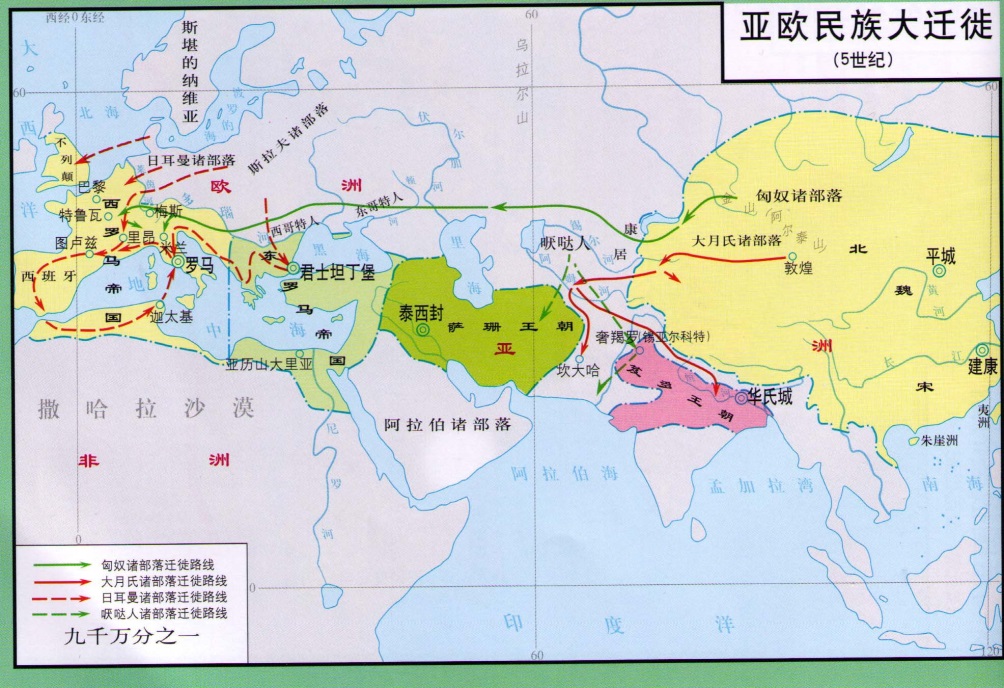 Wu laoshi lecture notes
The roughly 1,000 years after the fall of the Western Roman Empire in 476 CE are called the “Middle Ages,” the Dark Ages of Latin Western Europe. The cultural level of the Germanic barbarians was too low, and the Romans’ culture was not all that impressive either. In early medieval Western Europe, only Christianity could provide a small flame of culture. Note that the Middle Ages were not dark because of Christianity; rather, they were so dark that only Christianity was left. We are not going to discuss Christianity in this class for the time being; later we will devote a whole lecture to the relationship between Christianity and science.
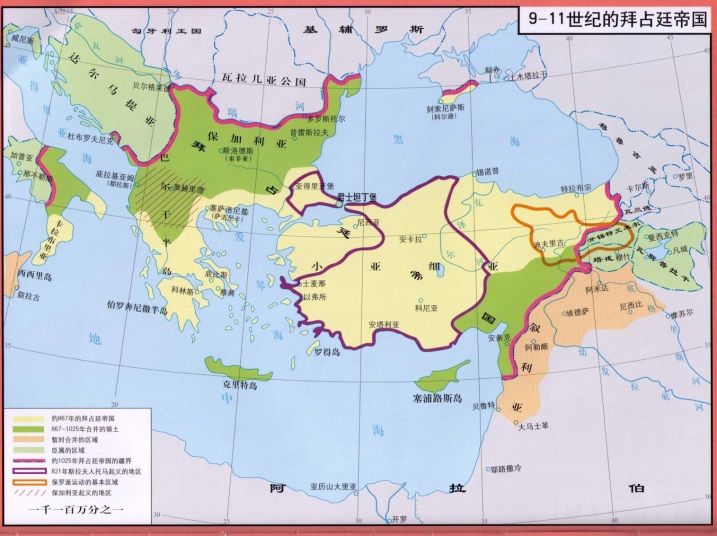
After the fall of the Western Roman Empire, the Eastern Roman Empire still “lingered on” for another thousand years. Constantine the Great made Byzantium his capital and renamed the city Constantinople; the split Eastern Roman Empire still took Byzantium as its capital, and so it was also called the Byzantine Empire. The territory of the Eastern Roman Empire kept shrinking, until in the end it was basically left with only the solitary city of Byzantium. It was not until 1453 that Byzantium was captured by the Ottoman Turks, the Eastern Roman Empire was declared extinct, and Constantinople was renamed the present-day Istanbul.
Some define the fall of the Western Roman Empire and the fall of the Eastern Roman Empire as the beginning and end of the “Middle Ages,” respectively, and there is some reason for that. The Greek-speaking Byzantine Empire preserved the Greek scholarly tradition to a certain extent and also retained a large number of Greek texts. After it was finally conquered, some Byzantine scholars who escaped brought Greek texts into Europe, helping to promote the European Renaissance.
Apart from preserving and commenting on Greek texts, the Byzantine Empire seems to have little to offer in the history of science. On the one hand, this may be due to the cultural conservatism inevitably brought about by the empire’s continual contraction; on the other hand, it may also be because of the inherent limitations of the Greek scholarly tradition itself. Just like China’s scholarly tradition, after the golden age of the Hundred Schools of Thought contended, the scholarly tradition often also moved toward commentary and interpretation of ancient classics. Without new stimuli (such as the eastward spread of Buddhism), the scholarly world could hardly ignite new vitality. In the ancient world, the mere fact that scholarship could be preserved for a long time was already extremely rare; decline rather than progress was the norm of ancient scholarship. So we need not be too harsh in criticizing the Byzantines for being stuck in their ways. As we will see later, modern science did not simply continue Greek science, but only became truly unstoppable after new conditions were added.
Next, we begin our discussion of Arab science. I went through some hesitation over this term. In the outline I wrote “Islamic science,” but now I am still using “Arab science.” We know that Arabs are an ethnic group, while Islam is a religion, and those who believe in Islam are called Muslims. Muslims include not only Arabs but also many other peoples such as Persians and Syrians. But in any case, Arabic was the lingua franca of the Islamic world in this period, and the scientific achievements of the period were mainly in Arabic. Moreover, Arab science was called “foreign” science in the Islamic world, distinct from the legal and religious sciences within Islam, so let us still call it Arab science.
The Arabs are a branch of the Semites and regard themselves as descendants of Ishmael; the Jews are descendants of Isaac. These two brothers were both sons of Abraham (called Ibrahim by the Arabs). In any case, the Arabs, Hebrews, and peoples such as the Assyrians and Babylonians are related. The word “Arab” already appears in 9th-century BCE Assyrian documents. But the rise of the Arabs must be traced to the rise of Islam in the 7th century CE.
Alexander the Great died suddenly on the eve of his planned expedition to the Arabian Peninsula, and the Arabian Peninsula never entered the sphere of Hellenization or Rome. Muhammad was born around 570 CE in Mecca on the Arabian Peninsula. He claimed to have received revelations from an angel and began preaching his doctrine; in 622 CE he was expelled by conservative forces in Mecca, led his followers in migration to Medina, and began to build his own community and armed force. That year was also designated the first year of the Islamic calendar.
Muhammad, with a sword in one hand and the Qur’an in the other, soon fought his way back to Mecca and then unified the Arabian Peninsula. After Muhammad’s death in 632, his followers successively elected four caliphs, that is, Muhammad’s successors; this period is known as the era of the Four Rightly Guided Caliphs, or the Rightly Guided Caliphs. During this period, the Arabs had already annexed Egypt and Persia. The fourth of the Rightly Guided Caliphs was Muhammad’s cousin and son-in-law Ali. At the time, Mu‘awiya of the Umayyad family, who served as governor of Syria, launched a civil war. In the end, after Ali was assassinated in 661, Mu‘awiya became caliph and changed the caliphate from elective to hereditary, thereby founding the first dynasty of the Arab Empire, the Umayyad Dynasty. The territory of the Umayyad Dynasty expanded further, encompassing Spain, the Indus River basin, and the Pamir Plateau; in ancient China it was called the White-robed Dashi.
Later, the descendants of Abbas, Muhammad’s uncle, joined forces with the Shiites and defeated the Umayyad Dynasty, founding the Abbasid Dynasty in 750. In 762 the capital was established in Baghdad, known in history as the Black-robed Dashi. The Umayyad Dynasty was not completely destroyed; one branch fled to Spain and established a regime centered on Córdoba. Throughout the Middle Ages it was a major center of Arab civilization, and also Europe’s largest city. After it was occupied by Christians in the 13th century, it became a bridge through which the Christian world learned from the Arabs.
The Abbasid Dynasty encountered the Tang Empire in 751, and defeated the Tang army led by Gao Xianzhi in the Battle of Talas. Shortly after this battle, the An Lushan Rebellion broke out in the Tang dynasty; from then on the Tang passed from prosperity to decline, while the Arab Empire entered its heyday.
 The expansion of the Arab Empire; the three colors respectively indicate the periods of Muhammad’s lifetime, the Four Rightly Guided Caliphs, and the Umayyad Dynasty.
The Battle of Talas is also important in the history of science. Legend has it that among the Chinese soldiers captured by the Arabs in the Battle of Talas were some craftsmen who knew how to make paper, and from then on the Chinese art of papermaking was transmitted to the Arab world. The exact facts are hard to verify, but papermaking did indeed begin during this period to spread from east to west across the Arab world. Samarkand (751), Baghdad (793), Cairo (900), Morocco (1100), Spain (1150), and other cities successively set up paper mills. Combined with enlightened monarchs, especially the support of the two caliphs Harun al-Rashid (r. 786–809) and al-Ma’mun (r. 813–833), scholarship in the Arab world flourished increasingly.
It is said that al-Ma’mun established the “House of Wisdom” in Baghdad, modeled on the Museion of Alexandria, but recent research shows that this may have been a misunderstanding: “House of Wisdom” may have referred to any library or book depository, rather than a specific institution. But in any case, many large libraries were indeed established in Baghdad and other major cities, with libraries numbering in the hundreds. For example, the royal library in 10th-century Cairo had 40 rooms filled with books; among them, books in the natural sciences alone (foreign sciences) numbered 18,000, and the total collection is said to have reached 2 million volumes. Some private collections of the wealthy were also astonishing—for example, one rich man claimed that his library required 400 camels to transport, and another had 600 chests of books, each of which required two strong men to carry.
We may also refer to the description by the Arab scholar Avicenna (980–1037) of the royal library of the city of Bukhara: “There I saw many rooms filled with books, with book chests stacked layer upon layer. … Books of science in every field also had a room to themselves. I leafed through the catalog of works by ancient Greek authors, searching for the books I needed. In the collection there, I saw books whose titles few people had ever heard.”
Greek scholarship was systematically translated in the Arab world. Galen’s medical works, the philosophical works of Plato and Aristotle, Euclid’s Elements, Ptolemy’s Almagest, and so on were translated from Greek, or via Syriac, into Arabic. By around 1000 CE, nearly all the major Greek scholarly works circulating in the world had Arabic versions. In addition, some Indian astronomy and mathematics were introduced into the Arab world, especially the “Indian numerals” later called Arabic numerals by Europeans.
 An Arab library depicted in a 13th-century manuscript
In addition to translation and preservation, the Arabs also made many original scientific achievements.
First is al-Ma’mun’s court mathematician al-Khwarizmi (c. 780–850), who systematized Indian mathematics and introduced Indian numerals, including 0, as well as decimals, fractions, negative numbers, and so on. His other work, The Science of Restoring and Balancing, was even more influential; the word restoring (al-jabr) was translated into Latin and became today’s algebra. Although Diophantus of Alexandria was praised earlier as the father of algebra, al-Khwarizmi had a more direct influence on European science. But in fact, al-Khwarizmi’s book does not contain equations or algebraic symbols; rather, it is filled with geometric figures and their descriptions, and in essence it uses Euclidean geometry to solve what we now regard as algebraic problems (solving equations).
.png) A page from al-Khwarizmi’s Algebra
A page from al-Khwarizmi’s Algebra
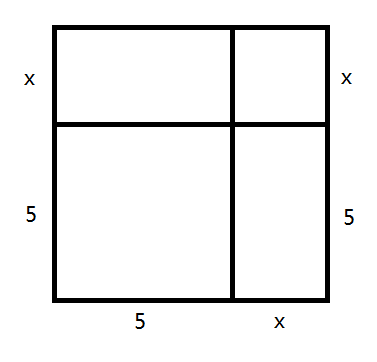
In class, a student asked how exactly al-Khwarizmi used geometric methods to solve algebra problems. I couldn’t come up with an example on the spot, so I’ll add one here. For instance, suppose we want to solve a quadratic equation of the form X2+bx=c; one method given by al-Khwarizmi is as follows:
To solve X2+10x=39, draw a square with side x, then extend 10/2, that is, 5, from two directions respectively, forming two rectangles each of area 5x; together they make 10x. At this point X2+10x is the area of that square plus the two rectangles. Then we notice that if we add another square with side 5, we obtain a larger square with side (x+5). Then the area of this larger square should be (39+5×5), that is, 64. Calculating the side length gives 8, so we solve x+5=8, x=3. Of course, we now know that this equation also has a negative root, -13, but from al-Khwarizmi’s geometric perspective it has no meaning. (See Guo Yuanyuan: A Comparative Study of al-Khwarizmi’s Algebra)
The Arabs also achieved remarkable results in astronomy. On the one hand, they absorbed Ptolemy’s Almagest and praised it as “of the greatest excellence”; on the other hand, they did not stop there. They acknowledged the ideas and techniques of the Ptolemaic system, but retained reservations about its concrete models and data. On the one hand, the Arabs corrected the parameters of Ptolemy’s model through astronomical observation; on the other hand, they were continuously improving new planetary models and attempting to resolve the conflict between the Ptolemaic system and Aristotelian physics.
For example, in the 13th century the Maragheh school (Maragheh was in northern Iran, and one of the largest observatories in the Arab world was located there) developed a set of geometric tools called the Tusi couple, which combined two uniform circular motions into an oscillating linear motion. Later, in the 14th century, Ibn al-Shatir used the Tusi couple to build a planetary model that no longer required Ptolemy’s “equant.” Although this model was still geocentric, it was mathematically equivalent to the Copernican system. Historians of science have found no evidence that Copernicus cited the Maragheh school, but few people would regard this as a mere coincidence. One historian of science commented: “The question is not whether Copernicus knew the Maragheh theory, but when, where, and in what form he learned about it” (The Origins of Western Science).


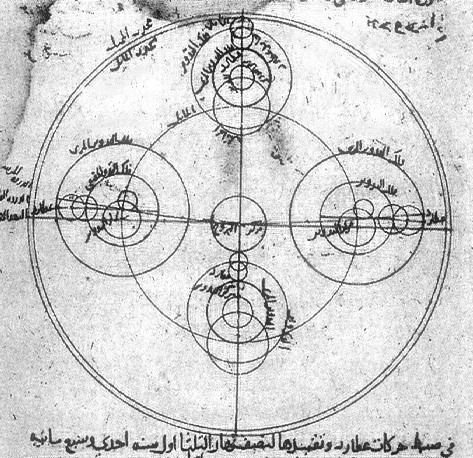 Ibn al-Shatir’s model of Mercury
In astronomical observation, the Arabs established many specialized observatories, including a dome with observation apertures, a supporting library, as well as precise observational instruments and large numbers of full-time astronomers. For example, the observatory in Samarkand was equipped with a giant sextant of 40 meters radius, used to determine the latitude of celestial bodies when they crossed the meridian.
The Arabs also invented or improved the astrolabe, an observational instrument widely used in astronomy, geography, navigation, and astrology.
Arab astronomy was so highly developed that from the Yuan dynasty onward China set up a special Huihui Si Tianjian, supported Muslim astronomers, and introduced Arab astronomy. The Ming dynasty’s Imperial Observatory still followed the Yuan system, separately handling the Chinese calendar and the Huihui calendar, and introduced Arab mathematical methods. Ming astronomer Beilin compiled Seven Luminaries Calculation and Progression based on Arab astronomy, calculating the Sun, Moon, and the five major planets; but in China, the geometric models of the Ptolemaic system were basically all replaced by algebraic methods.
The flourishing of Arab astronomy may have had something to do with its religious needs. Islam requires certain rituals to be performed at specified times, and thus precise measurements of time and the calendar were needed. In addition, Islam has the ritual of facing Mecca in worship, and determining the direction of Mecca from all parts of the world thus became an important issue.
 The giant sextant at the Samarkand observatory
_04.jpg) An Arab astrolabe (1067)
An Arab astrolabe (1067)
The Arabs also made considerable achievements in optics. In the ninth century, al-Kindi criticized the Greek theory of vision and proposed that light does not radiate as a unified whole from luminous bodies, but instead radiates in all directions from every point on the surface of an object, with the light emitted from each point being independent of the others. On this basis, in the eleventh century, Ibn al-Haytham (known in the Latin West as Alhazen) wrote the Complete Book of Optics, synthesizing mathematics, physics, medicine, and several other fields, and developed a complete theoretical system of optics. (The Origin of Western Science)
In addition to theory, Arab optics also introduced experimentation. At the end of the tenth century, Ibn Sahl of Baghdad derived the law of refraction through experimental analysis. In the thirteenth century, Kamal al-Din of the Maragheh school designed a glass sphere filled with water to simulate the formation of a rainbow, pointing out that rainbows are formed by the refraction and reflection of sunlight in water droplets.
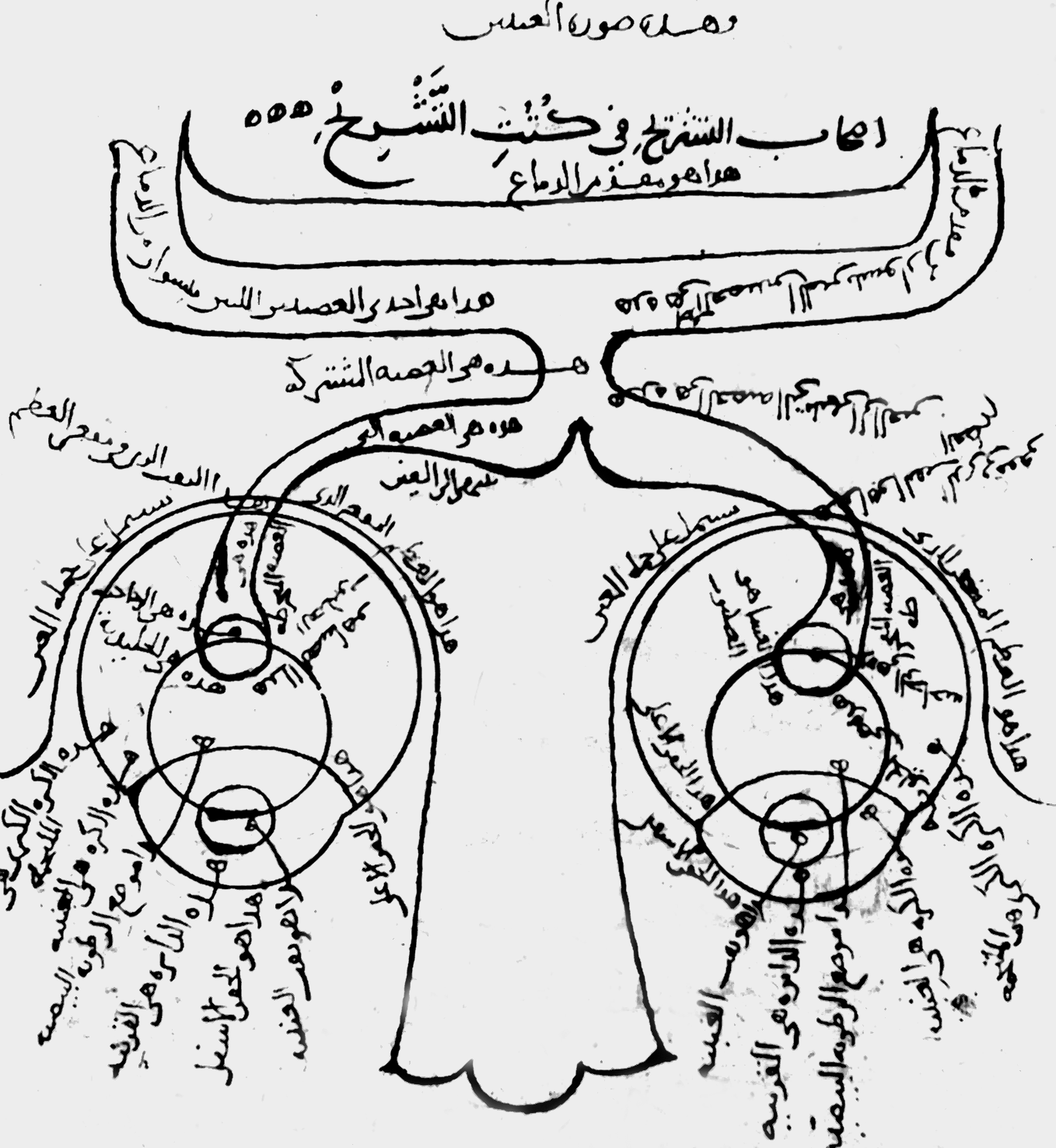 A schematic diagram of Alhazen’s eye. He clearly recognized that the human eye does not emit light rays, but is a receiver of light rays.
Arab medicine was also highly developed. Its greatest representative was the famous encyclopedic scholar Avicenna (980–1037, Arabic name Ibn Sina). Avicenna was a genius; it is said that by the age of 10 he had completed his study of the Qur’an and basic religious texts, after which he studied law on his own and, under the guidance of a family tutor, learned Aristotle’s logic, the Elements, and the Almagest. The Almagest was so difficult that Avicenna had to turn around and teach his own teacher. After that, Avicenna continued entirely as a self-taught scholar. He wrote more than 100 treatises covering arithmetic, geometry, astronomy, music, logic, physics, and metaphysics; commented on Plato and Aristotle; and attempted to formulate a Platonic Aristotelianism, exerting a profound influence on medieval Europe. His Canon of Medicine is one of the most important medical encyclopedias of the ancient world, and it continued to be used as a textbook in European medical schools until the seventeenth century.
In Ibn al-Nafis’s thirteenth-century commentary on the Canon of Medicine, he described the transport of blood by the lungs, laying the foundation for the theory of blood circulation.
It is also worth mentioning the Arab tradition of alchemy. The word alchemy, like many other words beginning with al-, clearly comes from Arabic, as do alkali, alcohol, and so on. The Arabs proposed the two-component sulfur–mercury theory of metals and the three-component theory of mercury, sulfur, and salt; they also developed instruments such as crucibles, alembics, and purification vessels, as well as methods such as dissolution, calcination, distillation, putrefaction, and fermentation, laying the foundation for the theory and experiment of later chemical science.
Compared with the thread running from astronomy to physics, the transition from alchemy to chemistry is another relatively independent thread in the rise of modern science; we may also cover a special topic on this in later lectures.
 Some alchemical diagrams by Jabir ibn Hayyan. It is said that he produced nitric acid and sulfuric acid, isolated alcohol, and revised Aristotle’s theory of metals.
Since Arab science was once so prosperous, why did it not complete the Scientific Revolution in one fell swoop? Why did modern science ultimately rise in the West, while Arab science declined? First, we must again point out that in the ancient world, decline in scholarship was often the norm, while flourishing scholarship was what required explanation. Of course, we can also speculate about some causes for the rise and fall of Arab science; we need not take these speculations too seriously, after all, history does not lend itself to easy what-ifs.
The flourishing of Arab science undoubtedly benefited from the relatively open cultural environment of the early Arab Empire. The rise of Islam was relatively rapid and smooth, in sharp contrast to Judaism or Christianity, which rose slowly amid suffering and persecution. This led to a mindset of strength among the rulers during the heyday of the Arab Empire, and the strong are often very tolerant toward the weak, because they are simply not afraid of them. In the early period of the Arab Empire, the Arabs did not force the conquered peoples to embrace Islam; on the contrary, since Muslims could enjoy tax reductions, from an economic standpoint the rulers were eager to have more nonbelievers, and it was often the nonbelievers who were the ones scrambling to become Muslims. Correspondingly, Islam was initially not hostile to various non-Islamic sciences and actively sought learning from Persia, India, the Eastern Roman Empire, and other regions. It is said that Islamic hadith record Muhammad as saying, “Seek knowledge even if it is as far away as China,” and the Qur’an also contains many statements encouraging learning.
But once the strong fall and the positions of strong and weak are reversed, this kind of tolerant strength is difficult to sustain; in a sense, Islam seems not to have adapted to a position of weakness even to this day. For the tolerance of the strong does not actually include any element of compromise: the Arabs did not try to transform Islamic theology to accommodate “foreign science.” Christianity, by contrast, accepted many elements of Greek philosophy in its early development.
In the later period of the Arab Empire, as nonbelievers within the realm were steadily assimilated, culture moved from plurality toward unity; moreover, under pressure from Christians and Mongols on the outside, the Arab Empire became more conservative, gradually shifting from tolerance to exclusion.
Some scholars believe that the legal tradition of Islam was also a major factor impeding further scientific development. The Qur’an lays down overly detailed legal rules and precedents; because the doctrinal system is too complete, Islamic jurists never tried to seek universal laws from human reason or from what was called the light of nature, but instead simply needed to follow traditional prescriptions. By contrast, Christian Europe developed the concept of “natural law” from Roman law, which in a sense laid the groundwork for the concept of natural laws.
In the educational system of the Arabs, the purpose of teaching was often the transmission of authoritative information: a scholar would read aloud a certain work, students would copy it down and memorize it, and then the scholar would issue the student a certificate authorizing him to transmit that work. This was the typical mode of issuing a “graduation certificate” (ijaza) in Muslim schools. Foreign sciences were not even included among the basic curriculum; they depended entirely on private instruction from teachers. The private tutor of Avicenna mentioned earlier was a typical example: such tutors mainly taught law, while also conveying some foreign sciences depending on the student’s circumstances. Even when studying in a school, the main format was still the teacher’s transmission of authoritative information to students. A student could study with many teachers and collect many graduation certificates, but there was little in the way of a public academic platform for exchange and discussion among students. So the autobiographies of scholars at the time often mention only which teachers they had studied under, and do not mention which schools they had attended.
Under this teaching mechanism, students had opportunities to encounter some scientific works, but it was difficult for them to gather together and form a public circle of exchange. As we will mention later, the universities that emerged in Latin Western Europe opened up a wholly new mechanism of scholarly exchange, something absent from the Arab world.
In any case, the result was that modern science did not arise in the Arab world, but was taken up by Europeans; we will introduce that afterward.
 “Graduation certificate”
Further Reading
Huo Fu: Why Was Modern Science Born in the West
Jonathan Lyons: House of Wisdom: How the Arabs Transformed Western Civilization
Ahmad Youssef al-Hassan: A Short History of Islamic Technology
Translated from the Chinese original with AI assistance. The original text is authoritative.