

I caught a cold in Guangzhou, and after coming back I rested for several days, so the task of writing the travelogue was delayed by several days as well; I only started writing on December 8…
First, a little sigh: time flies. In a daze, the annual phenomenology and philosophy of technology conference has already been held six times, and this is also the fourth session I have attended. I attended the Nanning conference as a master’s student, and in the blink of an eye I’m almost done with my PhD. As for this “I love my teacher” conference-bashing, this is already the third installment.
The previous two travelogues were mainly critical. In many places I was practically acting as if I knew no respect for my elders, in a manner utterly ignorant of the world and oblivious to one’s proper place. But afterward I not only received the tolerance of most teachers, I was even greatly encouraged. That both flattered me and put me under enormous pressure, because this travelogue seems to have become something that is hard to write without being caught in a dilemma.
When chatting idly with classmates, Wu Ningning once helped me analyze why my travelogues could be broadly tolerated by the teachers. Besides the teachers’ broad-mindedness, there was another reason: basically every report I criticized, I criticized without partiality, showing that I was addressing the matter and not the person, with no private targeting whatsoever. In particular, every time Teacher Wu’s report also failed to escape my criticism, which made it even easier for the other teachers to accept. But this time Teacher Wu simply did not give a report himself, which is to say that in both positive and negative respects he could no longer serve as a model. Alas~
As usual, I am still writing this conference record under the name of a “travelogue.” “Travelogue” emphasizes the personal coloring of these comments: it tells only of my own experiences and impressions, and is not an objective, rigorous overview. My assessments do not conceal my personal likes and dislikes, but after all they are impressions formed from a brief and cursory viewing, so they are certainly very one-sided.
December 7 early in the morning, Qi Jing, Wu Ningning, Jin Shixiang, and I—the four disciples of the Wu school—set out together, took a taxi to Nanyuan Airport, then met up with Dong Xiaoju (the teacher’s wife’s student), who had already arrived, and took a small China United Airlines plane to Guangzhou. This was my first time at this airport; it had a rather mysterious feel. The taxi fare was 99 yuan.
After arriving in Guangzhou, according to the conference notice’s suggestion, we should have taken the subway to South China University of Technology. But when we saw that one airport shuttle bus had a stop actually called South China University of Technology, we played a little clever trick and boarded the shuttle bus instead. As it turned out, this was false cleverness: after getting off, we still had to walk along a very long “expressway” road to make our way around to the university, and the whole road offered no taxis at all…

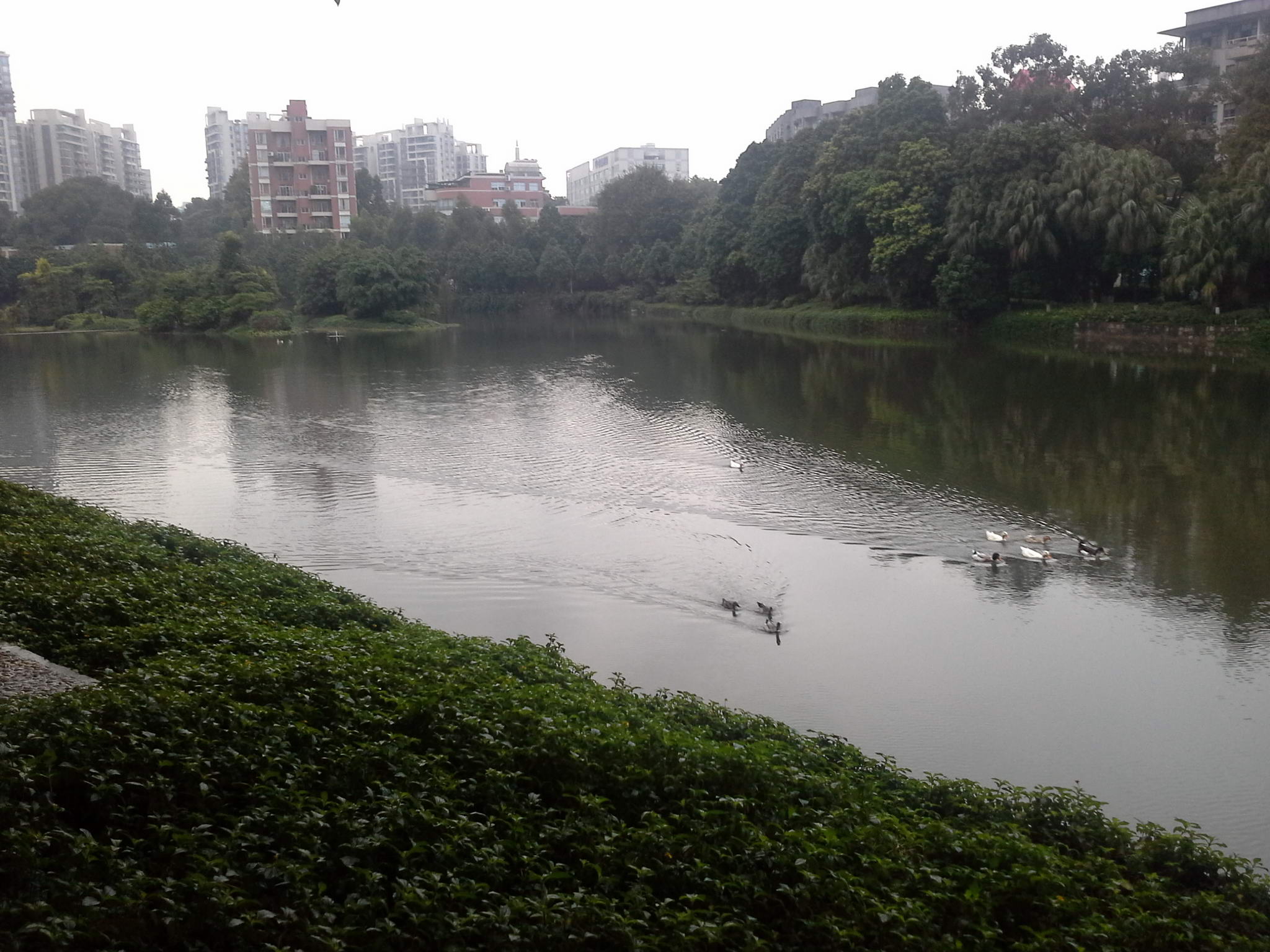
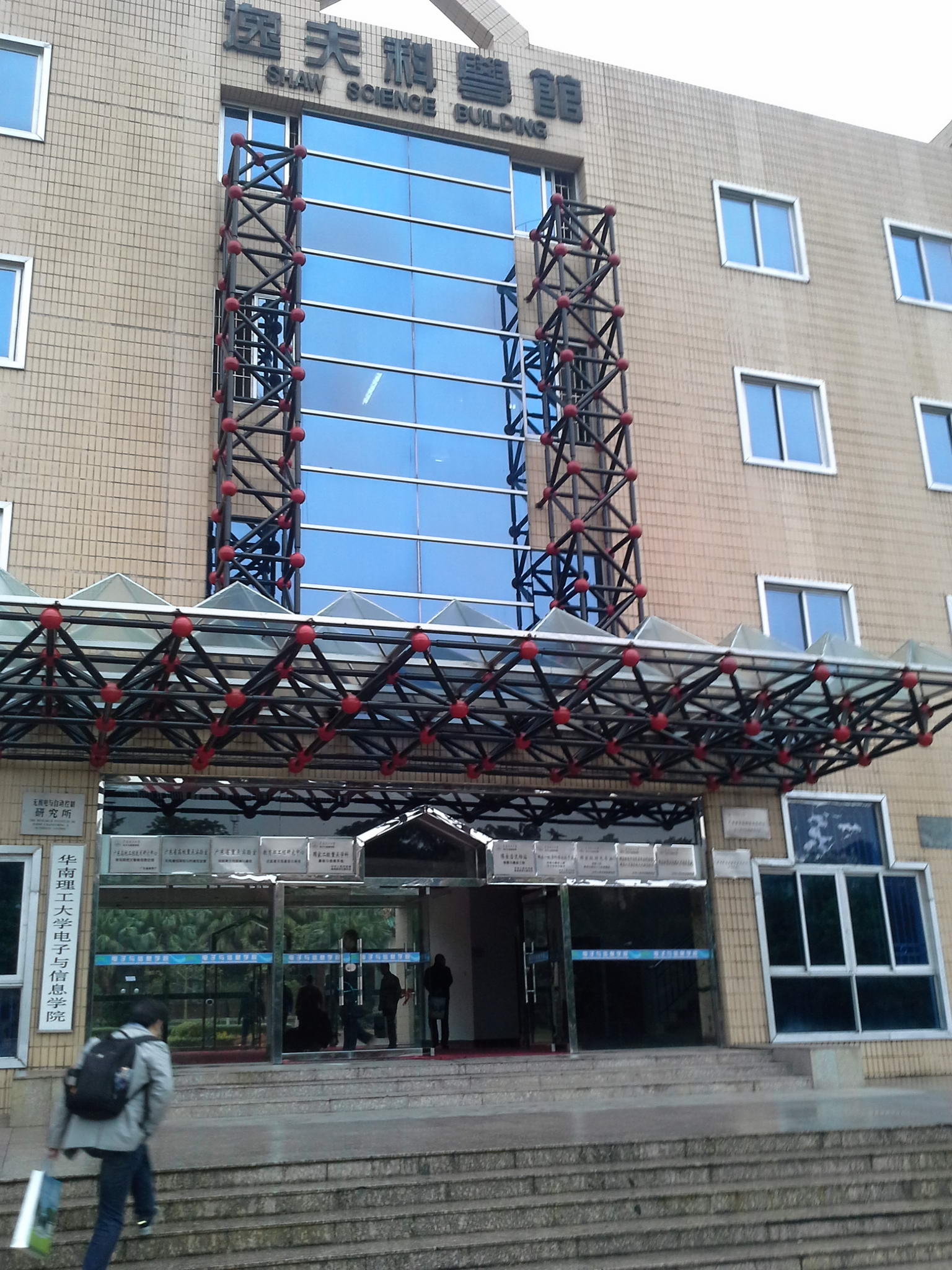
We arrived at South China University of Technology a little after four and checked into the West Lake Garden Hotel on campus. The campus environment was excellent, with rippling blue water and green trees providing shade; the drizzling rain and flowers blooming everywhere made it feel as if one would rather linger there than return north. Although Guangzhou had been having light rain for days, the climate was still warm, and both the shuttle bus on the way over and the hotel room itself were surprisingly air-conditioned.

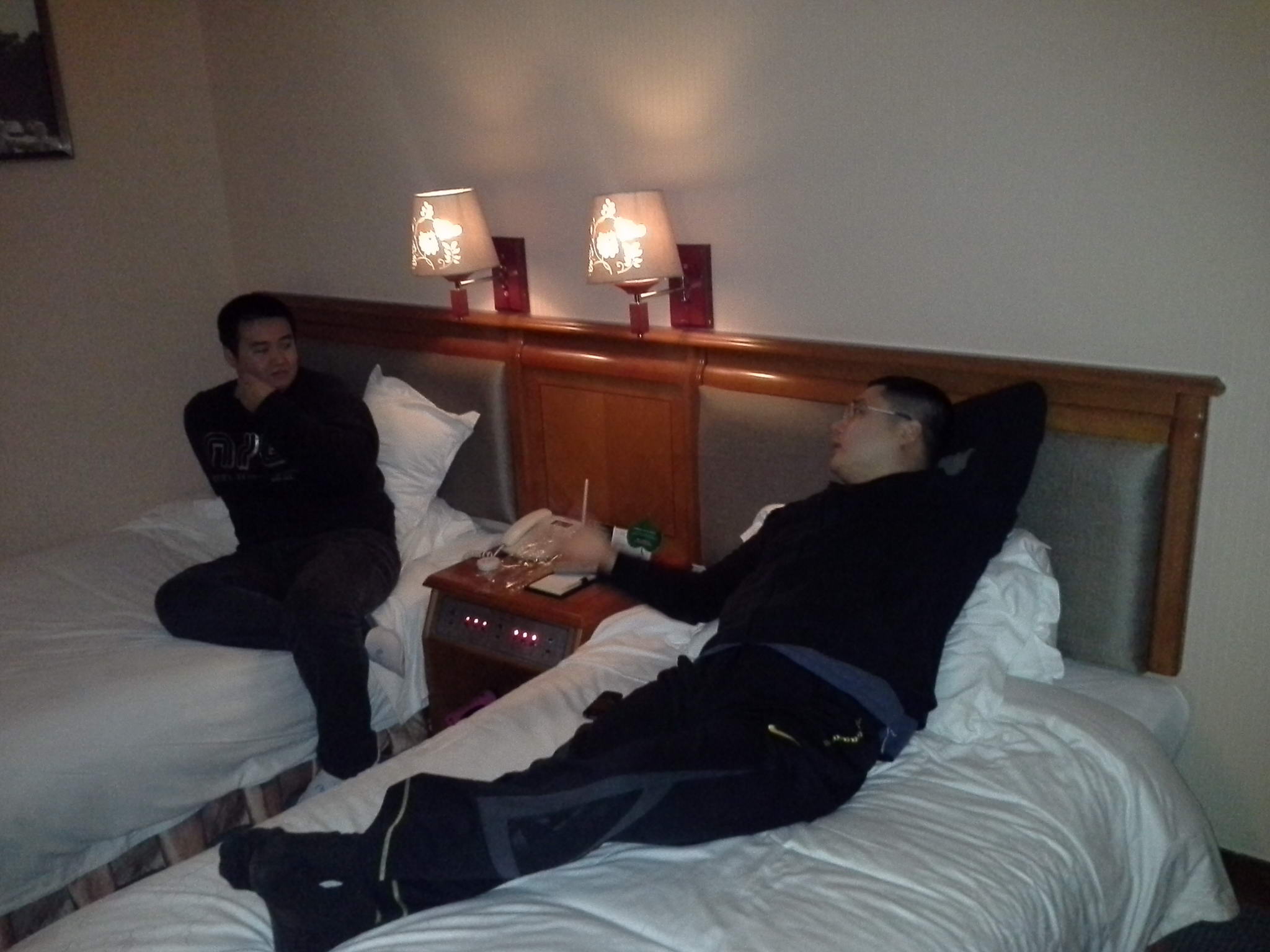
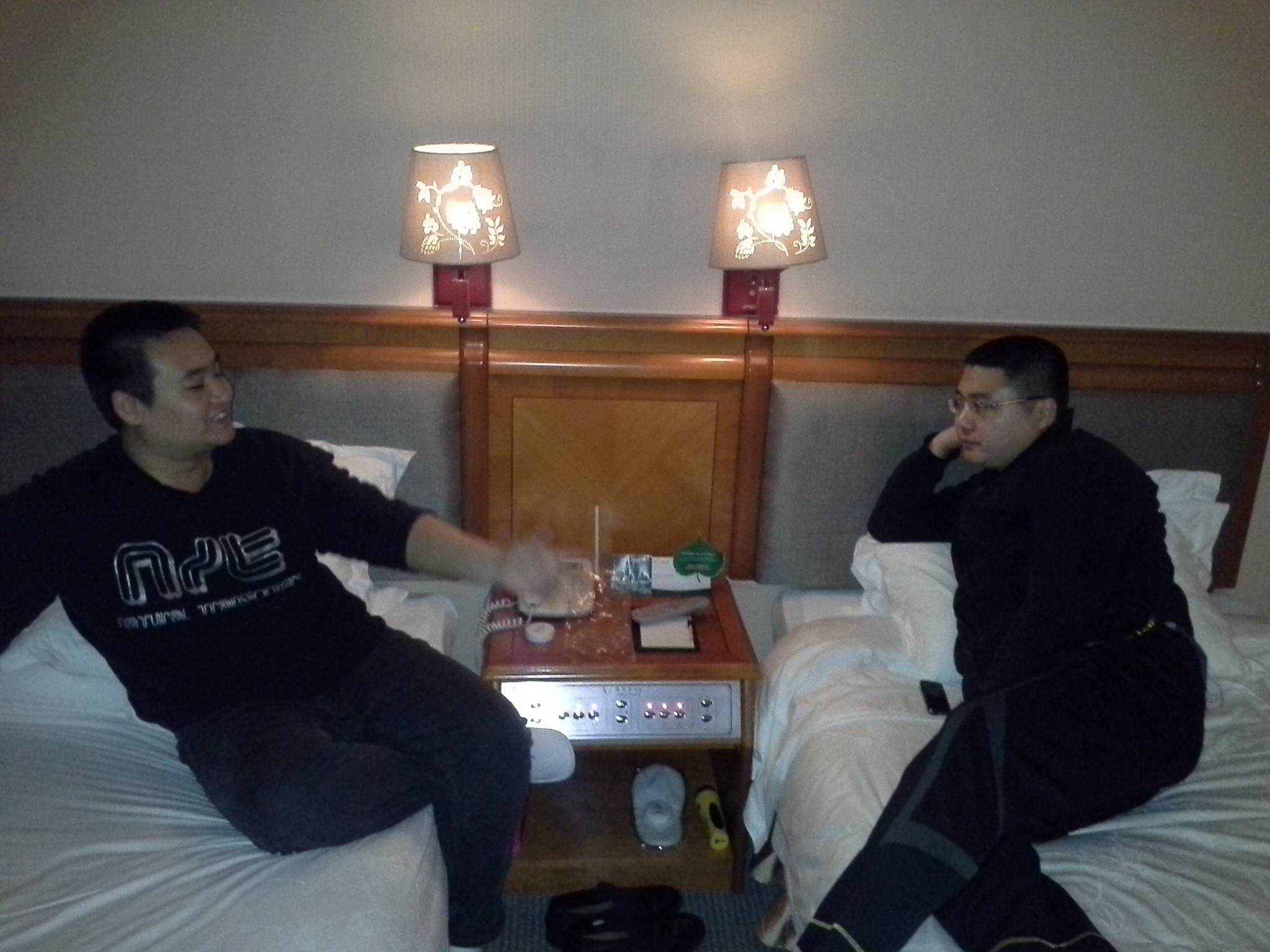
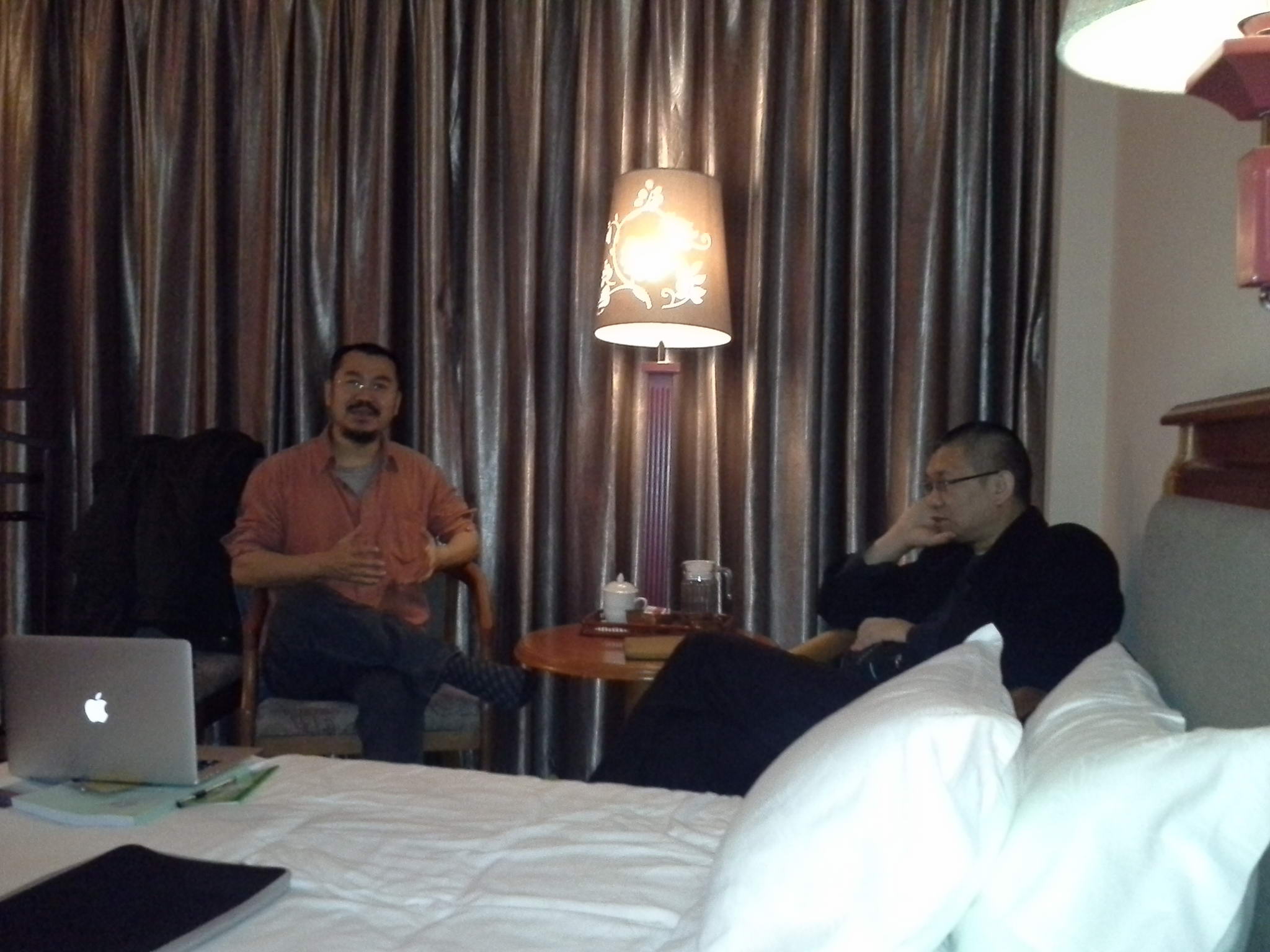
Jing Qi and Jin Shixiang were assigned to one room, while Teacher Tian Song and I were assigned to another. In the afternoon, since Teacher Tian had not yet arrived, after settling in I went to Qi Jing’s room to chat with them. The main topic of conversation was academic matters. During the discussion we talked about how Qi Jing’s oral explanations were clearer than the articles he wrote, and suggested that he should write more freely in the future, perhaps in a more colloquial style, rather than deliberately compressing and making things elliptical, with clarity of exposition taking priority. We also talked about how Teacher Tian’s “questioning of garbage” could be taken up as a very good topic in natural philosophy or intellectual history for further investigation. Qi Jing accepted our suggestions, so next week he will talk about the garbage issue in a more open manner, and I may write another piece to respond to it.
The hotel conditions were very good, both in terms of environment and service, especially the quality of the staff from dining to room management, which is something hard to come by in the north. There was wireless signal in the guest rooms, and I also discovered a free good-night milk service. While Teacher Tian hadn’t arrived, I ordered a cup →_→. Although a cup of milk isn’t worth much money, it was really a very considerate service, and it made one feel quite comfortable.

At eleven at night Teacher Tian finally arrived, and Teacher Jiang Jinsong soon came over to chat with him as well. Teacher Tian was going to comment on Teacher Jiang’s report, and both of them were especially serious: one was still constantly revising his report, while the other was also constantly revising his comments.
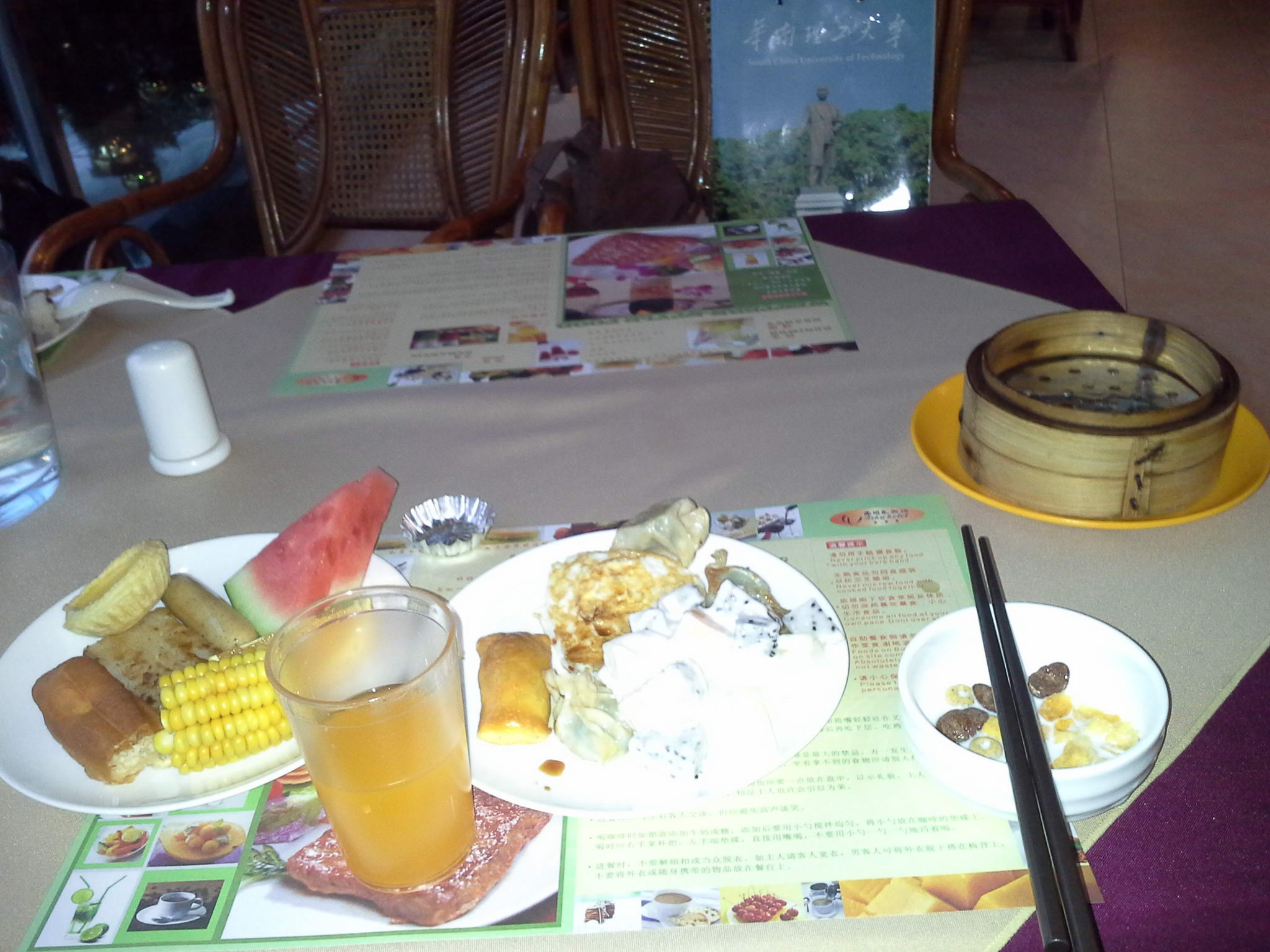
Nothing happened through the night. The next morning we got up early for the buffet breakfast, which not only offered a rich variety but also tasted very good. In particular, the unlimited Cantonese dim sum, wontons, noodles, and rice noodles were especially impressive. Lunch was also buffet style, but with the Cantonese dim sum and wonton noodles missing, it somehow felt a bit less satisfying. In any case, there was nothing to complain about regarding the food on this trip. Of course, some people may think Cantonese cuisine is too light, but for people from Shanghai it was just right.
Now we formally enter the conference section:
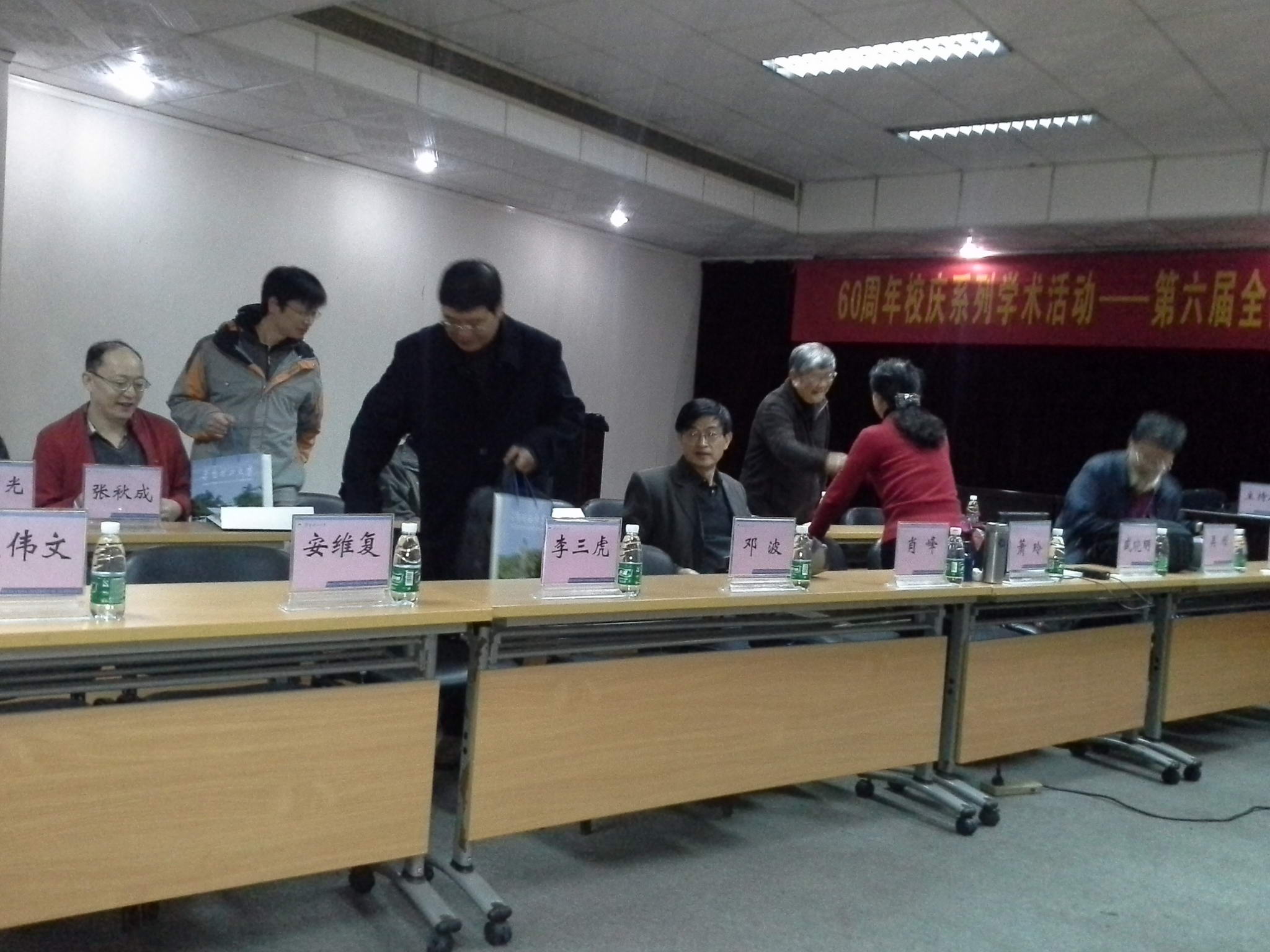
This conference had a total of 34 paper presentations, and the schedule was arranged very tightly. The presentations were divided into several types: the “full version” consisted of a 20-minute presentation, a 10-minute designated commentary, and 10 minutes of open discussion; there were also forms consisting of a 20-minute presentation plus 10 minutes of open discussion; a 15-minute presentation plus 5 minutes of discussion; and a 20-minute presentation with no discussion.
At 8:00 on December 1 the conference officially began. In the first session, “Opening Ceremony and a Phenomenological Prelude,” chaired by Teacher Wu Guosheng, the host institution’s vice dean of the School of Marxism, Teacher Wu Guolin of South China University of Technology, delivered the opening remarks.
Teacher Duan Weiwen of the Chinese Academy of Social Sciences gave the first presentation: “From Acceptable Science to Multiple Realities.” Teacher Duan believed that “one of the common inferences of phenomenology, existentialism, and pragmatism is that science is a humanized artifact aimed at constructing multiple realities… the essence of contemporary science is technological.” One feature of this technologized science is that “and” takes priority over “is,” and operation takes priority over assertion. Teacher Sheng Xiaoming gave the commentary. Teacher Sheng said that he had drunk too much yesterday, and at first he seemed to understand, but after hearing the whole thing he felt he no longer understood it. Of course, this may not have been merely a matter of Teacher Sheng’s drinking. Teacher Wu pointed out incisively that Teacher Duan indeed did not explain himself very clearly, though he did write somewhat more clearly. But to be honest, when I later went back to read Teacher Duan’s text, I still felt my head grow rather big. The key point is that this programmatic report involved too many threads. Just the main resources Teacher Duan himself listed in the abstract included “Bashar, Hacking, Latour, Arendt, Deleuze, Varna, Law, Mol,” and so on; the actual text would also bring in a whole array of heroes such as middle Plato, Marx, Hume, Popper, Kuhn, Foucault, and others. To gather so many lines of thought into a single narrative thread inevitably makes one overwhelmed. Perhaps Teacher Duan himself can handle his overall line of thought and summon all the various schools and doctrines at will, but for readers the pressure of interpretation is relatively great.
Moreover, through such a grand gathering, the subtle differences among the views and concepts of various thinkers may be bypassed. For example, Teacher Wu pointed out that Teacher Duan introduced Arendt’s concept of “action,” but in Arendt, action and fabrication, action and working, are clearly distinguished, whereas when Teacher Duan spoke of “fabrication as action,” he seemed not to have noticed this distinction. In short, because I did not really understand Teacher Duan’s report, I will not comment too much on it. But I do think that the fact that it is hard to understand is not entirely the reader’s responsibility. Teacher Duan once told me privately that McLuhan’s text was too loose and scattershot, but in a certain sense Teacher Duan himself also seems to have quite a wild, freewheeling postmodern style.
The second presentation was by Tsinghua’s Wu Tong: “Body and Space in Chinese and Western Medical Diagnostic and Treatment Practices.” Starting from the diagnostic and treatment scenes of Chinese and Western medicine, Teacher Wu Tong carried out a reflection. Chinese medicine is “going to see the doctor,” centered on the body, whereas Western medicine is “seeing a disease,” centered on illness. Behind different forms of diagnosis and treatment lie different conceptions of the body, and conceptions of the body in turn involve the disciplining of spatial structures. Modern Western “space” is objectified and standardized, whereas the space of Chinese medicine is more natural and intersubjectively penetrated. A technologized body requires different modes of response, and in this way one can understand the different diagnosis and treatment methods of Chinese and Western medicine. Teacher Xiao Ling gave the commentary, adding that related reflections may help us understand the current doctor-patient relationship. She believed that in Western medicine the doctor-patient relationship is mediated by machines, replacing a human-human relation with a human-machine-human form.
In the free discussion, Teacher Jiang Jinsong pointed out that traditional Chinese medicine also distinguishes yin and yang in the body; it is a battlefield where the forces of the right and the evil are locked in combat, and it is not necessarily merely about speaking of overall balance. In addition, there are all kinds of power relations in traditional Chinese medicine, while Western medicine also has special diagnostic and treatment relationships such as private doctors, so one cannot generalize. A teacher from Guangzhou Medical University asked whether the “specialization into disciplines” of Western medicine is ultimately a result or a cause. In Teacher Wu Tong’s formulation, this disciplining of space fundamentally comes from a certain national political consciousness, a standardized power system; under this spatial order, “the body too must be standardized.” But on the other hand, Teacher Wu Tong also says that the “two medical views of the body” “determine” that the objects of treatment in the two kinds of medicine are different: Chinese medicine takes the complete body as its object, while Western medicine takes separable diseases as its object. So which comes first, the “view of the body” or the division of space? That does seem, indeed, to be a question. Of course, in my view, the very idea of seeking a linear, one-way causal relation is itself modern. Since we have already uncovered the connection between views of the body and spatial separation, there is no need to insist on determining a clear causal relation. Finally, Teachers Pan Enrong and Sheng Xiaoming both pointed out that Teacher Wu Tong’s method of analyzing Chinese medicine is too Western, failing to combine China’s own traditional lines of thought and concepts. This criticism is correct, but I think it need not necessarily be corrected. Modern scholarship is basically established on the tradition of Western learning in the first place, so using the methods of Western learning to carry out reflection is the basic approach. Of course, going further, we can delve into the tradition itself and recreate the ancients’ context; that is the task of historians of thought. But as far as Teacher Wu Tong’s interests are concerned, he has no need to do so.
However, Teacher Wu Tong’s problem is that even within Western learning, this work is still not sufficiently deep; for example, the references to the thought of Merleau-Ponty and others are rather superficial, without deeper excavation or elaboration, and without critical pursuit. He merely rather crudely introduces some claims or distinctions, with a bit of the flavor of “waving a big banner to draw a tiger’s skin.” Of course, as Teacher Wu Guosheng said in his concluding summary, the “old comrades” represented by Teacher Wu Tong persist in exploration, keep thinking, and every year can bring out quite original new results; this is commendable. Compared with Teacher Wu Tong, Teacher Wu Guosheng, who for several years running has not produced a complete article and even had no article this year, forms a stark contrast ←_←.
After the tea break and photos, the second session, “Phenomenology and Philosophy of Science I,” began, chaired by Teacher Wu Tong.
The first paper was **Meng Qiang**’s report, titled “’The More Constructed, the More Real’—On Factishism.” The article he brought was a long piece called “Things, Reality, and Politics,” and the report focused only on its third section. Meng Qiang believes that the factishism proposed by Latour (factishism = fact + fetish) can be a third option beyond “scientific realism and anti-realism.” Teacher Duan Weiwen commented that Meng Qiang’s formulation is a bit like “wave-particle duality”—reality and construction are two sides of one coin, but when you see reality, you do not see construction; when you see construction, you do not see reality. I think this analogy is apt. Teacher Duan said that Meng Qiang’s route is an eclectic one, and Meng Qiang disagreed, saying that it is a route that pleases neither side.
In the free discussion, Teachers Jing Qi and Li Zhangyin both criticized Meng Qiang’s discussion of Heidegger. Meng Qiang mentioned that Heidegger improperly opposed “object” to “thing,” claiming that only the latter is a “gathering” in which the fourfold converges, whereas Jing Qi pointed out that Heidegger only distinguishes objects from things on a certain specific level, but in comparison with the “standing reserve” brought forth by modern technology, both “object” and “thing” are also gathering-like. Teacher Li Zhangyin believed that Meng Qiang had precisely flattened the tension between object and thing in Heidegger, because he misunderstood the “object” Heidegger was talking about in a specific context as the “object” Latour was talking about. But Meng Qiang maintained that he did not wish to repeat Heidegger’s formulations; the implication being that, however many subtle points Heidegger may still have, he is not particularly moved by them.
Basically speaking, Brother Qiang’s viewpoints and interests have many points in common with mine, and routes such as “moving toward a history of things of knowledge” have an echoing affinity with my own program of a “history of media.” But the difference is that Meng Qiang strives to break away from Heidegger or even earlier philosophers and move closer to newer postmodern theories, whereas I am more inclined to return to Heidegger, and even to Kant and Aristotle. I believe that the new route I speak of has long been contained within the possibilities opened up for us by classical philosophers, but Meng Qiang is dissatisfied with classical philosophy, with phenomenology, and with practical philosophy, and seeks to “forge a new path.” For example, when it comes to dissatisfaction with the binary opposition between scientific realism and constructivism, my own route is to trace backward, back to Wittgenstein, Heidegger, or back to instrumentalism, conventionalism, and even transcendentalism. Whether it is Wittgenstein, Heidegger, Bohr, Poincaré, or Kant, in fact no one from the very beginning was denying “reality”; they were merely trying to redefine the meaning of the word “reality” in different ways. Kant’s theory can be said to be “the more subjective, the more real,” and Poincaré can be “the more conventional, the more real.” Therefore I choose to return to Kant with the perspective of philosophy of technology and historicism, and to seek the third path, or rather the original path, by reaffirming traditional philosophy. The so-called “scientific realism” and constructivism that rose to prominence in the late twentieth century have both gone astray; the way to deal with going astray is to retreat, return to the starting point, and walk again from there, rather than continuing to move forward along the modern and postmodern routes.
In addition, Meng Qiang does not seem to distinguish fact, actual fact (fact), and the real, reality (real). Generally speaking, “realism” refers specifically to realism, but factishism and Meng Qiang’s writing both involve fact, and these two concepts are still very different. Realism (whether medieval realism or scientific realism) generally emphasizes whether there is a corresponding “substance” behind a “concept” (the common nouns of the Middle Ages, and in modern times terms such as atoms and electrons). Realists believe that “‘electron’ is real,” that is, that there is substance behind the word; instrumentalists believe that words are merely tools, but they can acknowledge the same “experimental facts.” No one thinks that the whole of scientific theory is illusory; the disagreement lies only in how to understand specific scientific terms. The reality of the “electron” is an idol constructed by theory. This view is not new; it is not some new path beyond realism and anti-realism, but nothing more than the original anti-realist position.
The second paper was **Xu Zhu** from the University of the Chinese Academy of Sciences, “How Can the Idea of Practicing Transcendental Philosophy Be Realized in the Philosophy of Science?” Xu Zhu believes that Kant’s transcendental philosophy contains two basic dimensions: first, the “constructive nature of transcendental consciousness,” and second, the “foundationalist transcendental normativity.” The former emphasizes the subjective construction of knowledge, while the latter emphasizes the objective rules of knowledge. But tension exists between these two, and the development of contemporary philosophy has taken routes that preserve one side or the other: from Neo-Kantianism to logical positivism, the emphasis is on salvaging normativity, while from phenomenology to the philosophy of scientific practice, the emphasis is on maintaining constructivity. Xu Zhu believes that both of these routes are biased, and the way out should be to seek a path that, in a new sense, insists on both at once. Teacher An Weifu from East China Normal University gave comments. He affirmed that Xu Zhu’s work is a useful attempt to “return philosophy of science to the history of thought,” and he added that Kant’s a priori judgments actually come from Newtonian science.
Teacher Duan Weiwen asked: before discussing “how to practice transcendental philosophy,” why should one first ask why transcendental philosophy should be practiced at all? I think this is not really a problem. Xu Zhu explains transcendental philosophy’s core as a certain argument about determining the “necessary conditions” in logic, and that seems a bit too rigid. In my view, transcendental philosophy is first and foremost a way of asking a question—how is knowledge “possible”? This is a question that philosophers after Kant could not evade. In a certain sense, the whole of contemporary philosophy is the consequence of practicing transcendental philosophy, only the manner of practice differs: some people give up this aspect, while others give up that aspect. But in any case, inheriting the tradition of intellectual history is our natural destiny; if one says we should give up this entire tradition, then we in turn have to ask: how is that possible?
Teacher Li Zhangyin mentioned that Rouse leaves behind Kant’s first person and uses third-person things to construct third-person things, attempting to use empirical things to construct transcendental things, and is not discarding normativity out of a desire to reinforce constructivity. Jing Qi pointed out that Neo-Kantianism not only includes the Marburg School, which leans toward positivism, but also the Southwest School, which leans more toward phenomenology, so one cannot generalize. These issues actually reflect that Xu Zhu’s binary distinction seems rather rough. Whether in terms of theoretical content or in terms of distinguishing actual schools of thought, this binary appears too broad. In fact, in a certain sense it can be said that every thinker will certainly attend to both the normativity and the constructivity of knowledge; they simply interpret them in different ways. Xu Zhu’s binary method highlights two possible theoretical developments, which is still suggestive, but whether this distinction precisely constitutes the historical division between the corresponding camps of philosophers is still worth exploring.
The third paper was Teacher **Tao Jianwen** from South China University of Technology, reporting on “A Study of the A Priori Legitimacy of the Mathematization of Quantity.” Teacher Tao distinguished “quantity” into “extensive quantity” and “intensive quantity.” He believed that the mathematization of extensive quantity is direct and a priori legitimate, whereas the problem lies with intensive quantity; Teacher Tao believed that “conversion into extensive quantity is the basis for the a priori legitimacy of the indirect mathematization of intensive quantity.” Teacher An Weifu gave comments, summarizing Teacher Tao’s key points and affirming his style of writing, which concentrates on small questions.
Teacher Li Zhangyin pointed out that this issue is very important, but that in Husserl’s *The Crisis* there was already a discussion of the mathematization of “secondary qualities,” and Teacher Tao had not paid attention to Husserl’s literature. Teacher Wu then pointed out that Teacher Tao was in no way doing more than repeating the distinction medieval scholastic philosophers made between “extensity” and “intensity,” and that this distinction in essence concerns which sense has priority. The primacy of extension comes from visual centrism.
Teacher Tao disagreed with reducing the relationship of precedence between extensive quantity and intensive quantity to the precedence of various senses. He emphasized that another key feature of intensive quantity is that “it is very difficult for us to find a third-party scale that can directly measure intensive quantity.” For example, we cannot find “a stretch of hardness” or “a stretch of temperature” the way we can find “a stretch of length.”
Indeed, whether one can separate out “one unit” can be said to be the distinction between some senses and other senses, but the question is whether this distinction is precisely the difference between so-called extensive quantity and intensive quantity. Teacher Tao compared length and hardness, but did not notice certain ambiguous zones, such as brightness and weight. With our eyes closed, when we feel the weight of an object, we can not only distinguish heavy from light, but can also distinguish a certain unit of weight; we can feel that the weight of one kilogram is equivalent to the weight of two jin. We can also feel how many candles the brightness of a light bulb is equivalent to. In theory, the units of “kilogram” and “candela” do not a priori require being converted into extensive quantity in order to be recognized, yet they are “intensive quantities.” On the other hand, although extensive quantities can distinguish a unit of “one portion” by reference to a third party, they also have a certain deficiency. For example, when length loses all reference to a third party—when, for example, a shape appears all alone in the visual field of one eye—if you are not allowed to move your body or use any other object or any other means to assist, if you do not know how far the object before your eyes is, and are given only this visual impression, then “length” loses its meaning, whereas color and brightness still remain meaningful. Compared with length, which must rely on a background of reference in order to be perceived, some other so-called intensive quantities are more direct. Without the assistance of other tools or other senses, they still present themselves as a degree. Speaking of susceptibility to illusion, vision concerning length is also unreliable, because people are easily influenced by reference objects, and this error has no limit; in the right setting, we can even make a person appear taller than a mountain. By contrast, errors in the perception of temperature can never be boundless in any case: a furnace fire will never be colder than ice, and a feather will never be heavier than a mountain. The reason length measurement can become more objective and precise is entirely because we ultimately found the assistance of standardized measuring techniques such as the ruler. But when speaking of direct givenness, or the directness of what is given, sensations such as hot and cold, dry and wet, light and heavy, bright and dark, seem to be more advantageous. That is to say, in terms of objective precision achieved a posteriori and with regard to actual technical means, “length” is indeed somewhat superior. But in the sense of a priori legitimacy, are not those more direct sensations the more primary ones?
The fourth paper, also the last one of the morning, was Teacher **Jin Shixiang**’s “The Origin and Crisis of Modern Science—An Interpretation of *Phenomenology and the History of Science*.” This report suffered two uncontrollable fatal blows. First, it was scheduled for the last session of the first morning, the worst possible time slot (on the second day everyone may perhaps have been a bit more adapted to things), and people were already thinking about lunch, so the quality of listening was bound to be greatly reduced. Second, the computer prepared by the venue was running Office 03, so the pptx file Teacher Jin Shixiang had prepared in advance could not be opened. Later reports by other teachers improved this situation, but Jin Shixiang became the sacrifice and could only hurriedly read from his manuscript in confusion. Under this double blow, the effect of this report was rather poor, and the audience found it difficult to grasp the main argument and key points of the paper. The commentator, Teacher Li Zhangyin, pointed out that the main purpose of this report was to suggest a historiographical route of a “phenomenological history of science,” and noted that Jin Shixiang’s writing was rigorous and cautious, but that there was still not enough reference to Husserl’s texts and not enough attention to Heidegger. Jing Qi offered some defense for Jin Shixiang; after all, the point of this article was not to interpret Husserl, but rather to use Husserl, especially the work of Klein, to suggest a phenomenological method of historiography. As for the introduction of Heidegger, that is also a concern of mine. Of course, as far as this article is concerned, not citing Heidegger is still complete and rigorous, but I am more concerned with a Heideggerian phenomenological history of science. I raised the related issues in the post-discussion seminar’s “Discussion on Intentional History and Actual History.”
Coming back in the afternoon, the third session, “Phenomenology and Philosophy of Technology,” was chaired by Teacher Sheng Xiaoming, but Teacher Sheng was quite late, so the meeting began on its own.
The first paper was Teacher **Deng Bo**’s report, “Philosophy of Language and Technology as First Philosophy.” Teacher Deng began with Plato and Aristotle, saying that Western philosophy has two paths: one is ontological metaphysics (inquiring into the being of beings), and the other is substantialist metaphysics (inquiring into primordial substance). What has continued from ancient natural philosophy to modern realism is the substantivist route, whereas in modern philosophy, especially in philosophy of language, substantivist metaphysics is rejected and ontology returns to the center. Philosophy of technology also represents a developmental direction of ontology as first philosophy. Teacher Deng believes that the ontological question is fundamentally the question of “how language can map reality.” Philosophy of language and technology as first philosophy “means taking language technology as the starting point, and through operations of written technology constructing models of being…”
Teacher Zhao Weiguo commented that Teacher Deng seemed to have some “retrogression,” and that the first part’s account of ontology and substancism as first philosophy was somewhat disconnected from the final part’s claim that philosophy is nothing but the drawing of language. Teacher Wu was even sharper in criticizing Teacher Deng for “retreating back before phenomenology,” merely replacing “essence” with “language,” while still clinging to a rigid opposition between matter and spirit, divided into intellectual technology and material technology, without phenomenologically classifying technology.
The criticism of regression may perhaps be inappropriate. Teacher Deng seems to be trying to accomplish a grand mission by retreating in order to advance, returning once more to the original pursuit of Greek metaphysics, while also using the proposition that “philosophy is nothing but a product of language” to dismantle the entire metaphysical tradition from the root. But the problem is that Teacher Deng seems to have retreated without advancing: he pays too much attention to the macro-level grasp of the whole history of philosophy, while making no obvious progress in his grasp of “language” and “technology.” He still merely emphasizes the statement “philosophy is a product of language technology,” but his understanding of what language is and what technology is still remains in a certain commonsensical mode, or in the “rigid” mode Teacher Wu mentioned. Teacher Deng believes that Heidegger’s treating language as a tool blocks the path of reflection, but he did not notice the unique dimension of reflection opened up by Heidegger’s re-interpretation of language. The force of these insights far surpasses a simple definition like “language is intellectual technology.”
Of course, Teacher Deng’s attempt to root philosophy of technology in the history of philosophy and to establish for it a certain position as first philosophy is something I strongly support; this in fact is also what I myself am doing. However, the entire history of philosophy is tangled and interconnected with too many things; to grasp it comprehensively in such a sweeping way within a short essay is somewhat overreaching, and Teacher Deng also did not explicitly use certain theoretical resources as support. As a result, the whole report seemed rather hollow. My own choice is to focus on the issue of the unity of consciousness in transcendental philosophy and to borrow Stiegler as support; that gives me a bit more confidence.
Following that, the second presentation was by Hu Yilin (myself): “Media History as a Transcendental Philosophy.” The content can be seen on my blog, so I won’t repeat it here in self-promotional fashion. Once again, it was Professor Zhao Weiguo who provided the commentary. Professor Zhao pointed out that I was in fact deconstructing transcendental philosophy through a kind of hermeneutic circle. He also mentioned that Kant’s own three syntheses may not necessarily have weaknesses, since once time is introduced, Kant’s theory turns inward and becomes circular. Professor Zhao was right. First of all, I think Kant’s philosophy is basically self-contained, and internally speaking, almost flawless; I was not trying to attack Kant’s philosophy, so whether it has weaknesses or not is not really the issue. But the coherence of Kant’s philosophy is still historical, and in this respect I indeed was using a hermeneutic circle to deconstruct Kant’s philosophy. However, I still retained the concept of “transcendental philosophy,” because I do not identify transcendental philosophy entirely with Kant’s philosophy. I believe that “transcendental philosophy” is precisely a certain kind of “first philosophy” that has continued since ancient Greece, only to be most explicitly reintroduced by Kant, but by no means as Kant’s private property. So what I have deconstructed can be said to be Kant’s transcendental philosophy, but I believe I am still continuing along the path of transcendental philosophy, still answering the “transcendental question.”
During the free discussion period, the teachers were very eager to speak, and in the end we went over time, so I was not allowed to respond. This situation occurred many times at this conference. In the end, Teacher Tian and others voiced their protest, arguing that not allowing people to throw punches, or not allowing responses, was unfair. I also agree with this: the presenter should not deprive the audience of time for questions, and the audience should also leave the presenter one or two minutes to respond; all of this should be carefully managed by the moderator.
Teacher Wu first helped defend me by pointing out that my article involved the question of the intelligibility of history, and that Stiegler’s analysis of the three syntheses provides an important entry point for technology’s entry into philosophy. Teacher Wu also believed that the importance of the three syntheses should be reversed: the third synthesis, or the technological synthesis, ought to come first. I do not entirely agree with this last point, because what I was expressing was only that the three syntheses constitute a certain “circle” among themselves, a mutually grounding relationship, but what it means to be “first” is difficult to say. Of course, in terms of the entry point to recollection, technology is the nearest thing we first encounter; in that sense, the status of the third synthesis as “first to bear the brunt” is also not wrong.
Teacher Xiao Feng asked about my concept of “media” here. He pointed out that I was either using it in the narrowest sense, specifically referring to language, or in the broadest sense, as synonymous with technology, but that I had not addressed the general meaning of media, namely those technologies specifically used for information exchange. That is correct. In fact, if considered independently as an article, it might be better to use the word “technology”; it is only because this article is one link in my overall doctoral dissertation plan that I kept “media” as the title. There are many considerations behind my choice of “media.” First, of course, is to bring in the resources of the media ecology school. Second, the word media more strongly emphasizes the intermediary character of “through …”. Third, the structure of “media—content/information” will be very useful. Of course, the usual meaning of media as “the intermediary of information exchange” will indeed be one of the central topics of discussion, and I also want to expand the intention of “exchange” to the broad sense of media, that is, to the concept of technology in general. General technology, including a hammer, is also a kind of “message,” within which the structure of exchange is implied.
Teacher Duan Weiwen asked whether, in the developed conditions of modern media, this would produce a kind of total forgetting. Teacher Duan also gave an example: after digitizing the Encyclopaedia Britannica, convert that digital value into a score between 0 and 1, and then carve a mark in the corresponding place on an iron rod; thus the entire Encyclopaedia Britannica becomes this iron rod with a single notch. Teacher Duan did not elaborate on the implications of this thought experiment; as I understand it, this example has to do both with “total forgetting” and with the essence of recording technology. It is obvious that the Encyclopaedia Britannica is not merely a scratch, even though it can be inscribed as such a scratch. But without an entire set of inscription and decoding technologies, this scratch itself is meaningless. In fact, isn’t the paper Encyclopaedia Britannica also like this? Without an entire system of language and writing technologies used by people to make the words on the page decodable, those black characters on white paper would also be meaningless. Any technology in fact entails such a whole set of “encoding—decoding” procedures; the meaning of technical objects is rooted in the entire world. If we strip away the worldliness of technical objects and treat them as isolated lumps of matter, then technical objects will become as absurd as that iron rod. But the reason we feel it is easier to sense that a book is “information-rich” than that an iron rod is is because the very activity of our initial “seeing” already contains a set of “decoding” procedures: we can directly decode the lines on the page into meaningful words, but we cannot directly see information in an iron rod, because through study and training we have already internalized the procedures for interpreting writing within our bodies. But the procedure for interpreting the iron rod is too complex to be internalized as bodily technique. Still, this is only a matter of degree. For example, staff notation can be understood as a method of encoding in which a certain position’s “scratch” corresponds to a specific piece of information. An untrained person cannot directly “read” musical notation, but needs some external assistive translation in order to turn staff notation into music; yet after training, one may directly see the notation as leaping musical notes. As for so-called “total forgetting,” it may refer to a situation like this: for example, after we externalize memory using overly complex technologies, because the encoding procedure is so complicated that it can never be internalized as a bodily procedure, and can only be decoded through complex technical means, then once we lose those technical means, we can never retrieve those externalized memories. However, this risk of forgetting is more often a risk for individuals only. For example, I use some complex cipher to record my own thoughts, and my encryption method is entirely private; then once I myself forget this coding method, I will be powerless before the ciphers I recorded. Yet technology belongs not only to each person, but to the shared world of coexistence. The reliability of my personal memory is precisely guaranteed by others in common life; without the world of interaction, I might even have difficulty distinguishing dreams from reality. When we externalize memory through encoding, we are not only entrusting memory to “technical objects,” but also entrusting it to others, entrusting it to human history. In this sense, the development of media will generally not lead to total forgetting. However, it does require memory to acquire a certain publicity. Those ancient memories transmitted privately, refusing publicity—such as primitive myths and sacred knowledge—do indeed face the risk of total forgetting. Of course, such a risk was inherent to these kinds of knowledge from the beginning, but modern technology and its globalization have intensified the extinction of cultural diversity, and objectively led to an increased risk that certain ancient forms of knowledge will be forgotten.
Teacher Li Zhangyin pointed out that Kant’s third synthesis recognizes experience under a concept of “one,” and asked whether the diversity of technology might cause cognition to fragment. In any case, the experiential object, which may appear in multiple guises, possesses an internally unified integrity; this is the starting point of my question. As for whether this “one” of unity must precisely be guaranteed by the concept of “one,” I do not think so. On the contrary, the “one” of the concept itself must come from the object. Why is “apple” a single concept rather than the two concepts “ap-” + “-ple”? Why is watermelon a single concept rather than the two concepts “water” + “melon”? These “concepts” themselves become “one” only within the corresponding context. In this respect, Chinese, especially Classical Chinese, is more obvious than Western alphabetic writing. Alphabetic writing tends to treat words one by one as independent entities—but before printing, even Western writing had not yet formed clear spacing; the use of spaces is a relatively recent thing. In other words, the fact that “concepts” can be split into “one by one” is not something natural. It is not because we first are able to split a concept into “one,” and only then can form a unified cognition of things. On the contrary, the independence of concepts itself is the result of various specific cognitive activities and technical environments. The reason the identification of “concepts” has not become “fragmented” is precisely that concepts are first and foremost technological.
In addition, Teacher Tao Jianwen, Teacher Zhang Qiucheng, Teacher Lei Depeng, and others also raised questions or suggestions. I no longer remember the specifics and cannot respond further. Thanks to all the teachers for their guidance.
The third presentation was by Teacher Li Sanhu from the Party School of the Guangzhou Municipal Committee, “Technology and Body Politics: A Phenomenological Perspective.” Since this report followed directly after my own, I was still immersed in the various questions raised by the teachers, questions that had not been given time for me to answer, so I did not listen to this presentation very attentively. This article involved many cutting-edge issues, including bodily politics, feminism, and other fashionable fields, but as Teacher Meng Qiang seemed to say in his commentary, the overall feeling was still rather vague, not sufficiently integrated. Teacher Wu commented that the “authentic body” said by Teacher Li to be lost in technology still carried a kind of essentialist anthropological flavor. Teacher Li admitted this, believing that critique requires setting up prototypes, such as the technology-free “ape man.” Of course, I think this theory of prototypes is problematic and unnecessary, but that would take too long to discuss; in any case, the bulk of the first volume of Stiegler’s Technics and Time is actually devoted to criticizing Rousseau’s prototypical anthropology.
After the tea break came Session 4, “Heidegger and Others I,” chaired by Teacher Deng Bo.
The first presentation was by Teacher Wu Guolin, “Phenomenological Reflections on the Wave Function.” This time, Teacher Wu Guolin used ontological difference to explain the relation between the wave function and particles—particles are beings, while the wave function is the being of beings. Teacher Wu Guosheng gave the commentary. Teacher Wu (when I say “Teacher Wu,” I am by default referring to Teacher Wu Guosheng) said that Wu Guolin speaks about quantum mechanics every time, because his essentially non-phenomenological way of thinking is always “beaten up” by other participants. Teacher Wu said that this time he wanted to prevent the host from suffering such a tragedy again. So Teacher Wu offered several positive evaluations of Teacher Wu Guolin. First, he revealed the priority of “relation” over the “relata”; the “wave function” is essentially a relation, and establishing its ontological status implies a new kind of relational realism. Second, he pointed out that the intertwining of past, present, and future as manifested in quantum mechanics has some superficial connection with phenomenological theories of time; this connection may be more than merely verbal, and its deeper meaning remains to be explored. Third, he pointed out that quantum technology as ontological difference—that is, the collapse of the wave packet caused by quantum measurement—does in fact bear a certain formal similarity to the difference between Being and beings. This similarity is probably not accidental either and deserves in-depth exploration.
Teacher Wu’s positive comments did not prevent on-the-floor criticism. For example, Teacher Tian Song sharply criticized Wu Guolin’s text as full of “a quantum fog built from conceptual piling-up,” an inescapable “ghost of realism.” Teacher Tian pointed out that the wave function is not some thing that preexists before measurement; quantum theory holds that before measurement there is no real thing at all.
In any case, although Teacher Wu Guolin insists year after year on his stubborn interpretation of quantum mechanics, it is clear that he is indeed exploring continuously. Though his use of phenomenology is never able to fully satisfy us, he still manages to come up with some new ideas every year. By comparison, Teacher Tian Song’s thinking on quantum mechanics has a somewhat unprogressive air about it. Over so many years, he can’t just keep living off the old stock of his doctoral dissertation, occasionally borrowing a bit of Wheeler to oppose realism. Teacher Tian merely uses quantum mechanics as a destructive tool, but seems not to have made much deep progress in the philosophical reflection on quantum mechanics. In this respect, Teacher Tian should really learn from Teacher Wu Guolin.
Speaking of which, the reason I moved from science to the humanities in high school and began to take an interest in philosophy was also due to my astonishment at quantum mechanics. The problem of quantum mechanics has always been a concern I cannot put down. I once thought that intuitionism could nicely crack the mystery of quantum mechanics, and after encountering phenomenology I came to some deeper thoughts. For example, when chatting privately with Jin Shixiang, I mentioned that the philosophical essence of quantum mechanics is a return from Platonism to Aristotle, a return to Aristotle’s concept of motion that solved Zeno’s paradox. So quantum theory is actually not a new paradox, but precisely the final solution to Zeno’s paradox, the final adjudication in the dispute between Plato and Aristotle. If there is an opportunity, I will elaborate further.
The second presentation was by Teacher Li Zhangyin, “An Unending Argument — Refuting Carnap.” Teacher Li said that this was a question he had been “suppressing for 30 years,” and that he wanted to refute Carnap’s criticism of Heidegger. Carnap criticized Heidegger as a typical metaphysician, and Heidegger’s “the nothing nothings” was cited as a typical meaningless statement to be criticized. Teacher Li believed these criticisms were wrong: Heidegger was first of all not a typical metaphysician, and his elaboration of nothing also had its own rationale. Teacher Yan Qingshan from East China Normal University gave the commentary. He believed that, in fact, both Carnap’s criticism of Heidegger and Li Zhangyin’s criticism of Carnap were all mixed-up cultural criticism. The key to understanding Carnap’s criticism lies in understanding what metaphysics looked like in Carnap’s mind. Relative to the metaphysics in Carnap’s mind, Heidegger may indeed have been typical. Heidegger’s ambiguity in the use of concepts is precisely what Carnap wanted to criticize, and in this respect Carnap’s criticism is reasonable. Teacher Yan believed that Heidegger was pursuing precision rather than clarity, and therefore had to move toward ambiguity. For example, “red” is a clear expression, whereas “dark red,” “bright rose-red,” and so on are more precise expressions, but at the same time they are precisely more ambiguous. Teacher Yan’s distinction here is very interesting, but I think that Heidegger’s use of seemingly equivocal language, beyond this so-called intention of precision, has a deeper consideration, namely the spirit of what is called “formal indication.” Heidegger does not regard words as labels that are attached, in a clear or precise way, to some object to be defined, but as a kind of medium of formal indication or situational disclosure. Heidegger tries to open up a space of thought with his language, intending to open the reader’s vision rather than to fix or focus our vision on some ready-made object. Therefore, each word or proposition Heidegger says cannot be analyzed in isolation; it must be interpreted in context. Of course, as Meng Qiang later also criticized, Teacher Li here still seems too eager to defend Heidegger and does not show the weightier accumulation one should expect after 30 years of study, especially by neglecting important texts such as Walking Paths. The merit of Walking Paths is that it does not rush to draw a clear boundary between Heidegger and Carnap, but instead precisely asks about the deeper origin of the fact that they eventually drew that boundary.
The third presentation was by Teacher Bao Guoguang, “Five Paths Toward Technology Based on Heidegger’s ‘Ontology’.” Teacher Bao reviewed various early and late strands of Heidegger’s thought and summarized five paths for pursuing technology: 1. through “being-in-the-world” (existence); 2. through nature (generation); 3. through works of art; 4. through the “four causes”; 5. through “thing-space.” Teacher Wu Guosheng gave the commentary. Teacher Wu first expressed admiration for Teacher Bao’s “unswerving” devotion to studying Heidegger. Of course, in a sense this is also a criticism, because according to Teacher Wu’s academic ideal and expectations for the field of phenomenological philosophy of technology, what is desired is that one can also come back out after going in—one must ultimately play phenomenology oneself after learning phenomenology. After plunging into Heidegger’s profound forest, Teacher Bao seems somewhat unable to extricate himself, as if he has forgotten to leave Sichuan once he got there. Teacher Wu pointed out that the second point Teacher Bao mentioned is especially important, namely that the concept of “nature” contains “technology.” This is also the insight Teacher Wu has recently wanted to develop (too bad I haven’t written it out yet). Teacher Wu believes that the Greeks constructed natural philosophy because of their mastery of technology. Finally, Teacher Wu criticized Teacher Bao for listing the five paths but not further exploring the connections among them. Teacher Wu believes that the second and fourth paths are interlinked, and the third and fifth are interlinked, and that in the end they all arrive at the same destination by different routes. I also very much agree with this criticism. We know that the work of inductively summarizing the gist of a chapter can be used to test whether a person’s “reading comprehension” is accurate, but this work is not very meaningful if the goal is to help others understand the original text. On the contrary, a summary broken down into items may instead dismember the original author’s overall, coherent line of thought, not only failing to help others truly “read through” the original author, but even more likely causing misleading cherry-picking of isolated passages.
Jing Qi raised questions about many of the details in the article. For example, he thought that the “tool” Heidegger discussed in his early writings could not be equated with “technology”; that μορφή [the setting that enters into appearance] puts the emphasis on “enters into appearance” and should not be abbreviated as “setting”; and so on. As for the point that “tool” differs from “technology,” I do not entirely agree with Jing Qi’s distinction. Of course the vocabulary and prose style of Heidegger’s early and later periods differ greatly and cannot be simply mapped onto one another, but this criticism also applies to Jing Qi himself: he connects his early doctrine of “formal indication” with later things like Ereignis, and I have always felt that those correspondences are rather dubious. By contrast, the correspondence between tool and technology is more direct, because they already correspond to each other in everyday language. And Heidegger would never ignore the connections inherent in the concepts themselves and arbitrarily define some concept’s usage from thin air; his use of concepts is always rooted in the history of the concepts themselves. So if we say that a tool is nothing more than one everyday understanding of technology, then the problem of tools and the problem of technology do not belong to separate domains.
The fourth paper, and also today’s final one, was brought by Zhang Xiaoming of the School of Tourism at Sun Yat-sen University: “The Urgency of Construction: On Harvey’s Academic Construction of Heidegger.” Zhang Xiaoming comes from a background in human geography and was attending our conference for the first time. He brought a paper defending Heidegger, pointing out that a citation of Heidegger by a certain contemporary giant of geography, Harvey, was clearly a case of taking things out of context. I offered some comments: if Harvey really did cause the geography community to seriously misunderstand Heidegger (though in fact that does not seem to be the case; on the contrary, it may even have had a positive promotional effect), then this paper might be somewhat interesting if shown to colleagues in geography. But for us, it did not have much point. Whether as an elucidation of Heidegger’s own thought or as a possible introduction of phenomenology into human geography, this paper did not offer much that was new. Moreover, the criticism of “taking things out of context” is not enough to invalidate Harvey’s own significance, because whenever a great academic figure quotes another scholar, it is often a case of “the Six Classics explain me,” and this is perhaps even more obvious in Heidegger’s case. If one tries to restore things purely on the textual level, there are probably even more cases of taking things out of context. From our standpoint, there is not much interest in writing yet more defenses of Heidegger. On the contrary, Harvey and other human-geographic thinkers mentioned in this paper interest me much more, especially when it comes to questions of “locality.” What we hear most often are science philosophers or science sociologists talking about “local knowledge” and such issues, but the way human geographers speak about them also seems very much worth attention; after all, “place” was originally also a problem of “geography.”
Thus the first day’s conference came to an end. In the evening I went out for a walk, bought a cup of scraping tea that was even more bitter than medicine, and, not checking the map, wandered about aimlessly and got lost. It took me more than an hour to work my way back, and I was exhausted enough to collapse into sleep; nothing happened that night.
At 8 o’clock the next morning, Session 5, “Heidegger and Others II,” began, chaired by Professor Li Zhangyin. This session all used the format of 15-minute presentations plus 5-minute discussion. In actual practice, however, the discussion time was often squeezed down a great deal.
The first paper was Professor Shu Hongyue’s “Technology for Dasein: From Inauthenticity to Authenticity.” Heidegger opposed the authentic and the inauthentic—that is, technological—life, while Stiegler regarded technology as the authentic construction of Dasein’s existence, opening up a new task for ontological research. Professor Wu and Senior Brother Dazhi, among others, raised some questions. Since I did not really understand Professor Shu’s presentation or paper very well, I will not comment much.
The second paper was given by Professor Zhang Qiucheng of Northeastern University, on Heidegger’s Distinction between Ancient Technology and Modern Technology. Professor Zhang argued that Heidegger’s “enframing” also applies to ancient technology, and that Heidegger conflated ancient technology with art, thereby obscuring the real difference between modern and ancient technology. Professor Zhang distinguished them through “transparency” and “obscurity.” Jing Qi raised some objections, and with a touch of irony—though afterward he said he had not meant it ironically—he said that Professor Zhang’s paper was a “major breakthrough” in Heidegger studies, but that he disagreed with it. Jing Qi thought that the continuity between ancient and modern technology lies in the fact that both are some kind of “solidified preservation,” while modern technology pushes this to the extreme and moves toward “constant availability,” and so on. These views are all addressed in Jing Qi’s own articles.
In my view, Professor Zhang Qiucheng’s so-called obscurity and transparency are not really different from Jing Qi’s notions of preservation and stockpiling. What I said last year in “Is Heidegger a Technological Pessimist?” was something similar: summoning and ordering, the hallmark of modern technology is that it leaves “no room to spare.” But in any case, this level of distinction is not a new insight beyond Heidegger himself.
Professor Zhang Qiucheng also argued that Heidegger “only saw one side of the silver plate as a work of art and ignored the production process of the raw material of the silver plate.” He pointed out that silver mining depended on slavery, and that slaves could be said to be a kind of “energy resource” in ancient Greece, whose condition of being “placed” was even more severe than in modern technology.
On this point, Jing Qi offered a rebuttal: in ancient Greece, slaves were not regarded as human beings, so the fate of slaves, in context, was not a human issue. This rebuttal seems a bit forced. In my view, there are three more ways to rebut it. First, so-called “craft” does not primarily refer to things or artifacts, but to human activity; such activity is thus also a kind of “unconcealment,” a kind of “bringing-forth.” When Heidegger analyzes the silver plate, the focus is not on the silver plate as an objective thing, but on the artisan’s “gathering.” If one wants to compare this with the corresponding link in modern technology, the proper example would be the plates produced as commodities on an industrial assembly line. The distinction between ancient and modern technology is first of all made at this level; second, “ancient” and “modern” are not primarily an objective temporal boundary, just as there can be ancient technology in the modern world and, of course, “modern technology” in the ancient world. Slavery in a certain sense has modernity. Professor Zhang Qiucheng was right to say that “seeing slaves as the forerunners of modern machines.” That is why Mumford, when speaking of the “megachine” of modernity, traced the earliest megachines back to the pyramids of ancient Egypt. When technology critics criticize modern technology, what they often mean is that modern technology strips people of freedom and turns them into slaves. But this does not mean that the age of slavery was somehow more modern than modernity; third, even if ancient slavery contains certain roots of modernity, the oppression of human beings by ancient slavery is still different from the way modern technology places human beings. Professor Zhang Qiucheng mentioned that “if slaves disobeyed, at best they would go hungry or be whipped… at worst they would be executed; the miserable condition of slaves in ancient Greek society was even worse than the condition Heidegger describes of modern people being turned into stock.” But the difference between ancient and modern lies precisely here: the condition of modern people is not miserable. Ancient slaves “disobeyed” and therefore had to be whipped; modern workers “obey”—but whose instructions are they obeying? It seems they are all doing so consciously and willingly, for the sake of their own livelihood. The problem lies here: submission becomes compliance, life becomes livelihood, and obeying the master becomes obeying the logic of technology. That is the pre-placement of human beings by modern technology.
The third paper, by Shi Xianming of Luoyang Normal University, was “Heidegger’s Thought on ‘Thing’.” It was basically a synthetic overview, and I did not listen very closely… Professor Wu pointed out that factuality should be translated as actuality rather than reality; Professor Zhao Weiguo then discussed the concept of reality further, pointing out that reality is nothing but “something with content.”
The fourth paper, by Wen Zhiqian of Nanjing Normal University, was “A Comparative Study of Heidegger and Habermas on Technology.” This was his master’s thesis; in the conference proceedings only an abstract was included, and at the venue he merely read the beginning and ending of the full text. Professor Sheng Xiaoming said on the spot that he was “very dissatisfied,” saying that Wen’s attitude was basically to throw the beginning and the end at us: “You figure it out.” What are we supposed to do about that? Professor Sheng also questioned what significance there could be in comparing figures from two different systems of thought. Wen Zhiqian said he wanted to reveal the internal tension in German thought as it faced the problem of modernity.
The fifth paper was given by Jing Qi, a student from Peking University, entitled “Toward an Ecological Phenomenology of Natural Philosophy—A Review of Fritsche’s Dwelling in the Earth.” The paper Jing Qi had originally prepared was the one printed in the table of contents as “The Third Peak of Natural Philosophy.” This paper was reassembled by him from a previous book report within one hour at Wu’s request. In that sense, the result was still quite good. Jing Qi is working hard to shift from being a researcher of Heidegger to being a user of Heidegger’s thought, turning his gaze away from Heidegger’s texts and toward more practical issues. Ecological phenomenology is also a breakthrough he only recently found, and his work in this direction will be worth watching. But one formal problem with this paper is that it was almost entirely indirect quotation—only each subsection title had a note giving the page range from the book (often spanning dozens of pages), meaning that each subsection was actually a condensed version of Fritsche’s original, yet there were no direct quotations within the subsections at all. This means that if we want to check whether Jing Qi has quoted some point correctly, we are forced to reread entire chapters, or even the whole article, of Fritsche! In addition, Jing Qi only added a section of his own comments at the end, rather than interweaving commentary with exposition. In short, this paper might perhaps be called a “guided reading” or even serve as a preface to the book, but it is hard to call it an academic review. In the discussion phase, Meng Qiang suggested that one should consult natural-philosophical works by Schelling and others—I suspect this suggestion was a bit retaliatory, because Professor Sheng Xiaoming had suggested that Meng Qiang should consult Hegel and the like, and Meng’s reaction seemed to be that it was not very necessary or relevant. This time, it was a case of using his own medicine against someone else.
The sixth paper was Wang Xianwei of Jilin University’s “Environmental Philosophy Based on Experience—The Current State and Significance of American Ecological Phenomenology Research.” His focus in “ecological phenomenology” was completely different from Jing Qi’s: he was not emphasizing natural philosophy, but rather how to provide a legitimacy claim for “intrinsic value” grounded in “experience.” He pointed out that the relation between humans and nature is grounded in an initial “encounter,” a “casual glance,” and that an examination of this “first reaction” would be the basis of ecological ethics. Professor Wu and others discussed Wang Xianwei’s understanding of “experience”; in phenomenology, experience and idea are in a certain sense the same thing. Wu Ningning pointed out that Wang Xianwei’s treatment of “experience” as another term distinct from “experience” is obviously problematic—aren’t they the same word in the original? Wang Xianwei defended himself by saying that this is indeed two usages of the same word and therefore there are two translations, but this was obviously not very convincing. This detail shows that Wang Xianwei still seems to lack sufficient sorting-out and probing of “experience,” the central concept of his article.
The seventh paper was Dong Xiaoju of the University of the Chinese Academy of Sciences, “Technology and the Good Life—A Study of Borgmann’s Philosophy of Technology.” Dong Xiaoju flew with us, and on the way she thought she did not have a presentation to give (Professor Qiu had not made it clear to her), so after arriving in Guangzhou she only then prepared her ppt; nonetheless, the result seemed pretty good. The talk mainly concerned Borgmann’s philosophy of technology, as inheritance and development of Heidegger, with the focus on technology as a “focal thing.” A typical example of a thing as focal thing is the stove hearth (which is also the etymology of “focal”)—“The stove hearth cannot be seen merely as a device for providing usable goods; rather, as a focal thing it plays a crucial role in a household. Around the stove hearth, the members of the family play different roles and jointly participate in the activity of warming themselves, and the rich connotations of the world of things unfold accordingly.”
Zhang Qiucheng suggested that a clearer comparison should be made between Borgmann and Heidegger, specifying exactly in what ways Borgmann developed Heidegger. Indeed, Dong Xiaoju mainly talked about Borgmann’s inherited aspects. In my view, if one wants to say where Borgmann “develops” Heidegger, one need not begin from Heidegger’s later “enframing”; the key lies in revealing the “co-presence” implication of technology. Heidegger does mention “co-presence,” but only vaguely and without probing it deeply; Heidegger’s philosophy is basically solitary. Borgmann, however, reveals here the connection between “tool phenomenology” and “co-presence”: a tool as tool manifests itself precisely in relations of human co-existence, and human relations are in turn precisely given in technological environments. Things as focal things reflect human “roles.” Only in this way can we more easily understand why the problem of modern technology is precisely the problem of modern society, the problem of communication.
The sixth session, “Ihde and Heidegger,” was chaired by Professor Li Sanhu.
The first paper was Wu Ningning’s “Is Ihde’s Philosophy of Technology Phenomenology?” Wu Ningning first commented on Ihde’s famous four modes of the “human-technology” relation, pointing out their “unsolved mysteries.” He argued that Ihde evaded the key question of “how the embodiment of technology is possible,” and that this was not accidental but was due to Ihde’s overly ready-made understanding of the “human-technology” relation; at a fundamental level, it was related to Ihde’s “misreading” of phenomenologists such as Heidegger and Merleau-Ponty. Professor Sheng Xiaoming gave a response and disagreed with Wu Ningning’s conclusion that Ihde is not phenomenology. This is because phenomenology itself does not have a clearly fixed trajectory; Heidegger and Merleau-Ponty were likewise deviating from Husserl’s path, and the extent of their deviation was by no means less than Ihde’s. Getting entangled in whether or not something is phenomenology does not fit the consistent aims of our conference. Professor Wu helped Wu Ningning respond to Professor Sheng’s criticism: Professor Wu pointed out that Professor Sheng’s criticism was too “external” and did not go into Wu Ningning’s specific arguments. Professor Wu believed that phenomenology’s divergence and convergence must have tension, and that sometimes making distinctions at the level of name is still meaningful for consolidating our academic position. Ji Haiqing pointed out that Ihde himself once said phenomenology was his “burden,” and that he did not care whether he was sufficiently phenomenological or not. Yao Dazhi clearly took Wu Ningning’s side, arguing that Ihde’s naturalistic tendency was too strong.
The second paper, by Su Li, was “A Phenomenological Examination of Early Bird.app.” It was also, in fact, a criticism of Ihde. Early Bird is an iPhone app launched by Starbucks. Su Li pointed out that this app cannot be made to fit Ihde’s four categories, and then analyzed why Ihde’s categorization fails: because Ihde ignores that perception is always perception in action. Ihde treats the body as a mere organ of perception rather than an organ of action. Su Li’s article has two parts; the second part, criticizing Ihde from the perspective of action, is very good. But the first part’s analysis of Early Bird actually committed a basic error, which I pointed out at the time: Ihde’s categories are four modes of the “human-technology” relation, not a division into four kinds of technology. Thus, with regard to the same technological artifact, the human relation to it can of course be multiple; a hammer may sometimes be in an embodied relation, sometimes in an alterity relation, and even interpretive or background relations are possible, let alone a multifunctional app. In addition, some teachers thought that an app is software, whereas the technological unit of analysis should be something实体, like the iPhone. I do not agree with this. Software can perfectly well be the object of technological reflection. Even if software always runs attached to hardware, the hardware at that point is more like a “background,” just as when we use any other “hardware,” we are in fact always relying on some technological background. A pen depends on paper, a lamp depends on electricity, a train depends on rails, and software merely makes this fact more conspicuous. More striking is the technology of the “network,” which seems not to have any single technological entity called a network at all, and yet we do in fact have the behavior of “going online” and “using the network.” The key point is that technology first resides in our “action,” and is not first of all a mere object of perception. If we think in terms of “action” as the center, technology is precisely those conditions that make action possible. The reality of technology comes from the externalization and preservation of action procedures; in this sense technology is first and foremost “software,” “program,” and “code,” and only secondarily is it fixed onto certain objective objects.
The third paper, by **Ji Haiqing** of the Shanghai Academy of Social Sciences, was “**Overcoming the Fate of the Metaphysical with Rich Experience—Idhe’s Critique of Heidegger’s Philosophy of Technology and Its Significance**.” Unlike the critical papers before it, this one defended Idhe’s position. Ji Haiqing argued that Idhe “criticized Heidegger’s philosophy from three perspectives: historical experience, anti-romanticism, and anti-essentialism.” Of course, we “Beijing faction” generally do not agree with these criticisms. Jin Shixiang raised objections to the so-called critique of romanticism, and Ji Haiqing said that “the romantic Heidegger likes art and belittles technology,” while Jin Shixiang believed that this showed that Idhe (including Ji Haiqing) had not understood Heidegger’s intellectual intention in discussing art. I have always thought that Heidegger was neither romantic nor knowledgeable about art; in matters of art, he was essentially a “country bumpkin.” Heidegger was entirely approaching art from the standpoint of a pious thinker, and had nothing whatsoever to do with “romanticized aesthetic appreciation.” In addition, I feel that the so-called “anti-essentialist critique” is also highly problematic. What Idhe seized on was that Heidegger, in *The Question Concerning Technology*, spoke at length about “the essence of technology,” and took this to be essentialism. But in late Heidegger, “essence” is actually just an ordinary word, like when we say in writing that “basically it is so and so,” “the fundamental point is…,” or “the essence is…”; this does not mean that using such words implies foundationalism or essentialism. Whether Heidegger’s talk about the essence of technology or the essence of truth is really essentialism cannot be judged merely from such issues of phrasing. The key is whether, in his theoretical structure, Heidegger is in fact fixated on these “essences.”
After returning in the afternoon, the 7th session, “Special Reports,” was chaired by Teacher Xiao Feng. Each paper was allotted 20 minutes with no discussion, though in practice discussion still took place if the speaker saved time.
The first paper, by **Pan Enrong** of Zhejiang University, was “**The Path of Modern Philosophy of Technology**.” Pan Enrong defined his own position as “an engineer’s perspective leaning toward analytics,” and described the contemporary “empirical turn” and “naturalist approach” in philosophy of technology. The so-called “empirical turn” was a program in philosophy of technology proposed relatively recently, in 1998; if this indeed represents a new trend in international scholarship, then Pan Enrong’s citations really do help broaden our horizons. However, the kind of philosophy of technology he mentioned is not actually the philosophy of technology that concerns us. Phenomenological philosophy of technology, especially that starting from Heidegger (and under Teacher Wu’s banner), is in fact a kind of philosophy of technology as “first philosophy,” rather than a branch of philosophy that takes technology as its object of study. Although the empirical turn Pan Enrong mentioned also means paying greater attention to the “epistemological problems of technology,” this epistemological priority is understood as asking whether technology can have its own distinctive epistemology and logic of inference, just like science. Philosophy of technology as first philosophy, however, is not really aiming to open up a special epistemological problem, but to answer general epistemological problems starting from technology. Of course, this is not to say that this departmental-philosophy version of philosophy of technology has no significance; it is simply to say that these two levels of philosophy of technology have their own developmental dimensions. But insofar as philosophy of technology as a departmental philosophy is concerned, there is also a basic issue of positioning, because much of what Pan Enrong actually discussed could be classified as “philosophy of engineering,” but is philosophy of engineering the same as philosophy of technology? Pan Enrong distinguishes engineering from science, and sets “design” culture alongside scientific culture and humanistic culture as a “third culture.” I think this distinction is interesting, after all science has always been different from engineering, and engineers have a certain independent path of glory. But can engineering and technology also be further distinguished? Why can’t technology be the fourth culture, with medicine as the fifth, and so on? In fact, the domain called “technology” in the contemporary world often specifically refers to information technology, within which a distinct culture known as “geek” culture has already taken shape; this culture is unlike science, engineering, or literature, yet it has some relations with all of them. Of course, the representative figure of ancient technology, the artisan, is also different from the engineer. In short, if Pan Enrong’s article were titled “The Empirical Turn in Contemporary Philosophy of Engineering,” that might be more appropriate. But once the title is set as “philosophy of technology,” then the legitimacy of that title itself must first be defended.
The second paper, by older brother **Yao Dazhi**, was “**An Overview of Contemporary French Philosophy of Technology**.” Brother Dazhi introduced the distinctive situation of French philosophy of technology: in fact, what emerged in French was “technics studies” rather than philosophy of technology as a research field. This resulted in a particularly broad scope for “technicians” in France, encompassing several major streams: empirical and historical studies focused on technology; anthropological, ethnological, and sociological studies; epistemological studies; and ethical and metaphysical studies, among others. Some important French technologists had long been overlooked by the English-language academic world, and brother Dazhi offered some introductions. Time ran out, so there was no discussion.
The third paper, by **Zhuoli** of Fudan University, was “**‘Geisteswissenschaft’ and the Turn to Two Worlds**.” Zhuoli understood Dilthey’s contribution as a “turn to two worlds,” namely that “the world of natural science and the world of the humanities are two worlds that are mutually ruptured.” But this claim is highly questionable. The original words from Dilthey that Zhuoli quoted were: “From the facts of the mechanical order of nature, one cannot derive psychological facts or spiritual facts.” Although I am not familiar with Dilthey, even from this sentence alone I cannot see the conclusion that there are two worlds mutually ruptured. What is emphasized here is the limitation of scientific method, the boundaries of knowledge, rather than the establishment of a boundary between worlds. This is like saying that “the sea cannot be measured by pecks,” that a balance scale cannot weigh a mountain, and that an axe cannot split bacteria: each tool, each method of measurement or calculation, has its own limits of applicability. Scientific method, including experimental methods and logical reasoning, is not an all-purpose measuring instrument; like a peck, a scale, or an axe, it applies only to certain specific objects. But that does not mean those objects must thereby constitute an independent world.
The fourth paper, by **Chen Zhiguo** of Shandong University, was “**Heidegger and Strawson: The Same Reading of Metaphysics**.” Chen Zhiguo compared Heidegger and Strawson, respectively as pillars of continental philosophy and analytic philosophy, in their readings of the metaphysical tradition: Heidegger divides metaphysics into essential-transcendental ontological metaphysics and existential-transcendental theological metaphysics; Strawson, for his part, distinguishes descriptive metaphysics from revisionary metaphysics (the former seeks, on the basis of ordinary language, to reveal the conceptual structure with which we think about the world, while the latter attempts to provide some picture of the world that transcends ordinary thought). Chen Zhiguo believes that these two philosophers’ distinctions and understandings of metaphysics have certain points of comparability and, in some respects, can even complement each other. Research that “compares” philosophers from two very different schools is full of risk, and Chen Zhiguo was aware of this, but he still “went forward despite the danger,” opening up some possibilities of dialogue between the two major academic camps in the contemporary world. If I have any dissatisfaction, I would say that Chen Zhiguo’s work still mainly concentrates on laying out certain formal correspondences between the views of the two philosophers, and does not deeply reveal their more profound tensions. That is to say, they are not only comparable, but ideally should also be able to “compete” with one another; only then does comparative research become truly interesting. And we generally feel that the approaches of continental philosophy and analytic philosophy differ so greatly that there is simply no way for the two to enter into “opposition,” because they are not even on the same playing field. Theories developed along different dimensions may present certain structural similarities, but that does not mean they can be placed together to compete with or dialogue with each other, unless we have found some level on which they are in direct conflict.
The fifth paper, by **Yan Qingshan** of East China Normal University, was “**The Phenomenological Significance of ‘Being’ as a Second-Order Predicate**.” Although this article in form seemed to borrow certain phenomenological expressions, such as epoche and intentionality, it was basically all in the vein of analytic philosophy’s linguistic analysis. I am rather skeptical of this approach, and not very interested in it, so I did not listen carefully.
The sixth paper, by **Li Yunfei** of Southern Medical University, was “**Husserl and Kant’s Transcendental Idealism**.” I also did not take notes on this report, and have forgotten how it was presented on the spot. In any case, the appearance of such a grand title was already quite suspicious. Each section in turn also introduced various major keywords, and it was not very clear what the author wanted to do; it seemed as though he wanted to give a general survey of the philosophies of Husserl and Kant. The references were basically Husserl’s, interspersed with a small amount of Kant, and it was basically some sort of reading notes, but lacking a sense of problematics.
The 8th session, “Phenomenological Philosophy of Science II,” was chaired by Teacher Xiao Ling.
The first paper, by **Teacher Xiao Feng**, was “**From Phenomenology, Looking at ‘Manifestation’ in Information Technology**.” Compared with Teacher Xiao’s report last year, which “interrogated” phenomenology, this year Teacher Xiao could be said to have gladly accepted some phenomenological perspectives and used them quite vividly. Teacher Xiao took “manifestation” as the key term linking research on information technology and phenomenology, and raised some rather good questions, for example: Can manifestation in information technology be regarded as the manifestation of things themselves? Can Heidegger’s theory of enframing be used to analyze information technology? How should technical manifestation and natural manifestation be balanced? and so on. I still criticized Teacher Xiao for opposing “technical manifestation” to so-called “natural manifestation,” and I think Teacher Xiao could go further. As early as Kant, it had already been made clear that the “thing in itself” (the natural thing) cannot possibly “manifest” itself; even in so-called “natural manifestation,” human forms of cognition are still involved, and we may further think that these forms of cognition are technical in nature. Even visual perception with the naked eye includes the use of bodily technique, recording techniques as memory, or technical environments as background, and so on. Teacher Xiao’s title could in fact not only be “From Phenomenology, Looking at Manifestation in Information Technology,” but also “From Information Technology, Looking at Manifestation in Phenomenology.” One can use the schema of “information—display” to interpret phenomenological concepts. I think Teacher Xiao need not rush to convert to phenomenology; it might be better to continue insisting on information technology research as his foothold, and then turn around to question the basic concepts of phenomenology. That may be more interesting.
The second paper, by **Teacher Lei Depeng**, was “**Husserl’s Critique of Modern Science’s ‘Amnesia’**.” Teacher Li Zhangyin raised some doubts about certain statements, and Jin Shixiang emphasized how important it is to understand the relationship between early Husserl’s critique of historicism and late Husserl’s historical turn.
The third paper, by **Teacher Lei Liang**, was “**A Preliminary Discussion of the Relation between Husserl’s Philosophy of Science and Western Standard Philosophy of Science**.”
The fourth paper, by **Wang Haiqin**, was “**The Unscientific Nature of Naturalist Psychology and Its Dual Epistemological Impact**.” Teacher Li Zhangyin raised four points of criticism: 1. How can the naturalism criticized by Husserl be connected to the naturalism since Quine? 2. “Scientificity” in Husserl is a broad German usage; 3. Did Husserl really affirm the value of naturalism? 4. Today’s naturalism simply does not care about the problem of skepticism.
Finally came the 9th session, “The Phenomenological Finale and Closing Ceremony,” chaired by Teacher Wu Tong.
The only paper left was by **Teacher Jiang Jinsong**, “**Phenomenological Observation and Reflection on a Plate of Dongpo Pork Elbow**.” Animal ethics and vegetarian culture have been the recent focus of Teacher Jiang’s scholarship, and this article naturally also carried forward his consistent ideas. Starting from Dongpo pork elbow, Teacher Jiang展开批判 of “meat-eating culture” in seven respects, the key being to reveal the killing, confinement, labeling of animals, the order of distribution and power, cultural issues, and so on, which are concealed by the image of the dish. Teacher Tian Song gave comments, saying that Teacher Jiang was better at speaking than writing, that making phenomenological use without jargon was good, but that the last-minute addition of the citation of Idhe was somewhat overdone. However, Teacher Tian believed that this analysis was still not as good as Jiang’s earlier analysis of mineral water bottles, because a good phenomenological analysis should be some kind of *reductio ad absurdum*—that is, making what is ordinarily taken for granted sound absurd, so as to astonish people. Although Teacher Jiang was indeed trying to do this, he did not seem to present a fresh interpretive framework that made one’s eyes light up, or in other words, it was not fresh enough. The seven aspects of the article also seemed to stand merely in a simple parallel relation to one another, without the sense of interlocking steps and progressive unfolding. Teacher Tian is also a vegetarian, but what he opposes is industrial meat rather than traditional meat-eating; he still approves of certain symbolic, sacrificial forms of meat consumption.
At this point, pork elbow enthusiast Teacher Zhao Weiguo was the first to stand up and raise some objections, but these objections seemed rather amateurish from the standpoint of animal protectionists, and Teacher Jiang directly interrupted him and denounced them as “questions at the level of child’s play.” Teacher Wu mentioned that “self-deception at the dining table” is not limited to meat: just as we do not talk about the slaughter process of meat at the table, we also do not talk about vegetables being grown with manure, and so on. In addition, some taboos seem to be cultural; for example, Chinese people are perhaps least inclined to observe such taboos. Teacher Jiang pointed out that the fact that Chinese people lack taboos in food culture precisely means that Chinese culture is indeed especially cruel. Meng Qiang pointed out that Teacher Jiang had not demonstrated why pigs need freedom. On this point, I imagine Teacher Jiang’s response might be that pigs are similar to vulnerable groups such as infants and persons with disabilities who cannot clearly express their own demands, yet they still have some kind of innate right, that they are “born free”; Teacher Duan Weiwen said that a pig can exchange a lifetime of laziness and indulgence for the price of taking the final knife, which is a kind of contractual relationship between pigs and humans. This is of course also a fine response. Teacher Jiang pointed out that such a “contract” is entirely a one-sided fantasy created by humans entirely out of self-interest.
Broadly speaking, I agree with many of Teacher Jiang’s arguments; however, I remain a meat-eater, because in my view cruelty, domineeringness, and lack of reason are, in a certain sense, still desirable. In addition, I completely disagree with the concept of innate rights, whether applied to animals or to human beings. Rights are not something already given innately. I do not support animal ethics in the sense of utilitarian normative ethics; rather, I support animal ethics in the sense of virtue ethics.
All the presentations at this conference ended here, and Teacher Wu Tong gave the concluding remarks. Teacher Wu Tong reviewed our common goal: to bring phenomenology into philosophy of science and technology, and to bring philosophy of science and technology into phenomenology. Teacher Wu Tong said that they could be regarded as the “first generation of immigrants” in the field of phenomenological philosophy of science and technology—receiving nourishment from phenomenology and opening up new territory—while the second generation of immigrants who have established themselves will have even greater prospects. Teacher Wu Tong believed that the conference schedule was very tight, but the atmosphere was still very lively, preserving a good tradition. Yet there were some formal shortcomings, because the clashes in the discussion sessions are extremely important, but in some reports the discussion sessions were either squeezed out and compressed, or deprived the speaker of the chance to respond, weakening the atmosphere of contention. Finally, Teacher Wu Guosheng delivered the closing address. Teacher Wu summarized that this conference had a total of 42 registered representatives from 26 institutions, with 37 conference papers submitted in all, of which 34 were presented at the venue, and 9 were graduate student papers. At the end, Teacher Wu expressed thanks to the host Teacher Wu Guolin, Teacher Tao Jianwen, and all the teachers and students responsible for logistics. The conference then closed successfully.
That evening’s dinner was called the “welcome banquet.” Aside from the fact that, for reasons unknown, somebody came up with the tactless idea of serving pork elbow, and aside from there not being enough vegetarian food prepared for Teacher Jiang, the banquet atmosphere was warm and convivial. Student Wu Ningning challenged himself for the first time, downing several cups in succession and entering a trance-like state. I slipped away early and went back to sleep. After drinking, Teacher Tian Song took some students to see *Life of Pi*, but fell asleep halfway through…
On December 3 we visited the former residence of Liang Qichao and the diaolou cluster of Zili Village. Although we did not have the chance to go into downtown Guangzhou, which was a bit of a pity, the itinerary was still fairly satisfying. Because of rhinitis, and because a cold irritated me into a nosebleed at Zili Village, I attracted quite a few eyeballs and even left behind some group photos with tissues stuffed in my nostrils… In the evening we took the 8 o’clock flight home, and at the airport Teacher Wu treated us to noodles costing more than fifty yuan a bowl. The return trip went very smoothly.


Translated from the Chinese original with AI assistance. The original text is authoritative.