标签:Chinese characters

  • Huawendao White Paper 3.0 (Q&A Version)

    Huawendao White Paper 3.0 (Q&A Version)

    Huawendao White Paper 3.0 (Q&A Version)

    Huawendao White Paper 3.0 (Q&A Version)

    1.What is Huawendao? Huawendao is a decentralized autonomous organization based on identity markers formed on the blockchain, aimed at gathering Chinese pioneers who are courageously exploring the world of Web3, while also attracting lovers of Chinese culture, so that Chinese civilization may glow with new life in the digital age. Joining the Web3 tide, we are not ashamed of being Chinese or of using Chinese characters; we do not need to disguise ourselves as foreigners in order to promote ourselves, nor do we need to trail behind Westerners scavenging their leftovers. Chinese people, and Chinese culture, should confidently and proactively lead the wave of the times, becoming an element of…

    Read more
  • The Triple Greatness of the Crypto Renaissance

    The Triple Greatness of the Crypto Renaissance

    The Triple Greatness of the Crypto Renaissance

    The Triple Greatness of the Crypto Renaissance

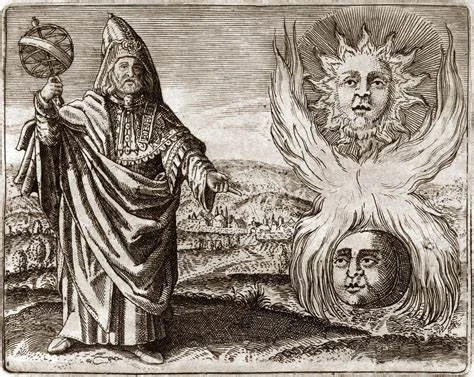
    Prelude 0.1. The Triple Transformation of Faith, Thought, and Power During the Renaissance, a new current of thought arose in Europe. Many thinkers and activists who opposed the decayed and rigid dogmas of the Middle Ages gathered together, seeking to revive ancient, Eastern wisdom. The new idol they invoked was called “Hermes Trismegistus” (“the thrice-great Hermes”). Copernicus said that the sun should sit at the center of the universe, just as “the thrice-great Hermes called the sun the ‘visible god’”; Bruno was burned at the stake for spreading Hermetic heresy; Boyle and Newton followed Hermes’s Emerald Tablet and devoted themselves to alchemy; the legendary Rosicrucians advocated the selfless sharing of…

    Read more
  • Huawendao White Paper, Version 2.1.1

    Huawendao White Paper, Version 2.1.1

    Huawendao White Paper, Version 2.1.1

    Huawendao White Paper, Version 2.1.1

    In the past two days, an article lamenting Chinese Web3 entrepreneurs went viral far beyond its usual reach, which prompted me to publish ahead of schedule the DAO I have been gradually preparing to build. The popularity of that article shows that the need among Chinese entrepreneurs for recognition is still very widespread. So in fact, it is not hard to build a Chinese help Chinese community; what is hard is to genuinely carry forward the positive elements of Chinese culture, rather than understanding what “Chinese” means in a negative, oppositional sense (non-white, non-Western, non-English, and so on). Why is the Jewish community so strong? The key is still that…

    Read more
  • The Distinctiveness of China’s Written Culture and Print Culture

    The Distinctiveness of China’s Written Culture and Print Culture

    I often cite McLuhan, Walter Ong, and others on the progression from oral culture to written culture to print culture (see Media, Senses, Space-Time — A Preliminary Exploration of McLuhan’s Media Ontology), but they are basically talking within the context of Western languages. The development of writing there is basically a process of “pure oral speech — ideographic writing — consonantal alphabetic writing — vocalized alphabetic writing (from Greek onward) — alphabetic writing printed with movable type.” Certain Eastern scripts can also be fitted into this genealogy and understood in that way: for example, Arabic and Sanskrit are consonantal alphabetic scripts, and thus preserve context more strongly. However, Chinese writing…

    Read more
  • Art, Media, and the Space of Meaning in the Interstices

    Art, Media, and the Space of Meaning in the Interstices

    Today at the reading group we touched on the question of art and technology. I myself have also made some related remarks before, for example in the comments on Professor Wu Tong’s paper in A Travelogue of the Hailar Conference: In the Western tradition of oil painting, although one carefully works with a brush during the process of painting, in the finished picture the “brush” is invisible; what appears in the picture is the object depicted. Only in more recent abstract painting or Impressionism does the “mark” of the brush begin to be left on the canvas. Chinese ink painting, by contrast, makes extensive use of brushstrokes; “as Zhang Yanyuan…

    Read more
  • Text Is Principle

    Text Is Principle

    Earlier I mentioned the sciences, so here let me say a bit more about “wen” and “li.” The division between wen and li is a real situation. I do not want to erase the actual differences between theory and literature, but I do want to point out one thing: what is called “wen” — literature, writing, culture, the wen of the humanities — and what is called “li” — mathematics and the sciences, theory, ideals, principle — are in fact related at certain root levels, and were even originally one and the same. The present division of disciplines is: humanities versus science and engineering, as if the sciences and engineering…

    Read more
  • Impressions and Notes on Heidegger and Schopenhauer

    Impressions and Notes on Heidegger and Schopenhauer

    This semester I only took these two courses: Heidegger’s *Being and Time* and Schopenhauer’s *The World as Will and Representation*. The day before yesterday I finally finished my paper on schedule, so this semester can be counted as a complete success. I still didn’t take these two courses very seriously; I skipped more than half the classes, and I only finished both books at the very last minute. But since the teacher for the Heidegger course was only giving rather general, introductory explanations, and the Schopenhauer course was even more centered on student presentations, skipping class didn’t really matter. At least I seized the opportunity to grit my teeth and…

    Read more