
Today I chatted again for a while with baiyu from SeeDAO, and in the process I laid out my thoughts on building digital city-states. What I chiefly want to promote is Arendt‘s thought, and to rebuild the “public sphere” in the digital age.
SeeDAO’s ideal is to become a “digital city-state for 1 million Web3 nomads.” My quip is: this number, one million, is too big to be big, yet too small to be small. Too big in the sense that if Web3 is truly the general trend, then in the future there cannot possibly be only 1 million “Web3 nomads”; just the Chinese-speaking population alone would have to be counted in the hundreds of millions, surely at least 10 million. Too small in the sense that, as a “city-state,” it really should not have that many people. Athens, counting slaves, had only several hundred thousand people at most; generally speaking, Greek city-states had populations ranging from several thousand to several tens of thousands.
I have long believed that living in the digital world will become a future form of life that is more focused in both time and meaning for people (in a sense, this is already the case now). So in a certain sense, everyone will be “digital nomads,” all possessing the desire to seek a home in which to settle within the digital world.
But this “city-state” that settles personal identity in the digital world can very well remain in a “small state with few people” condition; it does not require a million people cramming into the same “square” to act together. The Greek city-state system, or the feudal systems of medieval Europe or the Spring and Autumn period in China, could all to some extent support the independent existence of “small states.” But the environments favorable to small states are fleeting: ancient irrigation technology (the theory of Oriental despotism), early modern gunpowder industries (the theory of gunpowder empires), and modern industrial systems all promoted the rise of “large states.” Yet those conditions that helped large states squeeze out small states no longer exist in the digital world. In the digital world, small communities will not face an existential crisis; as long as there is consensus, a small group of people can always maintain their own territory in digital space.
So the future ideal, diverse Web3 world, I believe, will have countless DAOs, countless city-states or empires, tribes, and other organizational forms coexisting, with each network state able to have its own political system and operating norms. History has proven that a state of many small polities standing side by side, and a hundred schools contending, is most conducive to the flourishing of thought and creation.
So, in terms of politics, culture, law, and other rules governing interpersonal relations, there is no need to design a rigid scheme that accommodates 1 million people. But the digital world as a whole still needs to establish some more underlying consensus. For example, blockchain itself is a world-opening, epoch-making consensus, providing the foundation for “economic activity” in the digital world.
What should be done next? My thought is that we need to establish some “topography” in this world.
At a large scale, the hilly terrain and multi-island maritime environment of ancient Greece promoted the development of the city-state system. Corresponding to the digital world, we may have a space that is favorable to a new city-state system, but we may also have a space that is more favorable to a new empire system. This bias is precisely something that can be constructed through certain underlying consensuses. For example, I am not impressed by Ethereum’s shift to the PoS mechanism; the PoS mechanism ensures that large holders can “sit and eat the mountain without it running empty,” which is beneficial for the perpetuation of large holders’ status across generations. In other words, the underlying environment of PoS is more conducive to the growth of hereditary aristocracy or capital oligarchy. This does not mean that the future Ethereum world will necessarily form such a system; of course there will still be all kinds of accidents or games that determine the future’s fate, but the underlying environment after all does provide a certain bias. Bitcoin’s PoW mechanism is closer to liberalism, but it is not perfect either; it may strengthen the connection between the digital world and the physical world, and intensify the power of energy monopolists. Although I prefer Bitcoin, I would feel that a digital world in which Bitcoin and Ethereum stand opposed in a balanced rivalry is better than a world with only Bitcoin. Perhaps both are insufficient; the more varied the “topographies,” the better. In any case, the “nomads” of the digital world can migrate freely with great ease. Some topographies, even if I think are very bad, need not be erased; a little more room for choice is always a good thing.
At a small scale, “topography” includes the boundary between the private sphere and the public sphere. In the ancient Greek city-state, the boundary between private and public spheres was very clear—the threshold of your home. Inside the household, what you inhabit is the private sphere; everything within can be kept secret from the outside, and the rules inside can be unequal (parents disciplining children). The affairs of the household are focused on what Arendt called “necessity”—that is, dealing with eating and drinking, excretion, sleeping, cleanliness, sustenance, reproduction, and so on, all the matters human beings as animals inevitably have to handle. These matters are cumbersome, and they are never finished; today you are full, and tomorrow you must think about what to eat. So you cannot wait until “the problem of necessity is completely solved” before stepping out of the house to pursue other affairs, especially those that are above the animal and belong uniquely to human beings. So the house threshold is a boundary: once you cross it, it means I have “temporarily set aside” my animal needs and entered another space. In this space, what concerns me most is not what to eat tomorrow, but those affairs that animals cannot possibly care about and that only human beings feel are worth pursuing. This is what Arendt calls “action” (sometimes “work” also belongs to this category, but “labor” does not). Among the Greeks, it meant various activities aimed at “excellence”: an excellent athlete, an excellent actor, an excellent politician, an excellent sage, an excellent warrior… Their excellence was not measured by how much food they provided, but was judged in the public sphere by the many.
And this boundary between public and private spheres was dissolved in modern society (what Arendt called a society of laborers), where people entered so-called public space while still caring about “necessity” issues—noble people are always concerned with others’ “sustenance,” while vulgar people like to concern themselves with desires related to “reproduction.” In short, animal necessity entered public space and became the main topic of so-called “politics.” Thus Aristotle’s “household management” became the later “economics” (etymologically), and issues that were originally of concern within the family became public issues for the whole society. But the problem is that such necessity issues are never solved, so people are forever unable to free up time to properly pursue those affairs that transcend the animal and belong to human beings. Those committed to these transcendent affairs instead have to behave furtively; when others ask, “Can you make a living doing this?”, they always seem somewhat in the wrong, and in the end can only offer some defense by saying, “Well, you can make a little money from it too.”
Many people like to say things like “How can you do art without eating?”, trying to place the meaning of “eating” above art, philosophy, and all other fields (the reason they rarely place it above “science” is only because they think science can help people get enough to eat). But the “necessity” of eating precisely proves that the meaning of eating is the “lowest” one, the first thing to be set aside. Setting aside does not mean abandoning; it does not mean that a creator pursuing art gives up eating. Rather, it means that he can draw a boundary—eating is discussed only within a certain boundary, and once one steps outside that boundary, the question of eating can be set aside. I gave a personal example at the café: I need to go home to take care of my child, and my child is extremely important to me, but when I am chatting in the café, I must temporarily set my child aside and focus on the public issues being discussed. If, in the middle of the discussion, my child is crying and making a fuss beside me, your partner is acting spoiled beside you, and his parents are cooking in the back, then our discussion will be a complete mess. So we need to find a space like a café: a space that is both open and relatively closed. Open means anyone can come in; closed means it must temporarily isolate the noisy, chaotic, and endlessly unremovable affairs outside.
My advocacy of Arendt also stems from seeing that in the future digital world, the lost and distorted “public sphere” may be reborn in a new guise. For example, when we “go online,” we naturally shed the “realm of necessity,” shed our animal bodies, and thereby pursue spiritual values with a straight back and a clear conscience. This is less the ideal of Web3.0 than it is an old story from Web0.3. When the internet had just emerged, hacker culture was absolutely dominant. Programmers shared their creations without asking for compensation, seeking fame rather than profit; hackers pursued excellence, competed on strength, respected one another, and exchanged ideas selflessly. In that era, the young Bill Gates, who called for “making money through programming,” was the odd one out. The mainstream culture of the Web0.3 era was partly inherited by later open-source communities, but more and more netizens concerned with necessity issues poured onto the internet. So in the Web2.0 era, the internet’s nature as a public sphere declined again. One major significance of Web3 lies in “rebuilding thresholds,” using new technologies to draw boundaries within the digital world and promote the formation of public spaces.
The public space is not a monolithic giant space; it is also composed of one small space after another that is both open and closed. For example, cafés, streets, and classrooms are all public spaces, each with different thresholds and different degrees of openness. Small circles formed on the basis of Web3 identity authentication can also be public spaces with different thresholds and styles.
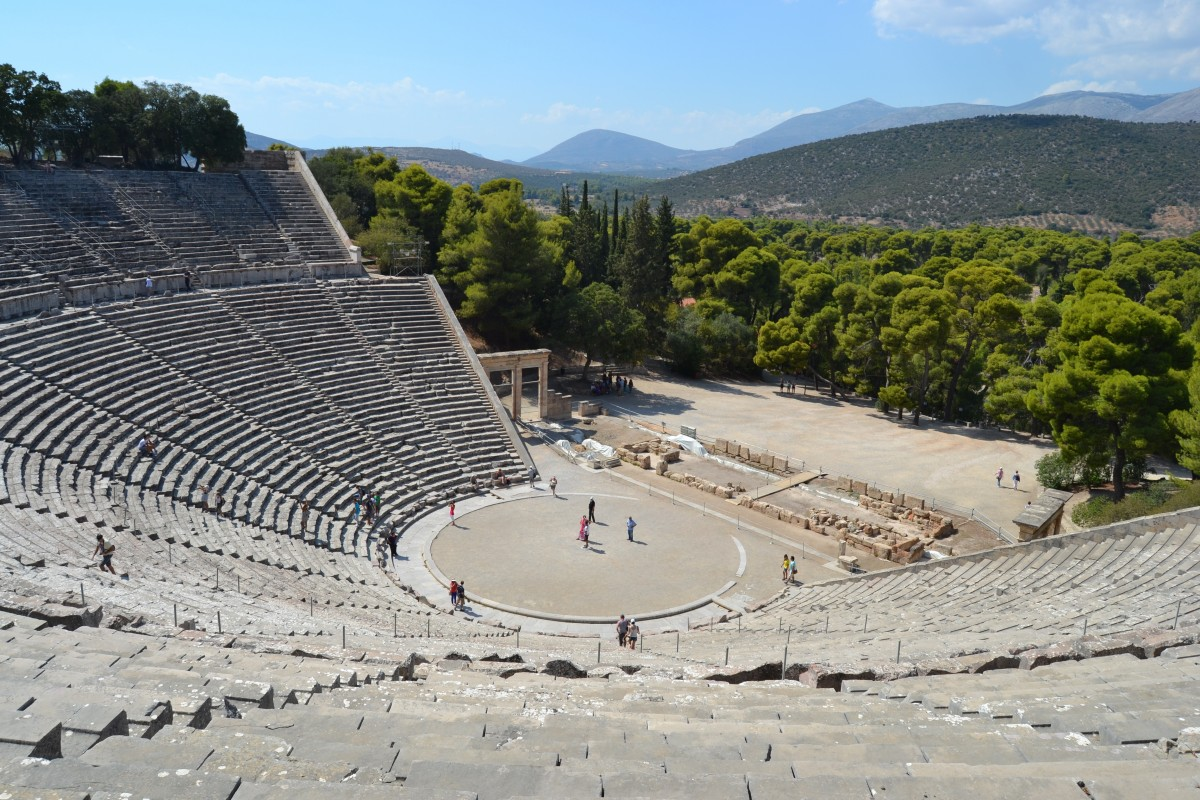
These public spaces can come in countless styles, just as cafés of the same kind can still have countless styles. But they can also have several basic forms, and for these forms we can also find references in the Greek city-state. Specifically, what we call “topography” also refers to the internal structure of the “city-state.” I finally thought of another word—“pattern” (格局). The countless Greek city-states each had their own distinctive features, but some basic “patterns” were shared. For example: city hall, market, temple, stadium, theater, fountain house. They are all public spaces, but each has a different function.
The city hall is the highest assembly of citizens, generally discussing the most serious public affairs, initiating various proposals and debates, and resolving disagreements by vote. Its counterpart in the digital world is the core council of a DAO.
The market (the agora, also the square) is a more open space, where serious debates can also take place, but so can casual conversation. People can also peddle opinions and goods here. Its counterpart in the digital world is the NFT market plus public social feeds.
The temple in the Greek city-state is also a space, but one that leans more toward cultural and artistic content. It often has high-level priests stationed there, providing Q&A (oracles, fortune slips), while also serving the public functions of a treasury and library. Its counterpart in the digital world could be AMAs and preaching, the treasury and resource repository, and so on.
The stadium is a stage for pursuing excellence, where people compete in many non-utilitarian games, measuring themselves against one another, ultimately pointing toward the highest honor of the Olympics. Its counterpart in the digital world is “games” and their communities. In addition, the gymnasium was also an important place for Greek citizens to receive education; sages taught knowledge in the leisure time of exercise, which is why school developed from the meaning of leisure, and later institutions like Plato’s Academy were also built on the basis of the gymnasium. Games and learning are isomorphic, and this also fits well with the concept of deschooling and gamified learning.
The theater provides public entertainment and public conversation topics, and also chases after “stars,” satisfying social needs for entertainment and gossip. Its counterpart in the digital world is the entertainment industry and its communities.
The fountain house is the public bath, where people shed their worldly identities and meet one another in honesty, perhaps chatting about more vulgar topics. Its counterpart in the digital world is anonymous communities.
In short, in building digital city-states, we can design basic rules at the level of the “underlying environment”; the key lies in providing “topographical differentiation,” or, in other words, the environmental “pattern.” Public spaces and private spaces must be separated from one another, and public spaces of different styles must also be separated from one another. Different DAOs may have different emphases, but the overall norms of differentiation may be common, and are worth building in advance.
Translated from the Chinese original with AI assistance. The original text is authoritative.