
In the earlier articles about the metaverse, I already said that the metaverse is not “virtual reality”—one path runs above reality, the other below it; these are two opposite roads.
But just how different these two roads are, I still haven’t made sufficiently clear.
Some people divide the development of the metaverse into two relatively independent dimensions: on the sensory dimension, simulation, realism, immersion; on the social dimension, openness, co-creation, decentralization. I basically agree with this division.
Of course, first of all, I think the development of the metaverse places more emphasis on the social side, especially power relations and economic relations. But the path opposite to “virtual reality” that I am emphasizing does not merely mean giving priority to the social dimension. Even if we look only at development on the sensory dimension, I think there are still two roads.
What I mean by different roads is not something that can only remain in the heads of philosophers; in fact, it can also become a practical program for the “architecture” of the metaverse. One is “virtualizing reality,” and the other is “realizing the virtual.” The former is the direction of what I call traditional VR, while the latter can of course still be called VR, though I would prefer to call it “surrealism” (perhaps this is what Chalmers means by Reality+, though I haven’t looked into it closely).
Of course, the two always have many things in common. It’s like the Tychonic system and the Copernican system: when facing the old Ptolemaic system, both are new systems, but when the two are compared against each other, whether the Earth revolves around the sun or the sun revolves around the Earth is a fundamental difference that cannot be ignored. Tycho was unwilling to accept the (imagined) “feeling of weightlessness” that would come with the Earth moving, so he insisted that the Earth remain still.
Today, many people are also unwilling to accept the so-called “distortion” of virtual space, so they insist that the real world remain “still,” and make virtual space revolve around the real world.
But the more revolutionary path is not to care at all about the so-called “distortion,” or even to deliberately pursue this “distortion.”
A common mistake in traditional VR is to conflate “immersion” with “realism.” In fact, what immerses people need not be realistic, and what is realistic need not immerse people. A novel printed in black and white on plain paper is enough to immerse us, while a realistic slaughterhouse will most likely scare people away. In Talking VR (III), I mentioned:
For example, when it comes to chess, I actually do not want the “horse” in my hand to become furry and able to kick people, nor do I want to hear a deafening roar when moving the “cannon,” and still less do I want to have a pawn spurt blood all over me when exchanging pieces. I only want these pieces to be simply and plainly pieces, to appear only as easily recognizable abstract symbols, so that we can better immerse ourselves in the rules of the game.
The realism imposed on various senses does not always produce immersion; on the contrary, in many cases sensory compression and simplification are precisely the conditions for immersion. To immerse oneself in reading requires turning a deaf ear to the world outside the window; to immerse oneself in a film requires turning off the lights and keeping quiet; to immerse oneself in chess requires those around you to watch without speaking; to immerse oneself in animation requires temporarily forgetting the laws of physics… Immersion is a kind of truncation, selecting a small world out of the richly sensory everyday world, and then entering that relatively isolated little cosmos separated from the outside world—only then can one be immersed.
So if you make a VR space incredibly realistic, as rich as the real world, that still will not automatically bring immersion. Because when we live in real life, we still need at any moment to rely on various media and enter a state of truncation at any time. That is why in Talking VR (III) I called VR technology a “mother substrate”; on this basis, various media and various relatively independent small spaces still need to be built within the VR world.
The question is, must this VR environment as the “mother substrate” be measured against sensory experience in the real world? In my view, of course not at all.
In the earlier articles about the metaverse, I approached the issue from the perspective of the history of science: a continuously nested process of development from natural environment to agricultural environment to industrial environment to information environment. Now let us talk again, from the perspective of phenomenological philosophy of technology, about the transformation of perceptual and sensory experience in this process.

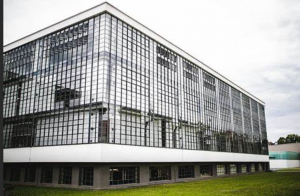
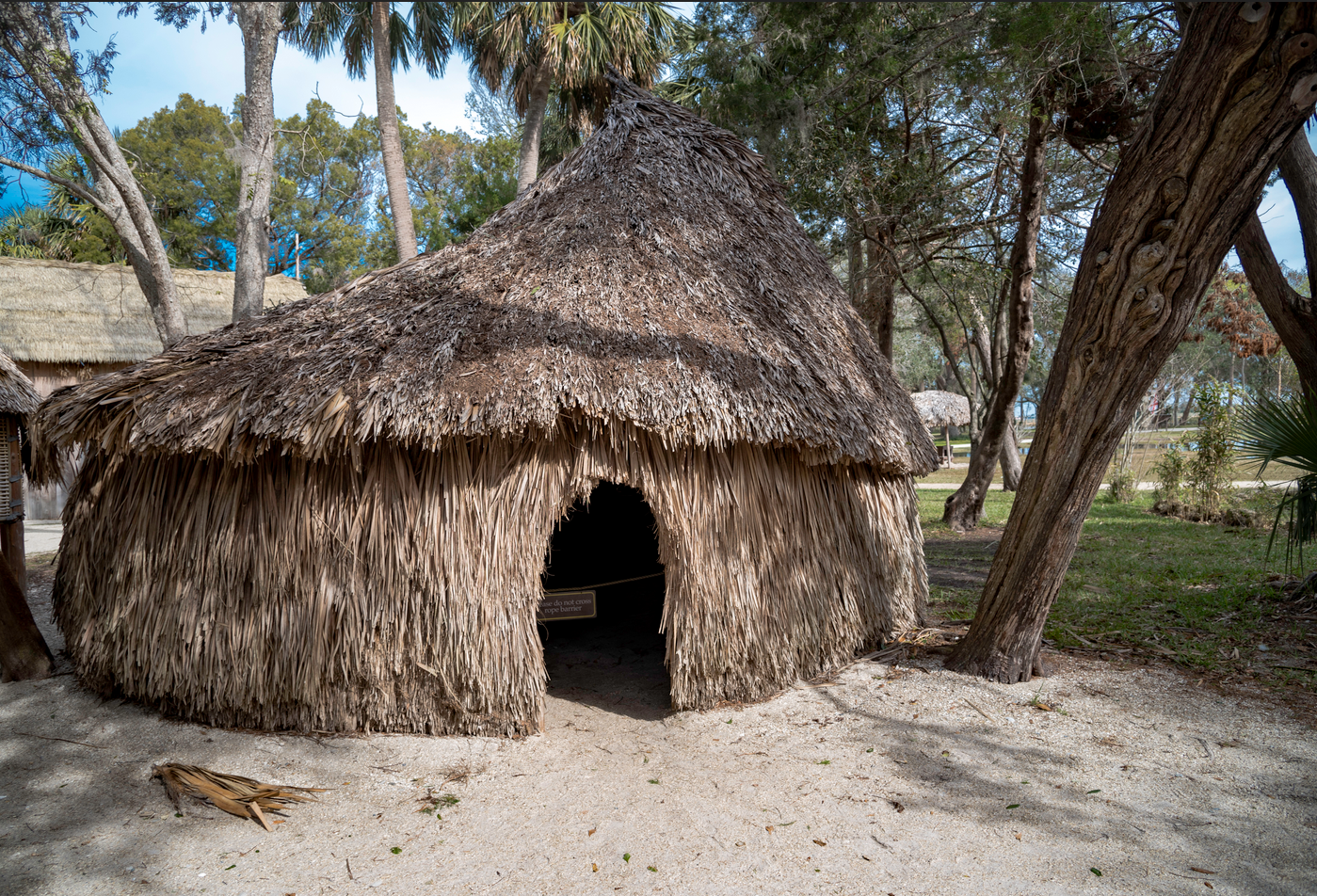
Years ago, I once saw Wu Guosheng say somewhere that if you want to tell how modernized a culture is, just look at the degree to which its buildings are geometrized. In primitive cultures, buildings look very “natural”: caves, thatched huts, and so on, with the shape of the architecture entirely fashioned around the materials. But after civilization flourishes, architecture acquires its own rules; people no longer fully follow the properties of materials, but instead strive to make materials conform to human aesthetics. Yet in the premodern era, apart from a few exceptions like pyramids, most buildings were also angular and full of edges. By the industrial age, the core principle governing architecture was neither material nor aesthetics, but “efficiency.”
Different architectural styles reflect different conceptions of space. Taking Aristotle’s concept of place as a representative example, the premodern conception of space did not see space as an independent entity, but rather as an “enveloping surround” always bound up with things. The modern conception of space, by contrast, is represented by Descartes’ coordinate system: space is detached from things and becomes an independent entity, and this entity is isotropic and completely homogeneous. And in the postmodern age, or the information world, the corresponding conception of space may change again; perhaps digital space is “topological” in style—valuing nodes and connections while downplaying length or distance.
No matter how the shifts in thought and culture reflected behind architecture are to be understood, at least on the level of appearance, the sensory style of living environments in different eras is very different.
When discussing VR, I have heard several people say: “VR can never replace the feeling of the real world.” I have already spoken in the earlier articles about the obsession with the so-called “real world.” In fact, the “real world” was never monolithic to begin with; what we are familiar with is actually the “urban environment of the industrial age.” In that sense, I absolutely agree that VR spaces cannot replace our experience of life in industrial cities, and I think VR technology should not develop in the direction of replacing the experience of industrial cities in the first place. But this “cannot replace” is like saying that in a city, your life experience can never replace rural life. You live in a cramped little square box in the city, like a birdcage—how could you experience the birds singing and the flowers blooming of pastoral life? Of course, on the other hand, pastoral life also cannot replace the wild experience of the primeval jungle; with your face toward the earth and your back to the sky, how could you experience the tension and excitement of living as a neighbor to beasts?
Unconcealment is concealment; every new environment, to a certain extent, buries the old one. The making of new experience and the loss of old experience are often two sides of the same coin. Arguing over whether VR can simulate reality or cannot simulate reality is pointless; what VR shapes is not reality, but surreal reality, a new reality.
Can someone who has long lived in a thatched hut adapt to moving into a modern reinforced-concrete apartment building? Of course not. Even after one gets used to it, one may still not find it comfortable; residents in urban slums do not feel their environment is beautiful, and even the wealthy in the city would rather live in environments of pastoral idylls and beach sunlight. It is not that the urban environment brings good experience, and therefore people flock to it; on the contrary, first people gather in cities, and only then do they hope to build the urban environment so that it is a bit more comfortable.
Cities do not attract people because their environments are close to the countryside, nor is the ideal of those who build cities to make cities resemble the countryside. This seems exceedingly simple, but when discussing the “metaverse” or “digital space,” many people still cannot quite turn the corner on this point.
In fact, there is no need for VR technology at all; people were already gathering in digital space long ago. When I was a child, I went online with a 56k modem, and I was immersed in it too. There is no need for any sense of being physically present, no need for 4K, 8K, or 3D, 4D sensory effects. The metaverse is not the starting point of digital space; rather, it is what comes after more and more people have gathered in digital space for more and more time, and people begin to organize building this place into something more complete, richer, and more independent.
When Meta announced Horizon Worlds the other day, I saw people online mocking the fact that the avatars had no lower limbs. In fact, anyone who has played VR knows that current VR is all about the head and both hands; having no lower limbs is perfectly normal. Of course, with some additional tracking equipment, current VR devices can also capture lower-limb movements, but these extra trackers do not sell very well. The key question is: why, in a VR experience, do we need lower limbs? What good is an avatar with lower limbs? In everyday life, lower limbs are for walking, so of course they are important, but in VR space, teleportation rather than walking is the main mode of movement. If I can teleport to wherever I can see, why would I need legs and feet?
Current metaverse real estate projects, such as Sandbox, still sell plots as square grids under two-dimensional coordinates, with concepts like neighbors and plazas, but if you can teleport to any place, what meaning does “proximity” still have? In my view, metaverse real estate will still have the concept of distance, but this distance will be measured by the topological structure of nodes.
The houses in the metaverse need not be square; or rather, the “houses” in the metaverse do not need walls at all. House walls exist to keep out wind and rain, but in the metaverse, where one can summon wind and rain at will and yet need not fear getting wet, why would walls and roofs still be needed? In my view, a “house” in the metaverse is nothing more than a relatively independent little world. Its outward form can be a string of characters, an image, a “world bubble”; when you click in, what you enter is not a room visibly surrounded on all four sides by square walls, but an entire little world. The size and richness of this world are also not determined by land resources, but by computing power and bandwidth.
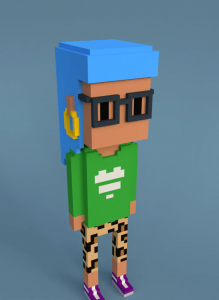
The houses in the metaverse may not be square, but people can be square. Why not?
Of course, in theory, if one could fabricate avatars’ appearances without restriction, people would still like human forms; that’s hardwired into DNA. If everyone made their avatar into Tifa or D.VA, the world would of course be a beautiful place. But the problem is that network-space bandwidth and computing power are limited. In a single-player game, you can render 100 Tifas and it will still run, but if thousands upon thousands of people gather and act simultaneously in digital space, and each person wants to display a personalized image, then it is very difficult for everyone to create an extremely elaborate 3D model. Not only is it hard to support under today’s bandwidth and computing power, it is probably difficult to realize for a long time to come.
But why must it be realized? First, each person can have countless avatars in the metaverse. I can make a very elaborate model for use in a two-person world or in a private space for three or five close friends, and everyone would be willing to spend time preloading and caching my model so that communication can proceed smoothly. But in a more public space, one may well just swagger about wearing a relatively simple model.
To save bandwidth and computing power, this simple model is very likely to be square, or spherical.
What is so wrong with seeing square people in an invisible house? You may feel odd, unaccustomed to it. That sense of incongruity is like a tribal person covered in feathers and tattoos seeing a group of modern people in sharp suits with slicked-back, gleaming hair oil in a square room. It is indeed incongruous, but what is truly incongruous is not the people in the room, but the person who has only just entered this room and has not yet changed his ideas and habits.


Translated from the Chinese original with AI assistance. The original text is authoritative.