
This article was first published in the January 2022 issue of Book Town https://read.douban.com/ebook/337719818/?&dcs=provider-63699269-%E3%80%8A%E4%B9%A6%E5%9F%8E%E3%80%8B%E6%9D%82%E5%BF%97 with slight revisions; the original manuscript is posted here.
Is the Bush Report Outdated?
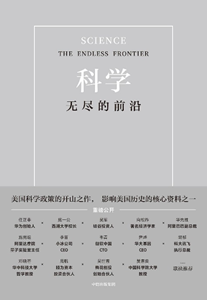
Vannevar Bush’s Science: The Endless Frontier was originally a report Bush submitted to Roosevelt in 1945. That report laid the tone for U.S. science and technology policy after World War II and had a far-reaching influence.
In 2021, CITIC Press published yet another new edition, with the cover and contents adorned with many commendations and comments, including a joint recommendation from more than twenty scholars and entrepreneurs at home and abroad, led by Ren Zhengfei and Shi Yigong.
In its online promotion, the book’s blurb says: “The China of today is similar to the America of that time. Although our science has developed rapidly, it still depends heavily on foreign fundamental research results, and in many key areas we have been choked by core technologies. Studying the reasons behind the great development of American science through Science: The Endless Frontier, cultivating scientific thinking and scientific spirit throughout society, increasing investment in basic science and frontier science, and enhancing the technological strength and global competitiveness of enterprises—all of these have incomparable practical significance.”
In terms of the Bush Report’s historical status, no amount of praise would be too much; but if one says that, beyond helping us understand history, it can also be used directly to guide present reality, then that is probably flattering it too much.
The present situation China faces—being “choked by core technologies,” and so on—certainly has similarities to America’s situation at the time, but the differences cannot be ignored either. And these differences are not only reflected in the differences between China and the United States in national conditions and culture; they are also reflected in changes in the relationship among science, technology, and society.
The Chinese translation opens with “commendations” from 21 luminaries: 14 Chinese and 8 foreigners. Every single one of those 8 foreigners mentions Rush Holt, the former chief executive officer of the American Association for the Advancement of Science, who wrote the new introductory essay. For example, Angela Creager says: “Rush Holt’s sharp reflections on Bush’s blind spots and bold plans make this reissue especially fitting for our time.”
It is clear, then, that Holt’s introduction is not merely complimentary; it offers “sharp reflections.” And the attitude of all the foreign commendations is almost the same: they affirm the historical significance of the Bush Report and the practical significance of Holt’s introduction, but they do not believe that the Bush Report can have practical significance without critical reflection.
On the other hand, among the 14 Chinese commendations, hardly anyone mentions Holt; only Hua Xiansheng of Alibaba emphasizes the importance of the introduction. In the ten “expanded commentaries” appended in Part Three of the Chinese edition, only Hua Xiansheng and Fan Chunliang (a professor at University of the Chinese Academy of Sciences, who did not appear in the opening commendations) seriously discuss criticism and reflection on the Bush Report. This is somewhat worrying, because if one looks only at the Bush Report itself and ignores its actual fate in the United States, one may misjudge the relevant science and technology policy issues.
Criticism of the Bush Report obviously did not begin with Holt; it started as soon as the Bush Report was published. Although Bush’s ideals had a profound influence, they were never fully accepted by Americans; one could even say that they were “outwardly obeyed but inwardly disobeyed.” The funding Bush actually won for scientists was not much. Compared with other developed countries, U.S. science and technology policy from beginning to end placed greater emphasis on application and practical benefit. Bush’s achievement may have been only that, in America’s pragmatist environment—where basic science originally had almost no government support—he won scientists a bit of support, but he did not change America’s pragmatic underlying color.
Especially after the 1980s, with the development of the disciplines of history of science and history of technology, and with the rise of the field of “science, technology, and society” (STS), scholarly consensus on the limitations of the Bush Report became much greater. By then, the Bush Report had become riddled with holes both in practice and in theory.
Critiques of the Bush Report
Professor Fan Chunliang’s long commentary has already given a detailed interpretation of the Bush Report’s historical background and related controversies. He notes that the controversies mainly center on two aspects: first, criticism of the linear model implicit in the Bush Report; second, questions related to the social contract. Let me restate this in my own terms below: the first kind of criticism mainly arises from the development of the discipline of “history of science and technology,” while the second mainly builds on the development of the field of “science, technology, and society” (STS).
The so-called linear model refers to the one Bush imagined, something like “basic research → applied research → technological development → market benefit.” Science and technology are sharply divided: basic research lies at the source of science, while market benefit lies at the end of technology. In this one-way river, improving the source will ultimately improve the final returns. But this model has long been proved far too simplistic. In the 1960s, the academic field of history of technology began to develop independently in the United States (in continental Europe, history of technology developed earlier), and historians of technology, together with historians of science, broke the traditional simplistic understanding that “technology is the application of science,” discovering instead that the development of technology often has its own independent threads and driving forces. Of course, science and technology often interact, but rather than saying that technology is driven one-way by basic science, it is better to say that the influence is always mutual, and that technological development is just as significant in supporting and stimulating theoretical science. For example, Watt’s steam engine was not stimulated by thermodynamics; rather, the establishment of thermodynamics as a discipline was inspired by the steam engine.
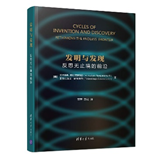
In Inventing and Discovering: Reflections on the Endless Frontier, published in 2016 by Harvard University professor Venkatesh Narayanamurti (with a Chinese translation published by Tsinghua University Press in 2018), he points out that not only is the linear one-way model wrong, but the very dichotomy between “basic” and “applied” is misleading. He proposes replacing the old view with a cyclical model of “inventing and discovering.” Moreover, the boundary between invention and discovery does not lie between two clusters of disciplines with different orientations; rather, within each discipline or each R&D field there exists a cyclical impetus between invention and discovery.
The so-called “social contract” refers to the question of the legitimacy of scientists’ “privileges.” On the one hand, Bush emphasized that basic research would ultimately bring long-term benefits to society as a whole; on the other hand, he stressed that basic research should be driven by free curiosity, and therefore officials and the public should be resisted when they try to dictate the content and direction of research activities, while funding for basic research should, he argued, be controlled by scientists themselves. The research freedom Bush championed meant that the government would give scientists large sums of money while not interfering in the use of those funds at all, with scientists organizing and managing themselves internally.
But this idea that scientists should enjoy privileges is, first of all, overly elitist. Bush seems to believe that scientists are not only far superior to the public in specialized knowledge, but can also have a better grasp of other fields, are wiser than ordinary people in matters such as ethics and governance, and therefore can certainly be competent as policymakers and coordinators of funding. In fact, however, modern scientists are mostly experts in their own fields, but once they move beyond narrow specialties, their performance is not much different from that of ordinary people. Scientists do not naturally possess an advantage in moral integrity, much less do they necessarily know how to manage huge sums of money and make proper adjustments among countless funding directions. In short, Bush’s refusal to allow non-scientists to participate in science and technology policy was wishful thinking.
In the second half of the twentieth century, from DDT to mad cow disease, in countless public crises, scientists did not display a lofty moral stance; on the contrary, many times scientific groups deliberately deceived and concealed things from the public in order to protect their own authority and interests. In addition, STS research, which rose in the 1980s, placed scientists within actual social contexts and found that scientific activity is not a pure activity transcending society; scientists, like entrepreneurs, politicians, or any ordinary person, are all influenced by the social environment and constrained by power relations. In short, people no longer believed that scientists occupied a transcendent social status, one that exempted them from social constraints or from bearing social responsibility. By the end of the twentieth century, developed countries generally introduced some kind of “committee” to formulate certain science and technology policies and scientific ethics rules. Generally speaking, a sound “committee,” in addition to including scientists, also needs participants with diverse identities such as legal experts, ethicists, and representatives of the public.
Holt’s new introduction, praised by many foreign commendations, was written after the outbreak of the COVID-19 pandemic. Using COVID-19 as an example, Holt emphasizes that scientists cannot hide in an ivory tower and cultivate virtue in isolation, but should shoulder social responsibilities and take on greater duties of communication with the public. He believes that scientific progress did not provide sufficient power for the United States to resist the COVID-19 pandemic: “This is a failure in the relationship between science and the public, and it is precisely this matter that the Bush Report and the debates that followed seriously neglected. From a modern perspective, Bush seems somewhat short-sighted in this respect… The research system he advocated, while promoting the flourishing of research, also contributed to the separation of science from the public.” In addition to the COVID-19 pandemic, the climate crisis is also pressing. Climate change proves that the development of modern technology can bring far-reaching social effects, but those effects are not always positive. Bush was fond of praising the positive effects of technology on society, and therefore advocated increasing support for scientists, but when negative effects increase, should scientists be responsible for them? Do scientists have the right to claim credit for the good effects, but treat the bad effects as none of their business?
In short, the social status of scientists has been restored to its original form: from standing apart from the world, they return to being moral subjects. Scientists are not morally superior, and “technological innovation” cannot be unconditionally regarded as a good thing or a neutral thing. The idea of “responsible innovation” has also become a consensus in European and American academia.
From “Basic–Applied” to “Long Term–Short Term”
Of course, criticism does not mean denigration. How we understand the Bush Report is not a choice between total acceptance and total rejection. We need to point out the limitations of the Bush Report, but that does not mean it has no significance worth learning from.
Even for Americans, the Bush Report has probably been reduced mostly to historical significance, but for Chinese people, perhaps its practical significance has not yet passed.
As far as the United States is concerned, the understanding of free science seems to have gone through a tortuous process: seeing mountains as mountains, then seeing mountains as not mountains, and finally returning to seeing mountains as mountains. Initially, American culture was completely dominated by pragmatism and paid no attention at all to free research that did not directly show benefits. Around the time of World War II, on the one hand because of the stimulus of the Bush Report, and on the other hand, perhaps more importantly, because the United States absorbed a large number of immigrant scientists from Europe (especially Germany), changing the atmosphere of the American scientific community, “free science” came to be advocated more widely. By the end of the twentieth century, science was once again brought down from its pedestal, and people once more turned their gaze to the social background and social impact of science.
But this kind of “return” is actually a sublimation rather than a regression; the intermediate stages were not simply abandoned, but were absorbed and “sublated” in the process.
For China, however, ever since the Self-Strengthening Movement, the mainstream science and technology policy or scientific culture has been oriented toward practicality, and “free science,” even merely in name, has by no means deeply taken root in people’s minds. In this situation, the “freedom” dimension of the scientific spirit championed by the Bush Report is a necessary supplement to the enrichment of Chinese scientific culture. Even if we do not need to adopt Bush’s suggestions in full—as even the United States never did—at the very least, it is worthwhile for us to go through this process of controversy and discussion about research freedom.
As I mentioned earlier, the main flaw in the Bush Report lies, on the one hand, in its overly simplistic division between basic and applied, science and technology, and on the other, in its deliberate or inadvertent separation of science from the public. But some of the insights contained in the Bush Report do not depend entirely on the above positions.
In my view, one of the Bush Report’s key insights is that it alerts people to the difference between “short-term aims” and “long-term impacts” in technological research and development, and encourages people to pay greater attention to the long-term effects of research.
Bush’s binary of “basic—applied” may indeed be overly simplistic, but the substance of this distinction can be understood as the degree of closeness between research and real-world benefit. What is called “basic” refers to research that does not directly produce social benefits in the short term; what is called “applied” is research whose practical benefits can be seen in the short term.
We might as well replace the “basic—applied” binary with the scale of “long-term—short-term,” which is not a either/or dualism but a continuum. Nor can the latter be simply mapped onto the “science—technology” binary; in the research of any specific technological field, we can also distinguish different orientations toward “long-term—short-term.” For example, if we take “artificial intelligence” as the same object of study, research on neurobiological mechanisms, underlying development of computer algorithmic languages, and so on are clearly oriented relatively far into the future; while developing an intelligent customer service system for a shopping platform, or an intelligent cooking machine for a restaurant, also counts as research on artificial intelligence, but the results and benefits are immediately visible.
Bush found that the former kind of research can, in the long run, promote the latter kind, but its influence is very hard to plan in advance. Many studies of great long-term significance may, at the outset, show no practical prospects at all, or else open up unexpected spaces of application beyond the prospects originally anticipated. Bush said: “Many of the most important discoveries have arisen from entirely different experimental intentions… The results of any particular investigation cannot be accurately predicted.”
Of course, “unpredictable long-term effects” are not necessarily always positive, as Bush seemed to think; some research has positive effects in the short term, yet destructive effects in the long run. DDT is one example. This chemical compound was synthesized by chemists as early as 1874, but initially no obvious use could be seen for it. It was not until 1939, when scientists discovered its insecticidal effect, that it began to show positive social benefits. After it came into widespread use, its negative effects gradually emerged, were comprehensively revealed in Rachel Carson’s Silent Spring, published in 1962, and were ultimately banned. In the case of DDT, 1874, then 1939, then 1962: different time scales present different social benefits, from useless to beneficial to harmful.
The recently fast-developing gene-editing technology (CRISPR) is another example. It originated in research on bacterial immune mechanisms, a line of inquiry that did not have very obvious practical benefits. But scientists ultimately mastered from the bacterial immune mechanism a gene-scissors technique capable of precisely editing gene fragments; this technique has broad practical applicability and far-reaching effects in many fields, including medicine, agriculture, and industry. Still, this technology has also brought risks of bioterrorism, and has encouraged some acts that overstep ethical bounds; these possible risks and harms also cannot be ignored.
The scale of “long-term—short-term” can also correspond to the scale of “uncertain—certain.” Generally speaking, short-term benefits are more certain and easier to evaluate, whereas long-term effects are harder to foresee, yet more important.
This attention to long-term benefits—whether on the positive side or the negative side—is something Chinese people would do well to learn from.
The Multiple Dimensions of Freedom
Since we have stepped beyond the simplistic binary of “science and technology,” and noticed that even in the realm called “technology” there are also different orientations of “long-term—short-term,” then we can also extend Bush’s advocacy of “freedom.”
Bush believed that “broad scientific progress stems from scholars’ freedom of thought and freedom of research; they ought to explore the unknown under the impulse of curiosity and choose the direction of research autonomously.”
What Bush calls freedom means that the driving force of research should be led primarily by scholars’ internal “curiosity,” rather than by external metrics of benefit. The reason for this is precisely the difference between “long-term—short-term” orientations: only research oriented toward short-term benefits is easily measured by some external yardstick of effectiveness, whereas research that cannot see obvious benefits in the short term is very hard to evaluate with any precise external scale of progress.
But research is not, after all, something to be done arbitrarily; it still needs some scale of evaluation. If such a scale cannot be measured by external utility, then it can only be measured by internal standards. These internal standards depend on the research paradigms of different disciplines and are hard to generalize. If one insists on stating it in the broadest terms, then it is “curiosity.” In other words, it is simply “interest.” Thomas Kuhn called the normal activity of scientific research “puzzle-solving.” Scientists, like people playing a jigsaw puzzle game, need to follow certain rules, but they do not need to appeal to external purposes; solving the puzzle and assembling a more complete picture is itself meaningful.
Bush further pointed out that this kind of free research must be led and funded by the government rather than by corporations, because corporations or capital always tend toward short-term gain; even the “long-term investment” discussed in the investment world is, in terms of the potential benefits of free research, far too short-lived. So one cannot rely on profit-seeking investors to sponsor scientific research; instead, it can only be sponsored by governments or public-interest institutions with a long view.
Here, Bush’s limitations are manifest in two respects. First, he confines free research to basic science, while overlooking the fact that in every field of applied science and technology there are also research activities that transcend short-term interests. Second, he ignores the fact that, even when one is also looking to “practical benefits,” investors’ pursuit of profit cannot be conflated with ordinary citizens’ concern for the public good.
Bush warned people not to promote research with a merely short-sighted and opportunistic mentality; this is undoubtedly correct. But the opposite of short-sighted, opportunistic research is not only “pure science in the free pursuit of knowledge”; there also exist complex dimensions such as “curiosity-driven applied research,” “theoretical research in pursuit of the public good,” and “technological R&D in the service of free creation.”
In Basic Science and Technological Innovation: Pasteur’s Quadrant, published in 1997 by the American scholar Donald Stokes (the Science Press published a Chinese translation in 1999), this blind spot in Bush was pointed out. Stokes noted that the orientation toward knowledge and the orientation toward application are not mutually exclusive; Pasteur’s work was research that simultaneously combined a drive for knowledge and applied significance.
The atmospheric physics research honored by the 2021 Nobel Prize in Physics is another example: this research field has always been fundamentally theoretical, yet it is increasingly being driven by public concern about the climate crisis.
Scientists should not be led by the nose by investors, but neither can they abandon concern for the public good. Einstein taught: “If you want to make the work of your life beneficial to humankind, then it is not enough for you to understand applied science by itself. Concern for the human being as such must always remain the main objective of all technical striving: concern for such still unresolved major problems as how to organize human labor and the distribution of products, so as to ensure that the fruits of our scientific thought will benefit humankind rather than become a curse. When you are absorbed in charts and equations, you must never forget this!”
In addition, in the realm of technological development, the driving force behind invention does not always lie in practical application. Historians of technology have found that many emerging technologies, at the time of their invention, often did not display any obvious use; they frequently satisfied a playful or aesthetic orientation. For example, some scholars hold that agriculture did not begin in order to solve problems like food shortage, but originated in gardening and ritual activities; the wheel may originally have been made as a toy; in more recent times, cameras and phonographs also initially looked more like toys, and bicycles were first used mainly by the nobility for comparison and racing…
In short, the “freedom” Bush advocated is precious, but we should further expand the meaning of freedom. Freedom should mean allowing researchers, in every field of study, to be driven by all kinds of research motivations, rather than limiting it to the single field of pure theoretical science and motivating it only by the one driving force of curiosity.
Translated from the Chinese original with AI assistance. The original text is authoritative.