
This is a new course, though not all of its content is actually new; some of it has “overflowed” from my two other courses, “A General History of Technology” and “Introduction to the Philosophy of Technology.” Since I keep adding content to both of those courses, I plan to transfer the sections on media technologies in “A General History of Technology” (including writing, printing, the telegraph, and so on) to this course. Of course, in the new course I will give more prominence to the relevant philosophical reflections, with both history and philosophy in view.
As usual, I am writing up a course summary. I’ll make this first one a little more detailed.
1. Course requirements
Course grading: class participation 10% + reading notes 40% + final paper 50%
The requirements are as follows
a. You must read books. At least 3 books must be read in full over the semester (1 required book, at least 1 recommended book, and 1 additional book of your own choosing.)
b. 1 reading note (midterm) + 1 paper (final), or 3 reading notes (submit 1 first at midterm). Total word count: more than 10,000 words.
c. If the reading note is on a book of your own choosing, please discuss it with the instructor in advance; only a good book can be written about.
d. The paper must be related to the course and must not plagiarize.
2. New midterm feedback mechanism
In past course evaluations, the item students rated lowest was always “the instructor is strict about this course,” so I tried to make the course requirements stricter. But temperamentally, I’m not really someone who can be all that strict, because I tend to advocate students’ freedom in learning and am not very willing to assign too many compulsory requirements. Still, I have always believed that if students hold themselves to high standards in my course, then my requirements will become correspondingly strict; if they are lax with themselves, then my requirements will likewise become lax. For example, when writing reading notes, I even allow long passages of quotation (in a 10,000-word note, three to five thousand words of quoted original text is acceptable). That may seem quite loose. But if you actually want to write well, it is by no means easy: writing a good reading note is far more than simply reading a book carefully to the end. You also need to connect it with classroom teaching, with other literature, and with lived experience; you need to bring in many things outside the book in order to write well. Merely summarizing the main idea of each paragraph absolutely cannot count as a good assignment.
A major change I made in this course was to add a midterm assignment. In fact, in previous courses I would say that students who set high standards for themselves could submit their assignments early, receive feedback from the instructor, and then revise further. But in practice, very few students did this; the overwhelming majority submitted right at the deadline. Even so, I would still try my best to give feedback on the assignments. When enrollment was high, I would often ask the teaching assistant to provide feedback; when the class was small, I would do all the feedback myself. But the effect was not very good, because by the time the feedback came, the course was already over and the vacation had begun. Students might not necessarily still pay careful attention to the instructor’s feedback, let alone revise further on the basis of it.
So this time I added a midterm stage, asking everyone to turn in an initial assignment first. I would give feedback, and then students could rewrite the midterm assignment based on that feedback, or at the very least they could get some guidance when writing the final assignment.
My feedback ranged from a sentence or two to seven or eight hundred words, averaging more than 250 words per person. What left me a little cold, though, was that the vast majority of students did not revise their midterm assignments. Even for the ones to whom I wrote seven or eight hundred words of feedback, they still didn’t even make the trivial change of revising the title. Overall, the better the student’s work was, the more willing they were to revise it further. What was a bit comforting, however, was that even students who did not revise their midterm assignments improved somewhat on the final assignment. By the way, I still wrote feedback on the final assignments, averaging around 150 words per person.
2. Recommended books
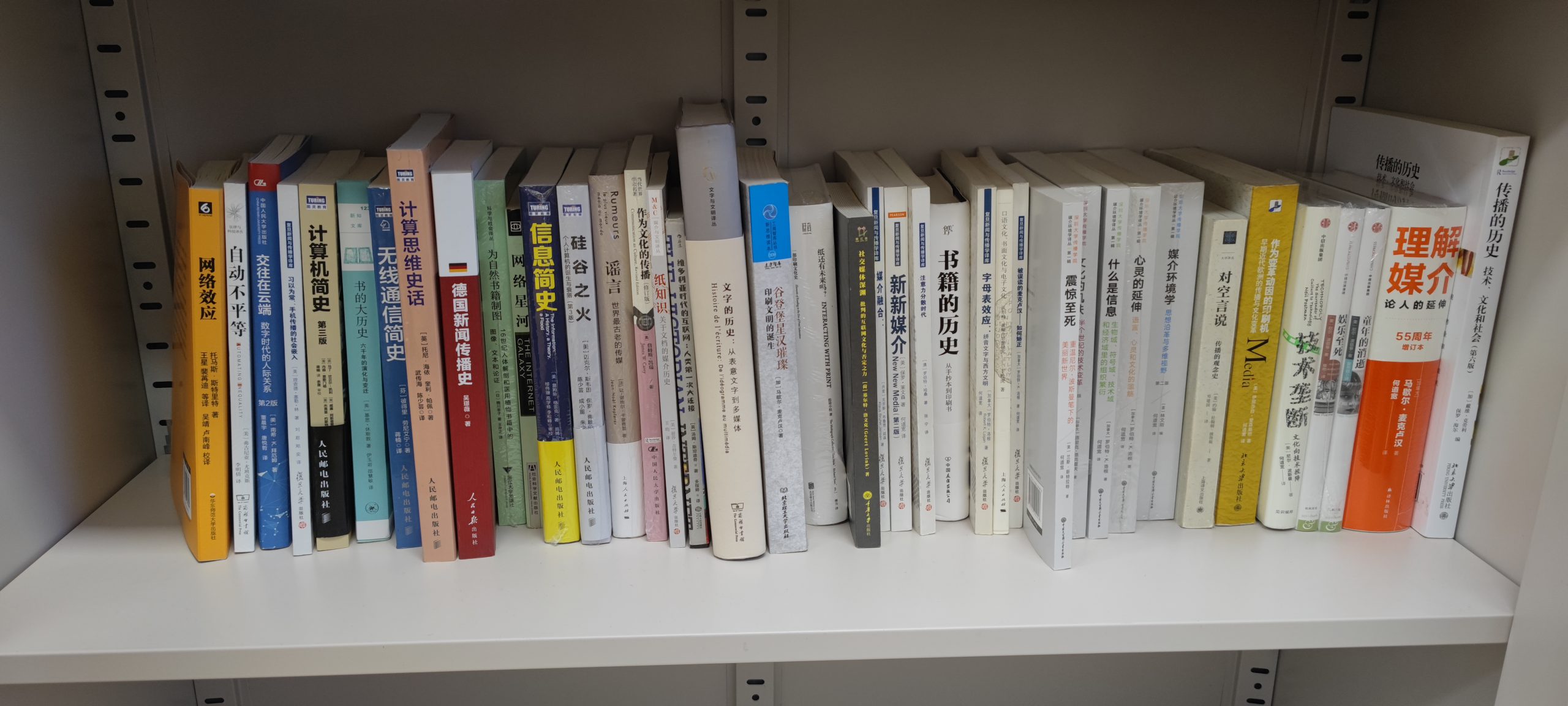
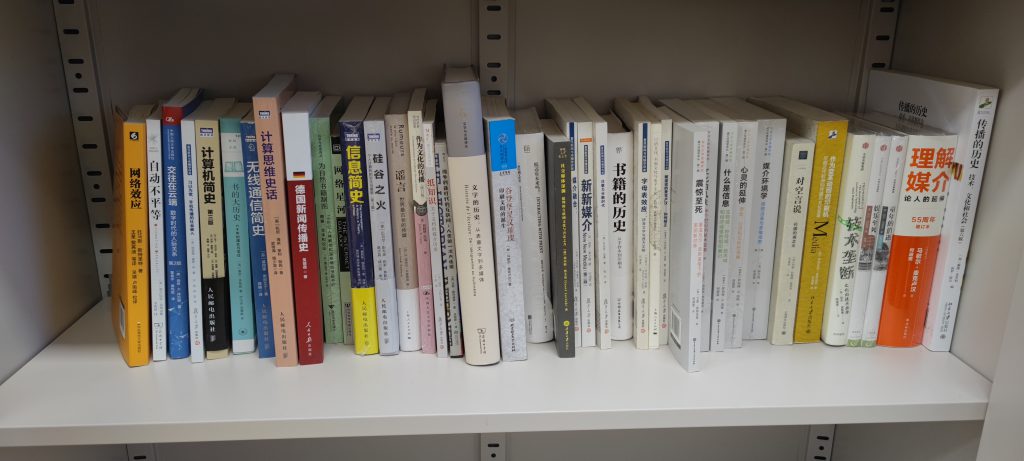
I chose to use James W. Carey and John J. Martin’s edited Communication in History: Technology, Culture and Society (6th ed.; the 5th edition also works) as the required, textbook-like reading, and the whole course was basically unfolded along the lines of this book. Apart from the two introductory classes on media philosophy, the rest of the media history sequence was basically organized at the pace of one major chapter every two weeks, including Part I, early times; Part II, writing; Part III, printing; Part IV, the telegraph; Part VII, television; and Part VIII, information. Parts V and VI were skipped.
This book is made up of articles or excerpts by many different authorities, so its ideas and style are not unified. In my actual teaching, I did not lecture entirely around the content of this book either; rather, it served as a common body of background knowledge. This book also cannot be used as the object of a reading note; it can only be used as background and reference for one.
There are 6 books (or 7) that I especially recommend, as follows:
J. Lin, ed., Media Ecology; McLuhan, Understanding Media; Peters, Speaking into the Air; Ong, Orality and Literacy; Eisenstein, The Printing Press as an Agent of Change; Postman, Amusing Ourselves to Death/The Disappearance of Childhood
The first of these is an anthology, from which one can pick and choose articles to read, helping one understand media ecology, a school of thought on which I myself also rely. McLuhan and Peters are both not easy to get a handle on, but both can provide a broad vision that combines media history and media philosophy. The last three books are ones I especially point out as suitable for reading notes; since Postman’s two books are both relatively short and easy to read, I treat them as one.
There were also many books I recommended impromptu in class, such as The Alphabet Effect, The Victorian Internet, The Network Society, The Age of Distraction, and so on.
My own book, The Strong Program of Media History, is of course also closely related to the course, but it is not a required reading, nor can it be used as the object of a reading note.
3. Encouraging discussion (not very successfully)
Although the actual course content is still mainly historical narrative, with a strong emphasis on cultural criticism and philosophical discussion, philosophy is not something that can be force-fed. The best way is to stimulate and mobilize students to think and discuss on their own. So in this course I also tried to strengthen interaction and students’ autonomous participation, though I did not do very well on that front. I once encouraged participation by giving books to those who interjected or asked questions, but I found that the people who spoke up often were still just those few individuals; those who did not speak up still never did. I also encouraged students to sign up to give a main presentation, but over the course of the semester only one student signed up twice.
In the course requirements, class participation accounts for only 10%, and I do not want to use grades as leverage to force students into discussion. I think discussion is better when it unfolds freely and spontaneously: if you have your own thoughts and the desire to express them, then you will naturally want to discuss. Of course, giving books is also a kind of external incentive, but compared with rigid grading, I think it is still more open and freer.
The final class was a discussion session, and I did not require every student to speak. Even students who did not speak, or even did not attend, could still get a starting score of 80% for participation. The most active students of course received the full 100% participation score, that is, 10 points. But do not underestimate the two-point gap here, because in fact I did not spread out the grading on assignments all that much either; most students were around 90 points, and when converted into a letter-grade system, a two-point difference is just enough to mean one full grade step, such as from A- to A, or from B+ to A-.
The final discussion class focused on today’s media environment, especially social network media. Overall, the effect was still pretty good. However, the shortcoming was that students often still preferred to discuss in a kind of “objective” posture, and less often reflected on the effects of social network media on themselves from a subjective posture, starting from their own personal lived experience. In fact, phenomenology or McLuhan’s strength lies precisely in inspiring us to reflect on lived experience and sensory experience, but in public discussion it may indeed be hard for everyone to loosen up enough to talk about this aspect.
4. Course content
I. Discovering media (4 class hours)
The first two classes were introductory, serving as an introduction to media philosophy. I began with the question “What is media?”, arguing against taking media as completely neutral channels, and bringing in McLuhan’s idea that “the medium is the message”: media itself, just like the content it carries, changes human cognition, thought, and ways of life; especially at moments of media transformation, the power of media itself deserves even greater attention.
I proposed weak and strong versions of “media philosophy.” I think the weak version of media philosophy is not really controversial: once we “discover” the importance of media and its influence on the cultural environment, then at the very least we should acknowledge the weak version of media philosophy, namely that we can treat media as an important object of philosophical reflection. The strong version of media philosophy, by contrast, is a general philosophy from the standpoint of media: it is not the philosophical study of media, but the study of philosophy from the standpoint of media. “Media” is one answer to the “mode of being” of things and to “human nature.” This is also the theme I discuss in the first half of The Strong Program of Media History.
This course does not require media ontology, or what I just called the strong version of media philosophy; the following part of the course is a rough review of media history. The “philosophical” perspective lies in the fact that our review of media history is not just for antiquarian curiosity or the listing of knowledge, but for “self-reflection.” Media transformations such as language, writing, printing, telecommunications, and television are both historical events and at the same time the construction of our present reality. Writing did not replace speech, television did not replace books; media of the “past” still exist, and multiple media have accumulated layer upon layer, shaping the environment of our lives today. Tracing history is also understanding the present; asking about media is also reflecting on ourselves.
During the introductory period, no outside reading was required; if interested, one could further read McLuhan’s Understanding Media and my The Strong Program of Media History.

II. Primitive media (2 class hours)
The reading material for this class was Chapter 1, “The Forerunners of Writing,” and Chapter 3, “Incan Knotted Strings,” from Part I of Communication in History (media in early civilizations). Extended reading materials included A Brief History of Humankind and so on.
We first discussed the characteristics of language as a medium. The ability to express certain signals through speech exists in many animals, but systematic “language” can still be said to be a human specialty. In Harari’s terms, what humans are good at is being able to “tell stories.” What is called “false, grand, empty” is precisely the point at which human language goes beyond that of ordinary animals. Human beings can use language to tell a false story that has never happened; they can use language to depict a grand concept beyond the reach of human ability; they can use language to shape an empty intention with no definite referent. These abilities may be related to the temporal features of human technical activity. Very early on, humans already had a consciousness of “keeping things in reserve.” As early as millions of years ago, Homo habilis could make tools that were useless here and now; after such tools were made, a rather long stretch of time had to pass before they could actually do their work. This consciousness of “keeping in reserve” made it possible to “preserve without using,” and in the end useless things, that is, symbols, appeared. Symbols are media that point toward certain realities of meaning, but they themselves have no direct use.
I use “the thickness of media” to explain the origin of human nature. When human beings adapt to dealing with nature through media, because those media themselves are not without friction, human intention often lingers within the thickness of the medium, focusing on the space of meaning opened up by the medium. Thus, the greatest difference between human tools and animal tools is that human beings have tools for making tools; the difference between human language and animal vocalization is that human beings have language for talking about language. This self-referential media space gives human lifeworlds a distinctive character.
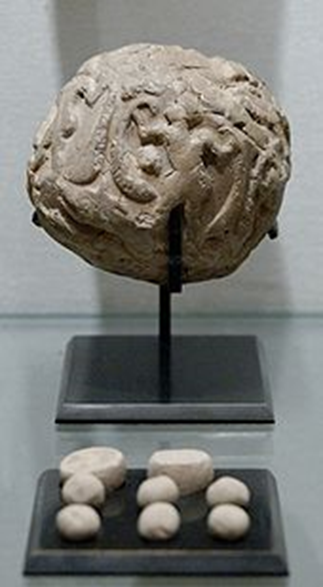
This class also focused on the “symbolic objects” of the Mesopotamian region, the knotted cords of the Inca, and other precursors of writing.

III. Writing (Part I): The Origins of Writing and Its Media (2 class periods)
The corresponding reading materials were Chapter 2 (Media in Ancient Empires) and Chapter 4 (The Origins of Writing) from Part One of The History of Communication (Media in Early Civilizations). Further readings included Innis’s The Bias of Communication, Empire and Communication, and so on.
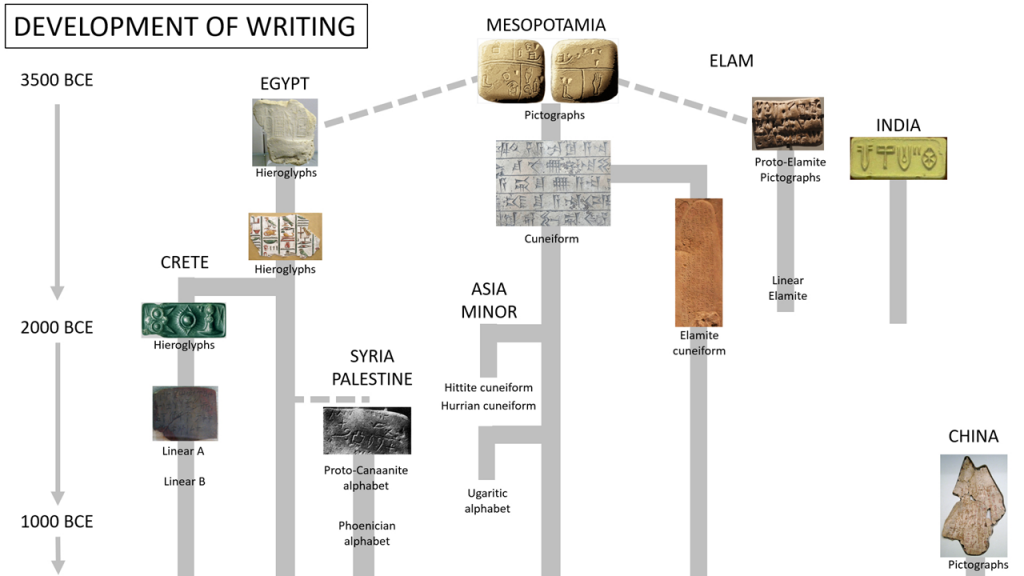
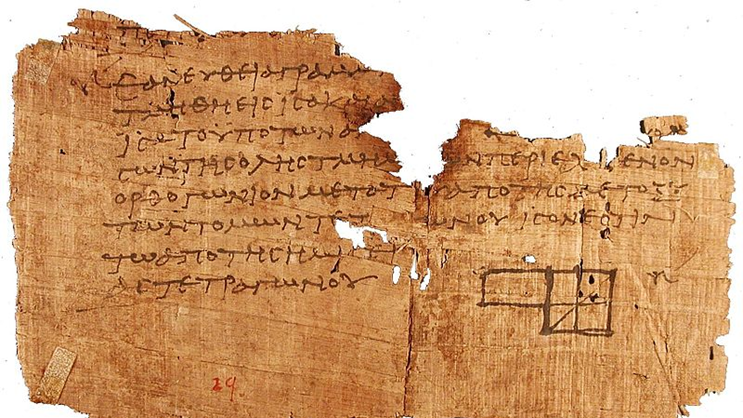
I introduced Mesopotamian cuneiform, Egyptian hieroglyphs, Chinese oracle-bone script, Mayan pictographs, and so on. It is generally believed that the origins of these early writing systems were independent of one another, and that their actual development also took very different paths. We oppose the simplification of Western centrism, namely, the idea that writing systems must all have developed along a single path from pictographic to phonetic to alphabetic script. The Chinese case and the American case are both difficult to explain by fitting them into a single developmental model. The phoneticization of pictographic scripts is very likely to occur in contexts of “cultural fusion”: for example, when the Akkadians used Sumerian script to write the Akkadian language, when people on the Sinai Peninsula used Egyptian script to write Proto-Canaanite, and when the Japanese used Chinese characters to write Japanese, all of these led to the phoneticization of logographic scripts. Chinese cultural transmission is relatively continuous, so it is only natural that there was no motivation for phoneticization. Whether different writing systems affected the modes of thought of different civilizations? We will discuss that next class. The second half of this class mainly centered on Innis’s selected texts and unfolded a discussion of his theory of writing media.
I briefly introduced Innis’s academic trajectory from economic history to the history of communication, as well as the “monopoly–cycle model” that emerged out of economic history. I also introduced Innis’s concepts of temporal bias and spatial bias in media of communication.



III. Writing (Part II): From Oral Culture to Written Culture (2 class periods)
The corresponding reading materials were Chapter 5 (The Greek Legacy) and Chapter 7 (Oral Culture, Written Culture, and Modern Media) from Part Two of The History of Communication (The Tradition of Western Written Culture). Further readings were Ong’s Orality and Literacy and Logan’s The Alphabet Effect.
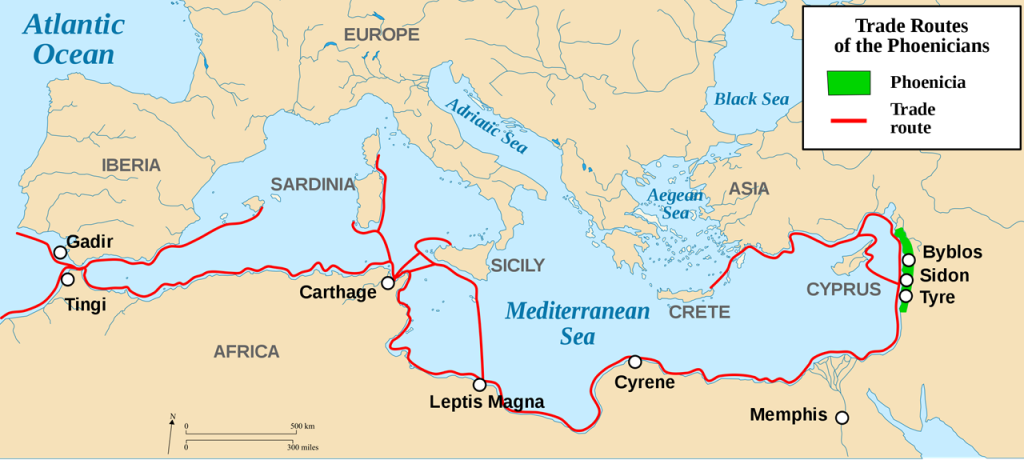
This lecture first followed the history of writing, covering Phoenician script and Greek script, that is, the rise of alphabetic writing. Then we discussed the influence of this medium, writing, on memory and modes of thought. This influence can be divided into two levels: first, the difference between a culture with writing and a purely oral culture; second, the differences among different forms of writing, especially between alphabetic and non-alphabetic scripts.
As for the differences between oral culture and written culture, Walter Ong’s work is the classic one, and I also introduced the subject mainly around Ong’s discussion. Writing promotes systematic, orderly, and layered thinking, while on the other hand oral culture is not a defective version of written culture, but also has features that we, as writers, find very hard to appreciate. In oral speech, having to exert force in order to say something means that the thing is important; this sustains a world of perception full of magic and resonance. Second, the fleeting fluidity of speech forces people to reinforce memory in special ways, such as rhythm, formulas, and contextual thinking. Finally, the world-sense dominated by hearing in oral culture differs greatly from the world-view promoted by literate culture, in which vision is dominant. A world “view” is often an objective, detached, calm perspective. Hearing, by contrast, is usually inward, immediate, and holistic.
As for the differences among different writing systems, especially between pictographic and logographic scripts on the one hand, and phonetic and alphabetic scripts on the other, Logan’s The Alphabet Effect discusses a great deal. But I have always felt that when Western scholars discuss the differences between Chinese characters and alphabetic writing, there is often a sense of scratching an itch through a boot; many times they miss the point, or are full of misunderstandings. So I did not discuss this topic in very much detail. Instead, I raised it first and hoped that the students would expand on it in discussion.
.svg)
III. Writing (Part III): Alphabetic Culture and Mathematical Symbols (1 class period of lecture + 1 class period of student discussion)
The corresponding reading materials were Chapter 6 (The Role of Writing and the Alphabet) from Part Two of The History of Communication (The Tradition of Western Written Culture). Further reading was either A Collection of Writings on the History of Ideas by Jacob Klein or the section “Abstracting Abstraction” in my Outmoded Wisdom.
Last class I called on students to discuss the similarities and differences between Chinese characters and alphabetic scripts, but only one student signed up to lead. So I lectured myself for one class period, and in the second period students led the discussion and we talked freely.
The part I lectured on centered on Logan’s discussion in the reading, especially his remarks on alphabetic writing and mathematical language. Logan believes that the alphabet may have stimulated the development of positional numeral systems, and that alphabetic culture also helps quality and quantity be unified under the same computational system.
I introduced Jacob Klein’s insights from the history of mathematics concerning “symbolic abstraction,” and recounted the history of the formation of modern mathematical language. This process was accompanied by a conflation of “means and ends”: symbols, as media for calculation, gradually became objects of calculation, and mathematics, as a medium for depicting nature, gradually became nature itself. From the perspective of media change, I explained the historical process by which nature became mathematized.
The latter half of the class was led by students and focused on discussing the characteristics of Chinese characters. Overall it was still quite good, but many students did not distinguish between the characteristics of the Chinese language and the characteristics of Chinese characters when discussing the topic (sometimes the characteristics of the Chinese language may in fact be reshaped by Chinese characters in return).
IV. Printing (4 class periods)
The corresponding reading materials were Chapters 9, 10, 11, and 12 from Part Three of The History of Communication (The Printing Revolution). However, the selected texts for these chapters were rather bland overall. Although they included selections from Mumford and Eisenstein, they were all taken from the more objective descriptive portions rather than the more intellectually forceful parts. The further reading, of course, was Eisenstein’s The Printing Press as an Agent of Change.
The content of this lecture was basically transferred over from the course on A General History of Technology, but in the original Technology History course printing was taught in 2 class periods, whereas here it was covered more leisurely and more fully, taking up 4 class periods.
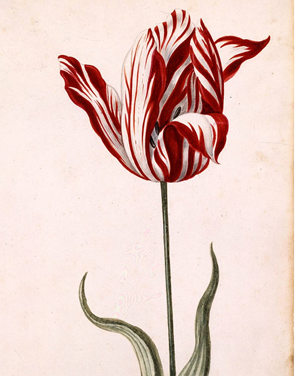
I added a little discussion of image culture, as well as a discussion of the rise of natural history. I also mentioned the “tulip bubble” in passing. The tulip bubble was actually not a story of financial collapse; what was being speculated on was in fact the rare varieties cultivated at the time, and the high prices were really the result of a craze for novelty and conspicuous consumption. But the tulip episode was a media-history event. Its background included a global freight environment supported by ocean-going navigation technology; a social environment of curiosities supported by letters and printed matter; and a futures-trading environment supported by bills of exchange and notaries.

V. Telegraphs (4 class hours)
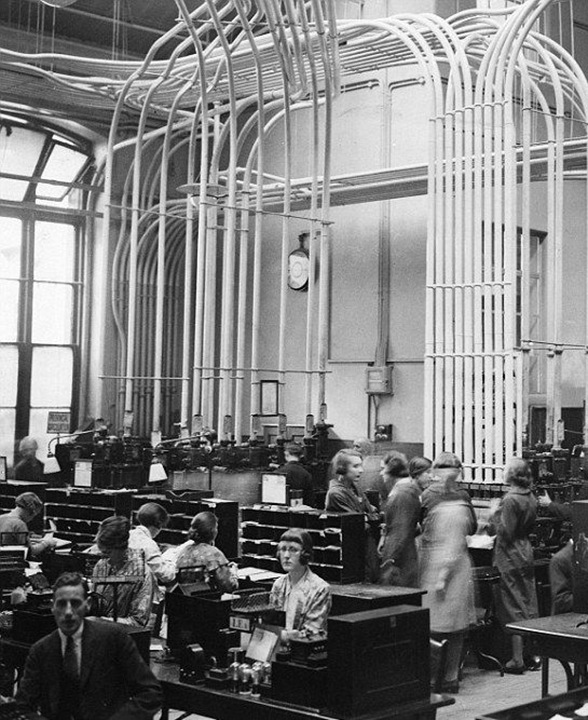
The corresponding reading materials are Part Four of The History of Communication (Electricity Creates a Connected World), in which there is a chapter on the telegraph in the fifth edition but not in the sixth; and also Chapter 14 (The Telegraph: The Internet of the Victorian Era), Chapter 17 (Time, Space, and the Telegraph), and Part Six (The Radio Era), Chapters 25 (The World of Radio), 26 (The Public Voice in Radio Broadcasting), 27 (The Early Years of Broadcasting), 28 (The Golden Age of Programming), and so on. Further reading includes Standage’s The Victorian Internet, and the relevant sections in Peters’s Speaking into the Air, among others.
This lecture too was migrated from A General History of Technology, likewise expanded from 2 class hours to 4. With richer historical content, the philosophical discussion was also strengthened. On the philosophical side, centered on Carey’s text, we additionally discussed the intrinsic connection between the telegraph and futures trading.
VI. Television (4 class hours)
The corresponding reading materials are Part Seven of The History of Communication (The Television Age), Chapters 31, 32, 33, 34, and 35. Further reading, of course, is Neil Postman’s The Disappearance of Childhood and Amusing Ourselves to Death.
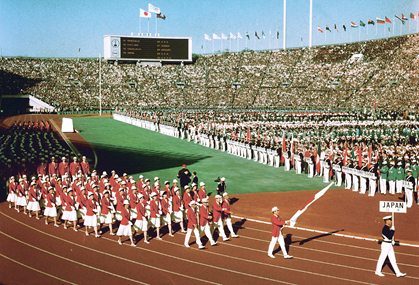
Aside from a very brief introduction to the history of television, this lecture centered mainly on Neil Postman. Postman’s writings are highly readable, and his ideas are sharp and provocative; they are worth discussing. The key point is that most of Postman’s critique of the television age applies equally to today. Mobile internet has intensified the “scrolling” characteristic of the television era, while the trends toward infantilization, anti-rationalism, fragmentation, and entertainmentization are even more identical in form.
Television was discussed over two weeks and 4 class hours in total. In the first week I followed Postman, criticizing the anti-intellectual character of television culture. But in the second week I turned around and criticized Postman himself; the basic line of argument is all in my “Hardline Thesis on Media History.”
Between these two ways of teaching, with and against the grain, I pointed out to the students two attitudes toward rational discussion. First, criticizing a scholar who has thought and taken a position is a sign of respect, not contempt; criticism, and provoking criticism in return, is precisely the mission of humanistic scholars. Second, one need not demand that a statement cover every angle and be flawless in every respect. A sharp, provocative statement may well be one-sided; in many cases, precisely because its position is one-sided and it pushes one line of thought to the extreme, its insight is more inspiring. If you want to obtain a comprehensive and dialectical understanding, you should not require every speaker to be maximally smooth and prudent. Rather, you should listen and read more on your own: Zhang San leans left, Li Si leans right; if you read across the whole field, you will naturally arrive at a comprehensive understanding.
And the attitude described above is exactly what is increasingly scarce in the present age. More and more people cannot tell the difference between criticism and smearing; and more and more people subject public speech to the harshest scrutiny, ready to tear it down and denounce it at the slightest handle or loophole, no longer showing respect. This trend first showed itself in the television age depicted by Postman, and in the age of social media it has become almost mainstream. This attitude itself is not absolutely a bad thing. Just as Postman repeatedly emphasized that he did not think entertainment itself was bad, what is troublesome is the blurring of boundaries, which leads to the flood of entertainment so that areas that were never supposed to be entertainmentized—such as politics—now share the same logic as fan culture. Amid changes in the media environment, we can hardly hope that the rational attitude of print culture will always be preserved; but I at least hope that within certain boundaries, such as in the academic sphere, we do not too quickly accept the onrushing tide of new media culture.
VII. The Information Age (2 class hours)
The corresponding reading materials are Part Eight of The History of Communication (New and Old Media in the Information Age), Chapters 37, 38, 39, and 40. Further reading includes the relevant chapters in A Brief History of Information, and Mumford’s The Myth of the Machine (Part II): The Pentagon of Power.
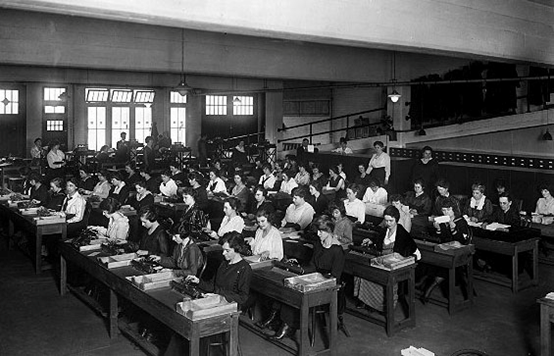
This lecture was adapted from the two lectures on computers and the internet in A General History of Technology. Originally it was 4 to 6 class hours of material, but here it is compressed into 2 class hours. This lecture does not replace the course in A General History of Technology; it simply includes a little overlap because the subject matter is important and cannot be avoided. Even so, I still added a bit of new material here, centered on Chapter 37 of the reading (The Revolution in Control). “The Revolution in Control” does not at first glance seem related to computers; it is about the rise of “intelligent technology” in the pre-computer era—for example standardized production, automated production, the modern accounting system, scientific management, assembly lines, the Soviet planned economy, and Keynesian state finance, and so on. This series of transformations in “management technology” was in fact the prelude to the modern cybernetic machine. This brought to mind Mumford’s concept of the “megamachine.” Mumford also said that the development of this social technology, which makes human beings themselves automatic and mechanical, preceded the rise of tangible machines.
If we broaden our view to the whole general history of technology, including social technology, it becomes easier to see a fact: automation or intelligent technology is not naturally liberating. It first arose in order to control workers’ behavior more effectively and squeeze labor out of them to the utmost. Even today, among food-delivery couriers, we can still clearly see that the role played by big-data intelligent technology is not that of humanity’s servant, but rather that of a cold and merciless slave driver. Engels said: “The automatic machine in the large factory is far more despotic than any small capitalist who employs workers.” This insight is no less valid today. While actively developing all kinds of intelligent technologies, are we treating them as a medium or as an end?
VIII. Social Media (2 class hours)
Chapter 41 in the reading materials (the mobile network society) is somewhat relevant, but in fact it is not of much use. Further reading includes Hassan’s The Age of Distraction and Lovink’s The Abyss of Social Media.
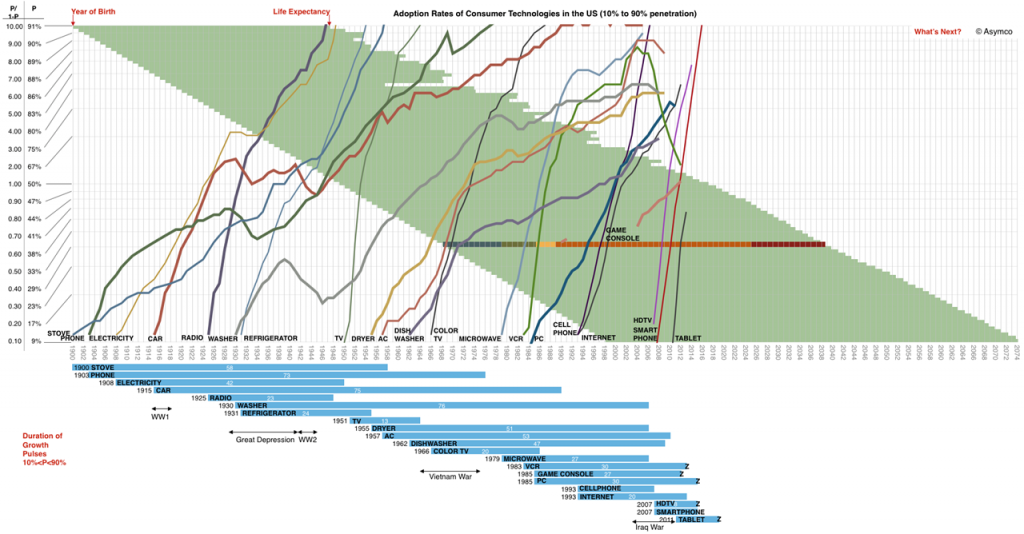
There is a great deal of literature on social media, but I could not find anything especially classic. That is not surprising. For scholarship in the humanities to become classic requires a certain sedimentation over time, whereas this era develops too quickly. Before a scholar has even completed the process of building up their own academic foundation, the surrounding media environment may already have undergone several rounds of drastic change. This difference in “speed” is itself one of the defining characteristics of this era. Since the Industrial Revolution, technology has been developing at an accelerating pace, but the speed at which technology has changed violently enough to keep pace with, and even outstrip, the rhythm of human life is perhaps only a matter of the past few decades. This situation poses new challenges for how human beings live with technology.
The focus of this class is social media. I first analyzed the phrase “social media” or “social networking media.” Social means socialized, but which medium is not social? Isn’t the telephone social? Aren’t letters social? Why do we use “social” specifically to refer to certain online platforms in the web 2.0 era?
In a sense, social media is instead the disintegration of the “social.” In the traditional sense, “society” is a very powerful, even dangerous, word—for example socialism, social movements, trade unions, associations, and so on. “Society” is the result of some conscious organization from below. But under social media, “society” is no longer full of agency. Although struggle and conflict remain common, these struggles often remain on the keyboard and at one’s fingertips, and can no longer join together into a force that changes reality.
In addition to continuing television’s trends toward entertainmentization, massification, and infantilization, social media’s “multithreaded” mode of use further intensifies the fragmentation of life and thought.
These new trends are not necessarily all bad, nor are they necessarily all good; but we who are caught up in them always want to understand clearly the environment in which we find ourselves.
IX. Student Discussion Session (2 class hours)
Translated from the Chinese original with AI assistance. The original text is authoritative.