
“Selected Readings in Classics of the Philosophy of Science” was the first course I was in charge of after coming to Tsinghua, aimed at incoming graduate students in the Department of History of Science.
At the time, the Department of History of Science still had only a few teachers, and someone had to teach philosophy of science, so naturally I was assigned to this course.
My own research leans toward the history of technology and the philosophy of technology. I am broadly familiar with orthodox philosophy of science, but it is not my specialty.
But in my view, orthodox philosophy of science is definitely something one has to study; there is no getting around it. By orthodox philosophy of science, I mean the academic lineage that began with logical empiricism and flourished in Anglo-American analytic philosophy. In terms of the theme of “philosophy of science” itself, this line is the most classic, the clearest, and the most practical. Even those working on phenomenological philosophy of science or sociology of scientific knowledge should, to some extent, understand orthodox philosophy of science; logical empiricism, falsificationism, Kuhn, Feyerabend, and so on—at the very least, one should know their faces.
Later, many teachers from Tsinghua’s STS institute joined our Department of History of Science, and the faculty was suddenly much more substantial. In their original curriculum, the teacher responsible for the foundational course in philosophy of science was Professor Wang Wei. He is experienced and deeply devoted to this field, and his course is clearly more mature than mine.
In the later planning of the teaching program, Professor Wang Wei’s course and mine became category-required courses. Students could choose either one of the two, and of course they could also choose both.
Since my course had originally carried 3 credits, while Professor Wang’s original course had 2 credits, though in practice he taught it as a 3-hour course, and since I wanted to test out the new curriculum plan and therefore hoped to reduce the hours a bit, we swapped courses this year, and I took over the course now called “Philosophy of Science and Reading Original Texts.”
Since students now have a more mature and more professional option, my course can be freer. I can, according to my own interests and distinctive concerns, make the philosophy of science course less orthodox.
I suggest that students who are more inclined toward philosophy of science should prioritize Professor Wang’s course, while my course can serve as a supplement, or be chosen by students who lean more toward intellectual history.
So how should my course be reformed? My idea is to stop reading orthodox philosophy of science altogether, and instead read “pre-philosophy-of-science”—that is, the classical philosophical tradition.
Is philosophy of science first science or first philosophy? The Vienna Circle may have believed it should first be science. The entire orthodox philosophy of science originated in the Vienna Circle’s renunciation of the whole traditional philosophy (so-called metaphysics) and its turn toward natural science. They tried to turn philosophy into science and answer philosophical questions by scientific methods.
But in the end, they failed—though of course this is also a matter on which reasonable people can disagree. For example, contemporary philosophers of cognition still identify themselves as cognitive scientists. Personally, I do not think modern philosophy can cut itself off from its connection with classical philosophy.
After logical empiricism, orthodox philosophy of science also became much more plural. Many people are capable of showing respect for ancient philosophers as well. But I feel they often quote out of context, or, to put it in the terminology of the history of science, they often take a Kuhnian attitude toward ancient philosophers: they excerpt the snippets they find useful and cite them, but rarely return to the context in order to understand the thought-world of ancient philosophers as a whole. Ancient philosophy thus becomes more of a field for historians and classicists.
But are we not, after all, in a “Department of History of Science”? Even if those ancient ideas are no longer regarded as “philosophy,” should they not at least still count as an important part of the “history of scientific thought”?
Moreover, I still maintain that the history of ancient philosophy remains a necessary foundation for contemporary philosophy. There is a saying: “Philosophy is philosophy history,” a line passed down from my academic ancestors (adapted from Hegel). I actually do not quite agree with this saying, because I believe that personal reflection on everyday life experience is the root of philosophy; but what I do support is this: a philosophy department is really a philosophy history department, because philosophy itself cannot be taught—it can only be guided and inspired—and all proper teaching materials are historical.
Simply put, from the standpoint of the philosophy of science major, philosophy of science is philosophy rather than science, and philosophical education is grounded in history of philosophy and reading the classics; from the standpoint of the history of science major, many classical philosophers constitute the core content of the history of scientific thought; and as for my own interests, the philosophy department at Peking University also gave me a classical philosophical upbringing. So I plan to broaden the scope of original texts in philosophy of science, selecting classic texts from the entire history of philosophy, while of course also relating them to the basic questions of philosophy of science in the narrower sense.
The texts I initially plan to select are as follows:
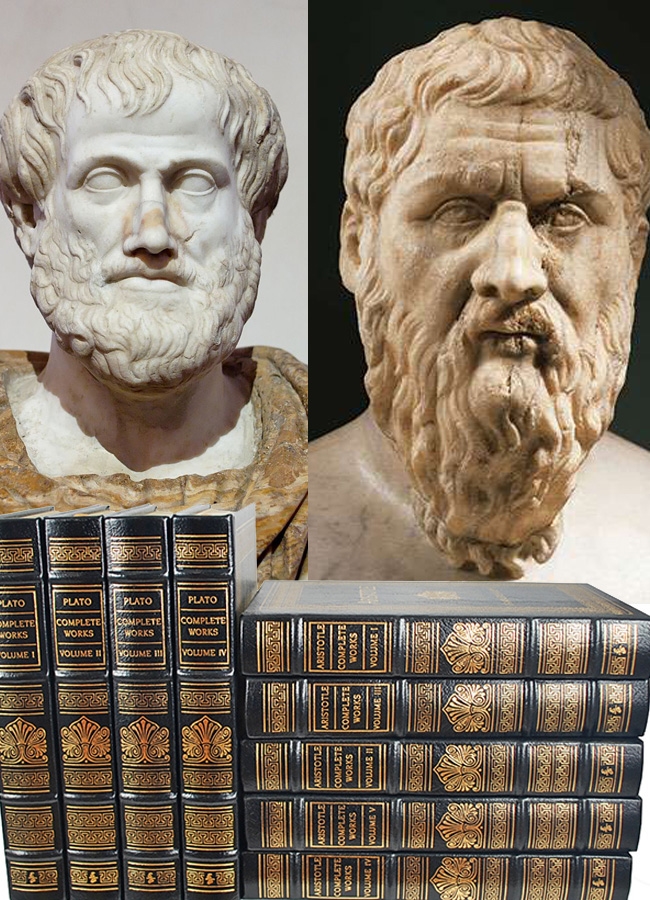
- Selected passages from Plato’s The Republic (roughly books 5, 6, and 7, on knowledge and the world of Forms) and selected passages from Plato’s Meno (the section on recollection)
- The opening sections of Aristotle’s Physics (the first three chapters, on first principles, nature, and motion)
- Selected passages from Descartes’s Meditations on First Philosophy (the First Meditation, or the first two Meditations)
- Selected passages from Hume’s A Treatise of Human Nature (chapter 3)
- The opening sections of Kant’s Critique of Pure Reason (the Introduction and Transcendental Aesthetic)
- Selected passages from Husserl’s The Crisis of European Sciences and Transcendental Phenomenology (the beginning of Part Two, sections 8 to 15)
- Heidegger’s “The Age of the World Picture”
If the course meets for 2 class hours per week, then roughly two weeks would be devoted to each philosopher; in 4 class hours, at least 1 hour would be led by student presentations, and the remaining time would be my general exposition. The texts actually read do not necessarily have to be the ones listed above; they can be adjusted according to the students’ situation and the pace of teaching.
The reading materials will be selected from reliable Chinese translations, and students with the ability may consult the original foreign-language versions on their own.
The amount of text should not be too large, but all of it will be very difficult. I am not, after all, an expert in the history of Western philosophy, so I cannot possibly lecture on it in a highly professional way; I can only interpret it together with the students. But we will consciously lean toward questions in the philosophy of science and the history of science, while also accommodating beginners who are almost entirely unfamiliar with the history of philosophy.
What I hope to achieve is that students may not necessarily gain a deep grasp of these classic texts, but at least they can acquire some more direct “feel” for them, rather than mindlessly labeling philosophers based on hearsay—for instance, when Hume is mentioned, one only knows the “problem of Hume,” but does not know how Hume himself actually posed the problem and answered it.
Reading classics in excerpted form is actually not ideal. I have always believed that philosophical classics are works to be taken as wholes; if you are going to read them properly, the best way is to read them one book at a time. But conditions are limited, and even a cursory reading will not be meaningless. At the very least, the chapters we select should guarantee a relatively complete logic of argumentation and reduce the risk of taking things out of context.
Translated from the Chinese original with AI assistance. The original text is authoritative.