
A recent Zhejiang Gaokao essay that scored full marks has sparked heated discussion, but the target of the criticism is often “obscurity.” The author opened by quoting Heidegger, famous for being obscure, and thereby deepened the stereotype of philosophy = obscurity.
In my view, the key to that full-mark essay is not “obscurity,” but “posing,” that is, feigning obscurity. Some philosophers are obscure because they often construct a grand edifice of thought, weaving together a self-consistent conceptual system; if an outsider is not familiar with the basic patterns, then even a few scattered phrases are hard to understand.
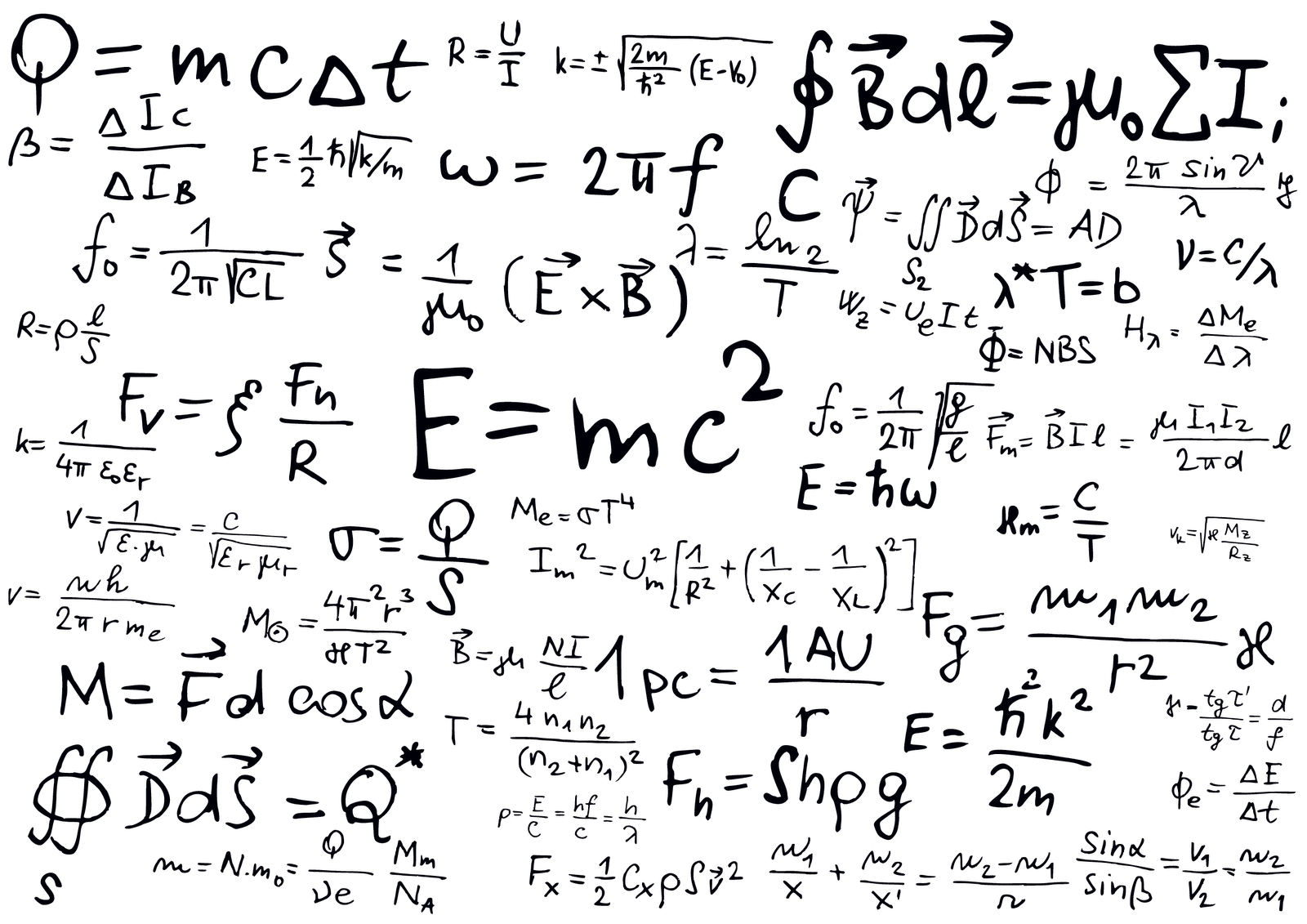
It is like a mathematical formula: if you are not familiar with the definition of every symbol in it, of course it reads like a heavenly cipher. But in fact, the reason for using these symbols that outsiders find hard to decipher is precisely to make the expression concise and accurate, not to increase the obstacle to reading.
Philosophers are the same. In essence, obscure language is used in order to express thought more simply and accurately. Of course, the styles of Anglo-American analytic philosophy and Continental philosophy are very different. Analytic philosophy is not easy for outsiders to read either, because it makes heavy use of mathematized forms of expression; Continental philosophy, by contrast, likes to play word games on top of everyday language, which makes its obscurity in terms of writing style even more famous.
The scaffolding and context behind obscure statements are very important, but the intellectual edifices of different philosophers are not the same and cannot be used interchangeably in a simple way. That means that if one is not presupposing a specific context (for example, internal exchanges among Heidegger scholars), but is instead writing for the public, or linking together in the same article several philosophers with different sets of assumptions, then one should not use those kinds of discourse that require a great deal of prior understanding.
The very first quotation in the full-mark essay already let the cat out of the bag. “All traditions of practice have already completely disintegrated” — here “practice” is not the everyday concept, but refers to “practical wisdom” in the Aristotelian sense. If one does not understand Aristotle’s tripartite division of knowledge (theoretical, practical, and productive/artisanal), one cannot understand what it means to say that the tradition of practice has disintegrated. This is because in modern everyday usage we default to the binary division of “theory—practice,” but in fact this conflates Aristotelian practice with productive craft-making; naturally, the concept of theory has also been reshaped by modern science. Modern “science—technology” replaced the ancient knowledge tradition of “theory—practice—craft,” and that is where the talk of the disintegration of the tradition of practice comes from. But the author’s next sentence talks about “expectations originating in the family and social tradition…,” which is completely at cross purposes with the “tradition of practice” that Heidegger and MacIntyre are concerned with, or, to put it bluntly, completely misses the point. (For the disintegration of practical wisdom, see my early short essay.)
Since what is being discussed has nothing to do with practical wisdom at all, why begin by quoting such a line? The conclusion is obvious: posing, using borrowed authority to bluff people.
Of course, we do not need to investigate the author of this essay too deeply. After all, it was an exam essay; it was neither public writing nor academic writing. To try to read the examiner’s mind and get a high score is perfectly understandable. The reason I bring this up is that I am aiming at the atmosphere represented by the examiners and the like, as well as the widespread misunderstanding of philosophical writing reflected in this case.
These atmospheres and misunderstandings also exist in academia. Some scholars regard obscurity as beautiful, while others sneer at any obscure style of writing as soon as they see it; both attitudes are undesirable. One cannot simply say that an obscure style is necessarily good or bad. The key is whether the author has accurately expressed their own thought. Obscurity is a strategy of expression; whether one uses obscure language or commonplace language, the goal is to express thought better.

For example, whether to send an emoji or send text is also a matter of different expressive strategies. Under normal circumstances, the meaning of an emoji is more ambiguous; a smiling face does not necessarily mean happiness. But if you are really happy or unhappy, agreeing or disagreeing, would it not be more accurate to express it directly in clear, unambiguous words? Not necessarily, because very often what we actually think is not a clear-cut, either/or judgment split into two poles; our thoughts and attitudes themselves already carry ambiguity and vagueness. In that case, it is precisely the more ambiguous emoji that can express oneself more accurately.
Of course, understanding emojis also requires familiarity with context. The same emoji means different things in different subcultural circles, so using emojis often increases ambiguity between us and our elders; in that case, emojis may become a rather poor expressive strategy.
The same is true in academia. Obscure language, everyday language, mathematized language, and so on are all different expressive strategies. None of them is absolutely good or bad in itself; the issue is whether they are suitable for different contexts.
Some thoughts are difficult to explain clearly in plain and straightforward language, and may even be difficult to put into words at all. This requires more scaffolding, approaching them slowly and gradually, while also patiently clarifying, strand by strand, some deep-rooted prejudices in everyday language. And this roundabout, progressive process is often not direct, nor can it achieve everything once and for all. This means that some philosophers become immersed in it too deeply, and this leads to a gulf between their mode of expression and ordinary modes of expression. But we must believe that sincere philosophers do not regard obscurity as beautiful; what is called obscure expression must, in their own eyes, be clearer and more accurate.
But these philosophers who are familiar with their own obscure modes of expression should not always remain immersed in their own world. When they need to communicate with outsiders, they need to compromise as much as possible on the basis of mutual respect. Just as parents need not probe relentlessly into the strange emojis used by their children, children may as well communicate with their parents as much as possible using speech patterns with which the parents are more familiar.
Translated from the Chinese original with AI assistance. The original text is authoritative.