
When Was America at Its Greatest?
So-called “Make America Great Again” — but at exactly which period in history was America the greatest? This historical question actually determines how one judges present policy and the respective international situation.
One standard answer is the post–Cold War period. At that time, the United States stood alone in glory, unrivaled, becoming the sole hegemon, the world’s policeman, imperious and overbearing. But in terms of industrial capacity and total GDP, America during this period was only about one quarter of the world.
The highest share of GDP should have been at the end of World War II. By then, the whole world had been beaten into ruin, while only the United States had not consumed itself and instead made a fortune from the war. At that time, America’s GDP should have exceeded more than half of the global total.
But America’s ability to make a fortune from war was not accidental either. Before World War II, the nation’s strength had already reached its zenith. In the nineteenth century, the United States surpassed Britain to become the world’s leading industrial power. The spread of interchangeable parts, Fulton’s steamboat, Morse’s telegraph, Bell’s telephone, Edison’s electric light, Tesla’s electric motor, the Wright brothers’ airplane, and Ford’s automobile, along with the first commercially exploited oil fields — this whole series of important inventions that drove the Industrial Revolution into a new stage (the electric age) either happened in the United States or were first successfully commercialized there. If Britain was the engine of the first Industrial Revolution, then America was the leader of the second Industrial Revolution.
Ford’s assembly line raised industrial production to a new level, and the combination of Ford factories with hydroelectric power plants let American manufacturing stand unrivaled.
In industrial power, only Germany — capable of unleashing two world wars — could compare. Germany’s Siemens and Mercedes could be placed alongside Edison and Ford. But in the large-scale popularization of industrial power, it was far inferior to the United States. Not to mention the issue of abundant resources.
From Ford’s assembly line (on the eve of World War I) to the eve of World War II, those more than twenty years were in fact the period when American national power reached an unprecedented peak. Before World War II, America’s GDP may have reached 30 percent of the world, or one third (because of historical divergence, it cannot be estimated precisely, but in any case it was no weaker than in the post–Cold War era). There was the Great Depression in between, but Europe was not doing much better either.
What am I trying to say? — Those twenty years before World War II were precisely the twenty years in which the United States adopted an “isolationist” national policy. Keeping quiet while making a big fortune.
You say America became prosperous by profiting from World War II? That way of thinking is fine. Then, in order to cash in on war profits, first, build up a solid industrial base so that at the critical moment you can put all your horsepower into mass-producing fighter planes, and don’t hand industrial power over to others; second, don’t meddle here and there — wouldn’t it be even better if other people go and start a world war?
So, if you think America was at its “greatest” in the 1920s and 1930s, then that was precisely isolationism. If you think America was greatest at the end of World War II, then first practice isolationism, build up your reserves, and wait for the third world war. — I feel that this is exactly what Trump is doing, only I don’t know whether he belongs to the first version or the second. In any case, he does not think the post–Cold War United States was the greatest period.
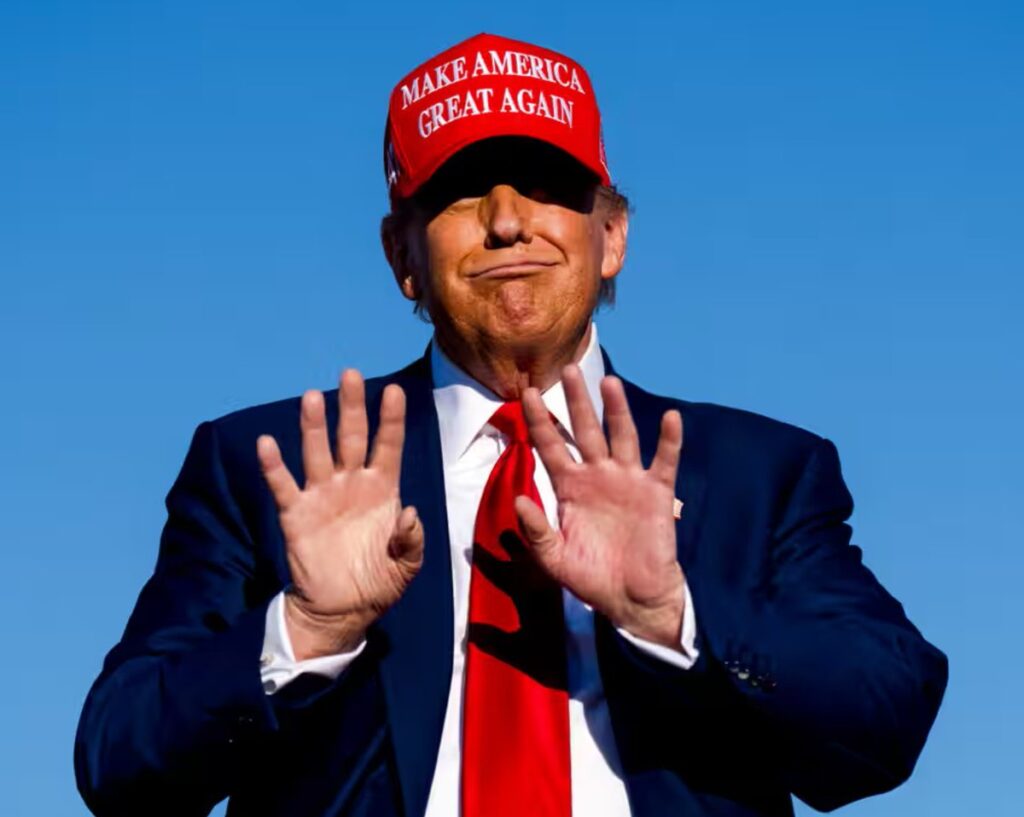
Alas, either you go all the way, or if you’re softening now, that means you were already out of options back then. At the time, Trump was obviously being rude. But everyone should have long known what kind of bastard Trump is; if you really want to win his support, you can only stroke him the right way. I think Zelensky’s attitude at the time was that, since he already didn’t want to sign, he came here to throw caution to the winds and stage a show — in that case, I thought it was a strategy. But now it looks like he really bungled the performance. Could it be that he really wanted to bluff Trump with the high ground of righteousness?
So bleak. Backing down is also a kind of courage, perhaps…… Trump’s posture is actually very clear: isolationism, speaking only of interests and not of righteousness, perfectly self-consistent. But the useless EU is actually not self-consistent at all. It shouts loudly, yet in practice gives only drizzle-like support. You say your military isn’t up to it, so then give more money, right? But even that money isn’t given in full; when the whole EU is added together, it still doesn’t compare to the United States. Then what are you shouting for?
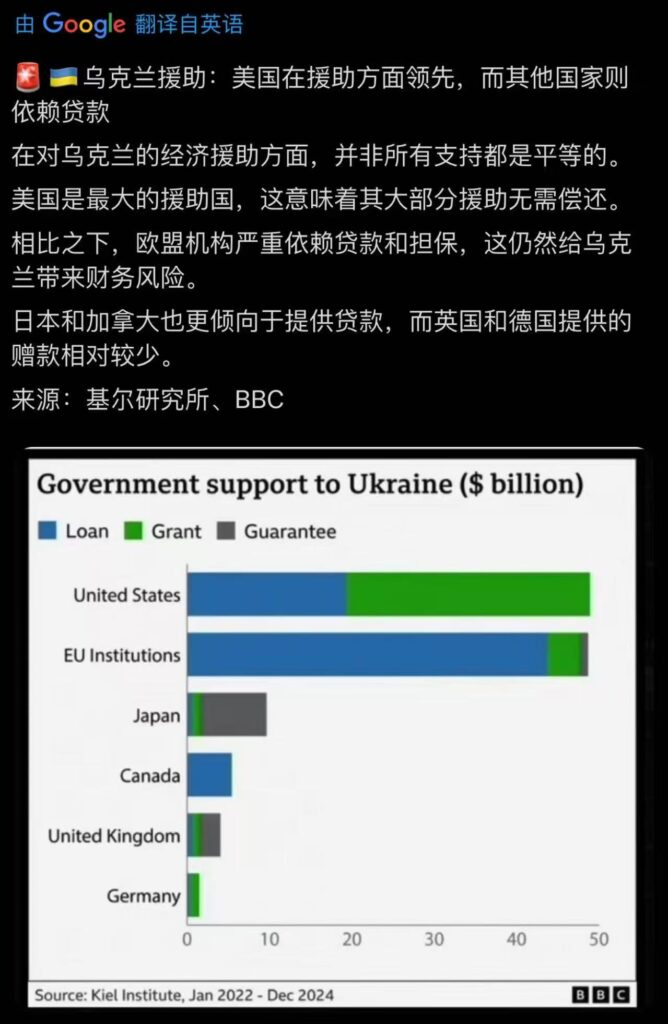
The Collapse of the Value-Based Alliance
The same goes for issues such as tariff policy. I think Europe as a whole still misjudged Trump and never expected that he was serious about cutting Europe off. Come to think of it, why are Europe and the United States natural allies? Chinese people all know: because of Western values, because of the shared identification with the “free world.”
Now Trump, on the one hand, has a businessman’s logic: he values practical gain and is immune to empty rhetoric, so he doesn’t care about these hollow things. On the other hand, he represents the resurgence of conservatism.
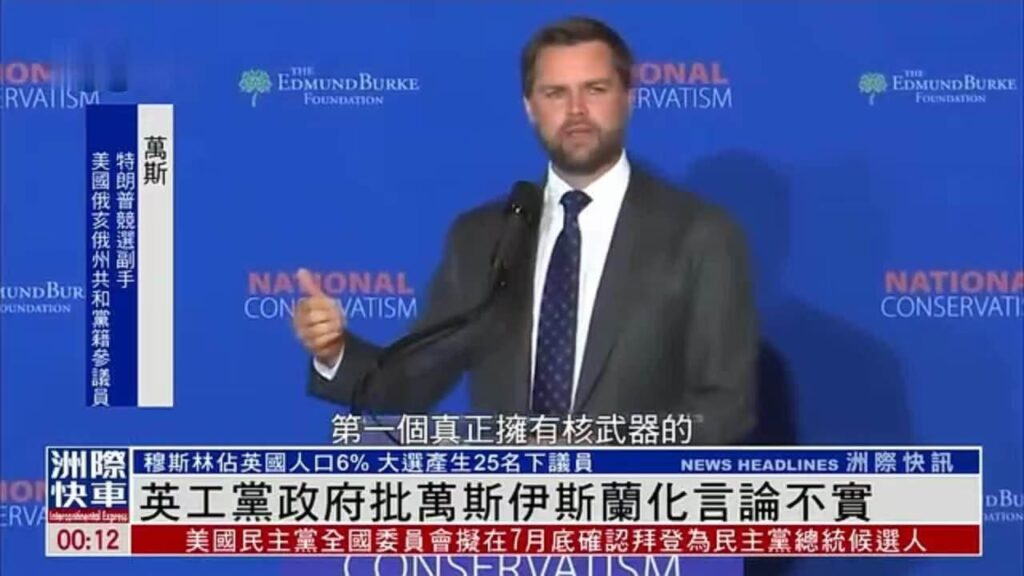
Western values contain many traditional elements, including Christian culture and classical liberalism. The problem is that many Westerners themselves have abandoned these two things. So now, from the point of view of a Christian conservative, the value alliance of Europe and America has already collapsed. Europe in fact has become a value system of atheism + Islam. The atheist population in Britain has already surpassed the Christians, and the Muslim population is also multiplying at an accelerating pace, so when Vance said at the time that Britain was the first nuclear-armed Islamic country, that probably was not entirely a joke; it could represent the mindset of the Trump camp.
Even I think the expansion of the green religion is a major problem, so how could those Christian conservative ranks remain unmoved? So now the theme of civilizational conflict has shifted from “democracy vs. autocracy” to “Jesus vs. paganism & atheism.” Under the new scale, Eastern Orthodoxy and Judaism can be brought in as allies; Western Europe is also a hidden menace; and some atheist Eastern great power is the ultimate enemy. But Chinese-style atheism is not as blasphemous as the LGBT faction, so in the short term it can still be courted. Other regions that were originally pagan cannot change overnight either. So the urgent priority instead becomes Europe and Canada, these places that can still be salvaged. Seen this way, it seems possible to explain the Trump camp’s line of policy.
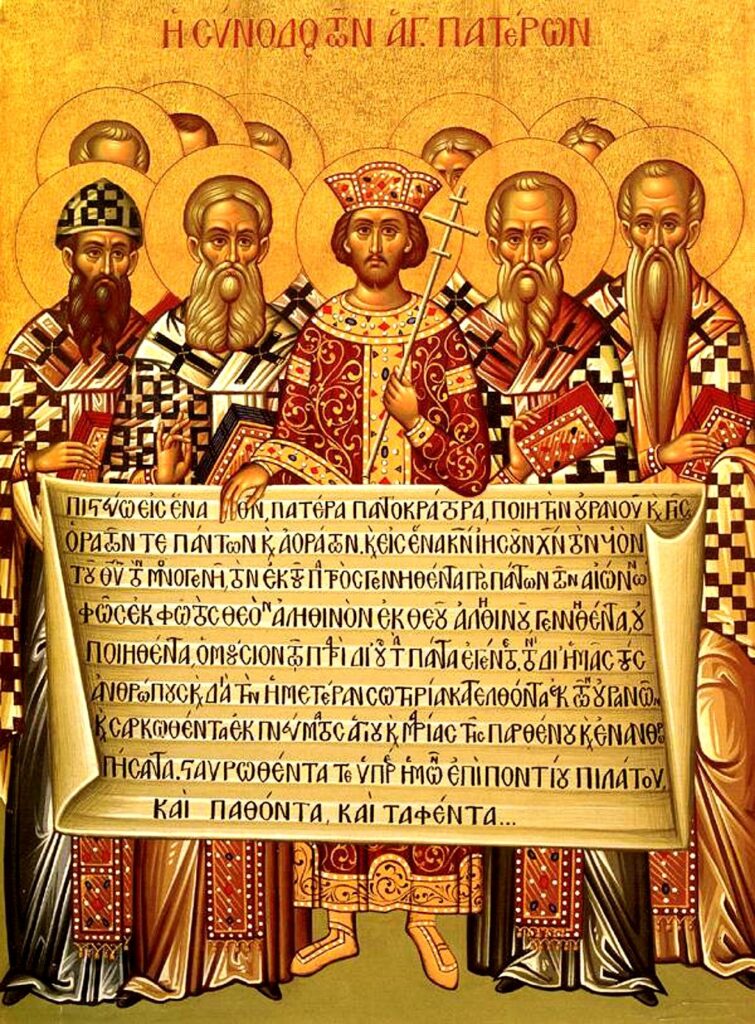
A saying in some group chat was, “Trump wants to secure peace before the 1,700th anniversary of the Council of Nicaea.” Thinking it over carefully, there really is some logic to that. The Catholic pope and the Eastern Orthodox ecumenical patriarch had already agreed to join forces this year for the grand occasion. Trump would absolutely not give up this truly once-in-1700-years chance to become Constantine reborn.
Translated from the Chinese original with AI assistance. The original text is authoritative.