
Recently I’ve basically given up on Weibo and switched to Twitter; one of the big themes on Twitter lately has been the MEME-related discussion that came along with Trump’s coin launch.
【On the origin of MEME】…A lot of people don’t know that the word MEME was coined by Dawkins. “Memes” are certainly a kind of meme, but MEME is not limited to “memes.”
【On TikTok being banned in the U.S.】This is the problem with Web2: you can’t always expect leader figures like Elon Musk to govern Web2 platforms. If so-called Web3 projects ultimately cannot provide a permissionless, uncensorable, open and free social space, then they do not deserve to be called Web3.
【Trump represents the trends of the internet age】Trump has won a second time, and yet many people’s explanations for his victory are still endlessly saying things like “the public is stupid.” In fact, just as from newspapers to television, the underlying environment of American elections has become the internet, Trump-style candidates will be the norm; Biden, by contrast, is the remnant glow of an older era. It’s also too naive to imagine that all we have to do is outlast Trump and things will be fine.
【On Trump launching a coin】Did everyone buy $TRUMP today? From my own understanding, if I had seen it right away, I would have gone all in. I saw it a bit late, but I kept buying without touching my cold wallet. Unfortunately I had to go do an event at a bookstore in the middle, which delayed me quite a bit.
I’m very bullish on MEME coins, and I was still talking about this today. The crypto world has always been a place that stores up all kinds of filth and all kinds of “garbage”; big sharks and small sharks chewing each other up left and right. But in the past it was a mixed bag—at bottom it was nothing but a game of pools, though it always had to be wrapped in all sorts of flashy packaging, attracting many people each with their own ideals, only for the essence in the end to be coin speculation. But now MEME coins have burst onto the scene. To those who think MEME coins are bad things, I say: the best thing about MEME coins is that their badness is pure—simple and brutal, making no promises and offering no functions. Aside from a name, it is pure speculation.
This kind of pure “evil” is precisely a good thing in the overall ecosystem. Because it becomes the best channel for emotional release. There’s no need to hide filth and garbage anymore; a whore doesn’t need to set up a chastity archway. If you want to speculate on emotions, then speculate purely on emotions—there it is, the simplest and purest emotional symbol. Then conversely, if you want to do real work and build functionality, that too becomes a bit purer.
And this world itself is not full of rationality. More often than not, what people pursue is the expression of emotion; rather than saying they are looking for the person they rationally identify with most as president, it’s more that everyone is looking for a direction that can better carry their own emotions.
The theory of the “nation-state” tells us that the state itself is a product of “narrative.” Nation-states were born out of “print capitalism,” but in the internet age, the internet has replaced print, and blockchain’s new financial model has replaced traditional capitalism. Then we are bound to welcome some new form of narrative. This form of narrative can’t possibly be more rational; just as short video is to the printed book, the new form will inevitably be more fragmented, more emotional, and even more absurd. But that is the trend of the times.
This world has always been full of absurdity and filth, and we neither can nor should expect to eliminate these irrational parts; that is also where the interest of this world lies.
Rather than saying the crypto world’s way of playing is dirty, it’s more accurate to say that it has made visible the parts of the original world that were already hiding filth and garbage. It doesn’t hide, doesn’t dodge, and puts it all out in the open. Take Trump launching a coin, for example: of course the issuer is going to make a killing, but they’re making it in broad daylight. A lot of other things have layer upon layer of complicated steps, but in the end aren’t they just harvesting your leeks? Now Trump is using his narrative to raise money, and he’s doing it openly; he deserves to make money. With no promises, there is naturally no deception, and it’s far more direct than those insincere grandiose promises. In the future, politics may even be played this way—candidates each issue a coin and compete to see whose is pumped the highest; whoever’s coin is pumped highest becomes president. That may not be any more unfair than the current electoral system.
【On Trump’s wife launching a coin】“The denationalization of money” is a good thing; it shows that what Trump wants to push is this new order of “everyone issues coins,” not merely “presidential coins.” But this pace is also too fast—it’s self-extraction feeding on itself, and the optics really are a bit ravenous. Of course, perhaps they need to issue all the coins before the official inauguration in order to avoid some legal issues (the president cannot directly participate in private business).
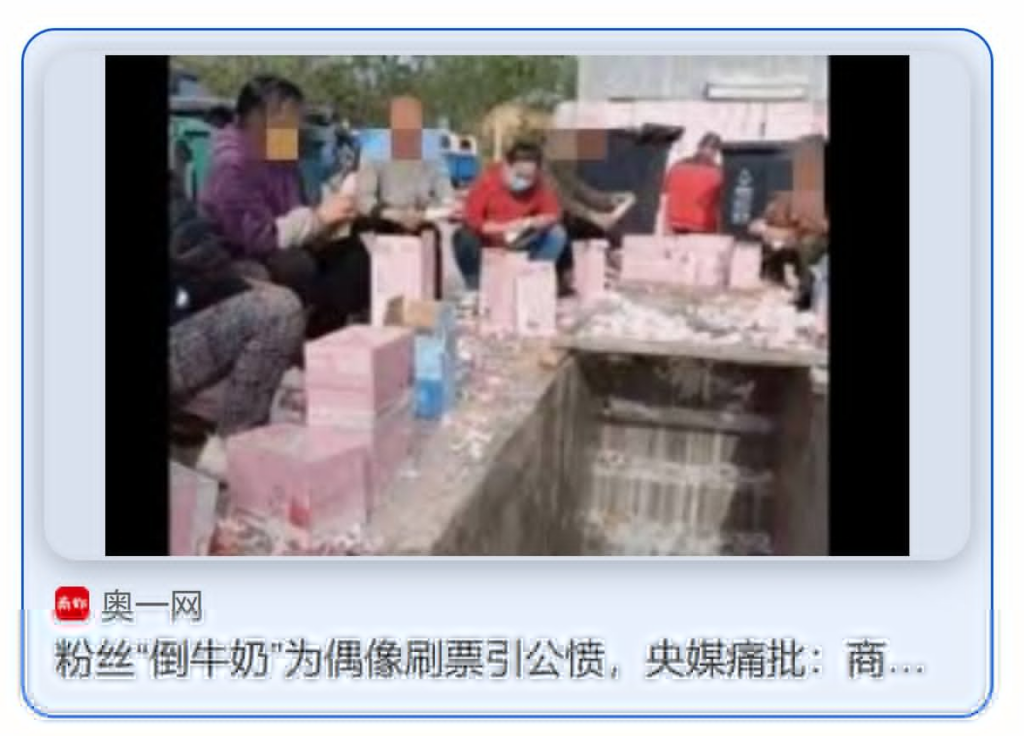
【The everyone-issues-coins revolution and influencer economics】Everyone issuing coins, replacing Web2’s influencer economy with a token economy—that’s something I thought of when I first came into contact with concepts like DAO and Web3, https://yilinhut.net/2023/10/27/9401.html but back then my thinking was still constrained by ETH. I kept thinking there had to be smart contracts and whatnot. Now I see: what smart contracts, what multi-sig treasuries, any of that? Since it’s about speculating on emotions, the purer the better. If there are no functions at all and you’re just speculating on a name, that’s it—that’s the first principle, going straight for the soul, a simple and pure emotional economy. You think you absolutely have to make some milk for fans to buy, and insist on adding some actual function, but in the end the fans dump the milk and only want that purest, most empty thing: “send money.” Now MEME coins are stripping away the flashy “milk” that smart contracts used to have and leaving behind the purest emotion. That’s what really hits the spot.
【MEME is the form of the new alt season】Come to think of it, I’m a bit puzzled: how do the many people complaining that “alt season” hasn’t arrived define altcoins? Anything other than Bitcoin is an altcoin. In 2013 it was all sorts of alternative-algorithm coins led by LTC; in 2017 it was led by ETH; later there were VC coins, platform coins, and so on. Each bull market has its own different alt hot spots, right? This year isn’t MEME rising up instead? Its玩法 is even more “alt” than the high-minded VC coins; isn’t that a proper alt season?
【Responding to cipher: “It’s not Ethereum, but the entire blockchain industry that has entered its darkest hour, unless you think the future of blockchain is meme and pvp”】The development of blockchain has different trends in different stages; hot spots are always more eye-catching, but that doesn’t mean other fields have been eliminated. The earlier hot spots before Ethereum weren’t eliminated either: NFT had already collapsed earlier, but in this round it’s actually bounced back a bit; DeFi is still very prosperous, only it has been siphoned off by Solana; ICO has now become broader in scope, with everyone directly issuing coins. “Freedom to issue coins,” “the denationalization of money,” removing the sacredness of the minting power, respecting the spontaneity of the market… these have been ideals of the entire crypto movement since the ancient era of Bitcoin, and I think the recent trend is a move closer to those ideals, not away from them.
Last year I told Baiyu: Ethereum’s biggest problem is that it is too eager to carve out a territory and establish a state, wanting to set up order. But the crypto movement is still far from complete; the revolution against the fiat-currency system has only just begun. Compared with the traditional financial world, we’re like we only occupy a small water marsh; rather than rushing to proclaim ourselves emperor and set up a system, it would be better to hope that the world remains in great disorder. Revolution requires the power of chaos, and even the impulse of barbarism and irrationality.
At the time, though, I placed more hope in the Bitcoin ecosystem, and reality proved my judgment wrong. But the new age of chaos still arrived as I had wished. PVP is, in essence, a zero-sum game, and cannot last. But in the short term it unleashes tremendous force, especially by using Trump’s crazy actions to ram directly into the face of the entire traditional financial system, forcing everyone who likes calm, peaceful days to seriously examine the new force of the crypto movement. Clearly, this is a situation we revolutionaries are happy to see.
【Continuing to talk about Ethereum (the Foundation): not too idealistic, but too pragmatic】I think Ethereum’s problem is not that it is not pragmatic enough, but precisely that it is not idealistic enough. They think the revolution is already close to completion, and have started thinking about long-term stability and peace. Environmental protection, longevity—those are things Qin Shi Huang could think about, but not the urgent task of Chen Sheng and Wu Guang.
For just anyone to come out and issue a MEME coin—inside the crypto world, that doesn’t feel like it has much constructive value, but the impact on ordinary people outside the circle is huge! If we can issue a coin at the drop of a hat, then as I said in https://x.com/epr510/status/1881185560121004100 the influencer economy can be revolutionized. In the future, fans won’t need to buy milk to support the rankings, and they won’t even need to刷鱼丸 rockets; there’s no need to let the platform take the lion’s share. The influencer just issues a coin and lets the fans speculate. Whoever’s coin price is higher is the top star; whoever holds the most is the number-one big brother on the charts. Is this way of playing really so nihilistic? If this is nihilistic, then what exactly is Web2 doing now? It’s the same speculation on emotions, the same irrational carnival. Wouldn’t it be better to smash the centralized platforms and return to individual freedom?
I’ve always said: if you don’t want to innovate Web2, then don’t talk about Web3 at all. In the ETH ecosystem before, all the tossing about and tinkering—were there really many things that matched Trump’s coin launch in terms of impact on the old order? The invention of the plugin wallet may count as an important thing, but there really aren’t many things that can strike at the soul and reform the Web2 paradigm at the level of thought.
ETH is not too idealistic; it is too pragmatic. Those programmers think MEME coins don’t have much technology in them, so they look down on their revolutionary power. But if we truly place our ideals on the grand mission of “tearing apart the old world,” then we should see the power of MEME and see the power from below.
【Responding to Bruce “You get what kind of people you attract. Those attracted by memes are mostly speculators and gamblers. If this industry really wants to influence all humanity, it definitely can’t be that billions of people are speculating on memes every day, right?”】Then what are billions of people doing on Web2 every day now? Aren’t they just watching influencers, scrolling Douyin, and the like? Of the billions in the Web2 ecosystem, how many are building every day? Don’t overestimate the public’s level, and don’t underestimate the public’s potential. Many people’s first time online, their first time jumping the Great Firewall, wasn’t for any lofty pursuit either; maybe it was to watch porn and so on. But they’re not necessarily only doing that forever. There will always be a few who pursue a higher taste.
Also, as I said, MEME is purified evil, https://x.com/epr510/status/1880653169350627406 it mocks the ways of harvesting leeks that hide behind a façade and pretend to be projects—since cutting people openly and directly is more popular, why go to the trouble of painting a pie and deceiving people? Isn’t that a thankless waste of effort? In this way, it actually pushes the profiteers who are just fishing in troubled waters out of the truly practical projects, and the real practitioners can be a bit cleaner, can’t they?
In fact, many practical undertakings don’t need that much money. Back in the day, those great open-source projects didn’t seem to need to raise that much startup capital. Take Wikipedia and the like: even though they’ve changed the world and are so great, how much money can they possibly burn? In the real world, many scientists, scholars, and public-interest people don’t earn the money that entertainment stars do. We have to admit that the background color of the mass-media era is entertainment, even frenzy. But making the emotion market more pure and more decentralized—that is a good thing.
[In agreement with @jason_chen998: “an enclosed, arrogant, conceited, stubborn Vitalik”]
Yes, at bottom it is still a kind of self-centered, self-moving machoism.
On the one hand, we should respect those who insist on ideals and reason and build things through real work; on the other hand, we should also fear the market and acknowledge the existence of irrationality. I once saw a successful person in the industry say, “Everything we have achieved is because of ETH.” VB is probably thinking the same thing: nearly all the important innovations in the crypto movement since Bitcoin have been pushed forward within ETH. This is also why I have always emphasized that I have never denied ETH’s contribution.
But that only says half of it. The other half is that the various achievements of the crypto movement must also be attributed to this “crazy market.” The fact that 99% of people in this market end up losing money is not something new on sol; it has been like this since the altcoin era of 2013. Of course, because Bitcoin itself surged so fiercely, the altcoin market overall did not turn out too badly, but if you look at it from the perspective of the pie-denominated standard, perhaps 99.9% were losing.
PVP is not a new phenomenon either; it is a “purification” of the market’s longstanding state. Originally, buidlers and irrational leek-like retail speculators were all mixed together playing the game. A project might have only 1% of participants with long-term ideals, while the remaining 99% all came with a PVP mentality. Back then, those two waves of people were playing the same coins together, so buidlers and long-termists could make money. Was the money they made really wealth created because the project exerted social and economic effectiveness? Wasn’t the overwhelming majority of it actually thanks to the continuous capital infusion from those PVP leeks?
The current crypto scene has not suddenly gained a new wave of irrational, ideal-less leeks who only want PVP; they have always existed. It’s just that they no longer play with the same batch of coins as you do. So the essence of what makes the Vs angry is not that too many PVP people have arrived, but precisely that too many PVP people have left.
Fear the market: either sit patiently on the cold bench, stick to long-termist construction, or acknowledge irrationality and reconcile with the masses.
(Addendum: Since VB, VC, and many Buidlers look down on PVP, and now those who play PVP also look down on ETH, it’s a perfect mutual journey—those who play PVP have found another platform to play on by themselves and won’t accompany you all anymore. So the long-termists no longer have a fanatical market; they can’t get rich overnight anymore. Thus the ETH ecosystem has gotten the cooling-off period it asked for and deserved. But it’s still such a high market cap, and it hasn’t collapsed either. Just build slowly and endure for the long term, then—right now that’s basically the situation. If you truly dislike PVP, you should welcome this state: each minding its own business is just fine.)
[On the staking culture of ETH] Personally, as a Bitcoin hodler, I was drawn into the ETH ecosystem by NFTs and DAOs. I still believe that NFTs and DAOs are the main directions for blockchain’s expansion into non-financial fields. But the problem is that these directions did not cool off because of the impact of sol or MEME; they had already cooled off before the challenge from the sol ecosystem began.
Do you still remember where the hot topic on ETH was before? It was staking upon staking, nested staking! In fact, it is still the same today. When many people criticize the EF for selling coins, the solution they propose is to sustain things through staking yields. What many people eagerly look forward to is for a U.S. ETF to allow ETH staking. Since the shift to PoS, staking yields have become the biggest theme in the ETH ecosystem.
If this is what is called long-termism, I think we might as well do without it. What does this ideal state of “long-term” look like? A person lives forever, and a mountain of gold is never depleted by consumption; with a huge principal, one can endlessly collect interest, lying down and enjoying an uninterrupted cash flow while the principal itself keeps multiplying! Then ETH becomes the world computer, becomes the world infrastructure, immortality is achieved as well, and the old guard of the ETH ecosystem can be rich for a thousand years, money making money without limit? Is that how it is?
As a young newcomer, looking at those dazzling restaking projects in the ETH ecosystem, are you really willing to hold their bags? Note that this is different from holding the bags for the old Bitcoin crowd: Bitcoin has no yield mechanism (so a Bitcoin ecosystem that focuses on staking-yield schemes deserves to fail). The more newcomers buy one coin, the fewer coins the old hands hold; the old hands may obtain a golden mountain by virtue of seniority, but their mountain will be depleted by consumption. I advised some ETHers to rotate into Bitcoin, and one of their reasons for refusing was that Bitcoin has no interest—they are precisely after the yield.
Well then, you say PVP means quick in and quick out, short-termism. But do newcomers prefer this kind of short-termism, or your kind of “long-term” ism? In a PVP environment, the wealth of the old guard does not automatically multiply; small capital actually has the advantage. Turning 1 sol into 100 sol is much easier than turning 100 sol into 10,000 sol. New concepts and new technologies emerge one after another; if you stop learning for three days, you’re already out of the loop. Of course, the old guard can splurge and consume, but wanting to consume while also earning interest and sitting back comfortably counting money is impossible in such a rapidly iterating market.
Of course, this too is a kind of frenzy and chaos, but is MEME-style play really more evil than the ETH style of nested staking? From the perspective of humanity’s future, I would rather support this short-termism than hope that the so-called long-termism ultimately prevails.
True long-termism has to consider the metabolism of human society as a whole, and has to consider the free mobility of classes. So in my view, the BTC+SOL ecosystem is actually better than the ETH+stETH+XXX ecosystem. BTC is conservative, providing a stable way to save, but it cannot generate yield and is difficult to skyrocket, allowing everyone to preserve wealth without worrying about retirement; SOL, by contrast, is radical, providing a fast-competitive market and myths of overnight riches, yet it is difficult for it to transform entrenched interests into solidified power. Of course, selfishly, I still hope the Bitcoin ecosystem will revive, stop making those rotten staking-yield projects, and return to non-financial long-termist directions like NFTs and DAOs. But in any case, I do not want to see a web3 future built by a group of Qin Shihuang figures who believe their rule will be forever secure.
[In agreement with Liu Ming: MEME is a kind of cultural resonance] I have also been talking about this theory recently. MEME coins are speculation on sentiment, but sentiment is not fleeting; it is the most vital thing in human civilization.
Take the Great Wall, for example. Today’s Chinese people are proud, saying the Chinese nation has a history of five thousand years and so on—but proud of what, exactly? Are you proud of anything that truly belongs to you? The Great Wall is magnificent, but what does it have to do with you and me? Am I supposed to go to Badaling and pry a brick off, or do ticket revenues give me dividends? Chinese people say printing is ours; Koreans say it is theirs. But what is the difference between “ours” and “theirs”? Can we get a share of the patent fees?
This world has always been full of illusion. What we care about, what we think we possess, what we defend and fight over—much of it is nothing but these “empty reputations.” So I have always said that MEME coins, or this kind of broadly tokenized play, have the effect of refining the unreal into the real, of using the false to cultivate the true. It does not make the world more illusory; rather, it gives substance to many things that were originally illusory, invisible, and intangible.
For example, when we ask whether the Great Wall is more magnificent or the Pyramid of Khufu is more magnificent, just look at how much market cap is left for Great Wall coin and Khufu coin. If today Chinese people still have someone speculating on Great Wall coin, while Egyptians do not speculate on pyramid coin, then that truly and concretely proves that the cultural tradition represented by the Great Wall is more vital. And then we really can possess part of the “Great Wall” in a sense that can be disposed of and can yield benefits; national sentiment becomes almost tangible.
Whether zongzi should be sweet or savory, whether Duanwu should be “peace and health” or “happiness,” these things can also have a fork in the road. Wang Yibo or Yi Yangqianxi, Jin Canrong or Zhang Weiwei—how many fans each actually has can also be made clear at a glance.
Translated from the Chinese original with AI assistance. The original text is authoritative.