
After spending a few days exploring the NFT market, I’ve really felt that it is still just getting started, with far too much room for imagination.
One night, when I couldn’t sleep, I did a bit of self-brainstorming and came up with a way to play with NFTs. Actually, it was several ways of playing with them, though several of the others are still not very mature. I recorded the idea here. I’ve also already made the NFT and frozen the metadata: Opensea link
If any big names or teams want to draw on it, you’re welcome to contact me.
As for NFT development, apart from the specific design below, I have a few general ideas:
First, at least in the early stage, the lasting value of NFTs lies in historicity rather than aesthetics. My own way of judging is this: if I were to give a lecture on “NFT history,” then whatever I would use as examples is something worth holding for the long term.
Second, NFTs that embody power are more valuable. I talked about this in my previous article, “BTC to NFT: Wealth to Power.” Possessing an NFT is not a one-time thing; it means possessing some kind of long-term effective power.
Third, NFTs are in essence always elitist. The masses do not demand much decentralization, so NFTs only need to take care of the small number of players at the very top. For ordinary players, there’s no need to put every element on-chain and play everything there; instead, it is enough to provide a good bridge between blockchain NFTs and centralized servers.
Fourth, the hottest NFTs right now are basically all usable as avatars, which shows that the demand for metaverse identity is extremely strong. Of course, many people will dislike overly simple labeling and oppose stereotypes, but in fact people also want to define themselves with more complex labels, rather than choosing a completely anonymous or neutral image. NFT design should be able to embody rich identity features, but it cannot be too straightforward or simplistic.
These principles are also carried through in this specific design.
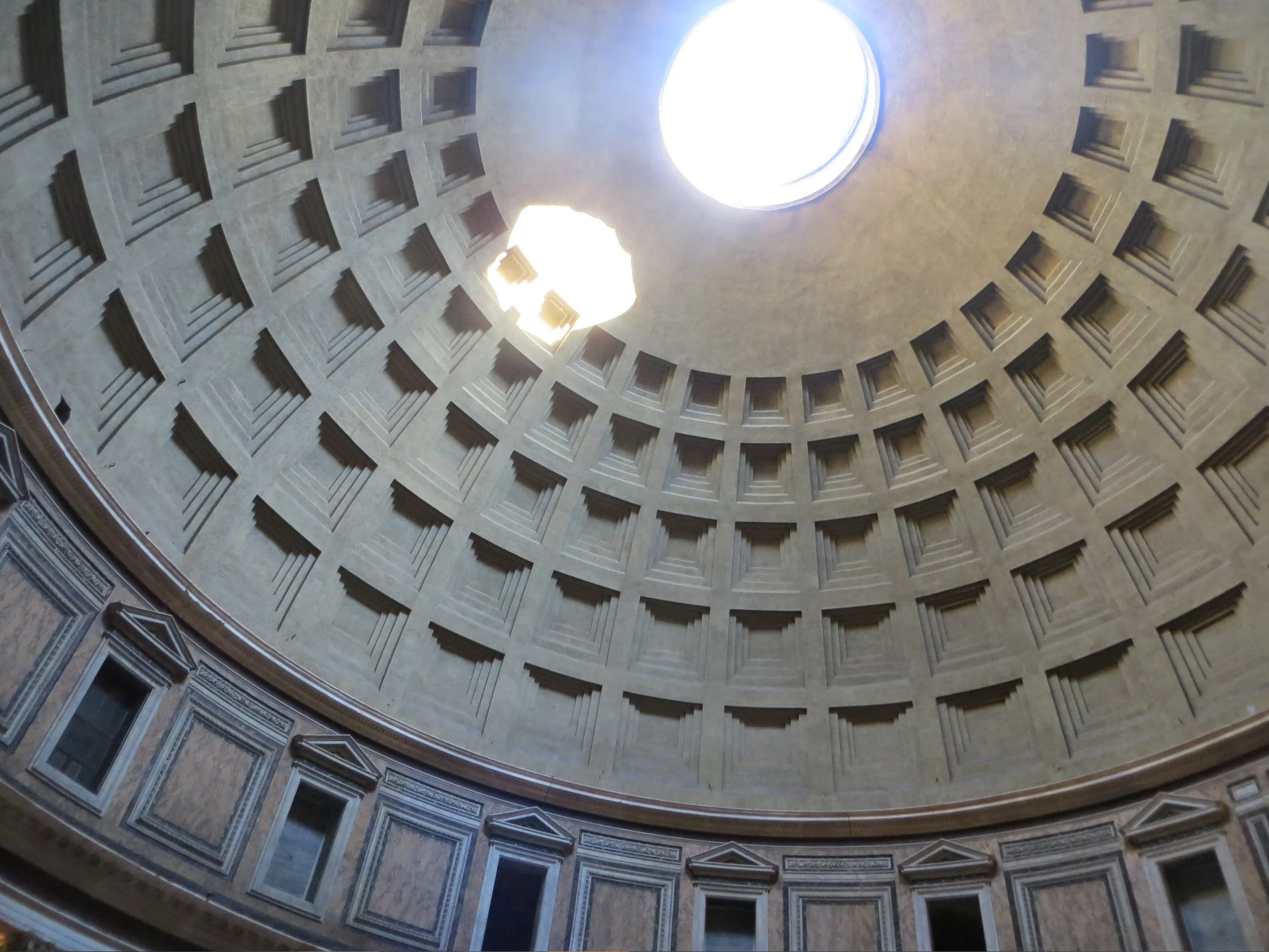
This design could be called *The Pantheon*, *The Investiture of the Gods*, or *Valhalla*; it is an NFT deity-playing game.
The metaverse has infinite room for imagination. Since anything goes, why must one play as a monkey? Isn’t it better to be an immortal?
The gameplay I have in mind is somewhat like the “club” of the Bored Ape, with 10,000 NFTs representing 10,000 club memberships, and these members having the power to do all sorts of things. But the role I am stepping into is not a bored ape, but ascended immortal gods. The deities shed their mortal husks and become immortals, escaping the real world and entering the “metaverse” to roam freely and live forever, while still being able to respond in the metaverse to the worship of their devotees.
The initial 10,000 NFTs correspond to these 10,000 deities.
The deities’ images are fictional rather than drawn from any real religious system. First, they’d be hard to find; second, to avoid “offense.” But one could draw on certain mythological elements in the creation—for example, objects like a willow-branch vase, a fly whisk, or a trident. The effect would be that players from different cultures could find forms that better match their imagination, yet if you insisted on saying which mythological figure each one corresponds to, they would not map neatly onto any of them.
In terms of individual characteristics, I imagine one could introduce a nine-grid system such as lawful good, chaotic neutral, and so on, but not in the sense of attaching very explicit labels. Rather, it would be presented as different artistic styles. For example, the good-evil dimension could be expressed through backgrounds and color schemes: light-colored halos, glows, or holy-light effects; dark-colored demon horns, blood-red light, shadows, and so on, as well as neutral natural styles, mechanical styles, and so forth. The order dimension could be expressed through facial expressions and actions. In short, the effect would be that players could find images matching the faction of their identity, but if you insisted that it must absolutely belong to this faction, that wouldn’t work either.
In short, it shouldn’t be hard to assemble 10,000 deity images. For instance, you could make 10 expressions, 8 halos, 15 outfits, 20 small props, plus at least 3 genders (male, female, beast). With various permutations and combinations, that should be enough. There’s no need to make the design too gaudy or overly fussy.
Then, of course, this club is not limited to 10,000 people. The most basic participants are the “believers.” Believers can worship deities, and to put it more bluntly, they do so by contributing money. Anyone who sends money to the address of at least one deity can become a “believer,” with no limit on the number of slots. Donations of course have benefits: on the one hand, they can earn a general-purpose “merit point” (the homogeneous currency in this game, whose uses can be further designed); on the other hand, they can fill up that deity’s “prize pool.” Once a certain deity’s “prize pool” has accumulated to a certain level, for example, it could unlock a new power for the deity, while also issuing a benefit to all believers who have contributed—for instance, a lottery in which the lucky winner takes the entire prize pool (after the deity’s tax), though other玩法 are of course also possible.
There can be many divine powers, for example: 1. issuing oracles (broadcasting any message to the whole game), 2. promoting devotees (raising ordinary believers to middle-tier players; believers can also level themselves up by accumulating merit, but divine favor lets one leap to heaven in a single step), 3. creating ritual implements (minting and selling special NFTs), 4. spreading divine grace (giving all believers a temporary buff), 5. expanding territory or waging divine war (the last two depend on whether this system is tied to a virtual land-building game or a virtual war game) … The exercise of powers can leave room for the deity-card holder’s choice, but if the holder leaves it idle and does nothing, it will also automatically trigger randomly after a certain time. Deities can interact with believers; a deity that responds more actively to believers’ prayers may attract more believers, but a deity that does nothing while left on autopilot will not disappear either. One could even design a plotline like “a deity that has slumbered for a long time has finally awakened.”
Of course, the specific design of the powers is not the key point. The key is that deities must have powers; that way, the sense of immersion in the “card god of the new world” comes through. Of course, beyond immersion, holders of deity cards can also believe that they possess a continuous and lasting stream of returns. Although those lasting returns essentially come from the constantly joining “believers,” the believers are by no means getting nothing in return. Just a single gambling-like mechanism is enough to attract countless participants, not to mention the ever-attachable activities of card draws, social interaction, games, and so on.
Translated from the Chinese original with AI assistance. The original text is authoritative.