

This year I have at least two new books coming out, and the first to appear is Shanghai Education Press’s 人的延伸——技术通史, or The Extension of Man: A General History of Technology. This book was part of a writing plan I signed at the same time back when Outdated Wisdom was published, but I dragged my feet for three years before it finally saw the light of day this year.

This book is still transitional in nature. I am writing a more substantial monograph on the history of technology, and if all goes well I should finish it early next year. The reason I brought out this miniature version of the history of technology first, on the one hand, is to give the publisher, whom I had kept waiting for too long, some sort of answer; on the other hand, it is also what I myself call “throwing a stone to test the waters,” a reconnaissance probe sent ahead in advance.
A short length is not necessarily a bad thing. In fact, what is fashionable on the market now are “XX in Brief,” “A Minimal History of XX,” and “A History of XX in One Sitting.” My book also counts as a minimalist volume that can be read standing up.
But my subtitle is still “a general history of technology,” first because this book is distilled from the “General History of Technology” course I teach at Tsinghua, and second because I want to carry through a consideration I have long held: the “general” in “general history” does not lie in the length of the book, but in its “generality” (general). Whether one can grasp the “generality” of a certain history is the condition for judging whether it deserves to be called a “general history.”
General is tied to academic disciplines, and what I am more familiar with are things like “general physics” and “general biology.” In fact, just as with General Physics, my General History of Technology may just as well be called “General Technology History.” Here general carries the sense of basic, introductory, while also standing in opposition to “specialized” and “specific.” For example, thermodynamics, electromagnetism, fluid mechanics, condensed matter physics, astrophysics, and so on are “specialized,” “specific” physics, not general physics.
Of course, General Physics will certainly include material from various specialized branches of physics, or, strictly speaking, every item in General Physics ought to be included within some specialized branch of physics. But General Physics is not simply a sum or superposition of the various specialized branches. On the contrary, it does not cover too many specialized topics, but concentrates on outlining several core areas.
A General Physics textbook may be much shorter than a professional work within some specialized branch of physics. And a General History of Technology can of course be much shorter than a History of Technology in Seventeenth-Century England.
That is why I insist that a massive multivolume work like the seven-volume Oxford History of Technology cannot be called a “general history of technology,” whereas my little booklet of just over a hundred pages may well qualify as one.
But of course, being short and easy to enter into does not by itself make something a “general history.” The key is that we need to select the most general and foundational elements. To take “general physics” as an example, if a general physics book only talks about thermodynamics and not electromagnetism, then it is certainly incomplete. Ancient acoustics and modern quantum mechanics may be left out or treated briefly, but classical mechanics and electromagnetism need to be treated in depth. This is because we have a certain overall grasp of the discipline of “physics” as a whole, and that overall grasp allows us, quite naturally, to regard branches that differ greatly from one another as branches of a single “whole.” It is on the basis of this overall grasp of physics, or of “physics” in a general sense, that we determine where “general physics” should focus.
Likewise, which “specialized technologies” a general history of technology should focus on also requires us to have some overall grasp in advance of the “history of technology,” or of “technology” in general.
In fact, we can scarcely even say what “physics” in general really means. Physics, or its Greek etymon “nature,” is itself an extremely broad and ambiguous concept, and traditionally technology stands in opposition to nature, also, of course, in a broad and ambiguous way. But at any rate, when it comes to “physics,” we already have many conventional understandings and many ready-made usages; of course, we also already have many existing volumes of General Physics, so we seem to be fairly certain about “what physics is.” Yet our understanding of “what technology is” is much more vague.
In this history of technology, I do not directly discuss the question of “what is technology”; the title The Extension of Man does, however, provide an answer. “Extension” contains both the meanings of “augmentation” and “externalization,” while also preserving “continuity.” Technology and the human being are interior and exterior to each other, but not opposed; the word “extension” can also hint at a relation akin to what Derrida and Stiegler call “différance.” Technology is some kind of extended alterity, not an alterity cut off and ruptured.
In this sense, the history of technology can be seen as a history of the extension of the human, as the history of human beings continuously “expanding” themselves through extension, even as what is extended increasingly turns into alien accretions that in turn affect and dominate human destiny.
Of course, this book is really far too short, to the point that the perspective of “the extension of man” remains latent and unarticulated throughout. What actually constitutes the “totality” of a general history is, rather than “human beings,” the practical results. Just as physics was originally divided among different disciplines, but after Newton unified heaven and earth, and Maxwell unified force and electricity, after these historical syntheses and the subsequent redivision into specialties, a unity finally emerged in modern textbooks. And as for “technology,” in my view its image was finally unified in the information age by means of “information technology” (IT). When we now speak of technology, science and technology, or technology-like terms, what we mainly mean is IT; even when it has nothing to do with computers, it is mostly related to electronics. So, starting from this converged result and tracing it back to its origins, what key historical nodes can we find? Telegraphs, electric lights, industrial assembly lines, the Industrial Revolution, mechanical technology, the Agricultural Revolution, stone tools. These are the themes this little book addresses. Of course, why were these themes chosen as the core thread? Perhaps that is something only my future massive history of technology can answer; this book merely presents the result directly.
As for What Is Technology, that will be my other book coming out this year. Originally I wanted to title it “Understanding Technology,” as a direct tribute to McLuhan’s Understanding Media: The Extensions of Man; later the publisher suggested changing the name, and I agreed. That book is also quite short, with a stronger philosophical slant, so please look forward to it.
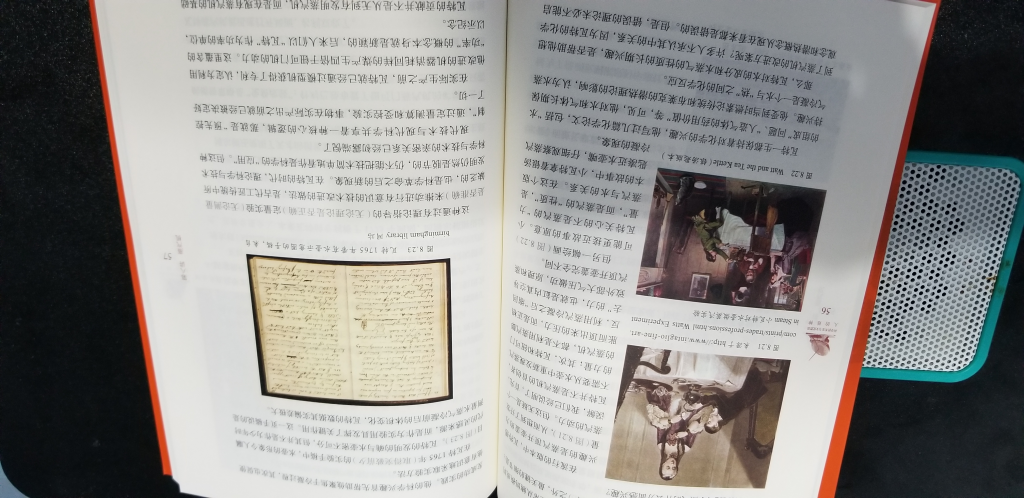
By the way, for students who have already taken my “General History of Technology” course, I do not recommend The Extension of Man: A General History of Technology, because most of the content has already been covered in class. Of course, you can also collect it or give it as a gift, since the book has many illustrations and is beautifully printed; on the surface it still looks pretty good.
The book is now available on JD.com and Dangdang. But I’ve taken quite a few sample copies, and I won’t be able to give them all away in a short time, so all of my friends on WeChat and Weibo can just send me your address directly. I’ll sign a copy for you and mail it free of charge. Please really don’t be shy.

Translated from the Chinese original with AI assistance. The original text is authoritative.