
The grades for the course have come out, and the first round of this course is now more or less a complete success. As for grading, I gave about half the students an A- or above, far exceeding the university’s recommended standard of 20%; I added an extra note and hope the university will approve it. At the same time, the number of students who failed because of plagiarism reached five, also beyond the recommended limit. But all of this was according to my own standards: giving high grades was not to curry favor with students, and failing students was not to make things difficult for them. My course also does not require students to be sure to learn some particular thing; so long as they participate earnestly, listen actively in class, think independently, and read outside class, doing these three things well is enough for a high grade.
Summaries written earlier
The final exam for “A General History of Technology” (with commentary)
What kind of assignments does the teacher hope to see? — Reflections on assigning “A General History of Technology”
On plagiarism (zero points without compromise and merciless ridicule)
Assignment summary
In practice, the “reading notes” format for the assignment has worked quite well. In fact, the vast majority of students chose reading notes; only five wrote papers, one of whom plagiarized, while the other four papers were all very good. As for the students who wrote reading notes, most of the grades I gave were between 85 and 99. The quality of the reading notes was also quite obvious: even with the same form of excerpting plus snark, the students who truly read deeply and had independent views wrote snark that was wonderfully lively, with sparks flying now and then.
The main criteria for evaluating reading notes include four aspects:
1. Choosing the book — I did not set any restrictions here; any book was fine, but the choice itself reflects one’s taste. Most students chose books I had recommended in class; a few found books on their own, some fairly good and some rather poor. Unfortunately, no student found a book that I had not recommended but that I thought was truly outstanding.
2. Style — Although no particular style was required, everyone should be able to understand that the more demanding the style, the higher the grading baseline will certainly be. For example, papers rank highest, book reviews close to the form of a paper come next, and excerpts rank last. Relatively speaking, I do not encourage summaries that merely organize the main points of paragraphs; rather, I hope to see students, through their own thinking and in line with their own questions, rearrange the material into a new thread of argument.
3. Association — Reading is for oneself, not for praising the book, so besides recording the book’s content, associations that arise from the book are also very important in reading notes. What I especially hope to see is students using this course to cross-check or compare certain claims in the book, or extending their thinking by connecting it with their own major or their own life.
4. Writing — Finally, a very important point is that the writing should “flow naturally and be smooth,” both in language and in logic; it should be coherent and well organized. This seemingly minimal requirement is actually one that very few people manage to do well.
Summaries given by students
At the end of the course, I shamelessly asked students to write a few thoughts and complaints about the course. So far it seems only one student has clicked a like on the blog, but several students have already posted comments in Tsinghua’s online learning platform. I have excerpted a few paragraphs here to sell melons at my own stall:
Student A—
The teacher’s PPTs were prepared with super great care. Maybe because I myself was also reading Mumford’s Technics and Civilization, I basically could find responses to most of it, which gave me the feeling that the book I read wasn’t in vain (lol).
If there is anything a little regrettable, anything that wasn’t covered in class, it would probably be that the relationship between technology and culture was discussed relatively little. Of course, part of that was also because class time was too short.
……
Student B—
For the fourteen-week course, Professor Hu mainly used the format of lectures. Each class introduced one theme, and about the last ten minutes of each session were left for questions and discussion. The pressure was not very great, but students who put their heart into it could learn quite a lot. Almost all of Professor Hu’s slides had web links for the images, and after class, clicking through those links one by one was a very different experience, as though every class had a sequel. I personally very much like philosophy courses and social science courses taught by teachers with a science background; the logic is especially clear, and it feels as though I am not being forced to accept some theory or view that has already been written up and validated by authority, but rather am understanding, starting from something relatively original, where viewpoints and connections come from.
Another very important point is that Professor Hu’s course is called “A General History of Technology,” but he never directly told us what the history of technology is. In class, what we experienced more was technology and civilization, technology and cities, technology and society, technology and the future—things that fit together and relate to each other—rather than discussing in isolation some particular technology or some period of technological progress itself. This relational perspective was enormously inspiring to me. Also, among the fourteen weeks of lectures, the topics I found most interesting were mechanical clocks, perspective, the telegraph, and computers.
……
Student C—
First of all, I think the range of dimensions in the topics chosen by the teacher is quite multifaceted. This means that the course was not limited to technology alone, but looked at the historical significance of technology, its developmental trajectory, and the meaning it brought to society from a higher vantage point. Moreover, the specific technologies chosen by the teacher were highly representative, not tied to any particular field, and the scope was very broad. This reflects the teacher’s breadth of knowledge and the ample effort put into preparing the course. What I admire most is that the teacher not only has a fairly macro-level grasp of the grand history of technology, but also has a very strong spirit of inquiry into some of the details within it. When students in class often raised questions about certain details, the teacher was still able to answer fluently, which left a particularly deep impression.
Student D—
……
For me, as a liberal arts student, the part of this course that interested me most was Mumford’s technological thought, because his ideas are connected to philosophy, political science, and sociology. For example, in his book Technics and Civilization, his views on machines affecting human civilization contain many philosophical points that can be explored in depth, and can also be interpreted as containing the view of cultural interactive transformation theory. Another example is his views on the origin and development of technology and cities, which are quite different from the views on the origin of cities proposed by earlier thinkers, and there is much that can be analyzed in sociology as well; at the same time, his idea of organizing the city through culture is full of humanistic feeling. Yet another example: his concept of the mega-machine made me think of the authoritarian polity in Hobbes’s Leviathan; the connection between this technology and the machine of tyrannical violence is thought-provoking. This course allowed me, for the first time, to appreciate how technology can be so rich in humanistic color, and how it is connected with many disciplines such as philosophy, political science, and sociology, prompting me to have many new interdisciplinary thoughts.
……
Student E—
……What I liked was the philosophical grain mixed into the history of technology, but in the teacher’s classes there were not only philosophical grains, but also interesting little stories from history. But it’s not as if the stories alone were what attracted people—the key still lies in the power inherent in the history of technology itself (of course, what this mainly refers to is the power felt by a layperson).
The steam engine and the Industrial Revolution, which we studied in middle school, were still manageable, but things like the telegraph and the mechanical clock were completely beyond me—I could only listen to the teacher tell the stories. It can be said that if one has not specially studied and learned about it, the concept and place of a technology in the human mind are basically fixed and ready-made. For example, although I know that the invention and application of the telegraph must have gone through a period of development, and that the primitive technological environment was certainly very crude, I would not have a clear concept that at that time the transmission of information still relied on holding up cardboard signs and using telescopes; although I know that in ancient times there were no clean toilets and no powerful sewage systems, the images in my mind of streets in ancient cities would never include those things either (perhaps that is the misleading effect of costume dramas nowadays).
Of course, seemingly having a clear idea that then and now were different is not of much use. But it gives me a sense of novelty and a broader horizon; I think realizing these things in itself is meaningful.
……
Summary of each lecture
This time, no handout was posted after each class. As for the lecture script, I of course整理ed some of it, but it still cannot yet be turned into a complete text. Within this year I will organize an introductory book on the historiography of the general history of technology, and only after the second round of the General History of Technology course next year will I organize a complete work on the general history of technology.
But as a course summary, I will first sort out here, by class session, the main content of this semester’s course, the line of reasoning and key points of each part, and for each lecture choose one illustration and attach a recommended reading list.
Lecture 1: Introduction
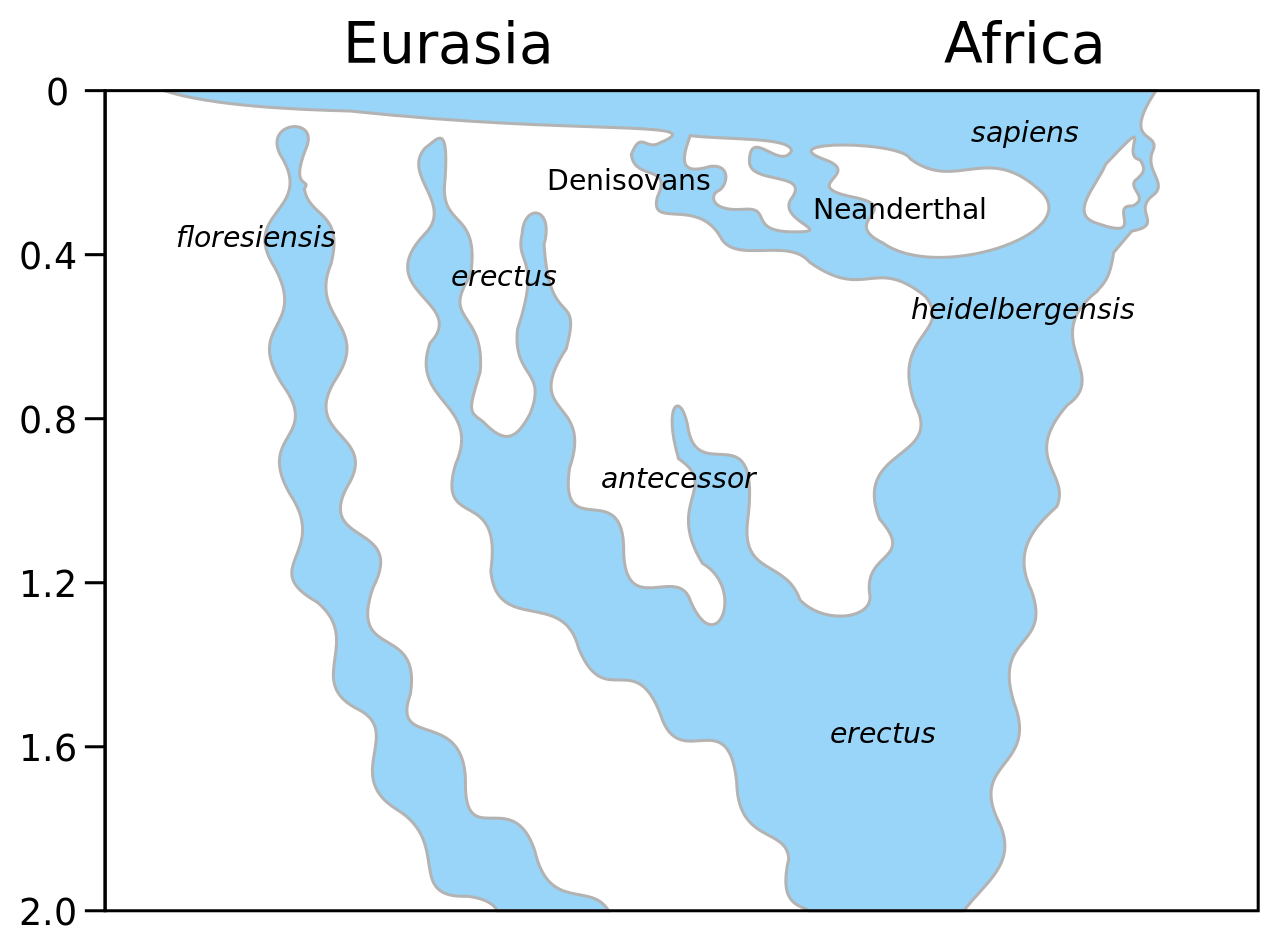
Besides self-introduction and introducing the course requirements, Lecture 1 mainly discussed the question “What is technology?” I mentioned Heidegger’s answer, McLuhan’s answer, and my own answer (something that can be learned), and I focused especially on the formulation quoted by Kevin Kelly (everything that is not yet running well). In all of these discussions, I carefully avoided going too deeply into troublesome philosophical territory; I merely threw out a few reference questions in a heuristic way.
What first needs to be laid out in the introduction is this: why does investigating obsolete things still matter in reality? My answer is: every obsolete technology contains within it a different set of possibilities for living. Our present life depends on our present technological environment, but how else might we live? To imagine such possibilities, we must step outside the world of life we have grown accustomed to, and exploring history is the best way to break free from the limitations of our thinking.
After the philosophical discussion, as a small beginning to the history of technology, I started from the parting of ape and man, talked about the human “premature birth hypothesis” and “grandmother hypothesis,” and also mentioned the myth of Epimetheus and Prometheus as interpreted by Stiegler. The core metaphor is that innate deficiency and acquired learning are what make humanity unique, and also the role technology plays—compensating for deficiency and carrying learning.
Lecture 1 had relatively little content prepared, leaving quite a bit of time. When the course is offered again in the future, I should specifically emphasize the issue of plagiarism.
Preview: human beings, by virtue of their unique technological ability, have reached the top of the biological chain. While adapting to the environment, they also need to transform it. The next lecture will address the Neolithic Age, where through the domestication of plants and animals, the relationship between humans and nature entered a new era.
Recommended books: World Prehistory, A Brief History of Humankind: From Animals to Gods, Technics and Time 1: The Fault of Epimetheus
But in fact these three books are not really recommended for the reading-notes assignment. The first two involve the history of technology, but it is easy to go off-topic; the third is too hard to get through.
Lecture 2: The Neolithic Age

The second lecture ranged from the late Paleolithic to the Neolithic. Everyone probably has heard of the so-called Paleolithic and Neolithic, but many students had never realized just how vast the time gap between them is: the Paleolithic began about 2.5 million years ago, whereas the Neolithic began only more than 10,000 years ago.
There was already a history of technology in the Paleolithic, but technological development was extremely slow, even far slower than the pace of biological evolution. The Neolithic, though brief, was a time when the complexity and diversity of technology exploded.
Of course, this question of the speed of evolution is actually a big issue: the evolution of our biological bodies is negligible relative to technology. The innate capacities of our species are not much different from what they were 10,000 years ago, but the technological environment is far more changeable than the natural environment, so humans can only rely on new technologies to adapt to the technological environment. But that is a story for later.
In the late Paleolithic, beginning around 50,000 years ago, some new changes became strikingly noticeable, especially the emergence of various “symbolic objects.” These included works of art, burial rituals, bodily ornamentation, counting marks, and so on. “Symbolic objects” constituted a certain unique space of meaning, and this was also the precondition for the more complex techniques and social organizations that came later.
The Neolithic, more than 10,000 years ago, appeared together with the Agricultural Revolution. Agriculture was accompanied by the rise of a “settled” way of life, and this in turn made possible the accumulation and transmission of technology or knowledge.
I also briefly mentioned pottery. In archaeological finds, clay figurines appeared tens of thousands of years ago, but the large-scale use of pottery came only after the Neolithic. The main function of pottery is “preservation,” and this function became important only under the new settled way of life.
I mentioned the precursor of writing, “tokens,” and the earliest cuneiform script. I cited Walter Ong and discussed how writing changed human ways of thinking.
Preview: settlement leads to aggregation, and the center of aggregation gives rise to the city. But what, after all, is a city? Is it just a large settlement? In the next lecture, we will discuss “the rise of the city.”
Recommended books: Guns, Germs, and Steel, The Myth of the Machine (Technological Development and Human Progress), A History of Communication: Technology, Culture, and Society, Orality and Literacy: The Technologizing of the Word
Lecture 3: The Rise of the City
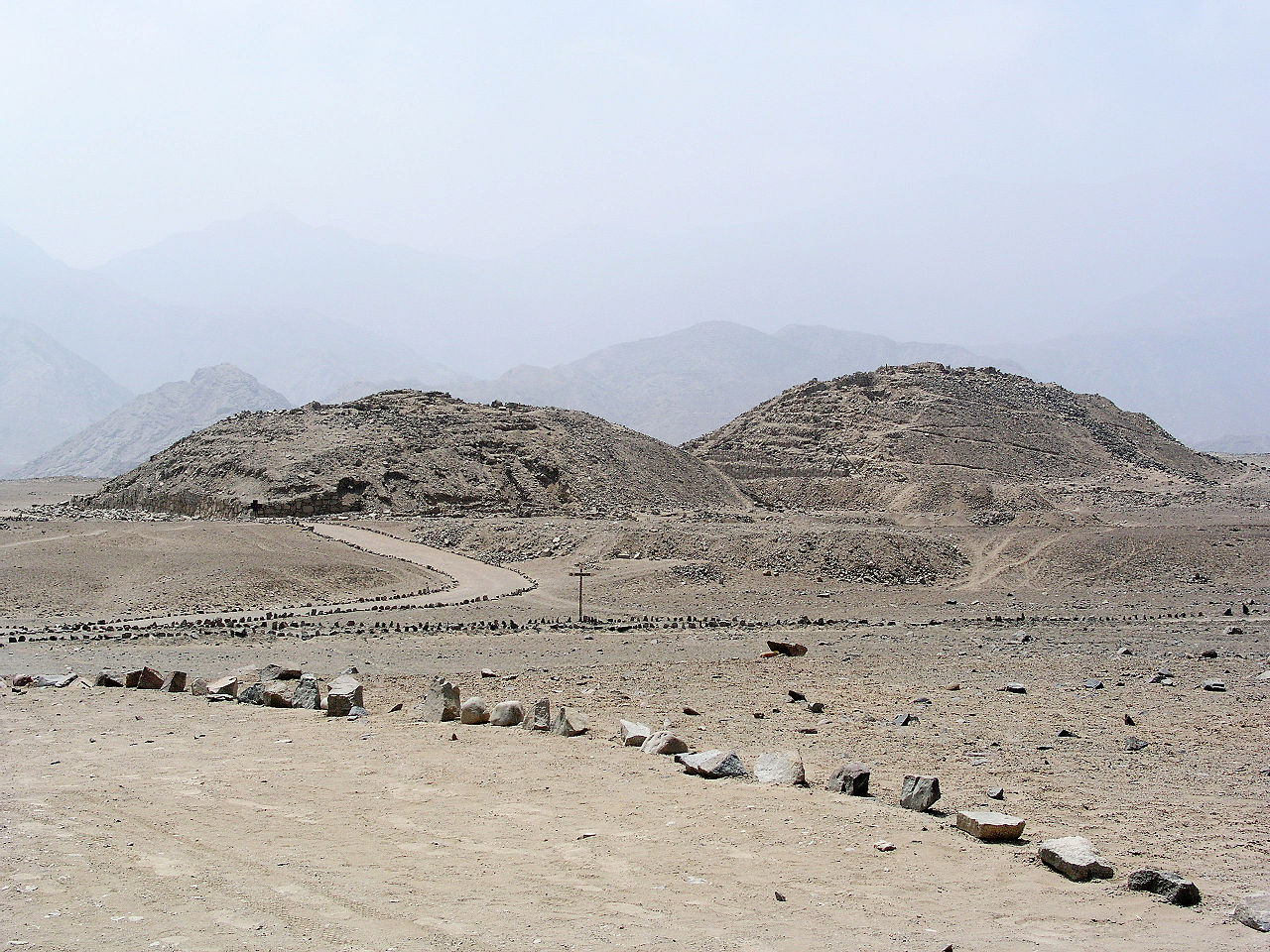
It is hard to say that a “city” is itself a technology; rather, it is a collection of technologies, or perhaps a “container of containers.” With the rise of the city, the trend toward specialized division of labor and stratification was propelled forward, and various technologies began to be systematically and organizedly applied and transmitted.
First I discussed the question of “what a city is.” If the meaning of a city is merely denser aggregation, then are we modern people pursuing urbanization simply in order to pursue increasingly crowded living?
Tracing things back to their source and examining when and why cities emerged helps us understand the meaning of the city.
I mentioned four perspectives on the origin of cities: the agricultural perspective (the development of agriculture produced food surpluses, which could therefore support a portion of city-dwellers who did not engage in food production); the military perspective (primitive defensive works developed into city walls); the commercial perspective (markets as centers of exchange developed into cities); and the ceremonial perspective (centers of sacred activity such as celebrations and rituals developed into cities). These four perspectives are not necessarily mutually exclusive; perhaps different cities had different origins.
I also introduced Mumford’s conjecture that sacred activity was the origin of the city, as well as Mumford’s concept of the “megamachine” — the city is not merely the consequence of architecture or military technology, but more crucially the consequence of a set of “social technologies.” What is astonishing about the pyramids is not the engineering skill that built them, but the organizational mechanism of that society: large populations not engaged in food production were uniformly deployed as slaves or hired laborers, working continuously for years or even decades to build mausoleums for a tiny number of rulers, pursuing the rulers’ resurrection hundreds or even thousands of years later… This kind of social organization, operating coldly and persistently like an invisible machine, is the most striking “technology” of ancient dynasties.
I also discussed Wittfogel’s argument in Oriental Despotism connecting hydraulic technology with despotic rule, extending the discussion to problems of geographic determinism and technological determinism. I believe that environmental determinism in its mildest sense is unassailable, because if you try to find some explanation for differences in certain respects, what else can you talk about besides invoking racial differences or sheer contingency? And the environment is nothing other than the natural environment and the technological environment; only these two can offer some explanation for the individuality of civilizations. The issue is merely one of degree: if one takes these historical explanations as necessary laws, then that goes too far.
Finally, I quickly went through some examples from the Mesopotamian region to the Greek city-states. In particular, I mentioned the Greeks’ outstanding achievements in technology, especially mechanical technology.
Preview: Greek technology had already reached an extremely high level; the Romans could not compare with the Greeks in precision mechanical devices, but they were unrivaled in large-scale engineering. Yet after the classical age, Western civilization entered a long dark period; still, this period was also one of close exchange between East and West, as the Chinese and the Arabs brought all kinds of technologies and ideas, laying the groundwork for the West’s rise again. The next lecture will be a special topic on “exchange between Eastern and Western technologies.”
Recommended books: The Story of Cities、History of Urban Development
 、
、
Lecture 4: Exchange between Eastern and Western Technologies

My course could basically be called a “history of Western technology.” After prehistory, it basically converges on the “West” — from Greece and Rome to the Middle Ages to the Renaissance to the Scientific Revolution and the Industrial Revolution, from beginning to end it is the main line of Western development. The fundamental reason for structuring it this way is still that our purpose in tracing history is to understand the present, to understand how our current situation has become possible. Under this concern, whether science or technology, their origins must be traced back to the West. Of course, the limited course time is also a major constraint.
In this semester’s course, the history of Chinese technology appeared only in this half-lecture, while the other half was devoted to the Arab world. And both parts were presented under the heading of exchange between Eastern and Western technologies; that is to say, in the end they were discussed because of their impact on the history of Western technology. Of course, if there is an opportunity in the future, I will consider introducing more content on the history of Chinese technology in the form of专题.
The achievements of the Arabs in the history of technology have long been neglected, being regarded merely as preservers and transmitters of classical knowledge, with insufficient estimation of their creative contributions. Fortunately, in recent years the academic field of the history of science has increasingly taken this area seriously.
In addition to their outstanding contributions in the history of science — especially in mathematics, optics, medicine, astronomy, and so on — their contributions in the history of technology are even less to be ignored. In particular, Arab scholars seem to have already formed a relatively modern conception of technology; for example, they actively improved the technologies of earlier generations through critical study, emphasized the importance of hands-on practice, and respected the disciplinary status of mechanics and engineering.
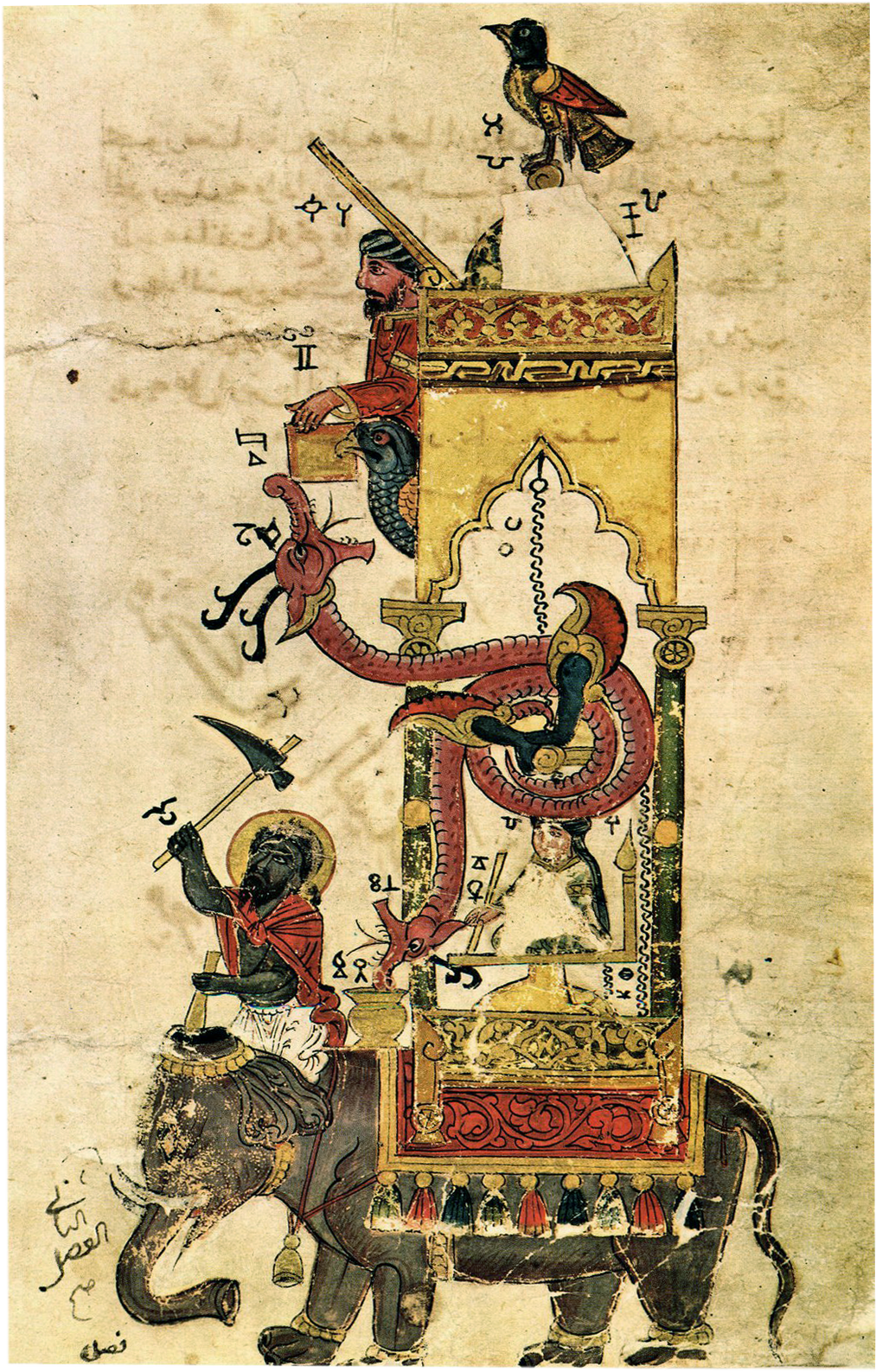
In class I focused on introducing many mechanical designs described by al-Jazari (1136–1206) in his Book of Knowledge of Ingenious Mechanical Devices. Many of these machines had features far ahead of their time, such as the implicit notions of “automation” and “programming”: the hydraulic driving mechanisms were hidden inside, while the whole device exhibited the characteristic of operating on its own. In some musical devices, different instruments would sound according to a prearranged sequence. Exactly how these technological creations and technological ideas influenced later Europe is still not very clear, but they are undoubtedly fields worthy of great attention.
On the Chinese side, I mentioned the Four Great Inventions and the controversies surrounding them. The “Four Great Inventions” originally came from the mouths of Western scholars, and they are the Chinese technologies that had the greatest impact on Western history. I cited Jiang Xiaoyuan and mentioned the unreliability of the “south-pointing spoon” and the conceptual confusion surrounding “Baqiao paper,” and so on.
At the end, I also mentioned the revival of late medieval Europe, focusing on the widespread use of mechanical technology — watermills and windmills.
Preview: the Western Middle Ages were dark, but not as dark as people used to imagine; the seeds of later prosperity had already been sown in the late Middle Ages. On the theoretical level, there was scholastic philosophy, and on the level of the history of technology, there was the widespread application of mechanical technology, especially the mechanical clock that rose in the late Middle Ages and set the tone for the entire modern world. The next lecture will be a special topic on the “mechanical clock.”
Recommended books: A Brief History of Islamic Technology and Ancient Chinese Technological Culture. In between the interspersed content, I also happened to recommend Studies in the History of Chinese Printing and The World of Glass.
 and
and  . In between the interspersed content, I also happened to recommend
  and
and Lecture 5: The Mechanical Clock
The successive lectures from this point on are all more thematic, one lecture for one technology. As things stand now, the mechanical clock section may be the most mature lecture of the lot, relatively speaking.
 The successive lectures from this point on are all more thematic, one lecture for one technology. As things stand now, the mechanical clock section may be the most mature lecture of the lot, relatively speaking.
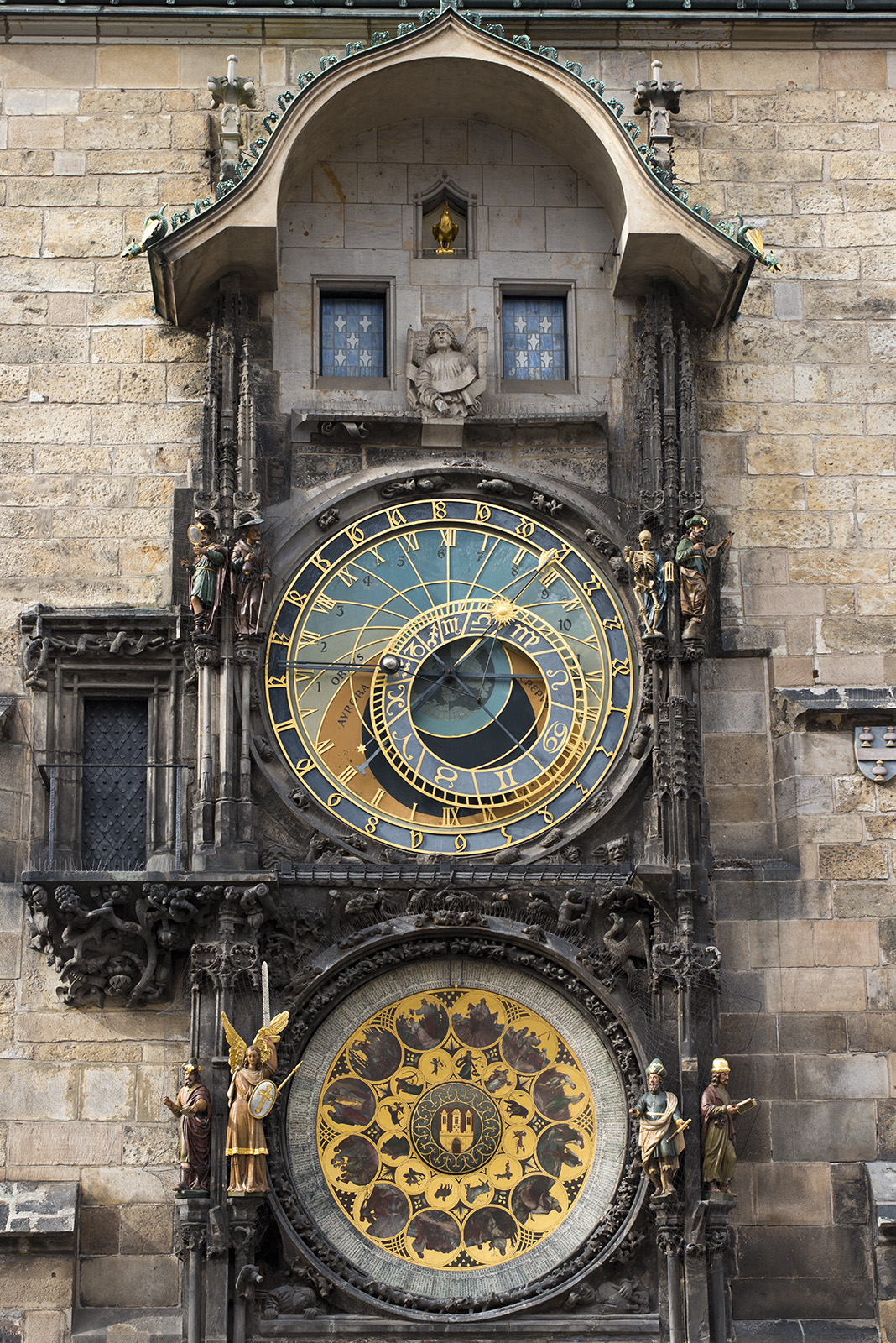
I began with the question “What is a clock?” The forms of clocks have changed enormously. Chime bells, bell towers, “be a monk for a day, ring the bell for a day”… are the auditory clocks in these contexts still of the same kind as modern quartz clocks, atomic clocks, and so on?
We can lead this toward a preliminary definition: a clock is technology for looking at time. But immediately a problem arises: what does “looking at time” mean? I have already distilled my thinking on this part in a separate article, see: When, exactly, do we need to “look at time”?
I cited Mumford to discuss the clock as “the key machine of the industrial age” (taming energy, standardization, automation, precision, and so on); I cited McLuhan to discuss the difference between acoustic time and visual time—“It is not the clock, but written culture reinforced by the clock, that creates abstract time, leading people to eat not because they are hungry, but to eat when it is ‘time to eat.’”
A preview: from the auditory to the visual, McLuhan believed that what promoted the visualization of space and time was not only the mechanical clock, but also printing. The next lecture is a special topic on the “printing press.”
Recommended books: A Brief History of Time (not Hawking’s), Technology and Civilization, Understanding Media,
 (not Hawking’s),
  ,
, Lecture 6: The Printing Press
 Lecture 6: The Printing Press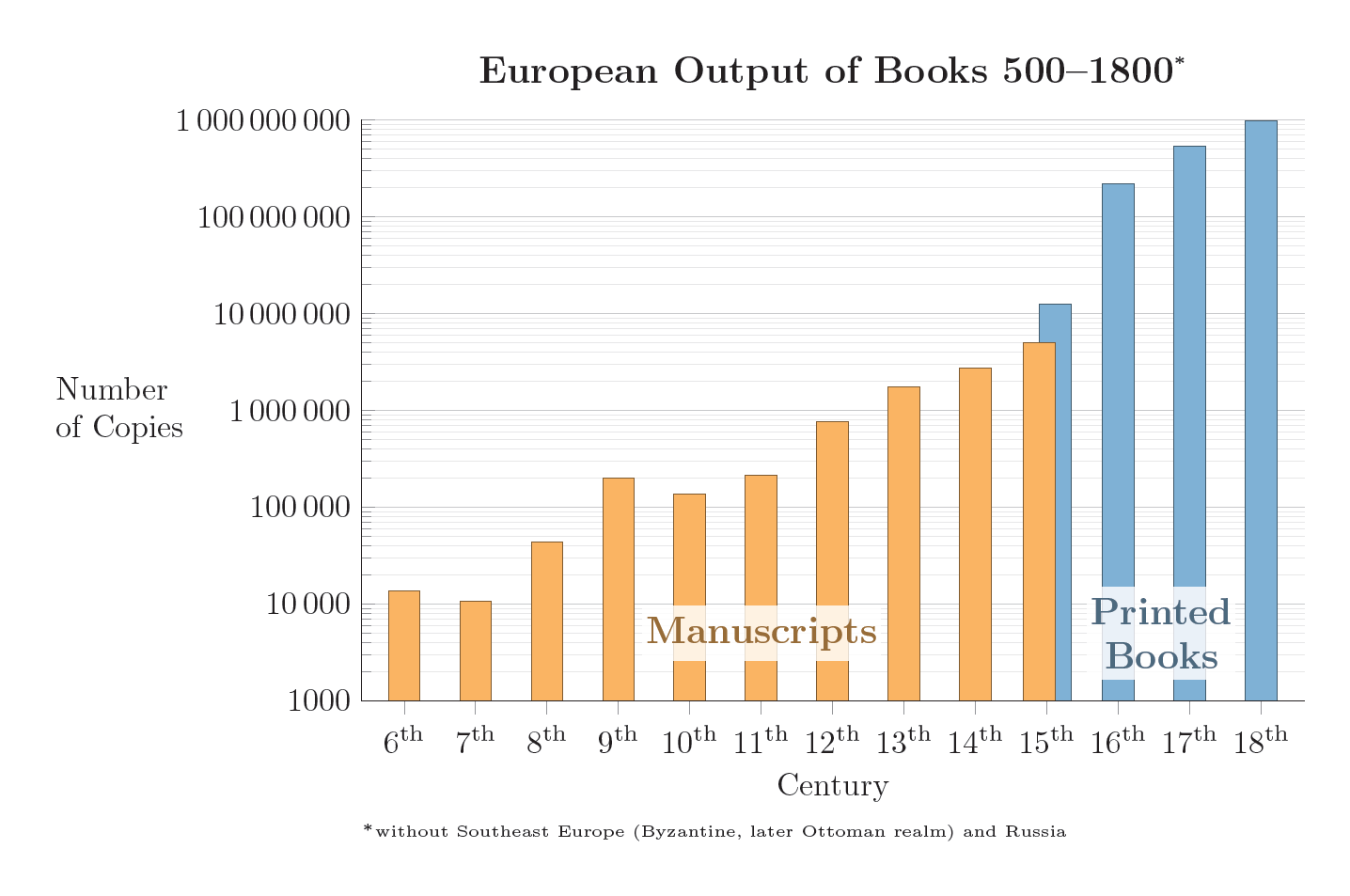
This lecture basically reused content from my earlier course on the history of science. But I added a thought question as the opening hook:
Imagine you are living in 1230 and have somehow(?) obtained a work on astronomy describing Ptolemy’s planetary model. Being a clever person, you discover that something is wrong with the book: the basic data or the computational results contain errors. — What would you think? What would you do?
First of all, it is hard enough simply to obtain a complete work on astronomy; but let us assume you really do have one in hand. How, then, should you understand its errors? Most likely, you would first think that they are copying mistakes introduced in the process of transcription. You would not immediately think of confronting the original author; instead, you would more likely try to find a more accurate version. Second, if you wanted to correct the errors so that what you took to be the more correct knowledge would be copied on by others, you would more likely still attribute it to an ancient authority, or directly correct it in your manuscript in the name of the original author; otherwise, who would be willing to copy it for you? But this would also make the book’s “editions” even more chaotic.
The key point is that in the age of manuscripts there was no notion of an “edition” at all; there were hardly any two identical books. It was difficult to compare different manuscripts against one another; only the most valuable books could be copied in large numbers; lay copyists found it hard to master specialized details, while expert scholars had neither the time nor the inclination to refrain from free embellishment.
The benefits brought by printing were nothing more than two: many people could own “the same” book; one person could own many books. The former promoted the formation of the idea of “standardization,” while the latter promoted comparison and criticism in scholarly research.
These new features of communication technology made possible modern science, which emphasizes empirical recordkeeping.
A preview: the birth of Gutenberg’s printing press also happened to mark the beginning of the Renaissance, but when people talk about the Renaissance, what first comes to mind is still art history, isn’t it? And from the standpoint of our history of technological thought, there is much to be said about looking at art history as well: “perspective” was a key technique of Renaissance artists, and this pictorial technology also signaled new social relations and new modes of thinking. The next lecture is a special topic on “perspective.”
Recommended books: The Printing Press as an Agent of Change, Gutenberg’s Splendor: The Birth of Print Civilization


Lecture 7: Perspective
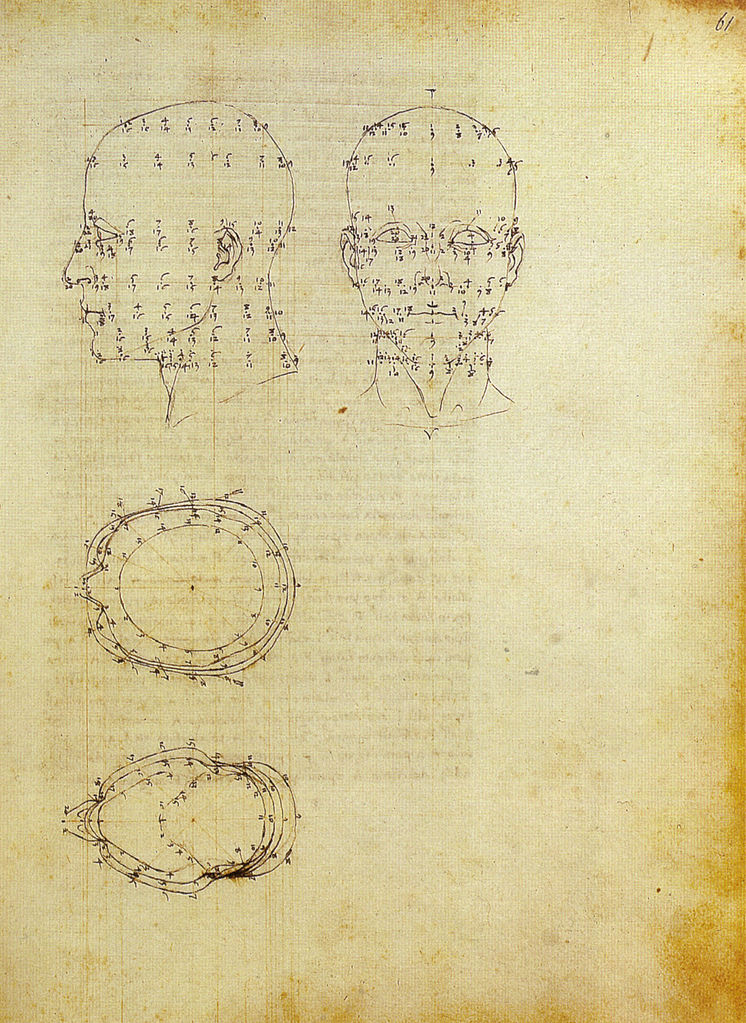
This lecture was a new topic I was learning on the fly and then immediately teaching. Since my younger colleague Zhe Ran had just finished his PhD, I simply took his dissertation and used it as the basis for class~
Renaissance perspective is extremely important in both the history of science and the history of technology. I called it a key “hub,” linking the ancient and the modern, scholars and craftsmen, theory and application, science and art…
Drawing on Wang Zheran’s work, I discussed the genetic relationship between ancient perspective and the tradition of optics, and I also discussed the historical background behind the rise of perspective. From Greek optics, to medieval perspective theory, to Renaissance perspective, disciplinary boundaries were constantly shifting; what that shifting reveals, in turn, are fundamental changes in certain epistemological and methodological realms—what kind of knowledge is truly knowledge? What kind of method can possibly approach genuine understanding? In ancient Greece, research into “how to paint realistically” would not have been understood as any kind of approach toward true knowledge, because the craft of painting was a “copy of a copy”: the real table was a copy of the table of Ideas, while the painted table was a copy of the real table, and then you still wanted to conduct research on the painting? Such research would be a triple removal from true knowledge (the world of Ideas).
But from the late Middle Ages into the Renaissance, the Greek boundaries of knowledge loosened and were eventually overturned. There were many reasons behind this, such as the rising status of craftsmen, the contributions of Arab scholars, and so on. In the end, the rise of perspective reflected not only a sociological overturning and fusion between scholars and craftsmen, but also an epistemological overturning and fusion between theory and practice.
I introduced the work of Brunelleschi, Alberti, Piero, Leonardo da Vinci, and others, and finally talked about Galileo’s artistic background.
Preview: once we finish the Renaissance, it will be time for the Scientific Revolution. If we approach the Scientific Revolution from the perspective of the history of technology, then of course we will place more emphasis on material artifacts (though not necessarily always; at least that is the case this semester). So in the next lecture we will focus on “instruments” to discuss the rise of experimental science.
Recommended books: Wang Zheran’s doctoral dissertation (I posted the electronic version on the course forum; the printed book should be published within the next couple of years); Infinity and Perspective
Lecture 8: Instruments and Experimental Science
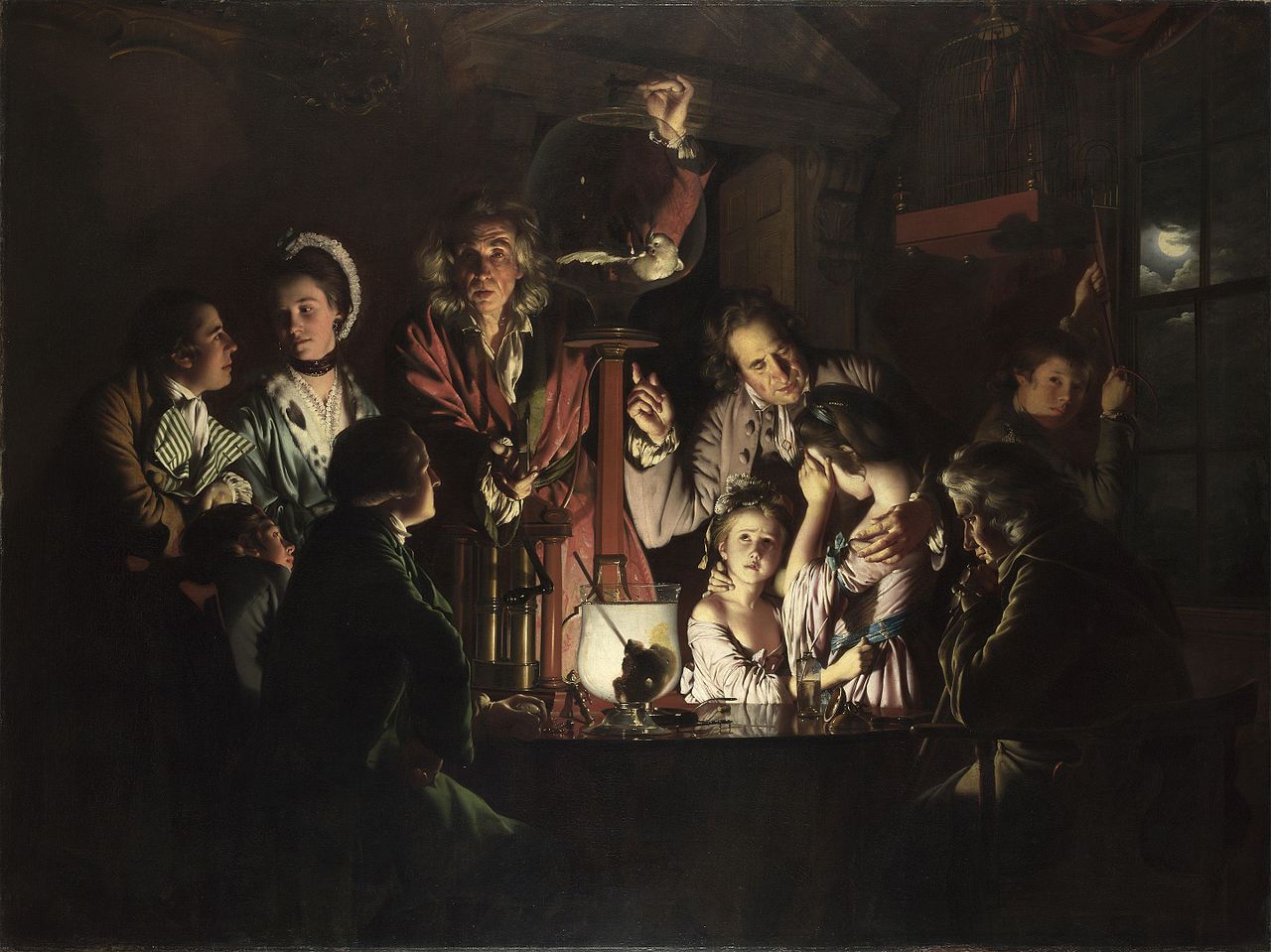
Instead of following the traditional combined “history of science and technology” approach, I teach the history of technology on its own, and that is one distinctive feature of this course. But the history of technology also cannot avoid discussing the history of science, especially from the Scientific Revolution to the Industrial Revolution, when science and technology gradually converged, eventually producing the modern world in which science and technology are unified. How this reality, in which science and technology are mixed together without clear boundaries, came to be in the first place is itself a question we need to pursue. In fact, starting with the mechanical clock, the thread of the history of science had already begun to enter the picture, and this lecture directly addresses the content of the history of science. But from the perspective of the history of technology, we are not focusing on astronomy or physics from Copernicus to Newton; instead, we take instruments as our thread and discuss the rise of experimental science as a theme.
I first mentioned that in antiquity and the Middle Ages there were already certain scientific instruments and experimental activities, mainly astronomical instruments and alchemical instruments, but there was no especially developed tradition of instrument making. In the Renaissance, the manufacturing of instruments underwent entirely new changes, driven by factors including the rising status of craftsmen, the spread of printing, the needs of the age of oceanic exploration, and the budding of the patent system, among others. Instrument makers were no longer merely appendages to scientists; they began to gain an independent status and even became a link in scientific sociability.
In the seventeenth century, instrument making became further industrialized, while scientific research also began to demand and guide the production of advanced instruments more and more. Galileo, Newton, Boyle, and others all made significant contributions in the realm of instrument making.
In the eighteenth century, “experimental science” reached its heyday. This “experimental science” was in fact the prehistory of modern experimental science; the laboratory work familiar to students of modern science and engineering is very different from the experimental science I discussed in this class. Experimental science was one thread of the early modern Scientific Revolution, but before the nineteenth century its connection with theoretical science was not especially close. In the eighteenth century, experimental science was in fact more closely aligned with the spirit of the Enlightenment, and more nearly akin to science communication directed at the public.
If viewed from the standpoint of theoretical science, the eighteenth-century public tradition of experiments actually had many characteristics of showmanship, with very few substantive results. But this public-facing dimension was crucial for the eventual formation of the alliance of “science—technology—industry—mass public.”
Preview: the “Industrial Revolution” was one of the consequences of experimental science. Of course the Industrial Revolution had many contributing factors, but the tradition of experimental science is an indispensable link, and Watt himself was a repairman of instruments. In the next lecture we will first talk about the story of “Watt” as a person.
Recommended books: The Scientific Revolution (this does not really deal with the history of technology, but if you want to understand the Scientific Revolution through a relatively short general-audience work, this is a very good choice), Leviathan and the Air-Pump: Hobbes, Boyle, and Experimental Life (a history of science work from the standpoint of the sociology of scientific knowledge, very distinctive), The Cambridge History of Science (Vol. 4) (Eighteenth-Century Science) (the collection is very thick, and among it there are individual articles related to the theme of the course)


 related to the theme of the course)
Lecture 9: Watt and the Steam Engine
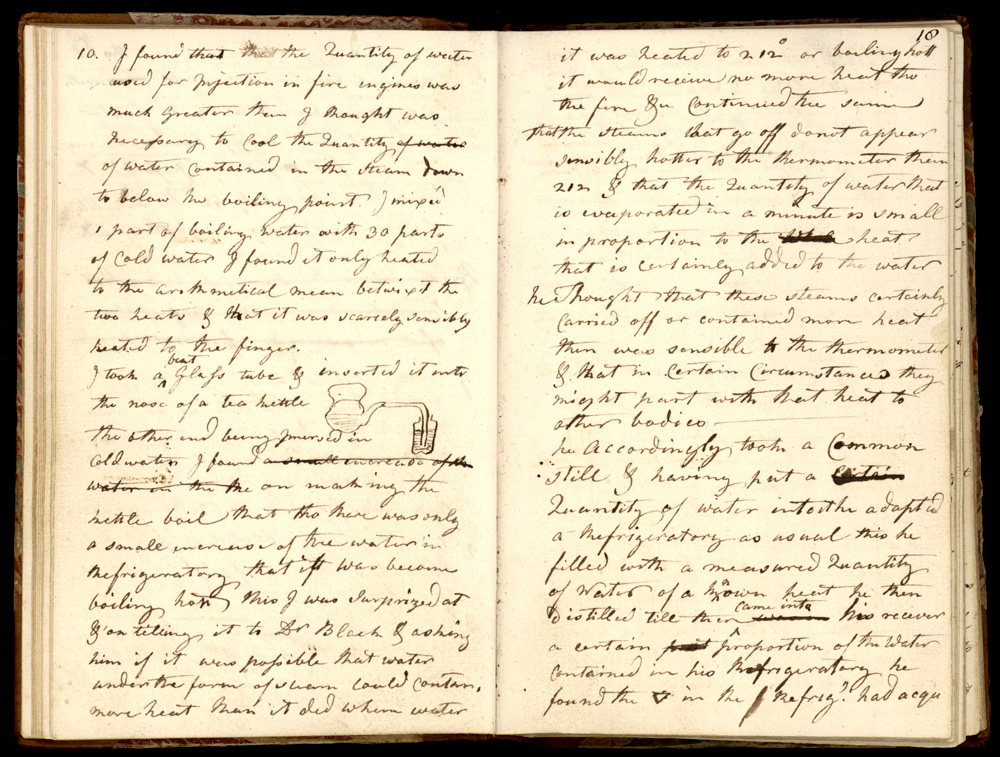
Watt was not the inventor of the steam engine. Not to mention Heron of Alexandria’s aeolipile, before Watt there were already Papin’s piston steam engine (1630), Savery’s steam pump (1698), and Newcomen’s steam engine (1712). Papin succeeded Hooke as Boyle’s experimental assistant, helping with experiments such as the vacuum pump. In 1681, in order to quickly clean bones in medical experiments, he invented the “bone-softening apparatus,” which was the earliest pressure cooker. Inspired by the pressure cooker, he eventually developed a steam engine that used the atmospheric pressure after steam condensed in a cylinder to push a piston to do work. Savery’s steam engine, by contrast, did not use a piston; instead, it used the vacuum formed by steam condensation to pump water, and was first used in mines. The early development of the steam engine was a continuation of the vacuum pump; when Savery’s steam engine was demonstrated in public, it was also promoted as a “small model of a vacuum pump.” Newcomen’s steam engine combined Savery and Papin, and produced relatively good commercial value.
As for Watt, he came from a family of craftsmen. His grandfather was originally in shipbuilding, and the family had a workshop dedicated to navigational instruments. Craftsmen’s families at that time were not necessarily poor; Watt’s family could be said to have been both rich and noble. His grandfather later became a municipal officer, and his mother also came from a renowned scholarly family. Watt received a good education from an early age, being influenced both in his father’s workshop and in his mother’s natal family, where he received training in mathematics and grammar.
Because he had not completed a seven-year apprenticeship, Watt was rejected by the guild of craftsmen. But by chance he had an opportunity to help the University of Glasgow repair astronomical instruments, and because of his excellent workmanship he won the favor of the professors there (including Black and the economist Adam Smith), and opened an instrument-repair workshop on the University of Glasgow campus. Finally, in 1763, he accepted the task of repairing Newcomen steam engines.
It should be noted that what he repaired was a steam engine used as a teaching instrument. Compared with steam engines in mines, it was reduced in size, and that reduction magnified the energy loss caused by repeatedly heating the cylinder, which made Watt especially dissatisfied with this phenomenon and led him to set out to improve the efficiency of the steam engine.
Watt was highly representative of his age. I have a distinctive formulation for this, namely “improvement as revolution” — Watt improved rather than invented the steam engine, and precisely this made Watt even more suitable as the emblematic figure of the Industrial Revolution. Consciously and deliberately, with the support of mathematics and experiment, one quantitatively improves the “efficiency” of technology. This way of working is taken for granted by the engineers after Watt, but it was not common among craftsmen in the Middle Ages and the early modern period. The “pre-control” of “efficiency” can be said to be the hallmark of modern technology as a whole.
Preview: Watt is the emblematic figure of the Industrial Revolution, but in general what exactly was the “Industrial Revolution”? That is the theme of the next lecture.
Recommended books: Steel, Steam, and Capital: The Origins of the Industrial Revolution、The Most Powerful Idea in the World: A Story of Steam, Industry, and Invention
 、
、Lecture 10: The Industrial Revolution


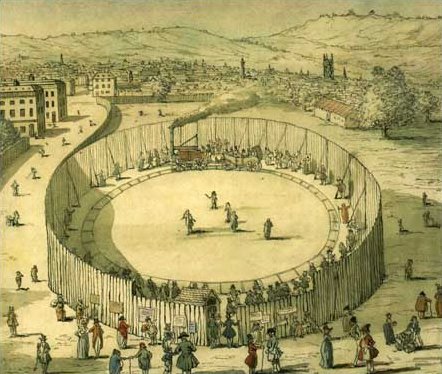
This lecture mainly has two parts. The first part discusses, besides the steam engine, the key technological innovations of the Industrial Revolution, namely the textile machine and the railway. Only when the textile machine + the steam engine + the railway were integrated together can we say that the curtain of the industrial age was truly raised. Early textile mills relied on water power and had to be built near rivers. Watt’s improvement of the steam engine made it theoretically possible for factories to be established anywhere, but because of the cost of transporting fuel, factories still mainly depended on water power. The emergence of railways greatly reduced transportation costs, making the steam engine and textile machine truly combine, and freeing factories from dependence on terrain so that they could be established in city centers. From then on, factories and population centers coincided, industrialization and urbanization coincided, and the new working class rose up.
Theory–experiment–industry was also gradually integrated; experimental science gradually became mathematized and quantified, and theoretical science increasingly quickly gained application.
In the second half of the class, we discussed what exactly the “Industrial Revolution” is. I asked about the Industrial Revolution from eight aspects: time (When), place (Where), people (Who), events (What), why it occurred (Why), whether it is good or bad (Whether), how to regard it (How), and which one (Which); and I explored the significance of the Industrial Revolution from six angles: economic history (productive forces and relations of production), political history (from feudal systems to industrial society), environmental history (the conquest of nature and the outbreak of pollution), cultural history (new values and ways of life), history of science (the consequences of the Scientific Revolution, knowledge is power), and history of technology (the invention and spread of new technologies).
I do not support the abuse of the concept of the “Industrial Revolution,” such as the so-called Third, Fourth Industrial Revolution, and so on. I even think the concept of the “Second Industrial Revolution” is questionable. I advocate replacing it with specific “technological revolutions,” such as the “electric power revolution,” the “internet revolution,” and so forth.
Preview: I rejected the concept of the “Second Industrial Revolution,” so what do we talk about after the Industrial Revolution? In essence, nothing more than the Industrial Revolution’s sequel and completion. The sequel is the rise of the electricity revolution and the petrochemical industry, while the completion refers to a new mode of production coming to dominate—namely, “mass production.” The next lecture takes “mass production” as its theme and discusses the completed form of the industrial age.
Recommended books: Unveiling the Industrial Revolution in Modern Britain , The Long Road to the Industrial Revolution , Introduction to the History of Technology


.jpg)


Lecture 11: Mass Production

The textile machine and the steam engine transformed the textile industry, but the final step in textile production still awaited improvement: the bleaching process. And the chemical industry itself also began with bleaching powder. In the late eighteenth century, many people raced to study bleaching processes, including Watt and his wife, but the eventual winner was Tennant, who obtained a patent for dry bleaching powder (potassium hypochlorite) in 1799 and established a bleaching powder factory. A chimney as tall as 133 meters became a symbol of the age.
The industrialization of the alkali industry in turn drove many related industries: bleaching agents, soap, gunpowder, papermaking, and other sectors all needed alkali. The hallmark of the chemical industry is its strong interconnection: research is combined with industry, different industries are linked to one another, and a by-product of one production process may become the raw material for another.
I also mentioned the rise of the petroleum industry. The initial main use of petroleum products was actually lighting, and the spread of lamps made factories truly operate day and night without pause.
The development of modern machine tools also promoted the standardization of production, and I briefly introduced the development of modern machine tools.
The standardization of production gave rise to the idea of “interchangeable parts,” which is usually credited to the American Whitney, though there is some controversy. In any case, the idea of interchangeable parts has a long history, and it is hard to name a single inventor. Especially in the field of weapons production in the late eighteenth century, there were many contributors. Whitney was simply the most famous of them.
The invention of the “production line” was the ultimate realization of “mass production.” Mass production does not mean producing one piece at a time, nor producing batch by batch, but producing continuously, day and night, without interruption. Ford’s Model T is the most famous industrial product of the production line, but the idea of the assembly line was actually inspired when an ordinary employee of Ford Motor Company visited a meatpacking plant in Chicago.
Finally, I mentioned Edison’s invention of invention: industrial laboratories made “invention” itself into a product. And I also mentioned the formation of a new set of values marked by The Wealth of Nations (I only touched on this very briefly; in fact, there is much to be done here, and I still need to do more research).
Preview: My overall attitude toward technology in this course has basically been positive, but I am not a simple optimist. In fact, the completion of the “production line” marks the “independence and autonomy” of modern technology: the logic of technology runs on its own, as if standing above anyone. And as technological power grows ever stronger, the destructive potential it may bring also becomes harder and harder to control. “Preemptive control” is the spirit of modern technology, but loss of control is the inevitable result. I reject the blind optimism that says “every problem of technology will eventually be solved by technology,” and the issue of “pollution” covered in the next lecture is the only lecture that confronts technology’s negative side head-on. But in fact I do not wish to celebrate technology’s positive side, nor do I wish to celebrate its negative side, because we do not first have a fixed, objective value system and then evaluate things as positive or negative; value systems themselves are deeply shaped by the technological environment.
Recommended books: The Machine Myth (The Pentagon of Power) , Prometheus Unbound , A Hundred Years of the Assembly Line
Lecture 12: Pollution
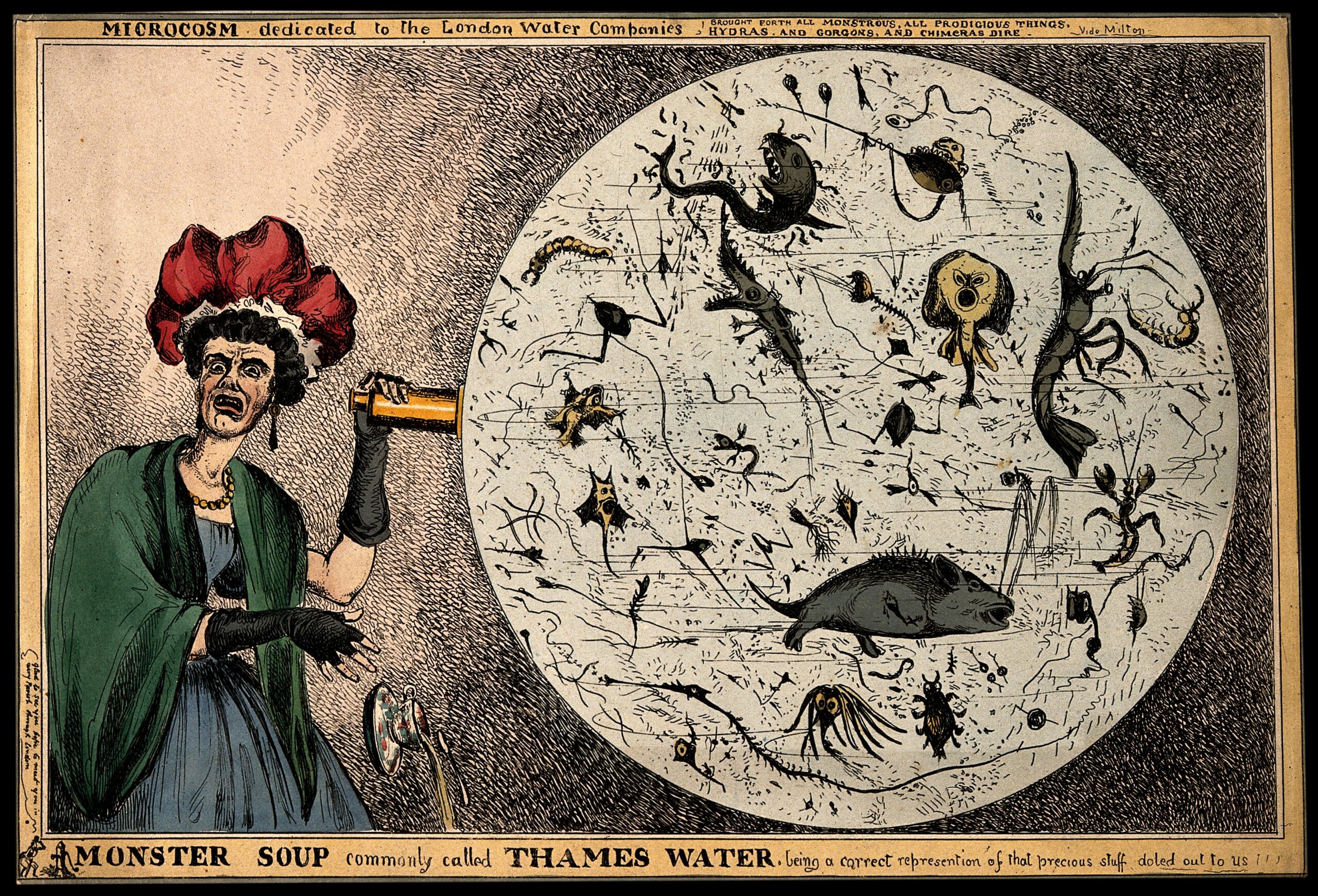

The pollution problem of the industrial age was all-encompassing, and the negative effects caused by technological development went far beyond pollution alone. But within the limited scope of this course, I could only discuss a few cases, including: the Great Stink of London, the Great Smog of London, the atomic bomb and the Anthropocene, pesticides and Silent Spring, and finally a little of my discussion of “the modernity of garbage” (The Metaphysical Foundations of Modern Garbage).
I raised several questions for reflection: first, why are human beings unable to foresee the negative effects of technology in advance? Second, even when some problems are already “foreseen,” why are human responses still always lagging behind? Finally, can the problems brought by technology always be solved by technology itself? And, incidentally, what can we do?
These events all share a similar feature: the “lag” in human response—from the lag in recognizing pollution, to the lag in assigning responsibility, to the lag in治理. In the end, it seems we still rely on technology to get through the crisis, but the next time we will fall into the same trap again.
The problem is that, as technology advances day by day and humanity’s ability to affect nature grows ever stronger, this kind of “lag” becomes increasingly likely to be fatal. Because if you always rely on the method of “borrowing new to repay the old” to plug holes, then the holes will inevitably grow larger and larger. Once one day technological development stalls, or a sudden disaster is especially massive, the result will be catastrophic.
In the postclass discussion, I followed up on a classmate’s point and emphasized one thing in particular: “speed” is the arrogance of modern technology, but it is also its crisis. The pollution problem is nothing but a problem of not keeping up in speed. Our ancestors already knew how to deal with excrement; we are not lacking the technology to dispose of excrement properly. But the problem is that its speed cannot keep up with the rate at which excrement is produced in a metropolis, and then overflow is bound to result. It is the same in many respects: having already or eventually being able to develop the relevant recycling technologies does not mean we can rest easy. The key is that the speed of our technological development is always higher than the speed at which we clean up after that development. So the faster the development, the deeper the crisis.
Preview: This lecture is relatively independent. Next lecture, we will temporarily forget these anxieties and return to the grand, sweeping history of technology. The industrial age entered a new stage, which we can call the “information age.” Since the course has limited time remaining, I can only cover the information age in two lectures in outline form. Next lecture will first introduce “the telegraph.”
Recommended books: Invention of Pollution: Coal, Smoke, and Culture since the Industrial Revolution , Nature and Power: A World Environmental History , Collapse
Lecture 13: Telegraph
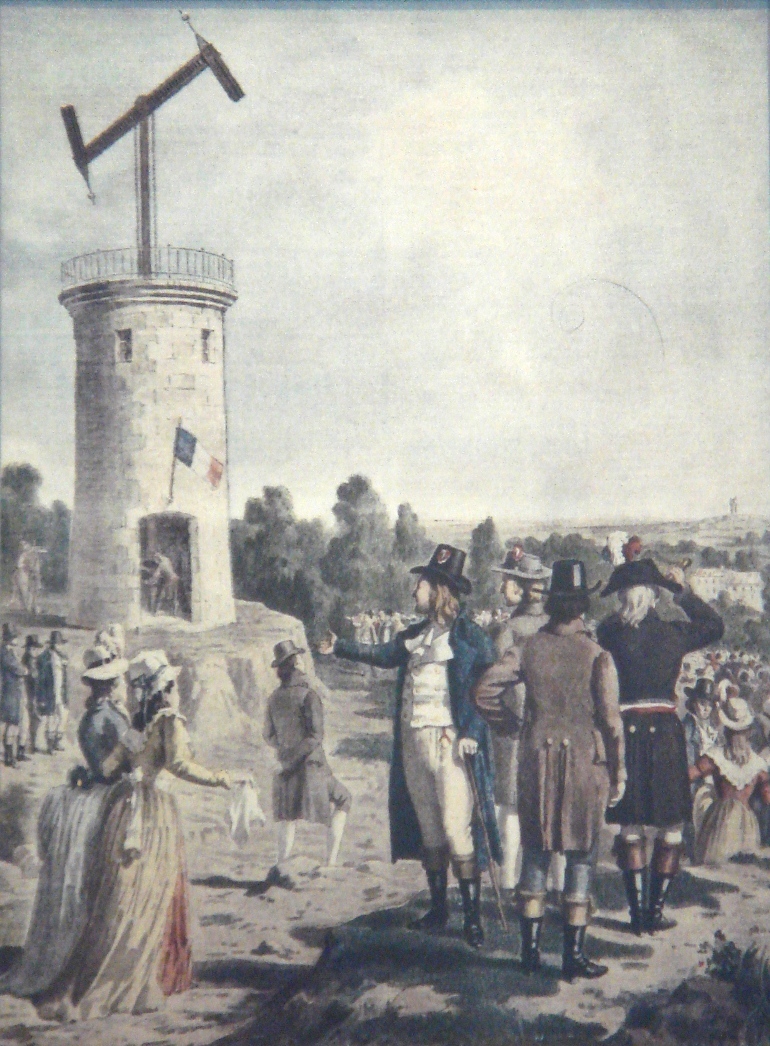
The visual telegraph designed by Chappe at the end of the 18th century did not make use of much new technology; aside from the telescope, it was nothing more than a very simple mechanical device. So why did the visual telegraph appear only in this era? On the one hand, there were the political and military needs around the time of the French Revolution; on the other, it also depended on the intellectual background around the French Revolution. During this period, the Frenchman Lavoisier proposed the Method of Chemical Nomenclature (1787), Lagrange wrote Analytical Mechanics (1788), and the French Academy established the metric system (1795). What these developments had in common was this: they unified a complex array of symbols into a new order, established public and precise standards, and expressed things through equal and neutral symbols.
The idea of “encoding” already had its rudiments among the Greeks; the “Polybius square” was a prototype of modern code tables, but the further development of the idea of encoding still had to wait for the highly developed “symbolic abstraction” of the 18th and 19th centuries. Morse was the most successful, but he also had competitors in his own time, and the prince of mathematicians, Gauss, likewise came up with an effective encoding scheme.
The financial industry was one of the earliest consumers of the telegraph industry, but modern finance itself was also only just coming into being at the same time. Finance and telegraphy shared a similar conceptual basis: futures separated the actual product from the symbolic certificate, just as the telegraph separated the messenger from the information. Marx, too, in criticizing the separation of use value and exchange value, said that human relations would ultimately all become abstract symbolic relations.
The rise of the telegraph also prompted people to rethink the soul and thought; the telegraph’s application in journalism also changed people’s sense of “news” and of the “present.” The “amusing ourselves to death” described by Postman was likewise foreshadowed from the age of the telegraph.
Preview: also a product of the idea of encoding, the next major invention is the computer; that is the theme of the final lecture.
Recommended books: A Brief History of Information, The Victorian Internet, Speaking into the Air: A History of the Idea of Communication, Amusing Ourselves to Death
Lecture 14: Computer
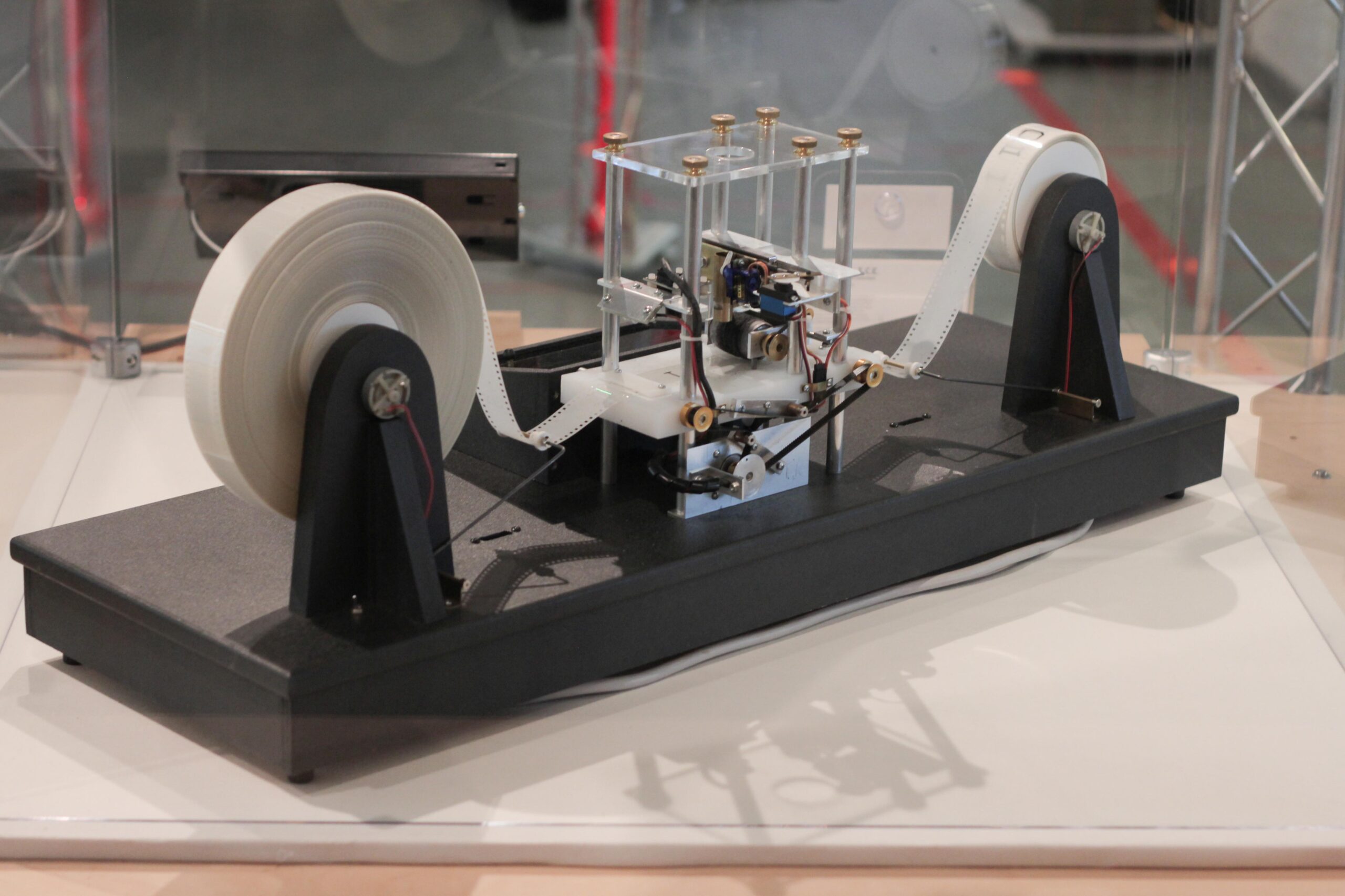

The final lecture first introduces the prehistory of the electronic computer, that is, non-electronic and non-general-purpose computers, such as the Antikythera mechanism of ancient Greece, ancient slide rules and calculation tables, and so on; then Pascal’s calculator, Leibniz’s step reckoner, Babbage’s difference engine and unfinished analytical engine. There is also the punched card introduced by Jacquard’s loom (the programming card).
Finally, during the Second World War, the entirely new demands of war promoted the development of cryptography and cybernetics.
In addition, developments in the realm of pure thought also laid the foundation for the modern computer, namely the developments in logic and mathematics since Leibniz. Finally, there are Hilbert’s famous problems and Gödel’s incompleteness theorem.
The proposal of the Turing machine was, in fact, made in order to define computability precisely in a creative way, and then restate Gödel’s proof.
But this part was the most unsuccessful part of my teaching. I tried to explain the mathematical principles and wonders of the Turing machine, but this material was too difficult, and I was unable to make it clear in a way that was easy to understand.
What I ultimately tried to emphasize was that the key trick of the Turing-machine idea is to break down the boundary between entity and data. The Turing machine itself, from first to last, is not an entity, but a theoretical construct. In this mathematical construction, everything is mathematical, everything is numeric. For the traditional calculator, three parts that are sharply separated—machine, program, data—have their boundaries dissolved in the Turing machine.
We can use a calculator to calculate calculators, and use programs to write programs.
I mentioned a phrase in my PowerPoint: the “self-enclosure” of technology. Unfortunately, I did not expand on it in class. I think the electronic computer marks the self-closing of technology; technology is no longer an external environment with clear boundaries. The boundaries among user—tool—object are dissolved; they nest within one another and determine one another. In this new environment where technology nests within technology, humanity’s place has increasingly been lost.
I also briefly mentioned the view that the Turing test is a gradual direction rather than a decisive experiment.
Recommended books: The Rise of the Machines: A Lost History of Cybernetics , The Engine of Logic
Translated from the Chinese original with AI assistance. The original text is authoritative.