
This year ICO has exploded. Many big names and veterans from the Bitcoin world have gradually become unable to sit still, and have taken up ICO, raising enormous amounts of money, only to finally dig their own graves. First, ICO was deemed illegal fundraising; now the entire domestic Bitcoin trading platform ecosystem is facing shutdown. How exactly will these big names end up? We shall wait and see.
As for ICO, I have always kept a respectful distance from it. Although this may well have caused me to miss out on a chance to get rich dozens of times over, I have always adhered to an investment philosophy of safety first, and therefore I do not feel the least bit regretful. Of course, now that ICO has been banned, I will not gloat either; the domestic shutdown of ICO is, of course, a very regrettable thing.
Now that I’ve calmed down, let me talk about my understanding of ICO and my expectations for it.
First, let me briefly explain what ICO means: the word ICO was coined in imitation of IPO (initial public offerings), and the full phrase is initial coin offerings, that is, initial public sale of coins. But here, the Chinese rendering is actually not quite precise, because in fact the three words in ICO have lost the “public” (public). Of course, according to actual usage, ICO does indeed mean “initial public sale of coins.”
The word “public” is actually crucial. In fact, non-public fundraising is very old; as early as antiquity there were partnerships, with partners agreeing on profit-sharing ratios and each holding a stake. Equity itself could also be traded, but all of this was private trading among partners, not conducted on a public platform.
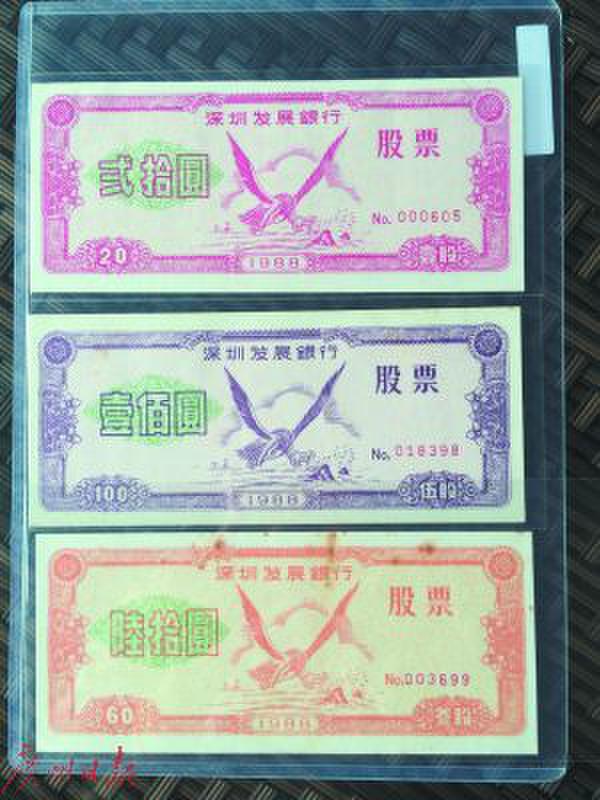
The “public” trading of shares is a new thing in the modern capitalist market, and its prerequisite is mathematization and symbolic abstraction. Equity was originally some kind of “ratio,” but it was not necessarily a neutral number. Once transformed into “securities,” however, they were completely stripped of any relation to the shareholder’s identity, status, method of contribution, and so on, and became an “objective” certificate, so that they could be detached from the operators and traded directly among investors.
In ancient society, a certificate of equity might have been a contract, written to specify the partnership between Zhang San and Li Si and the rights they enjoyed. Modern stocks are also a contract, but one that authorizes unspecified recipients: whether Wang Wu or Ma Liu, so long as you hold the stock, you automatically enjoy the corresponding rights. It is precisely because of this bearer nature that such stocks can be issued to the public at large.
Once the public holds the stock, they can also sell it at any time to other members of the public without needing authorization from the founders, because when claiming the rights, all one needs is the stock itself, not the holder’s personal identity.
However, securities face the same problem as modern banknotes, namely how to issue them and verify their authenticity. Since the form of the stock security itself may be nothing more than a sheet of paper, or even just a set of data records inside a computer, how can one ensure that stocks are not overissued and not counterfeited?
In fact, banknotes were originally also a kind of certificate similar to stocks, with each note corresponding to a certain share of gold. But in the end people discovered that the amount of currency issued by the United States far exceeded the gold they held, and thus the gold standard collapsed. The so-called collapse of the gold standard was, in fact, merely the result of Americans cheating and going back on their word.
So if a company also wants to cheat and go back on its word, it might issue more than 100 percent of its shares, or unilaterally refuse to acknowledge the authenticity of certain shares. Of course, forgers might also counterfeit shares. In that case, who is to verify them?
The United States held sway over the world; no one regulated it. After it went back on its word, the whole world had no choice but to do nothing, and could only continue cheerfully using the dollar. Fortunately, no company can be so unrestrained, so one can naturally find an institution capable of regulating companies to supervise stock issuance. For example, securities exchanges, the securities regulator, and so on. They can supervise companies so that they do not overissue stocks, do not casually default, do not fabricate information…
So the basic meaning of ICO becomes clear. The digital currency issued by ICO is actually similar to Bitcoin, and what ICO does to stocks is exactly what Bitcoin does to currency. It all comes down to the four words “decentralization.”
Of course, ICO does not decentralize the entrepreneurs who are the center of fundraising, but rather decentralizes the institutions of “issuance” and “verification” for securities. The tokens issued by ICO are, after all, also a kind of certificate; each token is equivalent to some proportion of the total, just as one lot of stock is equivalent to some proportion of a company’s total shares.
What, then, are the advantages of ICO? Simply that it uses blockchain technology to solve the trust problem in the issuance and verification of securities. In other words, without the supervision of the securities regulator, relying on blockchain technology, we can be certain of the proportion that each token occupies in the total, and a company cannot arbitrarily issue shares amounting to 200 percent. On the other hand, when investors privately transfer shares, they can rely on blockchain technology to directly judge the authenticity of the tokens they receive, without needing to seek confirmation from the securities exchange.
In addition to decentralization, a secondary feature accompanying Bitcoin is anonymity, and ICO tokens likewise have this. Although traditional bearer shares are also “recognize the share, not the person,” because of verification requirements they usually depend on buying, selling, and delivery through authoritative platforms such as securities exchanges, and receiving dividends also requires going through specific channels, so investors usually have to register under their real names as well. By using tokens for transactions, however, one can remain anonymous from beginning to end. Even when receiving dividends, one can do so by binding a signature on the blockchain and receive digital currency as the dividend (for example, Bitcoin). In addition, when exercising voting rights, this can also be completed through digital signatures, without needing to show up in person. In this way, traditional stock investors can remain anonymous throughout every stage of buying, selling, voting, and dividend collection. Entrepreneurs and investors can also bypass third-party regulation and establish a direct relationship.
Moreover, another feature of Bitcoin is the publicization of transaction records. Although the holder of each address is transacting, any transaction between Bitcoin addresses is open and transparent, and everyone can view every Bitcoin transaction happening in the world. This feature likewise applies to ICO, that is to say, all equity transfers are open and transparent. For example, if a company boss beats his chest and declares that he is increasing his holdings, but in fact is secretly reducing them, this kind of thing does not have to wait until the securities regulator breaks the news for ordinary investors to know; anyone can keep an eye on the boss’s stock account at any time.
In short, the strengths of ICO, like Bitcoin, are nothing more than decentralization, anonymity, transparency, and so on. There is no new revolution here; it is simply extending the revolution that Bitcoin brought about in the domain of currency into the domain of financial securities.
Of course, this extension of the revolution is itself highly significant, because Bitcoin initiates a monetary revolution, but the significance of a monetary revolution is far more than merely replacing currency, just as the significance of the astronomical revolution was not only to replace one system of astronomical calculation.
Fiat paper money is obviously not merely a product of printing technology; it involves the support of various systems such as politics, economics, finance, and law. Bitcoin’s revolution begins with currency, but in the end it will also touch the norms of conduct in every field. Changing the financing methods of entrepreneurs and the equity system of companies is only a small step among them.
Of course, we cannot overestimate the significance of this revolution. Bitcoin’s “decentralization” allows it to almost completely free itself from regulation, and currency can flow anonymously across borders. But the decentralization of ICO merely removes the role of regulation in a few specific links—for example, using no regulation to ensure the credibility of issuance, or using no regulation to ensure the authenticity of equity and its exercise—but it is hard to remove regulation in all respects.
This is because, in the monetary system, the value of currency in fact does not need support from regulators, and in the process of currency use, apart from issuance and authentication, no additional trust is needed. Fundraising through public offering is different: the issuance and verification of stock are only two very small links in the entire financial activity, whereas in other links, regulation can sometimes be effective, and is even sometimes needed by the market.
Bitcoin does not require a specific issuer or issuing institution; Satoshi Nakamoto was merely the creator of the initial rules. But ICO certainly still has a specific issuer. He needs to start a business, or open a company, or launch a project—in short, for various reasons, he needs to raise funds. ICO is, at bottom, a new way of raising money; investors can be anonymous, but fundraisers usually cannot.
Of course, in theory, fundraisers can also be anonymous. For example, it is entirely possible that a hacker known in the dark web says he wants to run a black market; then of course he would not be able to raise money through traditional IPOs, but he could raise money through ICO.
But that is a relatively extreme case, and even then, the fundraiser would still need to have a clear identity in the online world. Generally speaking, fundraisers are often more inclined to show up under their real names, because investors are ultimately putting money in because of the fundraiser; the investment goes into the fundraiser’s pocket, but if they have absolutely no idea who the fundraiser actually is, only the most blindly credulous investor would do such a thing. In fact, in this wave of booming ICOs, “celebrity endorsements” have become fashionable: the more famous the fundraiser or his partners are, the easier it is to attract investment.
So at the fundraiser stage, regulation is possible, and also demanded. First, because fundraisers often appear under their real names, regulators naturally have a trail to follow, and can directly invite these big names from the coin world in for tea; second, because investors always want to know and confirm more information about the fundraiser’s identity, and of course they do not simply believe whatever the fundraiser says, they will also welcome third-party supervision, and the more authoritative that third party is, the better.
After the fundraising succeeds, how should this money be used? The fundraiser claims he wants to start a business and do a project, but in reality he goes to the United States to buy a mansion, then turns around and tells investors that the startup failed and their investment has gone down the drain, leaving investors to quietly shoulder the risk. Then who are the investors supposed to reason with? Or rather, how can investors distinguish whether a failed investment was truly due to the fundraiser’s entrepreneurial failure or due to misappropriation and squandering?
So at this stage, although regulation is not theoretically necessary, investors are often willing to welcome, or even demand, the intervention of regulators.
Finally, there is the trading link between investors. Of course, ICO tokens can be transferred across borders anonymously just like Bitcoin, but also like Bitcoin, if investors need to buy and sell frequently and take profits at the top and buy at the bottom, then they will certainly need corresponding exchanges. And different exchanges can independently decide which stocks (tokens) to list, and can also set different thresholds for investor access; this is the same as today’s stock exchanges.
Isn’t that rather disappointing? This fundraising method called ICO still ultimately requires regulation and still needs securities exchanges, so what exactly can it provide that is new?
Of course there is still something new; roughly speaking, at least the following points:
1. Lower the threshold for public offerings, blurring the line between public and private placements.
In China, for a company to issue stock and list publicly, it must go through strict review, and the room for rent-seeking embedded in this review system needs no elaboration. China is moving toward a registration system reform, but the registration system in the U.S. stock market also has a fairly high threshold; at the very least, it is not something a startup can easily reach.
The first round of investment sought by entrepreneurs is often called “seed investment” or “angel investment,” and then they go through round after round of fundraising such as Series A, B, and C. Finally, after much hardship, when they at last go public through an IPO, one can basically say that this company has already succeeded in starting a business.
And now these ICO public fundraisings are basically all for startup projects, similar to traditional seed rounds or angel rounds. Entrepreneurs often have only a ghostly “big pie” in hand, an idea, a paper (a white paper), and then they begin ICO. And these ICOs often manage to raise far more startup capital than ordinary angel investments. Of course this is due to a huge bubble, but one can also imagine that in a long-term stable state, so long as regulation gives the green light, ICO fundraising would at least not be harder than seeking angel investment. The already popular “crowdfunding” websites have proven that the model of raising money from the masses is feasible. Of course, it would be too hasty to let ICO replace angel investment, but the key point is that ICO can replace any round of investment, whether seed round, angel round, or Series A or B; ICO can be inserted at any time, rather than treating public fundraising as the entrepreneur’s ultimate goal.
2. Stocks can flow freely outside the exchange, no longer constrained by the exchange.
Because the thresholds of different exchanges vary, traditional IPOs are often issued only on a certain exchange in a certain country. But a company’s stock can of course be issued on multiple exchanges; for example, many Chinese companies have stock both in A-shares and in Hong Kong stocks.
At present, these stocks issued on different exchanges are, in theory, equal in one share, one vote, and enjoy the same rights, but in practice they often differ greatly, even enormously. Why is this? Of course, because circulation between the two places is not smooth. The so-called Shanghai-Hong Kong Stock Connect and similar channels also have very limited quotas.
ICO easily solves the problem of stock circulation between different exchanges. ICO tokens can be withdrawn from one Chinese trading platform at any time and transferred to a U.S. trading platform. Or if I do not want to play the game of taking profits at the top and buying at the bottom, and only want to hold the stock to receive dividends, then I do not need to entrust the tokens to the exchange at all; I can keep them myself, without affecting the exercise of rights or dividend collection in the slightest.
In this way, the situation of “one share, one vote, different prices” is basically dissolved. Investors still need exchanges, but exchanges are merely platforms and tools, and no longer wield life-and-death power.
3. Greatly enhance the liquidity of stocks
The fact that stocks themselves can flow freely outside exchanges will also force exchanges themselves to provide as much liquidity as possible. Bitcoin exchanges were designed from the outset to be T+0, 24-hour trading, with no daily limit up or down. But stock exchanges today almost all fail to provide 24-hour, round-the-clock trading. Why? Because the global free flow of digital currency forces exchanges to obey global time: no morning and afternoon sessions, no opening and closing.
In addition, the infinitely divisible nature of digital assets also makes trading more flexible. Stock trading often has a minimum lot size (for example, one lot), and it is said that more than half of Chinese retail investors cannot afford even one lot of Kweichow Moutai stock. Many Chinese stocks like to play with “bonus shares” to split the stock. But ICO tokens can be broken up and traded at any time; buying 0.001 of one is also fine, and there is never any need to split shares.
4. Accounts are transparent, making auditing and regulation convenient.
ICO usually cannot escape regulation, but conversely, on the premise of being willing to accept regulation, blockchain technology’s public ledger is in fact more convenient for regulation. Every expenditure, cash-out, buyback, and dividend has evidence to follow and cannot be tampered with. If wages are paid and resources purchased directly through digital currency, rather than needing to be exchanged into fiat currency before use, then all of these spending links are transparent. If, after the project succeeds, the income obtained is also in digital currency, then all future income will likewise be transparent. For example, we can clearly see from the public ledger of the blockchain: this year the company’s income is A coins, expenditures are B coins, C coins of the surplus are used for investment and reproduction, D coins are used for dividends… Then if viewers discover that A is far greater than B+C+D, the problem will immediately become apparent.
At present, listed companies are often required to make their accounts public, but whether these public accounts are true or not depends first on the public’s trust in the corresponding auditing institutions and regulatory agencies. With the help of blockchain technology, the public will have the possibility of confronting the ledger itself directly.
这样一来,虽然ICO仍然需要监管,但这种监管未必总是自上而下的了。
5. The Additional Functions of Tokens
Up to now I have been comparing ICO tokens with stocks, but tokens are of course not just stocks; they are also, in themselves, a new kind of digital currency. In fact, most ICOs up to this point do not seem to have positioned the token as a kind of stock at all, but rather have largely promoted it as a new digital currency, and so they tend to tout what new functions these tokens have compared with Bitcoin.
Token issuance in this sense is, in fact, just the altcoin issuance of those years, only with a large amount of “pre-mining” added. A few years ago, the environment in the Bitcoin community was completely different from what it is now; back then, it was still the world of idealism, and newly issued altcoins were often required by the community to have not a trace of pre-mining. But in today’s ICO token issuance, in many cases it is basically equivalent to developers pre-mining 100%.
Of course, the biggest success story of this model of developing a new coin in the form of an ICO is Ethereum (ETH), and it has also become the foundation for a new round of various ICOs: a new ICO can raise ETH and issue EOS, and then an even newer ICO can raise EOS and issue a newer coin.
Although ICOs have broken down the boundary between currency and stock, I personally think that if they are positioned merely as a development model for new digital currencies, then they do not go beyond the significance of the various altcoins that came before. New digital currencies can of course continue to emerge endlessly, but how many new currencies do we actually need? How many new companies, how many new entrepreneurs do we need? Clearly, even if the world of the future needs ten thousand digital currencies, that is still far, far fewer than the number of entrepreneurial projects. So the main significance of ICOs must not lie in their being a development model for a new currency, but rather in their being a financing instrument for public stock offerings.
So an ICO token can perfectly well be nothing more than a completely unoriginal altcoin, such as a PoS coin, or some future asset on a sidechain attached to Bitcoin. There is no need for it to benchmark itself against Bitcoin or Ethereum; it only needs to benchmark itself against traditional stocks, and that is enough.
Translated from the Chinese original with AI assistance. The original text is authoritative.