
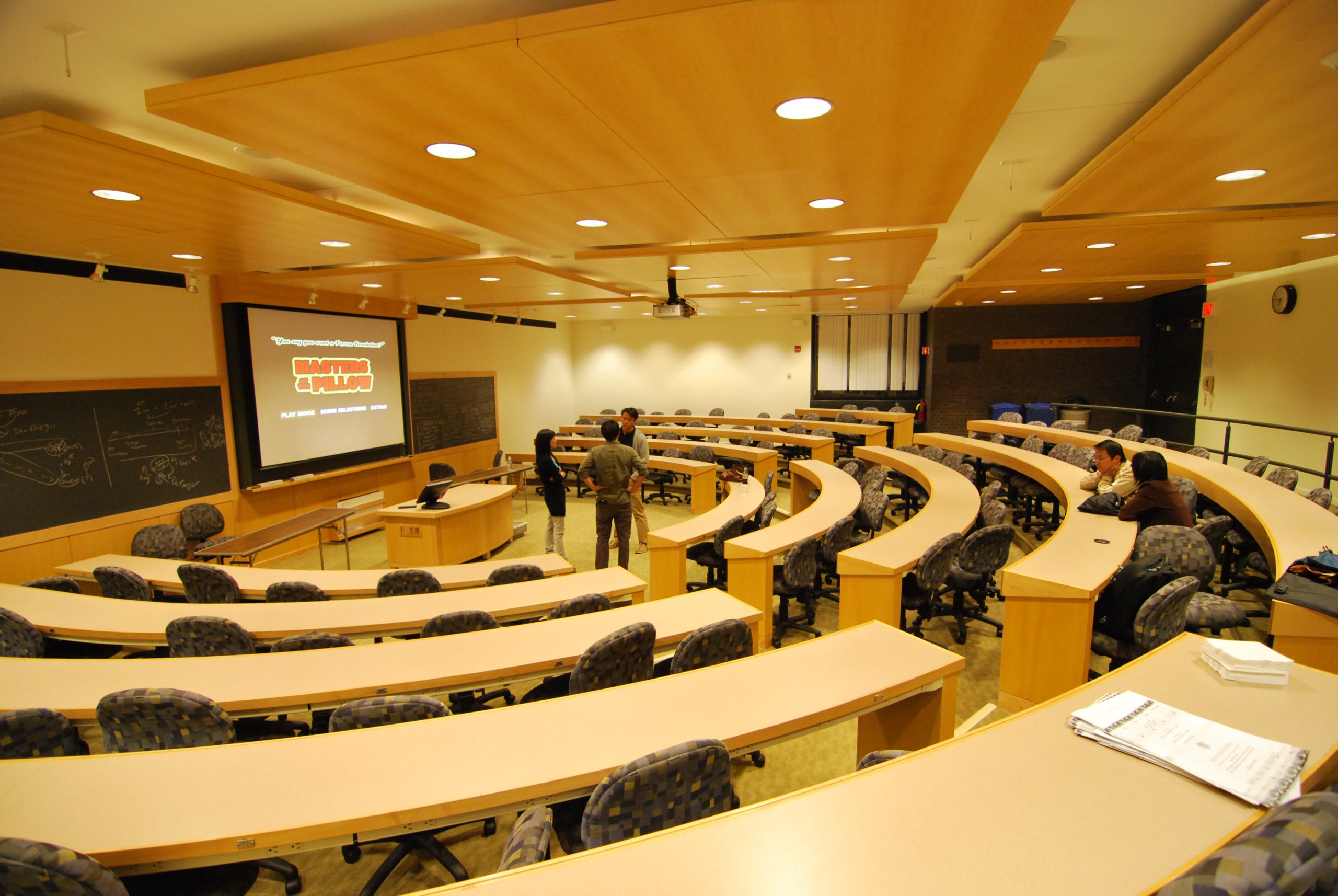
Getting upeatingusing the toilet, and then the next steps should be getting dressed, going downstairs, riding a bicycle, and so on. This time, since a reader requested it, I’ll first jump ahead to “going to class” and talk about that. Another key point is that I was not in good shape before this class, so “going to class” happened to be something I could talk about fairly casually without much preparation. This part is relatively rambling; it is only a record, and not recommended reading.
Next time will be the last class, and I may jump back and talk about riding a bicycle, but it will mainly be free exchange.
I. Cross-section
The activity of going to class is fairly complex. A typical classroom scene contains countless technological links, and we can only simplify in order to discuss it.
First, as usual, let us do a preliminary analysis of this slice of life.
Why go to class?
——To learn. Learn what? To learn knowledge. But what does knowledge mean? In different historical periods or teaching contexts, understandings of “what is worth learning” vary. For example, so-called knowledge may include sacred knowledge, bodily knowledge, knowledge of making things, historical knowledge, mathematics, science, and so on. What modern elementary, middle, and university students are more familiar with is probably so-called scientific knowledge, but in contexts such as learning to swim or learning to cook, “bodily knowledge” is still often the object of instruction.
Where do you go to class?
——We were having class at 706 Youth Space in Wudaokou, but that is an atypical classroom setting. Generally speaking, the more typical places are “classrooms” and “schools,” rooms and institutions specifically designed for going to class.
What do you use when going to class?
——Going to class is always a “multimedia” environment. Before electronic media entered, the classroom had long already been a situation in which multiple media coexisted. From speech in the earliest days, to writing, to printed books, blackboards, projection technology, computers and the internet, and so on. Moreover, the characteristic of going to class is that after the introduction of new media, older media are often not eliminated, but continue to coexist.
II. Technical conditions

We can briefly examine the technical conditions of going to class from three aspects. First is the classroom environment: specialized classrooms and schools mean the “professionalization” of teachers and students. The rise of modern schools is in some sense more important than the rise of the “factory.”
Desks and chairs are an essential feature of a typical classroom. They may not seem to contain much “technology,” but they are nevertheless quite worthy of reflection. (I forgot to mention this during class.) The modern forms of single desks or double desks seem to be relatively recent inventions, with predecessors perhaps in the drafting tables or scribal desks of the Middle Ages and the Renaissance. The form of the desk reflects a particular classroom environment and relationship between teachers and students, while its taken-for-granted ubiquity also benefits from the standardized mass production of the industrial age.
The trio of blackboard, chalk, and blackboard eraser is also very important. In ancient times, teachers would use sand trays on the ground for demonstrations, but once the vertically placed blackboard appeared, it was very difficult to replace with anything before PowerPoint. As for the emergence of PowerPoint, that is precisely something experienced firsthand by our generation, but unfortunately I did not develop the discussion.
The application of textbooks has radically changed the way teaching is conducted. The teacher becomes the textbook’s lecturer, and we seem to obtain knowledge from the textbook rather than from the teacher. Of course, there were similar things to “textbooks” in antiquity as well, but their status varied. For instance, Euclid’s Elements was very likely the textbook of its time; the Four Books and Five Classics, Aristotle’s works, and so on, were also elevated by their respective eras into “textbooks,” though seemingly not in the sense we understand textbooks today.
The succession of media technologies such as writing, paper, and printed books has been crucial in affecting the way classes are taught. Fundamentally, our concept of what counts as “knowledge” is closely related to changes in the media environment.
In addition to carriers of knowledge such as textbooks, changes in social division of labor brought about by the overall technological environment also affect the concept of “knowledge.” Greek free men did not engage in production, so their education pursued useless knowledge; modern people believe that knowledge is power, and useful knowledge has become the goal of education.
Beyond the useful/useless distinction, textual knowledge and tacit knowledge are also a way of distinguishing things. Knowledge such as craftsmanship, swimming, and riding a bicycle is unwritten bodily knowledge, while legal provisions, mathematical formulas, and so on are typical textual knowledge. But much knowledge actually lies somewhere between the two. Textual knowledge also contains tacit elements (for example, mathematical skill), and tacit knowledge can also be partly conveyed through texts (for example, martial arts manuals). Still, it is interesting to examine the roles these two kinds of knowledge played in teaching activities in different historical periods.
III. Historical tracing
Because preparation was insufficient and time was limited, this class mainly traced the different forms of “knowledge” along the line of “speech—writing—print.”
The oral teaching environment without writing is typified by sacred knowledge transmitted by shamans, druids, and other “elders” in tribal societies, or by epics and myths transmitted by bards.
After writing technology was introduced, even within the priestly class, status would change. The mysterious, heaven-penetrating sorcery was gradually desacralized, and priests often acquired a special social status through their control of texts. Examples include the priests of ancient Egypt, the wu, historians, court historians, and Ru scholars of ancient China, the Brahmins of India, and so on. Only later, with the spread of printing, did the educational system in the modern sense begin to take shape.
1. Oral speech
Walter Ong[1]’s work inspires us to understand knowledge transmission in primary oral cultures. So-called primary oral cultures refer to cultures that have never come into contact with writing, rather than illiterate groups within a culture where people have already learned to write. Ong found that the intellectual world and the transmission of knowledge in such oral cultures are completely different from those of textual societies, and oral speech cannot simply be understood as “text not yet written down.” Even after anthropologists record the oral utterances of oral societies, they still cannot be studied simply in the manner of “documents.”
Order, structure, layers, logic, and so on are all requirements for texts, but for pure oral speech, these concepts themselves often have no place to stand.
What is called “choosing words and forming sentences” makes “words” seem like blocks one by one, which we deploy and assemble into a structure called a “sentence.” Yet for people who have never had any notion of writing, where exactly is there to deploy troops from? Oral sentences are even harder to present as complex constructions; they appear more as shifting and unstable states.
Abstract, objectifying, detached-from-the-world (objective) modes of thought are very hard for oral cultures to support. Speech is always contextualized, and words are difficult to capture. People can talk about a real horse, but it is hard to abstract the concept “horse” for analysis.
The ideas of lists, catalogues, and classifications are also difficult for oral cultures to imagine. Definitions by genus and differentia, tree-like classificatory structures, and so on—these common forms of “knowledge” in textual cultures are also hard to imagine in oral cultures.
2. Writing
Early writing lacked independence and served more as an aid to the speaker’s memory. The earliest alphabetic scripts had no vowels; later, the Greek alphabet acquired vowels, but initially there were no spaces either, and writing often took the form of boustrophedon—that is, the first line is read left to right, the second right to left, and so on.
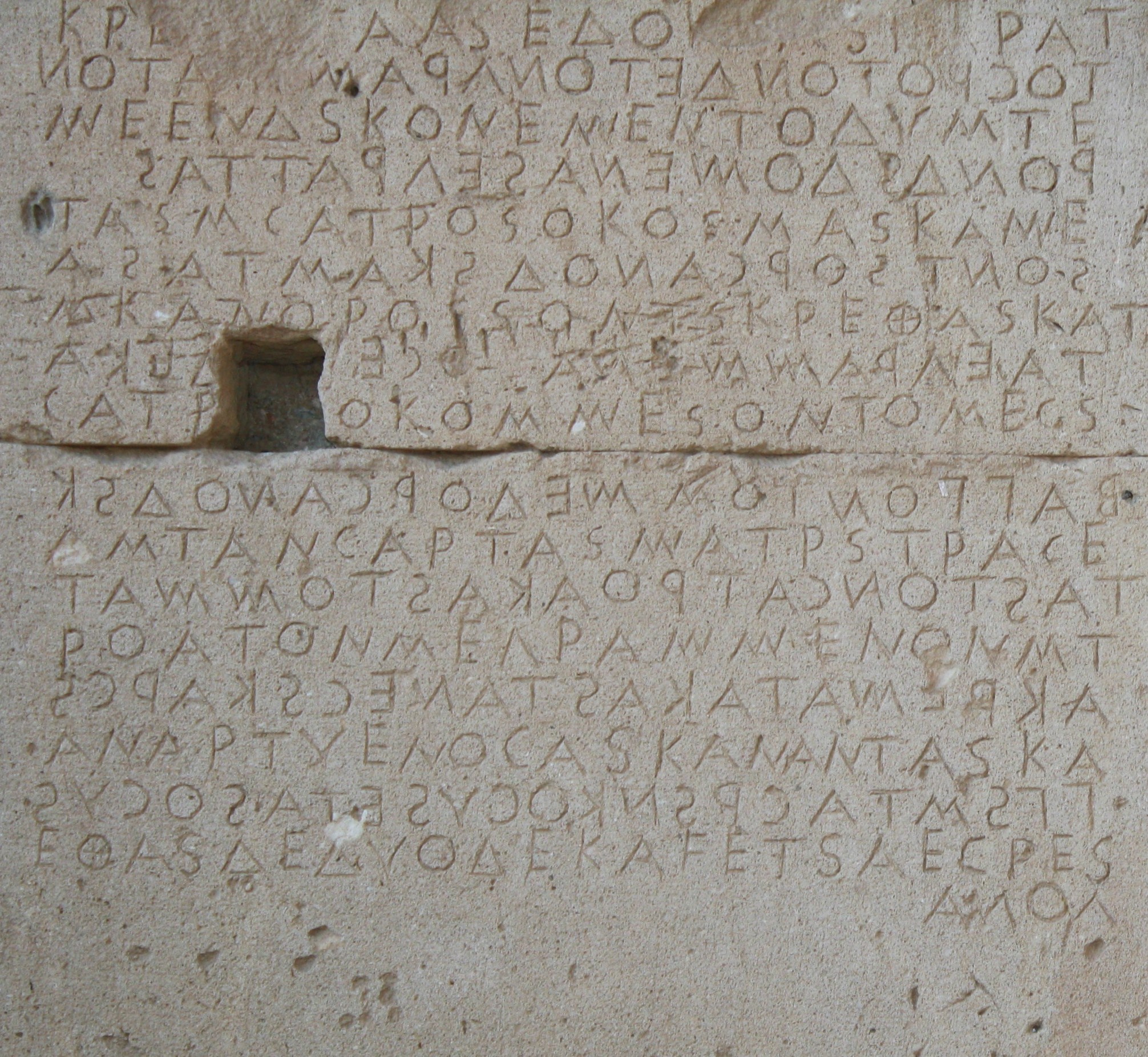
Boustrophedon writing suggests that such written texts were mainly used to be read aloud in a linear flow; unless one reads straight through, it is very difficult to directly grasp a certain word or concept from the text.
But in any case, the emergence of writing made possible the independence of “concepts,” allowing thought to appear before the world in a certain objective, tangible form, and thus to be analyzed, discussed, and reconstructed.
Plato lived precisely in the era of transition from speech to writing. On the one hand, Plato’s theory of Ideas bears a distinct written-culture character; on the other hand, the Platonic school also shows the features of oral culture. For example, the Tübingen School holds that Plato’s dialogues cannot reflect the true thought of the Platonic school, but were merely introductory books for openly recruiting students. The truly important ideas were in fact the unwritten doctrines transmitted secretly within the school.
By the way, the Academy that Plato founded in the suburbs of Athens became a model for later research and educational institutions. The Academy was originally a gymnasium, and the schools of Plato, Aristotle, and others were initially established in gymnasia. We know that the Greeks were passionate about athletics; every free young man had to undergo physical training, and in the intervals of “gym class,” sophists would come to sell knowledge and the art of debate, training the mind while training the body. The word school in Greek means “leisure.”
The Greeks were enthusiastic about physical exercise in order to take part in athletic competitions, for contests and games, not in order to train their bodies for hard labor. Likewise, Greek-style Academy education was nothing more than intellectual play aimed at honing the soul, not at mastering livelihood skills. So Western classical education since Greece has emphasized “useless” knowledge, with arithmetic, geometry, astronomy, and music as the basic curriculum.
3. Manuscript books
Throughout the era of manuscript books, books were extremely precious, and this also determined how people understood knowledge. The transmission of classics was itself one of education’s important missions.
In ancient China, as well as in the medieval West, scholars’ main work was to annotate and comment on the classics, and the limited corpus of canonical texts was always the core of teaching. This extreme emphasis on classics should not be understood simply as dogmatism. In fact, only around widely circulated canonical works could scholars find some common platform, and only then did discussion and contention have a target. Only in later generations, with the help of printing, could the newest works rapidly become public resources, allowing scholars to conduct research based on new materials.
In the ancient Islamic world, education was relatively developed, with specialized Islamic schools, but the directly established teaching relationship between teachers and students was even more important. The purpose of teaching was often the transmission of books: the teacher would read aloud a certain work, the student would copy it down and memorize it, and then the teacher would issue the student a certificate authorizing him to transmit that work—the “graduation certificate (ijaza).” A student could study under many teachers and collect many graduation certificates, but there was rarely a public academic platform for exchange and discussion among students.
4. Medieval universities
The “university” that emerged in the late Middle Ages laid the foundation for the entire modern educational system.
European universities appeared in the early twelfth century. One background factor was the collapse of the Arab rule (the Umayyad dynasty) that had occupied the Iberian Peninsula for years, after which Christians gradually “reconquered” Spain. A large number of Greek and Roman texts transmitted by the Arabs were discovered by Europeans, and some Spaniards who knew both Latin and Arabic became translators. Greek learning represented by Aristotle was rediscovered by Europeans.
At the beginning, it was still out of an interest in interpreting texts that many spontaneous teacher-student relationships began to form.
Teachers and students who were each independent came together because of their common identity, forming associations. Just like blacksmith guilds, shoemaker guilds, carpenter guilds, and so on, teachers and students also established their own “professional associations”: internally, to prevent vicious competition; externally, to seek rights and interests from the government. Guilds were also called a “universitas” (whole), for example the Paris teachers’ guild could also be called the whole body of Paris teachers. Eventually this “whole” gradually became a metonym for teachers’ and students’ guilds, and the word “university” originated from this.
So the original “greatness” of the “university” was not the greatness of large buildings, nor the greatness of great masters, but rather the greatness of a “universal whole.” Compared with educational institutions like Plato’s Academy, which were built around individual “masters,” the medieval university was initially looser, but also more flexible. A certain master might fall out of fashion, a certain building might be banned, but the “whole” of teachers and students would not wither away. Freely associated organizations of teachers and students did not need a common ideology to hold them together, nor did they need the protection of authority, and so they instead had a more stable life. And this was indeed the case: the earliest European universities (the University of Bologna, the University of Paris, Oxford, Cambridge, and so on) are generally still in existence today.
In mature European universities, the typical form of class was the “scholastic disputation.” Such disputation was first initiated by the teacher by raising a “question,” and the other participants were divided into affirmative and negative sides for a public debate. The “doctoral defense” required for graduation is likewise a demand that the student preside over a disputation, guide the debate to unfold, and finally render a judgment.
But one can imagine that the final ruling on the answer to the question was not what was most eye-catching; rather, the intense process of argumentation was the most captivating part of this teaching model. A question could involve any aspect, including claims that conflicted with authoritative theological interpretations, and these could be introduced into the dispute. Perhaps in the final ruling the teachers would try as much as possible to remain consistent with religious dogma, but all sorts of novel heretical doctrines could be imagined by the disputants.
5. Printing
For the part on printing, you may refer to my earlier article. Simply put, printing promoted the demand for the publicity of “knowledge,” and knowledge began to be understood as something in black and white, public, and open to public discussion.
By the time of the Enlightenment, the idea that knowledge is power had taken deep root, and “useless knowledge” was no longer esteemed; science and engineering majors were increasingly brought into the educational system. In addition, the ideas of research universities and national education emerged in the early nineteenth century.
6. Television, the internet
The popularity of television had a huge impact on modern education built upon print culture. This does not mean that teachers could use television in the classroom, but rather that outside classroom education, children could access all kinds of knowledge from the adult world through television. This meant that schools and parents were no longer able to fully control the transmission of knowledge.
In the internet age, because information retrieval is extraordinarily convenient, the meaning of the “erudition” praised in traditional society has been greatly diminished. The significance of textual knowledge and tacit knowledge may once again reverse: easily retrievable textual knowledge has a lower status in teaching activities, while imagination and creativity that are hard to put into words may become the main goals of education.
So my course on the history of technology greatly downplays related written knowledge—such as when, where, and by whom a certain technology was invented, or how the internal principles of a certain technology work. These questions can all be looked up in no time. What I emphasize is inspiration and understanding; there is no objective knowledge here that needs to be memorized.
This class was prepared rather hastily, so I taught it in a rather loose way. What I’m now writing out here is basically the same as what I said then, only slightly trimmed, so it’s rather messy too. Recently I’ve been writing a series of pieces on the history of teaching scientific knowledge. Once I’ve finished organizing them, I’ll rewrite this part again~
References
Translated from the Chinese original with AI assistance. The original text is authoritative.