
The previous post on the first week’s class only wrote half of it. In fact, the first half of that class was the introduction, and the second half discussed the first case study, so I’ll continue that here. As for the second week’s class, the original plan was for four classmates to speak for half a class each, and for me to speak for half a class; but the classmates’ sense of participation was too strong, and the time wasn’t strictly controlled either (since it was the first time, I deliberately didn’t try to force control), so the three classmates’ reports, together with discussion, took up a full two hours. Thus the material I had prepared will have to wait until next week.
The first example is “getting up”; in fact, I’m only extracting the one moment of being awakened by the alarm clock.
1. Cross-section
This morning I was awakened by an alarm clock.
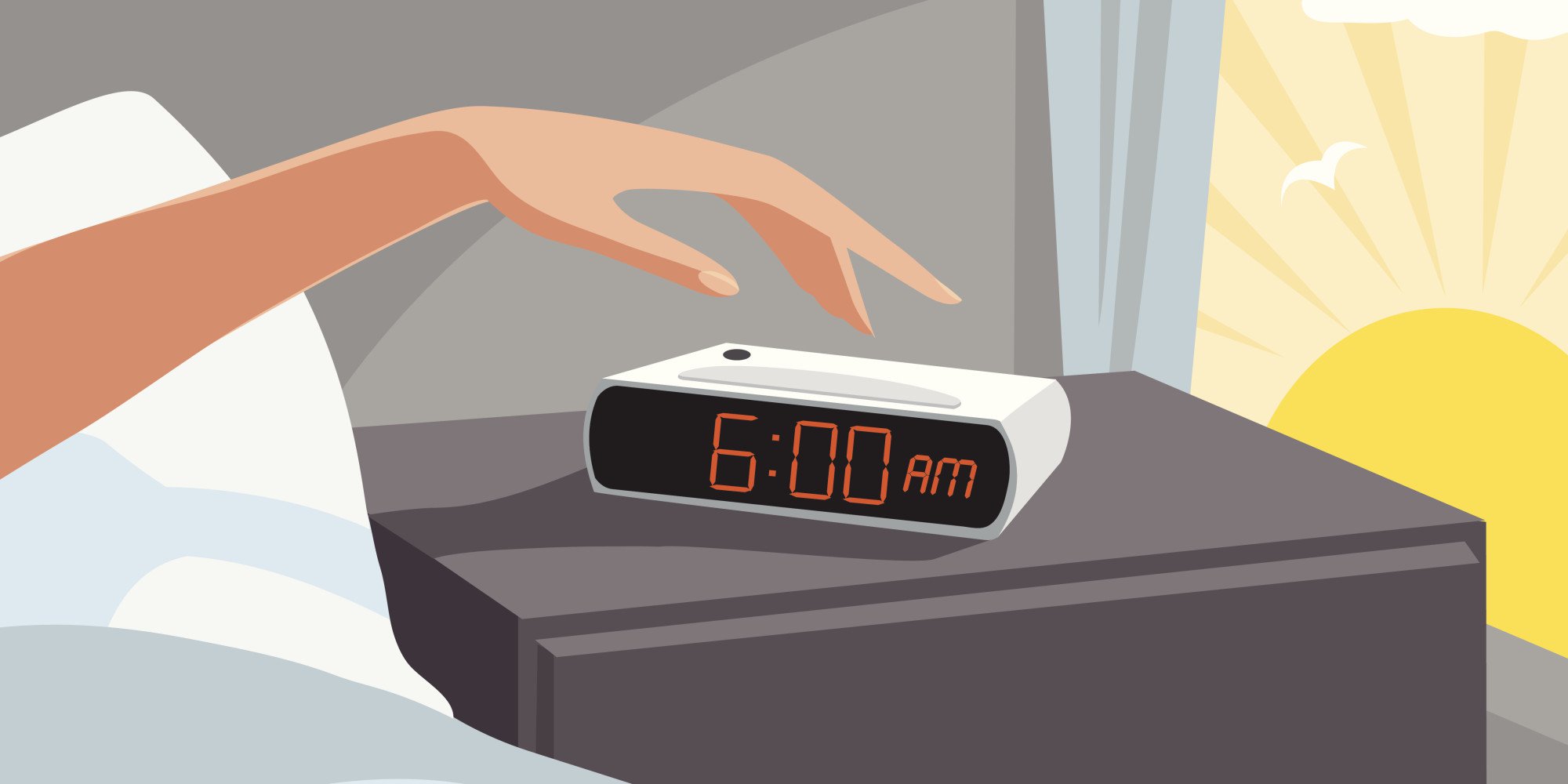
A preliminary analysis of this cross-section:
Why do I need to be awakened? — Because when I wake up, I need to do something: work, study, go on a date, and so on.
Why do I need to be awakened? — Because I can’t wake up on my own — because I go to bed late — because there are lights and computers at night (electricity and entertainment).
By what do I wake up? — What wakes me up (the ringtone, vibration), and by what means is it timed (alarm clock, mobile phone, etc.).
Every cross-section contains countless clues. We can only pick one clue first and focus on pursuing it. Here the dimension I choose is “time control.” The focal technology is the “clock.”
2. Technical conditions
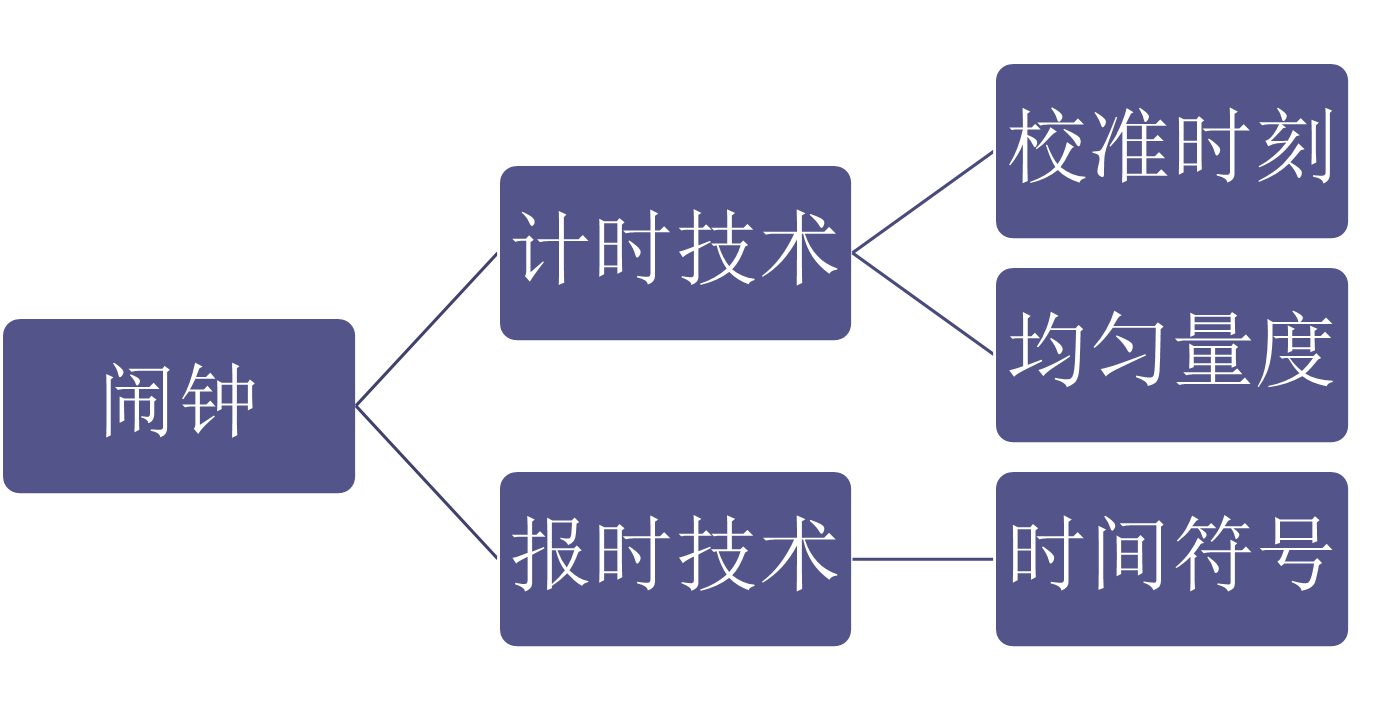
No technological artifact contains only a single technology. Behind the normal operation of every technological artifact there is always a whole series of “conditions.” In a certain sense, there is no such thing as a “single technology”; technology is always plural, and every specific function is a composite of the entire technical environment.
Starting from the alarm clock, we can trace back some of the nearest technical conditions. Broadly speaking, an alarm clock includes timekeeping technology and time-announcing technology. Timekeeping technology requires at least two levels: first, according to what reference and in what way time is calibrated; second, ensuring that the timer “ticks” as evenly as possible in some way, providing a uniform measure of time. As for time-announcing, it is about how time is presented, including the auditory aspect (the ringtone) and the visual aspect (hands or numerical symbols).
3. A historical tracing of technology
For each strand of technical conditions, if we trace back the corresponding historical changes in technology, we get roughly the following:
1 Timekeeping technology: mobile phone ← electronic watch ← mechanical clock ← celestial timing
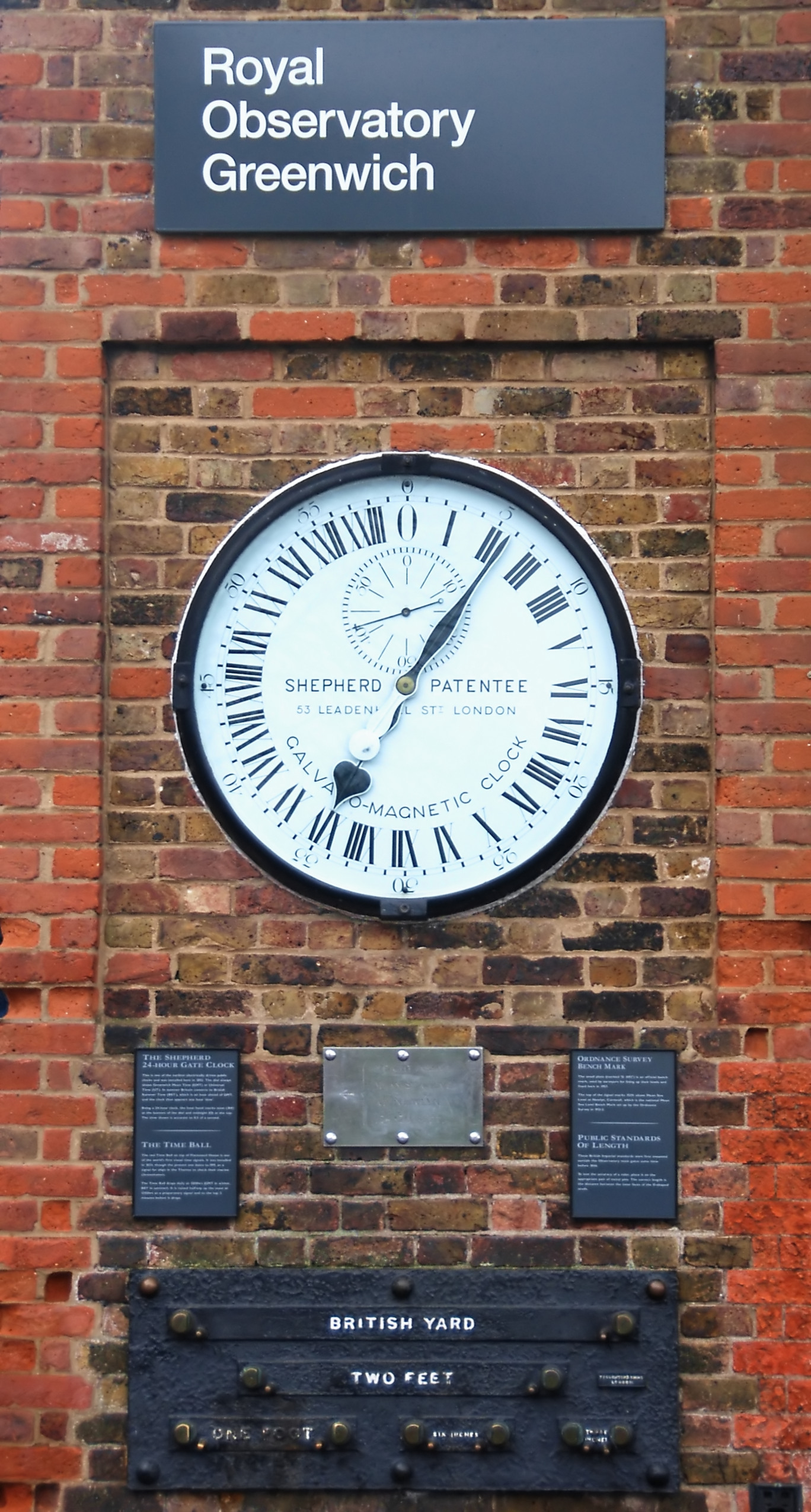
2 Calibrating the moment: network synchronization ← top-of-the-hour announcements on TV/radio ← rulership’s decree
3 Uniform measure: atomic clock ← quartz, pendulum ← water clock, heartbeat ← cycles of the sun and moon
4 Time-announcing technology: personal alarm ← ringing the bell and the watchman’s rounds ← crowing rooster
5 Time symbols: 08:00 ← dial hands ← sound ← celestial phenomena
In the absence of today’s technical conditions, how were the relevant functions accomplished? Or rather, when these functions could not be realized so precisely, how did people keep time?
1. How was time measured when there was no advanced timekeeping technology?
In fact, people usually do not need to measure time precisely. Most life situations only require “relative” measures of time, such as “the time it takes to smoke a pipe,” “the blink of an eye,” “the sun is high overhead,” “when the sun sets,” and so on. Of course, there are also a few activities that require relatively precise timing, mainly ritual activities, such as executions at the third quarter of the hour of wu, or sacrifices to Heaven. But even then, there is no need for individuals or families to possess timekeeping equipment.
2. Without electronic signals that spread instant synchronization, how was time calibrated?
Generally speaking, because timekeeping equipment was not needed in the first place, ordinary people also did not need to calibrate time. Of course, the earliest mechanical clocks had to be calibrated daily, and the reference object was usually the sun. Earlier timers, such as sundials, were useless to most people (it was better simply to look up at the sun). Most of those timers were astronomical instruments, useful only in astronomical research and related rituals.
In addition, what actually establishes the standard of time is often whatever is most authoritative or influential in a given era. For example, in ancient China, promulgating the calendar was a symbol of imperial power. Which day counted as which month, which date, and which reign title could only be decided by the Son of Heaven alone. Therefore, when the peoples of the four quarters submitted and acknowledged the central dynasty’s status as suzerain, they had to say “to receive the orthodox calendar” (奉正朔), meaning that which day counted as the first day of the first month was up to you to decide.
Today the peoples of the world are more or less all receiving the orthodox calendar of the “Gregorian calendar.” The Gregorian calendar originally symbolized the authority of the Christian church; now it has been taken over by the scientific community and become the legislator of time.
Besides the highest legislator, there are also the actual executors—that is, what in practice conveys standard time to people. In traditional society, the bell-ringer or watchman was responsible for announcing the time; in modern society, radio, television, and the internet have successively played such roles. Before internet time synchronization became popular, the top-of-the-hour announcement on television was an extremely important element. And these things that hold the “real power” over time are often also the source of cohesion in the society concerned.
3. In the absence of precision, how can one grasp and understand the uniformity of time?
In fact, the uniformity of time is often made intuitively visible through the uniformity of space. For example, “ke” refers to the marks on a sundial or clock face, and the so-called “an inch of time” is also a spatial length. Human senses are in fact fairly good at comparing whether two lengths placed side by side are equal through vision, but it is difficult to bypass space and directly grasp whether two stretches of time are equal—unless expressions like “a stretch of time” have already, in fact, been using space to image time. There can be many philosophical discussions about the uniformity of time, which I won’t expand on here. In fact, we find that because traditional concepts of time often measure time through relative relations, they actually do not place that much emphasis on objective, quantified uniformity.
4. Before the alarm clock could be personally controlled at will, who announced the time?
In modern times, setting your own alarm clock is taken for granted. Although in fact our rhythms of work and rest are set for us by companies, schools, or factories, it seems as though we are able, and only willing, to control our own time. I set my alarm, and can even do so without waking the partner in the same bed; thus I control my own time. But in ancient times, private control over time had neither the technical conditions nor the need. For example, in the countryside, people relied on the rooster’s crowing to wake early; as the saying goes, “the sound of chickens and dogs can be heard from each other’s homes,” meaning that this “alarm clock” could even be heard in the neighboring village. In the city, watchmen walked the streets and alleys to remind people of the time; all of these forms of time control were public in nature. Only a small number of wealthy people could secretly arrange for servants to wake them. But basically, time was more “public.”
5. Before time was represented with Arabic numerals, how was a moment described?
Now we use a few Arabic numerals to mark time, such as “2017-08-01 12:34,” but this digital display is not necessary. Ancient China used the heavenly stems and earthly branches to mark time.
The dominance of numerals makes time appear more as a visual image, but in ancient times, time was more of an auditory image.
3.5. A glimpse of the history of technology
As a popular course, it’s impossible to systematically sort through every link in the history of timekeeping technology. We can only pick out some interesting fragments in passing to show.
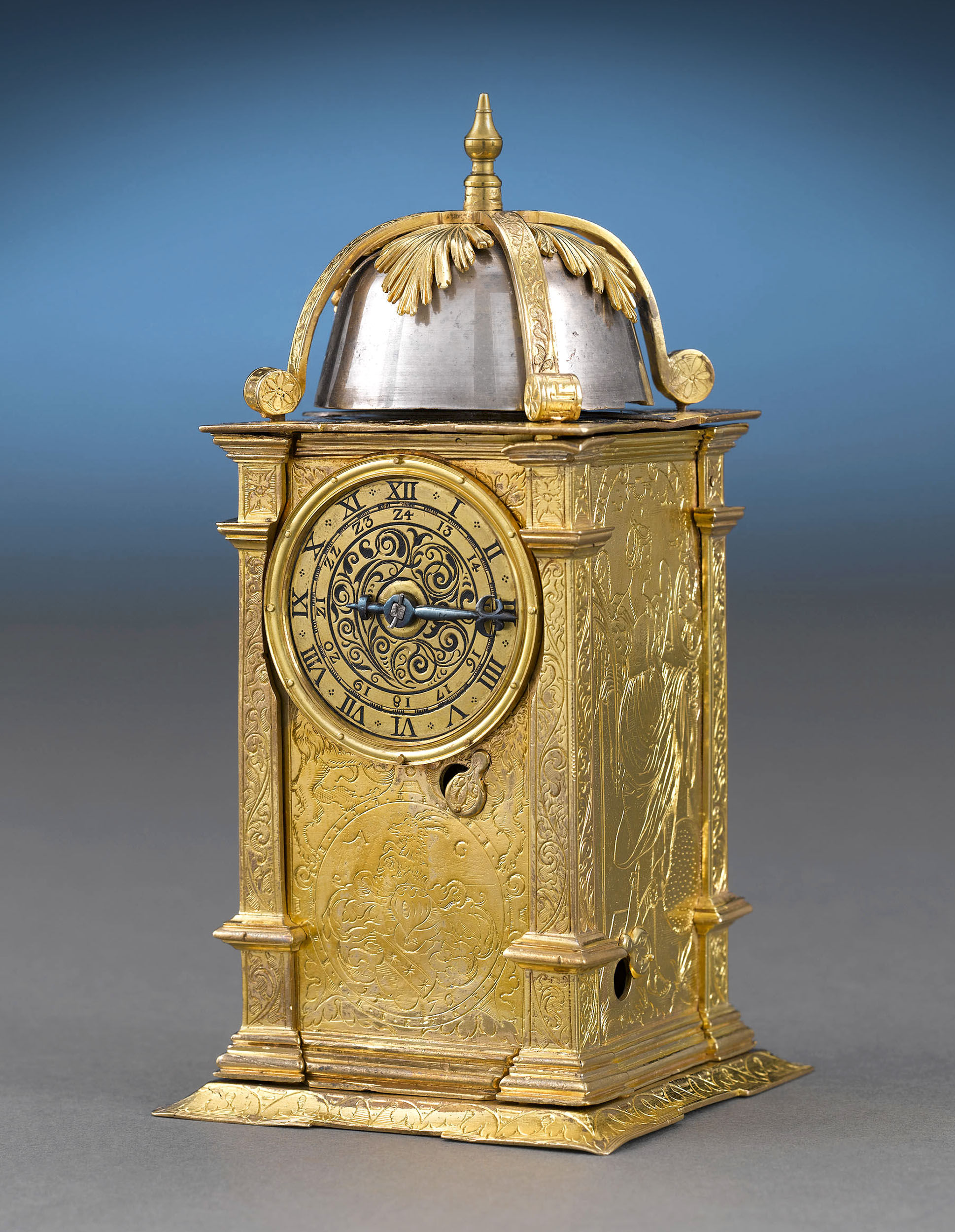
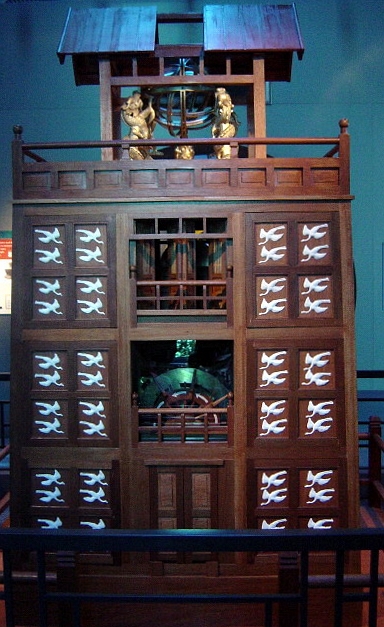
Because it adopted an escapement mechanism, the water-powered astronomical clock tower is regarded as the earliest mechanical clock. Of course, this clock was not used for everyday timekeeping; it was an astronomical instrument. In ancient China, astronomy was a monopolized field of learning by the imperial court, because celestial phenomena were related to the fate of the dynasty. Unless one was of the imperial house, studying celestial phenomena in the folk realm was tantamount to trying to usurp power. So although astronomy was highly valued by successive dynasties, its transmission was not widespread. Su Song recorded the general structure of the water-powered astronomical clock tower in his writings, but details are missing, and modern researchers’ reconstruction efforts often do not work well, finding it difficult to keep the device operating effectively. Of course, in fact this is reasonable, because the greatest function of such a large astronomical instrument tower was ritualistic: it only needed to run occasionally during major sacrificial ceremonies to Heaven, and was not meant to maintain the stable everyday operation of a modern clock.
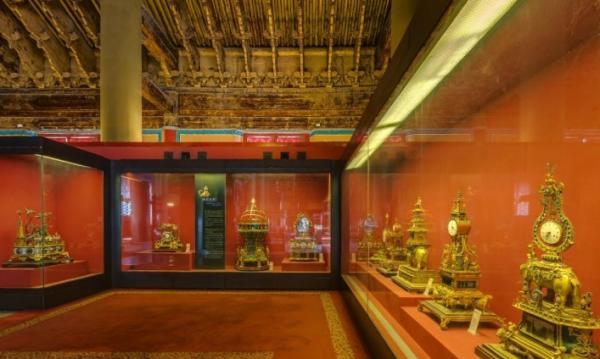
It is said that the Forbidden City’s collection of Western mechanical clocks numbers more than 1,500 pieces. As Western learning spread eastward and Western missionaries entered China, most took an upper-level route, dealing with scholar-officials or the imperial family, and mechanical striking clocks were the gift they often brought to Chinese people when first meeting them. The emperors and imperial consorts of the Qing dynasty all loved them very much, so the collection is vast (and some were even copied by Chinese craftsmen themselves). But why did they like mechanical clocks? Not because they felt clocks recorded time especially accurately or especially well, but because they regarded them as interesting “toys.” So it was not unfair at the time to call Western technology “trivial tricks and ingenious crafts” (奇技淫巧); looking at all those gorgeous mechanical clock gifts, weren’t they exactly trivial tricks and ingenious crafts?
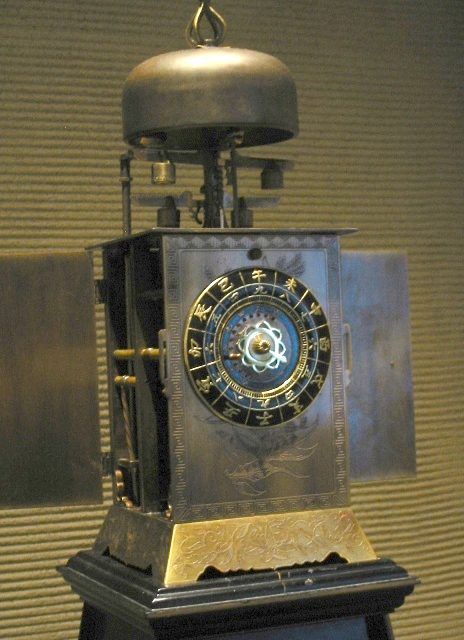
Western mechanical clocks also entered Japan. At the time, the Japanese felt that Western mechanical clocks were unsuitable, because Japan then practiced the “non-uniform time system” (不定时法). Simply put, this meant that daytime and nighttime each had six hours. In summer, daytime was longer than nighttime; in winter, daytime was shorter than nighttime; but each still had six hours. So from the standpoint of objectively uniform time, one hour in the daytime and one hour at night were not equal lengths. Thus the Japanese reworked the mechanical clock, using two escapement mechanisms to achieve dual rates that could be adjusted according to the seasons. With the penetration of Western culture, it was not until 1868 that the cumbersome “non-uniform time system” was abolished (in fact, according to the traditional lifeworld, this way of keeping time was not cumbersome at all), and in the end the Gregorian calendar was adopted outright in 1873, with Western time fully made the standard.

Western mechanical clocks first became practical in monasteries, because ordinary people’s rhythms of life did not require objectively precise measurement of time; only ritualized activities did, and the monks’ daily lives were all ritualized, requiring prayer at fixed times, so clocks were practical for them. The early mechanical clocks were all very large, often appearing in the form of bell towers; clocks were displayed on the spires of churches and monasteries, and this meant that ordinary people outside the monasteries could see clocks at any time, and the idea of time would naturally and imperceptibly influence the general lifeworld.

Among the “exhibition of international buildings” on the Bund in Shanghai, the “clock tower” is also the most prominent. Western concepts of time entered China along with clocks and factories, and we gradually took them for granted.

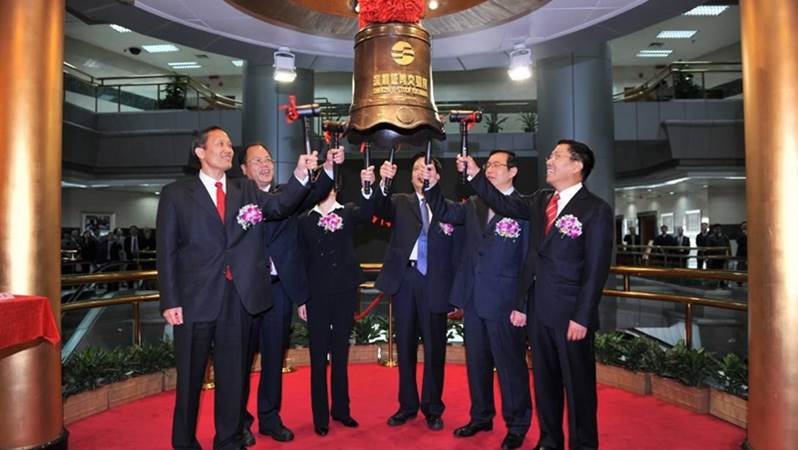
Ringing bells: before mechanical clocks, the usual announcer of time was the auditory bell, not the visual face of a clock. Of course, the earliest mechanical clocks also had to have a chiming function; they simply chimed automatically, which is why they were called “self-striking clocks” (自鸣钟). As bells gradually faded away, time shifted from an auditory-dominant concept to a visually dominant one. Now bells are rarely rung, and are used only in some ritual occasions—for example, the stock-exchange bell-ringing tradition that originated on Wall Street, or the New Year bell-ringing rituals popular at major temple fairs across China, and so on.
IV. Putting It into Context
1. Who really needs precise timekeeping?
We find that not everyone is born needing precise timekeeping; for most people in most life situations throughout history, this technology has been irrelevant. Farmers eat according to the weather, rise with the sun and rest at sunset, and do not need to consult a clock; scholar-officials play with clocks only as clever novelties and tricks, not as necessities of life. Only the monasteries of the Middle Ages, and modern workers, needed clocks, because their very ways of life were “decontextualized”: they were ways of living detached from the natural and communal environment, and self-rhythmic. Monks needed to pray at fixed times rain or shine, while workers needed to go to work from nine to five on schedule. Only for these specific ways of life did the clock become a necessity of life.
2. Who has the authority to set the standard of time?
Imperial power in antiquity, Christianity, modern science… To control time also meant to control the commonality of the entire society. In modern times, time seems to have become more and more objective, so controlling time also seems to have become a purely neutral matter—but not necessarily so. The promulgation and communication of time still reflect the power structure of the whole society.
3. Does time flow uniformly?
From the example of Japan’s unequal-time system, we can see that although people have always more or less demanded the uniformity of time, what exactly one takes as the reference for speaking of uniformity has no standard answer. Let alone the fact that relativity has already shattered the concept of absolute time; even if such an absolute temporal scale existed, who would have the authority to invoke it in order to issue decrees for calibrating time?
4. Is time quiet? Is a public bell noisy and annoying?
Modern timekeeping technology is becoming quieter and quieter. When I was a child, I often heard the “clicking” of the quartz clock hanging on the wall at home, but now in the timekeeping devices dominated by mobile phones, even the clicking sound has disappeared, not to mention the chiming that would boom out every hour. Modern people usually think that placing a bell that would boom on the hour in one’s residential community is an absurd thing, but in a certain historical period, the existence of bells was in fact part of everyday life.
The French historian Alain Corbin’s The Bell of the Earth—The Soundscape and Sensory Culture of the French Countryside in the Nineteenth Century offers an interesting account: “The church bells of the nineteenth-century countryside became noise in another age. People listened to and appreciated them with a system of emotions that has now disappeared. These bells indicated another relationship between human beings and the world, and with the sacred; they indicated another way of existing in, and feeling, time and space. Interpreting the surrounding soundscape also entered into the process of constructing personal and collective identity. Bells constituted a language, establishing a communication system that was slowly disintegrating…”
5. How do visual time and auditory time differ in experience?
The clock’s movement from thunderous sounding to silence, on the one hand, bears witness to the transformation of public space and the rise of private space; on the other hand, it also marks the shift of the concept of time from auditory dominance to visual dominance.
Of course, every concept evokes corresponding sensory impressions, but some concepts are more closely related to vision, while others are more closely related to hearing or touch. For example, “electric light” evokes more visual impressions, “sponge” carries more tactile impressions, “rice vinegar” certainly brings gustatory impressions, and so on. So which sense does the concept of “time” lean toward more? That probably differs in different historical situations. Then what are the differences between auditory-dominant and visual-dominant concepts of time?
Simply put, “moment,” “occasion,” “time,” and so on—the “time” in the eyes of the ancients was more often a point that suddenly arrives, or an opportunity resonating with other events, rather than an objectively measured standard that quietly flows away. In the view of McLuhan, hearing is a sense that tends toward “involvement,” whereas vision is a sense that tends toward “detachment”; visual centrism promotes modern people’s objective, abstract way of thinking, and an individualized, certain way of life. I will not discuss this further here.
V. Past and Present Compared
Modern people place more emphasis on punctuality, on every second counting, and so on; they cherish “time” more, but their perception of contextualized “opportunity” has grown increasingly faint.
Modern people’s pace of life is regularized and standardized, and at the same time rigidified. While setting my own alarm to wake myself up, in fact my whole rhythm of life is being controlled by the entire industrial environment.
Modern people enjoy quiet, undisturbed private space; the rhythm of time is no longer shared by the community. Even in public space, quiet and not disturbing one another has become a virtue, but communal life increasingly lacks a point of cohesion. People are increasingly estranged from one another; even the crowing of chickens and the barking of dogs between neighbors is no longer heard, and they have become utterly out of touch, growing old together without visiting one another.
The arbiter of time has shifted from imperial and ecclesiastical authority to the scientific community; the issue of “upholding the orthodox calendar” has been neutralized, but power continues to operate in more concealed ways.
… I leave more reflection to the reader.
That is all for the course content. I do not offer a systematic answer; I only hope that through these fleeting traces and reflections, I can reveal some of the strangeness of modern ways of life, and make us notice that, historically speaking, our lives are not quite as self-evident as they seem. It is worth noticing that while modern people have gained many new conveniences, they have also lost certain “dimensions.” This is not to say that we must necessarily judge modern life and ancient life as better or worse; the key lies in deconstructing the way we live today, so as to open up a horizon toward the future.
Recommended Reading
Professor Wu Guosheng’s The Concept of Time may be consulted. Also, a few years ago there appeared a “Time-Space Sociology Translation Series,” a rare and valuable set of topics, though I have not read it carefully.

Translated from the Chinese original with AI assistance. The original text is authoritative.