
In the last class we mentioned the historiography of the history of science, including different historiographical strategies such as intellectual history and social history. We cannot take science as a ready-made, fixed standard and sit in judgment on history from the lofty vantage point of modern people. We need historical consciousness, and we should try to return to historical contexts in order to understand how things developed.
The concept of “science” itself is not ready-made and fixed either; in different perspectives and different contexts, it has different meanings.
Every historiographical strategy for the history of science embodies some understanding of what science is. For example, intellectual history tends to see science more as a system of ideas, whereas social history pays more attention to a particular kind of social activity. So what on earth is science: a system of ideas, or a social activity? There is no definitive answer to that.
Dictionaries give authoritative, definite explanations of concepts, but we must remember that dictionaries themselves are products of history. In other words, people first use concepts, and only then does someone collect and compile those uses into a dictionary. A dictionary is dead, while concepts are alive; in actual usage, every concept is often polysemous, and its meaning changes continuously with history.
The newer Xinhua Dictionary gives the following definition of “science”: science is “a system of classified knowledge reflecting the objective laws of nature, society, thought, and so on.” But this is clearly a contemporary interpretation. For example, concepts like “nature,” “objective,” “classified,” and “system” are not ancient at all.
A large number of words in modern Chinese actually come from Japanese translations of Western concepts, and the most important contributor in this respect was the Japanese translator Nishi Amane (1829-1897). Words such as science, technology, reason, sensibility, philosophy, art, induction, deduction, nature, society, objective, system, physics, chemistry, and so on were all translated into Chinese through this route; there were no corresponding words in ancient China, or else the corresponding words had entirely different meanings (as with nature and society).
In other words, if we take a modern Chinese dictionary back to antiquity, we will not find “science” there. If you use this definition to explain to ancient people what science is, it would simply make no sense at all.
So how is it possible to write a history of science spanning ancient and modern times? Exactly which ideas and activities of ancient people should we include in the history of science?
As we mentioned last class, the traditional method is a Whiggish history, that is, using our contemporary, ready-made scientific achievements as the standard by which to select the achievements of the ancients. But in fact this strips the ancients’ thoughts and actions from the historical context in which they existed, and what ends up being written is only a static chronology, unable to delve into the causes and consequences of history.
But we also have to admit that, to a certain extent, a “Whiggish” attitude is unavoidable. Precisely because science is so important today, we want to investigate the history of science. The historian Croce has a famous line: “All history is contemporary history,” meaning that history is always written from the standpoint of the present.
But writing history from one’s own standpoint is not the same as so-called Whiggish history; the key still lies in whether you are self-aware. People are always biased, but self-aware bias can become insight, whereas unself-aware bias becomes prejudice. When we sort out history from our own standpoint, the purpose is not to sit in lofty judgment on the ancients, but ultimately to turn back and reflect on our own standpoint.
So when we trace the “history of science,” of course we must begin from some conception of science, using our understanding of what science is to select and organize historical materials; but at the same time, we cannot remain forever at the “starting point.” The starting point is also our destination; after entering the historical context, we must also turn back and reflect on our own concepts.
It is like entering an unfamiliar culture: I may first need to rely on a dictionary. That dictionary establishes a certain correspondence between an unfamiliar language and my mother tongue, and these correspondences help me enter that unfamiliar language world. But if I always remain at the level of following the dictionary, always using ready-made concepts from my mother tongue to understand those different concepts, then I am probably never going to融入 into a different language world. Only when I can throw away the dictionary, even set aside my mother tongue, and directly experience another language, can I be said to have entered that world. Of course, this does not mean abandoning my mother tongue; in the end, I will still turn back, reexamine the original dictionary, and even reflect on the habitual patterns of thought embedded in my mother tongue.
Starting today we will enter the main topic of the history of science, and it will involve some figures, events, and stories. But I hope everyone will always keep the question “What is science?” in mind, and be especially careful with key concepts such as “nature,” “objective,” and “system of knowledge.”
Strictly speaking, today is not yet the main topic. Today we will talk about the so-called “prehistory of science,” from primitive humans all the way to the great ancient civilizations. By “prehistory,” I mean that during this period “science” had not yet truly appeared; what we will discuss today is only the groundwork laid before science came on the scene.
Why talk about this preliminary stage? To be honest, I myself am not especially resolute about it. Of course we could also begin with ancient Greece; that would be the origin of science. But why should we say that the origin of science lies in ancient Greece? What exactly was unique and novel about Greek science compared with the knowledge traditions of earlier or other civilizations? Was Greek science a necessary product of the development of human intelligence—meaning that it did not have to be born in Greece, and would sooner or later have arisen somewhere else? Or was it a highly peculiar formation that emerged only under uniquely favorable conditions? Of course, there is no standard answer to these questions, but by comparing Greek science with other knowledge traditions, perhaps we can understand it more easily.
We know that our species belongs to the family Hominidae, the genus Homo, the species sapiens. The hallmark of the family Hominidae is walking upright, about 5 to 8 million years ago; the hallmark of the genus Homo is tool use, and the first member of Homo is called Homo habilis, which appeared about 2.5 million years ago; and Homo erectus, which appeared about 2 million years ago, is generally regarded as an ancestor of modern humans. Homo erectus had a larger brain capacity, but still lagged far behind modern humans.
The “sapiens” that appeared around 250,000 years ago were anatomically almost indistinguishable from modern humans. At the same period there was another human type that coexisted with Homo sapiens for a long time: the Neanderthals. Some scholars also believe that Neanderthals were extremely close to Homo sapiens and can be regarded as a variant or subspecies, and therefore call them Homo sapiens neanderthalensis. Neanderthals had a larger brain capacity than we do, could also make sophisticated tools, had a certain degree of social organization, and knew how to care for the sick and respect the dead.
In 2010, scientists discovered yet another human type in Siberia, called the Denisovans. As recently as 30,000 years ago, both Neanderthals and Denisovans were still living on Earth, and they certainly had contact with Homo sapiens. The latest DNA studies show that modern Europeans have roughly 1%-4% Neanderthal genes, while Melanesians and Indigenous Australians have 6% Denisovan genes.
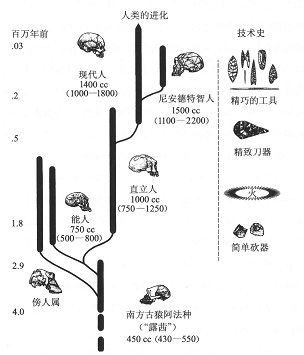 Figure 1.1 in A General History of World Science and Technology
 A reconstruction of a Neanderthal boy from A Brief History of Humankind (at first people tended to portray Neanderthals as savage cave dwellers, but recent research suggests that Neanderthals were closer to modern humans)
Humans became the only Homo species on Earth for no more than 30,000 years, a span that is extremely short in evolutionary history. Before that, the history of human evolution was by no means a linear process of gradual ascent; in fact, most evolutionary branches eventually died out. Why exactly we became the sole winners may well involve a great deal of luck.
Looking back from the present, we naturally tend to think that our evolutionary advantage lies in intelligence. But this is actually highly questionable. Humans’ eventual occupation of the top of the food chain through powerful technological forces may be something that happened within less than 100,000 years; and over hundreds of thousands of years of evolutionary history, the advantage of intelligence was not that obvious. Even if humans could make some stone tools, swinging a stone axe at a gorilla in a one-on-one fight would not necessarily mean victory, let alone against those large beasts. So for a long time humans were actually in the middle of the food chain. That is why humans are omnivores, and sometimes had to eat carrion. One speculation is that the earliest stone tools were mainly used to crack open bones and suck out the marrow.
The advantages of upright walking were not especially obvious either; otherwise so many mammals would not have had only this one eccentric exception. Upright walking led to the freeing of the hands, but the original significance of the freed hands was probably not so much the so-called making of tools (making tools is the hallmark of Homo habilis, but hominids were already walking upright). It may have been more conducive to gathering food, or to more complex gestural communication.
Human body shape, in adapting to upright walking, produced certain side effects, especially the narrowing of the female pelvis; meanwhile, human brain capacity was increasing, and this led human women to suffer tremendous pain in childbirth. In premodern times, and even in underdeveloped regions today, obstructed labor has always been a major cause of female death.
Compared with other primates, human newborns are obviously smaller in body size and have obviously shorter gestation periods. That is to say, in a certain sense, all humans are premature babies, and this may have been an evolutionary strategy to offset upright walking. As a result, compared with other mammals, human newborns are extremely weak. Many animals can run as soon as they are born, whereas human beings may need several years before they can break free of their mothers’ arms, and even human children in their teens still differ significantly in body size from adults.
This phenomenon very likely promoted human sociality, because infants must be cared for by their mothers for a long time, and during that period the mother’s ability to forage is unquestionably hindered. This requires grandmothers, fathers, or other members of society to form some kind of stable mutual-aid relationship.
In addition to being born prematurely, human women also have exceptionally long lifespans. That is to say, almost only human women experience “menopause” (the other two animals known to have menopause are short-finned pilot whales and killer whales). In other words, human women can continue living for a long time after losing their reproductive ability, almost as long as their fertile years themselves. So what evolutionary advantage is there in this mode of survival, which continues consuming resources but can no longer reproduce? One convincing explanation is the so-called “grandmother hypothesis”: the existence of grandmothers cannot continue reproducing DNA, but it can help already reproduced DNA grow better.
The elderly not only lose the ability to reproduce; their capacity to make a living and forage also declines, but their continued survival still provides an evolutionary advantage, and that advantage probably lies in the experience, skills, or knowledge they can continue to provide.
Although other animals also have, to some extent, the ability to use, or even invent, “technology,” and some animals can even teach learned techniques to companions or offspring, it is very difficult for them to make the transmission of technical knowledge into a stable social mechanism.
In any case, the use of technology is unquestionably a human specialty. There is an ancient Greek myth that says when the gods created the various animals, Epimetheus was responsible for assigning each animal a skill. As a result, Epimetheus, through a moment of negligence, forgot to assign any skill to human beings. He then discovered that humans had neither strength nor speed, no fangs or claws, and not even fur for warmth; they were truly miserable. Prometheus could not bear to watch, so he stole fire and gave it to human beings.
This myth is quite symbolic. It suggests that humans rely on technology precisely because of human deficiency: the human body lacks skills, so it can only extend its abilities by means of objects outside the body.
So human history is to a very large extent also a history of technology, and what it means to be human is also defined through technology. For example, if I now say I am a teacher, I am a farmer, I am a soldier, I am a plumber… the question of “who” I am is often defined by the kind of technology I handle.
Our periodization of human prehistory today is also based on corresponding technological achievements. From the appearance of Homo habilis 2.5 million years ago to roughly 10,000 years ago, the period is called the “Paleolithic Age,” and from more than 10,000 years ago to about 4,000 years ago it is the “Neolithic Age.” The marker of the transition from the Paleolithic to the Neolithic is the development from chipped stone tools to polished stone tools. This way of dividing history was first proposed by the British archaeologist Lubbock in 1865. Clearly, this division has tremendous one-sidedness and is basically constrained by archaeological materials. Stone tools are obviously the things most likely to survive, and we can imagine that primitive humans may have used wooden implements more than stone ones. Moreover, apart from external implements, the development of “non-material culture” such as social structure and religious ritual may be even more important. For example, Neanderthal stone tools do not seem to have been significantly inferior, yet they were ultimately driven out by modern humans. This very likely had to do with the social structures of the two sides, but these aspects are difficult to verify archaeologically. (There is some indirect evidence, for example, that in Homo sapiens sites one can find evidence of long-distance trade, whereas in Neanderthal sites there are mostly only locally available materials.)
Language is an important skill that is difficult to present archaeologically. It is generally believed that language arose about 50,000 to 100,000 years ago, but recent genetics and archaeology suggest that Neanderthals very likely also possessed complex language abilities. If so, the origin of language may have been much earlier than scholars imagined. Of course, what we mean is a complex language capable of bearing a system of abstract knowledge; as for language that merely conveys certain specific information, many animals already have that. Many animals can use calls to warn of nearby danger, and can even convey whether a wolf or a lion is coming. But if we speak of fabricating an entire set of mythological stories through language and shaping idealized or even completely unreal abstract images, that is probably something only human beings can do. Monkeys can say “the wolf is coming,” but they cannot understand “the wolf totem.” And this kind of abstract symbol and fabricated story can organize large populations beyond the family, making cooperation among strangers possible as well.
Language also makes theorized knowledge possible. Broadly speaking, technology is knowledge: making and using tools both require “knowledge,” and this knowledge can be transmitted from generation to generation through hands-on teaching and imitation. But what is closer to what we call “science” are those intangible forms of knowledge that can only be expressed through abstract concepts.
Of course, in primitive oral societies, in the absence of writing, the abstract thinking that spoken words can support is extremely limited. One element of abstract thinking is establishing complex structures of relations between concept and concept, rather than merely between concept and thing. This is very difficult to do through speech alone. Speech is fluid and cannot pin down a concept; spoken words are “hard to grasp.” Concepts are always evoked in their corresponding contexts and are difficult to detach from those contexts so that the concepts themselves can become objects of thought and discussion.
Some studies of modern non-literate regions also bear out the distinctiveness of oral culture. For example, when researchers asked subjects to classify four cards depicting a hammer, a saw, a log, and an axe, illiterate participants could not understand the idea that “only the log is not a tool,” and instead insisted on contextual thinking: “They’re all the same. The saw cuts wood, the axe chops wood. If I had to throw one thing away, I’d throw away the axe. The axe is not as good as the saw for doing woodworking.” The researchers found that once the subjects had received even the most elementary literacy education, their performance changed completely, and this had nothing to do with the specific knowledge they had learned or the richness of their life experience.
We will mention the status of printing again later when we talk about the rise of modern science. Modern science, rather than directly facing the natural world, might be said to face first and foremost the order of the textual world. In oral cultures, people’s modes of thought are concrete, contextualized, and so-called animistic. By animism, it is not necessarily meant that ancient people believed every object must have some sort of soul; the key point is that the way ancient people used concepts made it difficult for them to talk about a certain thing as an isolated, objective object unrelated to other things. Instead, they were accustomed to anthropomorphic ways of speaking.
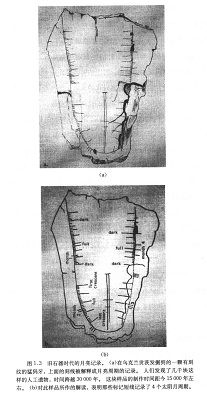 《World History of Science and Technology》
Of course, before writing appeared, there were certainly also means of recording such as knotted cords, which made a certain degree of objective knowledge possible. For example, a batch of Paleolithic archaeological finds dating back 40,000 years reveals what may have been people’s persistent efforts to record changes in the phases of the moon. (The image shows a mammoth tusk from 15,000 years ago.)
The Neolithic Age is marked by polished stone tools, but in fact a more important marker may have been the invention of pottery and the emergence of agriculture and animal husbandry—in short, the rise of settled life.
In the Paleolithic Age, human beings lived by hunting and gathering and had no fixed abode. At that time there were also almost no domesticated large animals available for carrying luggage, and what one could carry when migrating amounted at most to things one could hold in both hands. One can therefore imagine that, apart from some knowledge passed on by word of mouth, it was difficult to form a cultural transmission that was both long-term and stable.
The agricultural revolution was a prerequisite for settled life. Beginning about 10,000 years ago, inhabitants around the world consciously began to cultivate and breed certain plants and animals. Apart from dogs and horses, most domestic animals and crops were domesticated in this era, for example:
Near East or the Fertile Crescent: wheat, peas, olives, sheep, goats
China: rice, millet, pigs, silkworms
Mesoamerica: maize, beans, turkeys
South America: potatoes, llamas
North America: squash
New Guinea: sugarcane, bananas
West Africa: millet, African rice, sorghum, wheat

The English word “domestic” comes from the Latin word for house (domes). The Chinese character “家” likewise depicts a pig kept inside a house:  . Clearly, settlement is related to domestication; indeed, in a certain sense, settled life is humanity’s self-domestication.
Rather than saying that human beings domesticated plants and animals to adapt them to their own lives, it is better to say that people were also domesticating themselves at the same time, changing their own way of life to adapt to this new form of food acquisition.
In fact, this new way of life was not any more comfortable. Archaeological and anthropological investigations reveal that primitive gatherers may have lived quite leisurely: three or four days of gathering were enough to meet a week’s needs, and their diet was extremely varied and nutritionally rich. Modern gatherers, meanwhile, have been driven by farmers into remote places such as deserts and deep jungles. So what about gatherers in ancient times who lived in fertile regions with lower population densities? Of course, their average life expectancy was low, but to a large extent this was dragged down by early death and death in childbirth; insofar as the form of food acquisition itself is concerned, gatherers do not seem to have had a harder life than farmers. Their diets were extremely varied, and they did not have to worry about devastating disasters such as floods and locust plagues; before livestock were kept, primitive people were also rarely troubled by infectious diseases.
Agriculture brought a dramatic increase in grain yield per unit area, but it also led to a sharp rise in population density, and people’s work pressure and mutual conflicts increased accordingly.
But evolution is so cruel: it does not care which way of life is more comfortable, only which way of life is better at reproduction, and in the end, of course, the side better at reproduction prevails.
So the question of why people initially domesticated plants is a puzzling one. Wild wheat, wild maize, and the like—things that look like weeds and are especially troublesome to eat—why would people labor generation after generation to domesticate and cultivate them? One explanation is that they were driven by the pressure of life brought on by food shortages during the glacial period. A somewhat more offbeat explanation is that people did not initially cultivate them for practical purposes; like flowers, they were part of primitive horticulture, and by the time their edible value became prominent, they had already been cultivated for many years.
This speculation is not groundless. Even in the oldest ruins one can discover human beings’ love of beauty. Many technical inventions, including the wheel, steam engines, electricity, and so on, often first appeared as useless toys. Even today, games and entertainment remain a major driving force behind technological innovation, so why should we insist on imagining primitive people as struggling painfully under the pressure of survival?
Mumford also speculated that the main problem faced by primitive people was not how to cope with pressure from the natural world, but how to discharge excess psychological energy. Through activities such as play, art, and ritual, human beings first learned how to control their own bodies and domesticate their own lives, and only then could one speak of controlling nature and domesticating other species.
This sort of speculation is difficult to verify archaeologically, but in fact any speculation about primitive people’s way of life based on the pitiful archaeological remains available gives us little evidence; still, many times we need such speculations. (It is worth adding that this kind of speculation does not contradict the principles of evolution. Evolution only cares how much survival advantage the final result can bring, while the variations that produce the result are attributed to chance. But in human evolutionary history, apart from random variation at the genetic level, the element of chance in the history of technology does not exclude additional explanations.)
Again, Mumford came up with a thought experiment regarding the consequences of the agricultural revolution. He asked: after farmers replaced gatherers, where did the original hunter-gatherers go? Of course, some should have been assimilated, some forced back into remote areas, and others physically exterminated, but some tribes must always have survived and learned to coexist with farmers. They may have become the first generation of warriors or the military class. Their spears and bows and crossbows were no longer needed to acquire food, but their force could be used to protect villages and cities, to maintain internal stability, and to plunder externally. This professionalized violence made possible a large centralized society.
From settlement to the rise of cities, the division of labor and class stratification of human beings became fixed within different buildings: the poor lived in peripheral slums, the rich in central fortresses or palaces. This differentiated pattern of habitation in turn reinforced class stratification, and as this development continued, human society, like a city, formed a centralized society with clear layers from center to periphery.
Of course, another more mainstream explanation is that after the agricultural revolution, water conservancy projects required a certain centralized organizational form; therefore, the regions that depended more on irrigation projects were more likely to form centralized societies.
These two explanations may not be contradictory. The formation of centralized society was probably the result of many intertwined factors, and the emergence of bronze ware was probably also a crucial link.
In short, in several centers of the agricultural revolution, some large cities or centralized kingdoms emerged, including Mesopotamia in 3500 BCE, Egypt in 3400 BCE, the Indus Valley in 2500 BCE, the Yellow River basin in 1800 BCE, Mesoamerica in 500 BCE, and South America in 300 BCE. The origins of these six great civilizations were roughly independent of one another, and so they can be called cradles of civilization, or primitive civilizations.
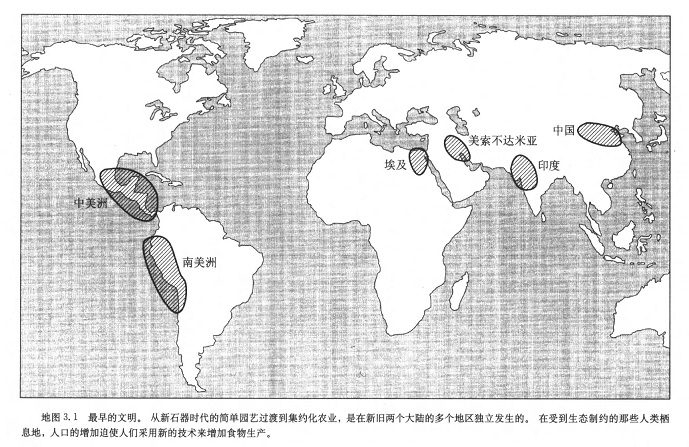 《World History of Science and Technology》
Most of these ancient civilizations produced their own writing systems, which also made communication across longer spans of time and wider spaces possible, and made theorized knowledge and its transmission possible.
Let us focus on Mesopotamia and Egypt, because later Greek civilization lay within the radiation zone of these two civilizations, and Greek science in some respects inherited the traditions of these two ancient civilizations. As for Chinese civilization, we may arrange a special lecture on it later.
Mesopotamia is Greek for “between two rivers,” and is also called the Tigris-Euphrates region, roughly corresponding to present-day Iraq.
This region was the cradle of the oldest human civilization, but perhaps because of its geographical location, foreign wars kept breaking out here and dynasties changed frequently. The most important of the major centralized dynasties include Sumer (5000–2700 BCE), Old Babylon (1894–1595 BCE), Assyria (800–612 BCE), and Neo-Babylon (626–539 BCE).
Around 3200 BCE, the Sumerians invented cuneiform writing, one of the world’s earliest writing systems, which developed and simplified gradually from pictographs.
 Writing from Uruk in 3200 BCE. On the left is the number 4; on the right, the pictographic symbol represents an object. Initially cuneiform was pictographic; later it developed into a phonetic script.
 A 3,750-year-old “complaint letter,” grumbling about the poor quality of the copper ingots purchased
The Babylonians of Old Babylon achieved very high accomplishments in mathematics; they were already able to solve one-variable linear equations, two-variable linear equations, one-variable quadratic equations, and even one-variable cubic equations. In addition, clay tablets discussing series problems have been found. Using approximation methods, they calculated √2 = 1.414222. In geometry, the Babylonians divided the circle into 360 equal parts and obtained π = 3.125; in trigonometry, they not only mastered methods for calculating the areas of right triangles and isosceles triangles, but also knew that corresponding sides of similar right triangles are proportional, that the altitude from the apex of an isosceles triangle bisects the base, and that a triangle inscribed in a semicircle is a right triangle. Most remarkably, they mastered the fact that in a right triangle, the square of the hypotenuse equals the sum of the squares of the other two sides. The Babylonians also calculated the area and side-length ratios of regular pentagons, regular hexagons, and regular heptagons. (Wikipedia)
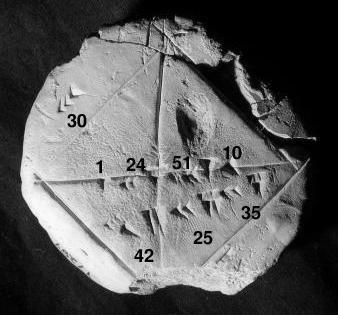 1600–1800 BCE: the Old Babylonians calculate √2
The Babylonian sexagesimal system and 360-degree system are still preserved in modern clocks and protractors.
Babylonian astronomy was also highly developed. Around 2000 BCE, the people of Mesopotamia were already able to distinguish fixed stars from planets; in the 13th century BCE the Babylonians drew charts of the twelve zodiac signs, and the division and naming of the twelve signs have survived to this day. Later Greek astronomy directly absorbed Babylonian star charts and astronomical data.
Ancient Egypt was located in the middle and lower reaches of the Nile Valley in North Africa. It began around the 32nd century BCE, when Menes unified Upper and Lower Egypt and established the First Dynasty, and ended in 343 BCE, when Persia reconquered Egypt. It passed through 9 periods and the rule of 31 dynasties: the Predynastic Period, Early Dynastic Period, Old Kingdom, First Intermediate Period, Middle Kingdom, Second Intermediate Period, New Kingdom, Third Intermediate Period, and Late Period. Overall, the regime was extremely stable and long-lasting, which was related to its relatively enclosed geographical environment.
By 332 BCE, Alexander the Great had conquered Egypt, and Alexandria, founded there, became an academic center in the Hellenistic period, which we will mention again later.
Ancient Egypt also had advanced mathematics and astronomy, but it was still somewhat inferior to ancient Babylon.
According to the Greeks, geometry originated from the Egyptians’ “land measurement,” arising from the need to remeasure land after the Nile’s regular flooding. There is a legend that philosophers such as Thales and Pythagoras traveled to Egypt to study.
What is more worth mentioning from the perspective of the history of science and technology are its achievements in medicine and engineering.
In medicine, because of the making of mummies, rich knowledge of anatomy and related pharmacology developed, and there is evidence that physicians were performing surgical operations as early as 2500 BCE.
Egypt’s greatest achievement in engineering was unquestionably the famous pyramids. In fact, there is nothing particularly mysterious about the construction of the pyramids themselves; the key lies in the social mechanism that could mobilize so much labor stably and effectively. This kind of social mechanism kept running ceaselessly like a cold-blooded machine, and people, consciously or unconsciously, willingly or under compulsion, became screws and bolts on this giant machine. Mumford called it the “mega-machine.”
Supplementary Reading
Sapiens: A Brief History of Humankind…
Selected Works of Lewis Mumford
Translated from the Chinese original with AI assistance. The original text is authoritative.