
Last class, we finished the mechanical revolution all the way up to Newton. The problems in physics provoked by Copernicus’s astronomical revolution were ultimately solved by Newtonian mechanics, but Newtonian mechanics itself implied a certain conceptual transformation amounting to sleight of hand: the distinction between nature and artifice, the distinction between inwardness and outwardness, and the boundary between physics and mechanics were all finally broken through, and the introduction of the concept of “force” ultimately substituted itself for people’s search for “cause.” We said that Newtonian mechanics is accidental in name; of course we could equally have had something like Empedology or Zhang San Dology, and F=ma could be replaced by L=mb or any other symbols whatever. In terms of calculation and prediction, Newtonian mechanics has nothing to do with the word “force.” But in the development of the history of science, the fact that the concept of “force” came to play this role is not entirely accidental, because of the anthropomorphic imagery embedded in the concept of force and its connection to the concept of cause.
The transformation of the concept of cause and the rise of the mechanistic view of nature are very important links for understanding the Scientific Revolution. Unfortunately, too few students came to last class; I hope those who did not come can make up for it afterward as well. This part may be relatively difficult to understand, so if there is anything confusing or doubtful, we can discuss it. Next class I am planning to arrange a special discussion session. The topic of discussion might as well be the similarities and differences between ancient and modern science, but you can also raise any topic or insight you are interested in. I hope everyone will try to attend. A discussion class is different from the question-and-answer segment after our usual classes. In class, questions are mainly directed at me, whereas in the discussion class everyone can freely express their own views, and can also ask questions, but it is not I who responds first; rather, other students participate freely in answering. Every student must speak; this is also part of the regular grade. If you truly cannot come, please ask for leave in advance.
Also, those whose midterm reading reports are already finished can send them to my email as soon as possible; I may also give some commentary on them in next class’s discussion session.
Today we will talk about the alchemical tradition, or rather the tradition of the magus. If the astronomical-physical tradition from Copernicus to Newton is the main line of the Scientific Revolution, then alchemy is the side line. But that does not mean this line was dispensable; it is only that this thread ultimately lost to mechanism, and because its main elements are now regarded as pseudoscientific or even anti-scientific, it has been intentionally or unintentionally excluded from the mainstream narrative of the history of science. But if we take scientists’ spiritual temperament, habits and customs, and modes of thought and method as more important than the accumulation of specific laws and facts one by one; or if we try to return to the historical context of the Scientific Revolution and make our selections from the standpoint of the time rather than today’s values, then we cannot ignore alchemy.
Alchemy has a long history, though perhaps not as long as we imagine. The relatively clear Western alchemical tradition can be traced back to Hellenistic Egypt, that is, the Ptolemaic dynasty. Later, both it and China’s elixir arts were transmitted into the Arab world, and finally, after the 11th century, into Latin Western Europe via Spain. The alchemical tradition truly flourished in Europe in the middle and late Middle Ages.
Roger Bacon (1214–1294), called the “Universal Doctor,” held alchemy in very high regard. We did not talk about Roger Bacon before, but in fact this person is very important. We should not confuse him with Francis Bacon, who discussed inductive method more than three hundred years later. Yet these two Bacons do indeed have many similarities: both were hailed as pioneers of the experimental method, though in fact that is not quite accurate either. Francis Bacon’s advocacy of induction still mainly emphasized observation and record-keeping, whereas the word “experiment” used by Roger Bacon basically meant “experience” or “to experience.”
But it is not as though he had nothing to do with the experimental method. Roger Bacon did indeed stress the importance of practical activity for the pursuit of knowledge, and believed that artificial things could rival natural things.
We know that ancient Greek philosophers drew a distinction between natural objects and artificial objects: natural objects have their own inner principle, whereas artificial objects are merely external imitations. And however exquisite this imitative activity may be, it still remains different from natural things. A tree painted by an artist, however lifelike, cannot be a real tree. But that is the view of natural philosophers, whereas the alchemical tradition contains a tendency to overturn the boundary between natural objects and artificial objects. Alchemists did not, like natural philosophers, belittle handicraft and technical skill; on the contrary, they believed that such skills might recreate, accelerate, or even surpass natural processes.
Roger Bacon thought this way. He even believed that because of the alchemist’s meticulous and ingenious refinement, the gold obtained through alchemy was purer and more harmonious than naturally produced gold, and therefore more beneficial to the human body. He believed that the harmonized gold produced through refinement, or the “philosopher’s stone,” was a universal panacea that could cure all diseases and prolong human life by hundreds of years.
For example, alcohol seems to be some kind of artificial product that transcends nature. Refined alcohol is a combustible water; it combines two elements that in nature are “as incompatible as fire and water,” absolutely opposed to one another. Is this not a technique that surpasses nature? Alcohol was also believed to possess a certain extraordinary harmony, and was therefore called the water of life; some alchemists regarded it as a miraculous universal medicine.
As for the so-called “philosopher’s stone,” it has always been the ultimate pursuit of alchemists. Different people have various legends about what it is. It is generally thought to be some kind of red powder, though some also believe it has no material form at all, but is the person transformed through spiritual sublimation. In any case, it is generally believed that the “philosopher’s stone” can turn stone into gold and confer immortality.
According to legend, the medieval alchemist Nicolas Flame (Nicolas Flame, 1330-1417) obtained the philosopher’s stone and made both himself and his wife immortal. There are also other legends, recounted in quite a plausible and detailed way, of witnessing the philosopher’s stone.
Of course, when we hear this today it all sounds like nonsense, but perhaps immortality is indeed a bit outrageous. Turning stone into gold, however, does not actually sound that absurd. After all, most metals are refined from ore. Since iron can be extracted from stones, why can’t gold be refined from iron? Compared with stone and iron, don’t iron and gold seem much closer to one another?
The Roman Curia’s attitude toward the alchemy popular at the time was quite contradictory. Many popes and bishops were interested in alchemy. Legend has it that Pope John XXII once accumulated wealth through alchemy, but it was also he who issued an edict in 1317 prohibiting the forgery of gold and silver. Quite a few scholars also raised objections to alchemy. But in any case, the alchemical tradition continued to flourish.
In 1330 Petrus Bonus wrote The Precious New Treasure to defend alchemy. He believed that alchemy was both natural and artificial: the alchemist, with the aid of skill and under the guidance of the will of God, caused metals to transmute. Transmutation means turning base metals into noble metals; it is not simple refinement, but a change in nature.
Bonus believed that the alchemist causing metals to transmute was like a doctor treating a patient or a gardener grafting plants. Although it is a kind of skill, it does not at the same time violate nature. As for using a tiny amount of red powder to cause a large quantity of base metal to transmute into gold, that too was not hard to imagine. The Egyptian alchemist Zosimos in the 3rd century CE had already explained it: “Just as a small piece of leaven can make a large mass of dough rise and ferment, so too a little gold will ferment the whole substance.” Medieval alchemists also cited this analogy, and sometimes the philosopher’s stone would even be called a “ferment.”
Alchemists could indeed refine many “natural” substances, such as sal ammoniac (ammonium chloride), verdigris (basic copper carbonate), and so on. People discovered that products synthesized by alchemists were identical to those extracted from natural environments and hard to distinguish from them. Alchemists believed that their techniques successfully recreated and catalyzed the processes by which these substances formed in nature.
Therefore, in a sense, alchemy is also a kind of natural philosophy. Through the artificial re-enactment of natural processes, it tries to comprehend the mysteries of nature with one’s own hands. So although they were not recognized by mainstream philosophers, alchemists often styled themselves philosophers as well: we are not refining gold for the sake of gold, but in pursuit of wisdom.
This alchemical tradition, sublimated into philosophy, became increasingly prominent after the Renaissance. The key lies in the rise of Hermeticism.
In 1462, Ficino was preparing to begin translating Plato’s dialogues when his patron Cosimo di Giovanni de’ Medici (Cosimo di Giovanni de’ Medici,1389-1464) came to see him. Cosimo was a prominent figure in Italy’s famous Medici family of Florence. The Medici family held a position of vital importance from the 14th to the 17th century; the whole Renaissance was almost a family history of the Medici. We remember that Galileo was later also supported by the Medici family. Cosimo was the de facto ruler of Florence, and he was extremely enthusiastic about scholarship. He established a “Platonic Academy” in an attempt to turn Florence into the Athens of the new age.
At that time Cosimo discovered a Greek manuscript containing the first 14 treatises of the Corpus Hermeticum. He went to Ficino and told him to stop what he was doing at once and translate the Hermetic corpus, because he felt that Hermes was even greater than Plato.
The Corpus Hermeticum was published in 1471. By the mid-16th century it had been printed in 24 editions and translated into Italian, French, Dutch, Spanish, and so on. The name of “thrice-great Hermes” thus spread far and wide. In the Middle Ages, Hermes’s name was also occasionally mentioned by scholars, but his influence was nowhere near so great. In addition to translations from Greek sources, many texts on astrology, alchemy, and the like also circulated under Hermes’s name.
The so-called “thrice-great Hermes” refers to the belief that Hermes was history’s greatest philosopher, greatest priest, and greatest king. Ficino believed Hermes to have been a contemporary of Moses, in the 13th century BCE, representing the most ancient tradition of wisdom, and that Pythagoras and Plato were also later heirs of the Hermetic esoteric tradition.
Actually, as early as the 17th century some scholars, on linguistic grounds, judged that the Hermetic corpus was not very ancient and had been written after Plato. But this did not curb Hermes’s influence.
Hermeticism broadly manifests a certain animistic and Gnostic tendency, emphasizing the grasp of the hidden knowledge of natural things through some inexpressible spiritual intuition.
Hermeticism, together with the contemporaneously popular Kabbalistic esoteric tradition, merged with the alchemical tradition and formed a distinctive cultural atmosphere, in which alchemy was sublimated into a kind of spiritual activity, not for money but for the soul.
In Kabbalah there is a set of methods for interpreting biblical codes. Its adherents believed that the text of Genesis contained the secret of God’s creation of the world, which must be unlocked through specific methods—for example, the first and last letters of a group of words could be combined to form a new word; or each letter could be assigned a number, and the numerical values arranged in search of meaning; or one could move and transpose letters to form riddles… This kind of “verbal alchemy” corresponds to practical alchemy: the former seeks to grasp the secret of creation by studying God’s speech, while the latter does so by studying God’s works.
The influence of Hermeticism extended far beyond alchemists. Copernicus, Bruno, Kepler, and Newton, whom we mentioned before, were all, to varying degrees, influenced by Hermeticism.
We mentioned that Hermeticism was strongest in Bruno, to the point that he simply opposed the fundamental doctrines of Christianity, believing Christ to be a magician rather than some sort of savior. But generally speaking, although scientists of the time more or less held views different from mainstream theology, they did not regard Hermeticism as incompatible with Christianity.
We mentioned that when Kepler was young he was puzzled by the number of planets being 6. He thought 7 was a good number, and this too was part of the fashion of mystical traditions at the time. Alchemists also believed there were 7 metals altogether. Later, Newton used prism experiments to split sunlight into 7 colors, and behind this too lay elements of numerology. We know that the spectrum of the rainbow is continuous, and how many colors there are in it can be said in any number of ways; in fact, according to Newton’s manuscripts, his earliest record listed only 5 colors, and it was only when published that he made up two more to bring it to 7. In addition, Newton personally liked dark red, and he had the walls of his room painted red as well, because red was traditionally the color of the philosopher’s stone.
Gilbert’s (1544-1603) On the Magnet studied various magnetic and electrostatic phenomena, and he in fact also held some kind of animist thought. Magnetic phenomena were considered the best example of magic, and Gilbert believed magnetism to be some kind of soul, and moreover a soul higher than the human soul, because the human soul is often blinded by the senses, whereas a magnet is never deceived. Gilbert believed the Earth to be a great magnet, meaning that the Earth has its own soul, and therefore the Earth can move.
Hermeticism also influenced the formation of modern early scientific academies.
At the beginning of the 17th century, two pamphlets circulated in Europe: Fama Fraternitatis and Confessio Fraternitatis, which portrayed the ideas and aims of a secret society. These ideas were products of Hermeticism, and the rose was a symbol of alchemy. The Rosicrucians called, with a kind of religious fervor, for an ideal scientific society.
Legend has it that Bacon, Descartes, and Newton, among others, were members of the Rosicrucians, but present-day historical research generally holds that there was no actual organization of the Rosicrucians at the time (perhaps it was truly too secret to have been exposed?). Even so, the influence of the Rosicrucians was enormous. Many scholars expressed in their publicly published works their ardent desire to join the Rosicrucians, or spontaneously defended the Rosicrucians.
The invisible college came before the visible college. This sense of identification with an academic community prompted the birth of many actual scientific societies, including the later Royal Society of Britain, which is considered to have been founded under the influence of the Rosicrucians. Although it bore a royal title, it was in fact established on the basis of spontaneous organization by more than a dozen scientists, who met and exchanged ideas in non-fixed venues (such as coffeehouses). At the time, this was called an invisible college, and many of these scientists were clearly influenced by the Rosicrucian program.
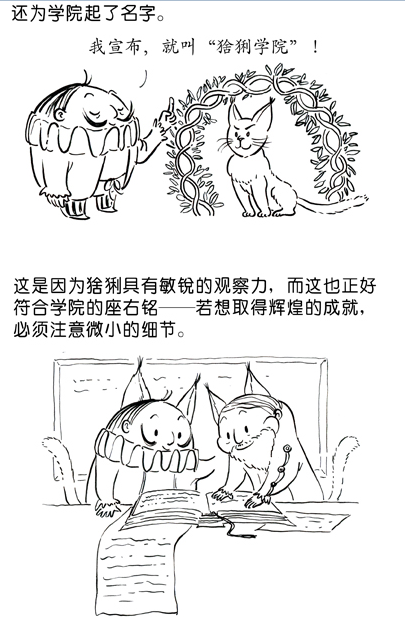
Galileo’s “Academy of the Lynx” was also very famous. The Academy of the Lynx is also translated as the Lyncean Academy or transliterated as Linqin Academy. Why “lynx”? One explanation that we easily encounter is that it was named for the lynx’s keen powers of observation, as in the cartoon below excerpted from a piece on the Science Squirrel Society. But such explanations simply ignore the mystical element behind it. In fact, the word “lynx” comes from a then-popular book called Magia Naturalis (Natural Magic), whose preface says that one should “observe nature with lynx-like eyes.”
In addition, early so-called works of utopian socialism or utopia, such as Campanella’s The City of the Sun, Andreae’s Christianopolis, and including Bacon’s New Atlantis, were all influenced by Hermeticism.
In “The City of the Sun,” the city is designed as a cross-shaped ring centered on the sun, so as to gather the power of the sun and the planets. The rulers exercise magic in the name of Hermes.
Let us return to alchemy. Perhaps the most famous alchemist produced under the influence of Hermeticism was Paracelsus. (Paracelsus,1493-1541).
Paracelsus’s full name was Philippus Aureolus Theophrastus Bombastus von Hohenheim. Because he wanted to surpass the famous Roman physician Celsus, he called himself Paracelsus; para means beyond or surpassing.
In a sense, his profession was not that of an alchemist, but of a physician. Yet he offered profound elaboration of alchemical theory, established a “chemical philosophy” that stood shoulder to shoulder with mechanistic philosophy throughout the entire period of the Scientific Revolution, and integrated alchemical thought into medicine. He believed that a physician purifying the human body with medicine was the same as an alchemist purifying metals with fire.
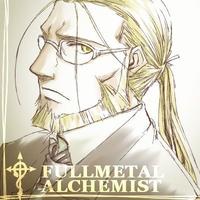 The “Father” in the anime *Fullmetal Alchemist* is named von Hohenheim
Paracelsus cured Basel’s famous publisher Froben in 1527, and was subsequently appointed Basel’s municipal physician, thereby gaining the right to lecture at the university. His personality was extremely flamboyant and contemptuous of authority: he gave his lectures not in Latin but in Swiss German, often made startling remarks, and even publicly burned Avicenna’s *Canon of Medicine* and the works of Galen in a copper basin with sulfur and potassium nitrate. In the end, he offended many people and was driven out of the university, then drifted to another place and repeated a similar experience…
With fierce words he criticized traditional scholastics, saying, for example: “What do you know… what you know is no more than a Spanish fly on the dung of dysentery!” “You lowly, despicable, shameless sophists, you take me, the monarch of this mysterious world, for nothing more than an uneducated, ignorant, profligate quack.”
He stressed that the pursuit of knowledge must not cling to tradition, but must go out of the academy and learn without shame: “A physician should not rely solely on the knowledge taught by his school, but should also know what old women, Egyptians, and people of that sort say; for in these matters they have more experience than all the scholastics.” His maxim was: “Study again and again, ask again and again, and do not feel embarrassed.”
His follower, the Danish court physician Severinus, put it even more passionately: “Sell your land, house, clothes, and jewels; burn your books; buy yourself a pair of sturdy shoes and travel into the mountains and forests; explore those ravines, deserts, seas, and the deepest parts of the earth; record the different characteristics of all kinds of animals, plants, and minerals—go learn about heaven and earth from peasants, and do not feel embarrassed. Finally, buy some coal, build a furnace, and light the fire. Only then will you obtain knowledge of things and their properties.”
Unlike mechanists who regarded God as a geometer creating the world with a compass, chymical philosophy regarded God as an alchemist who created the world through alchemical processes such as “extraction, separation, sublimation, and conjunction.”
And this universe was like a giant crucible rather than a giant clock. For example, volcanoes and rain on earth are precisely what through the process of “distillation” make the water cycle.
Mechanistic philosophy recognizes only the external collision relations between material particles, whereas chymical philosophy believes that all things are ensouled and that things can mutually sense one another. The alchemical process is not merely a collision between material particles; it also requires the right timing, location, and human cooperation.
The “weapon salve” of the Paracelsian school exemplified a theory of action at a distance: Paracelsus’s followers believed that applying the salve to the weapon that inflicted the wound, rather than to the wound on the person, could heal the injury.
Chymical philosophy held that the human body, as the “microcosm,” corresponds to the “macrocosm.” Paracelsus said: “You should know that all these things exist in man, and realize that the firmament is within man; the great motions by which the firmament connects with his bodily planets and stars produce the exhalations, conjunctions, oppositions, and so on that you understand and call these phenomena. … (Astronomical knowledge) teaches you about the firmament of the body. … You know that the earth exists merely to produce fruits for man. By the same logic, bodily existence exists for the same reason. Thus all sorts of foods grow from within the body for the use of the limbs belonging to the body, and the limbs grow like the fruits of the earth.” (*Reconstruction of the World*)
| Chymical philosophy | Mechanistic philosophy |
| alchemical creation, chemical process | architect, compass, geometry |
| the universe as a giant crucible | the clockwork universe |
| all things ensouled, internal action | mechanical particles, external collision |
| microcosm ↔ macrocosm | man is a machine |
Paracelsus lived a life of poverty, but his doctrines caused a tremendous response and inspired a large number of followers. For example, the German physician Agricola (1494–1555), influenced by Paracelsus and interested in minerals, systematically studied mining and became known as the father of mineralogy.
Another example is the Belgian nobleman Van Helmont (1579–1644). Influenced by Paracelsus, he nonetheless held his own views on some issues. For instance, according to the order of creation in Genesis, he denied that the heavenly bodies directly influence human beings. Further, based on the Bible’s words “And God said, Let there be a firmament in the midst of the waters, and let it divide the waters from the waters,” he insisted that water was the sole element.
He also designed an experiment to prove that all things originate from water—the famous willow-tree experiment:
“I had previously prepared a earthen vessel, put in 200 pounds of dried earth baked in the furnace, and after moistening it with rainwater, planted in it a willow branch weighing 5 pounds; after 5 years, the willow had grown out of the soil and weighed about 169 pounds 3 ounces. Whenever there was need, I used only rainwater or distilled water to water the vessel. The willow was large, planted in the soil, and in order to prevent dust from the air from mixing into the soil, I covered the mouth of the vessel with a sheet of tinplate, drilling many small holes in it. I did not record the weight of the leaves that had fallen during the past four autumns. Finally, I dried the soil in the vessel once more and found that it still weighed 200 pounds, with only about 2 ounces missing. Therefore, the 164 pounds of wood, bark, and roots all came about only because of water.” (*Reconstruction of the World*)
Any discussion of the history of experimental science absolutely cannot omit this experiment. Though from today’s perspective it has many flaws, it was indeed a carefully designed quantitative experiment containing modern experimental ideas such as quantitative research, the principle of conservation, and control of variables. Helmont believed that “nothing can be destroyed by natural force or art, nor can anything be created,” and some kind of conservation is the precondition for conducting quantitative experiments.
Helmont attached great importance to quantitative calculation. He was not only skilled at using scales; it is said that he also had a thermometer with 15 units.
Although he valued quantification, like ordinary alchemists he despised mathematics in the sense of logical proof, believing that “logic is the enemy of natural knowledge.”
He also distinguished air from various different “gases,” and named gases by taking the sense of chaos as his point of departure (gas).
Helmont styled himself a philosopher of fire, inheriting the Paracelsian tradition and regarding alchemy as a way of philosophical inquiry.
Helmont claimed to have used the philosopher’s stone to transmute mercury into pure gold. He reported that his “philosopher’s stone” was a very heavy orange-red powder with the smell of saffron, and that these powders could turn two thousand parts of mercury into gold.
The next important alchemist is, of course, the famous Robert Boyle (1627–1691). Boyle is generally regarded as a marker of chemistry’s becoming a science, and there is some truth to this, though there are often also certain misunderstandings. Although Boyle styled himself “the skeptical chemist” (*The Sceptical Chymist*, published in 1661), the object of his “skepticism” was not alchemy, but the element theory of traditional alchemy (and there are even historians of science who think that Boyle’s achievement was to establish the theory of chemical elements, which is completely mistaken).
Aristotelian natural philosophy identified earth, water, air, and fire as the four elements. Paracelsus, however, opposed the doctrine of the four elements and proposed three elements—or rather three principles or three fundamentals—namely salt, sulfur, and mercury. Salt represents the body, corresponding to hardness and form; sulfur represents the soul, corresponding to combustibility, color, and smell; mercury represents the spirit, corresponding to metal, solubility, and smoke. Paracelsus demonstrated that when a branch burns, it produces ash (salt), fire (sulfur), and smoke (mercury).
But Boyle expressed doubts. He admitted that burning a branch produced salt, sulfur, and mercury, but when a branch was distilled the products were completely different, yielding oil, spirit, and water. If things broken down by different methods turn out differently, on what basis can one say that some of them are the basic elements?
Although Boyle opposed the element theory of traditional alchemists, he was still to a greater extent an alchemist. In his youth he was a social activist concerned with moral and spiritual matters. It was only after he learned about Van Helmont from the alchemist George Starkey (1628–1665) that he began to turn to alchemy and chemical research. He claimed to have observed several successful transmutations of metals. He also once revealed to Newton a mysterious red earth recipe, said to be able to turn base metals into gold, but Newton tried repeatedly without success. After Boyle’s death, Newton even wrote specially to his estate administrator requesting the original version of the recipe, wanting to see whether Boyle had slipped up and said something back then.
In any case, at that time the concept of chemistry was basically still not very different from alchemy, and it was not until the eighteenth century that it was thoroughly separated from it.
If Boyle was in some sense still a turning point from alchemy to chemistry, then the key lies in the fact that he abandoned traditional chymical philosophy and instead implanted mechanistic philosophy within the alchemical tradition. Boyle, and Newton who was deeply influenced by Boyle, explained the transmutation of matter through the combination, separation, and motion of particles; from that point on, the animistic thought within the alchemical tradition was gradually purged away, and the chymical branch of the Scientific Revolution tended toward severance,
What remains to be discussed, of course, is Newton, the “last alchemist.”
Newton was a great alchemist; this was never a secret. But ever since Newton’s death—at a time when the Enlightenment was beginning to unfold, and alchemy’s reputation had already turned sour—the academic world has deliberately or inadvertently ignored Newton’s alchemical manuscripts, casting Newton as a wholly bright and upright icon of scientific rationality. These manuscripts were long sealed away as the part deemed valueless. It was not until 1936 that this portion of the manuscripts was finally taken out for public auction. The famous economist Keynes bought a little under half of it and set about studying it, and in 1946, on the occasion of the Royal Society’s commemoration of the 300th anniversary of Newton’s birth, he published the remarkable essay “Newton, the Man,” restoring this aspect of Newton.
Keynes said: “Newton was not the first of the age of reason. He was the last of the magicians, the last of the Babylonians and Sumerians, the last great mind that looked on the visible and intellectual world with the same eyes as those who began to build our intellectual inheritance some 10,000 years ago. Isaac Newton, the posthumous child born on Christmas Day, 1642, was the last wonder-child to whom the Magi could do sincere and appropriate homage.”
Some scholars unwilling to believe in Newton’s alchemical aspect have tried hard to defend him, saying, for example, that Newton’s dabbling in alchemy was merely a pastime in the gaps between his work in physics, or that Newton merely treated alchemy as practice for chemical experiments, and so on. But in fact Newton’s interest in alchemy was comprehensive and ardent. At times we can’t help suspecting that physics was actually Newton’s pastime in the gaps between alchemical studies.
Newton’s assistant Wiggins once described Newton’s obsession with alchemy: “He was so absorbed and serious in his studies that he ate very little, often forgetting to eat… he also slept very little, sometimes… lying down for only four or five hours. … The fire in the furnace was never extinguished day or night. When I was busy with other matters, he would work through the night until he completed his chemical experiments.”
By the age of 41, Newton’s hair had already turned gray-white. He joked that it was because he had done too many mercury experiments and had absorbed the color of mercury.
Like Boyle, Newton tried to explain transmutation through corpuscular philosophy, but Newton’s corpuscular theory was somewhat more flexible than Boyle’s: in addition to the mechanical properties of size, shape, and motion, corpuscles also possessed mass and forces of interaction. This concept of an action at a distance force was established in Newton’s alchemical research around 1675.
We mentioned last time that Newton introduced the concept of “force” into the mechanistic tradition, something other mechanists found hard to accept. Mechanistic scholars recognized only the form of particles and their external collisions, and did not recognize such internal force and ghostly action at a distance. But such action at a distance was very easy to accept within the alchemical tradition. Perhaps precisely because Newton’s mechanism was not thorough enough and allowed more room for the alchemical tradition, he was able to introduce the concept of “force.”
Unlike his eagerness to compete for priority in the field of physics, Newton published few alchemical texts during his lifetime, but this was not because he thought alchemy was somehow beneath notice. Quite the opposite: Newton took alchemical research extremely seriously. In 1675, Boyle claimed that he had produced a superior “philosophical mercury,” but could not make up his mind whether to make the preparation method public, so he asked for the opinions of his peers. Newton deliberately wrote to him, expressing three points: first, Newton doubted whether the performance of this philosophical mercury was really that remarkable; second, Newton suggested that it should not be published before one fully understood its social impact and could guarantee that it was harmless; third, he believed that philosophical mercury was merely the first step on alchemy’s road toward the pursuit of truth, and therefore, for a philosopher, it would be wise not to publish the method for making philosophical mercury for the time being and instead continue exploring deeper truths. (See Yuan Jiangyang: “Newton’s Alchemy: Noble Philosophy”)
The dual image of physicist and alchemist is what makes the complete Newton; it is not at all, as some traditional textbooks say, that Newton became muddled in old age, took one wrong step and came to believe in religion, then took up alchemy. Alchemy was a part of Newton’s life from beginning to end. Likewise, the alchemical tradition was from beginning to end a part of the entire history of the Scientific Revolution. These two strands conflicted and complemented each other. Thus the Scientific Revolution was neither a simple linear process of accumulation, nor a simplified fairy tale in which reason triumphs over superstition and science over magic. This interweaving of multiple faces is precisely what makes history so captivating. Our general history of science is not merely about listing the “results” of science; it also seeks to re-create the “course” of science.
Further Reading
Margaret•Osler: 《Reconstructing the World》
Peter Marshall: 《The Philosopher’s Stone: Exploring the Secrets of Alchemical Gold》
Hans-Werner Schütt: 《In Search of the Philosopher’s Stone: A Cultural History of Alchemy》
Translated from the Chinese original with AI assistance. The original text is authoritative.