
This commissioned article was published in Science and Technology Daily (2022-05-05, p. 3, general section), with the title changed to “Why Was the ‘Cat Version of the Drug God’ Criminally Detained?” This was a change that deviated greatly from my original intent, and there were also some important alterations to the article’s content, especially the final paragraph. I understand why such rewriting happened, so I did not object further. My view is that the cat-version drug god did something wrong, but that does not mean the reason for detaining her is correct. I am not defending her detention; I am defending scientific research ethics and research norms.
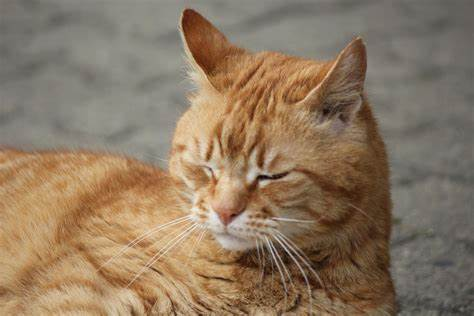
A few years ago, the film Dying to Survive sparked discussion about generic drugs and their smuggling. Recently, another “drug god” in the pet world was exposed, drawing attention. This “cat version of the drug god” is a graduate student in Fudan University’s Department of Chemistry. In 2018, she discovered that a compound called GS441524 had an astonishing effect on “feline infectious peritonitis,” and she used her chemistry expertise to synthesize the compound herself, saving more than a hundred sick cats. She then tried to apply for approval of a new veterinary drug, but was unsuccessful, so she came up with a clever shortcut: she added this compound to another veterinary drug that had already been approved and produced and sold it that way. But this method did not get by unnoticed. On April 22, 2021, the Jiading Branch of the Shanghai Public Security Bureau criminally detained Hu Hongyan on suspicion of producing and selling counterfeit or substandard products, and the case has recently entered the trial stage.
Those who made and sympathized with the drug claim that her original intention was good—she merely wanted to save more sick cats—and the result was also good, causing no social harm. The procedure was unlawful only because it was “a helpless choice in the context of drugs being unable to be quickly brought into compliance.”
If that is the case, then it would seem that every link in the process of making veterinary drugs at home was reasonable and justified, and the only unreasonable thing was the sluggish approval mechanism. But does the sluggish approval mechanism itself have any rationality?
We can see that the cat version of the drug god acted very much ahead of her time: she learned about the compound through a paper, and its efficacy had only been tentatively proposed; abroad it was still in the experimental stage and had not yet been marketed. And yet her prescient production and sale proved that it worked well, which in turn pushed foreign acknowledgment of the drug forward.
But this kind of happy ending success is contingent. From the publication of a paper to Phase I, II, and III clinical trials and then approval for market release, a drug has to go through a long process. One round of trials after another is not only to verify a drug’s efficacy, but also to verify its safety. Of course, we can see many drugs successfully pass Phase III trials and ultimately prove both effective and safe. At that point, it is easy to think, in hindsight, that if a few rounds of trials had been skipped and the drug had been brought to market earlier, wouldn’t more patients have been saved? But the problem is that many drugs do not pass the tests, or even if they pass the efficacy test, various contraindications and adverse reactions are discovered, so they must be used with caution. Precisely because human beings cannot foresee the future, we need to carry out trials step by step.
In the history of medicine, humanity has already accumulated a fair number of lessons and warnings. For example, thalidomide back then did indeed effectively alleviate morning sickness, but rushing it to market without fully verifying its side effects ultimately caused the birth of a large number of deformed infants, becoming a major scandal in the history of medicine. Thalidomide ultimately caused more than 10,000 babies to be born with deformities, but in fact it had already been sold to millions of people, and its teratogenic rate was not actually all that high; in a clinical trial on the scale of only dozens or at most a hundred cases, the risk might not necessarily have been detected, and it might only have become apparent in a Phase III clinical trial involving several hundred or even more than a thousand people.
Of course, even after passing Phase III, absolute safety and efficacy still cannot be guaranteed, so after a drug is marketed, further follow-up studies such as Phase IV clinical trials and real-world research are still needed, with corrections made at any time, after all there is no absolute certainty in this world. But relatively speaking, setting the gate for approval between Phase III and Phase IV is a consensus reached by scientists, legislators, and pharmaceutical companies around the world—a balance struck between efficiency and safety.
Looked at this way, the cat version of the drug god’s behavior was obviously a violation of the medical consensus. The more than a hundred sick cats she initially saved were, on the one hand, not enough in number; on the other hand, the process also did not follow the basic norms of medical experimentation, and presumably did not take standard steps such as blinding or control groups. It is therefore reasonable that approval could not be granted immediately.
In addition, what makes her even harder to sympathize with is that she seems to have deliberately crossed the line. “During the process of treating sick cats, she learned that some research institutions used GS441524 to treat sick cats under the name of ‘research needs’; otherwise, it would count as violating regulations by selling medicine.”
She may have thought that this “research need” was merely an empty pretext, but in fact it is not. The strict distinction between “medical practice” and “medical research” is precisely a basic requirement of modern medical ethics. In the first principle set out in the 1979 Belmont Report, this distinction was made explicit, and it quickly became a global consensus within the medical community.
Medicine and research have different requirements and different norms; they cannot be conflated. One of the simplest and most intuitive differences is that researchers are supposed to give economic compensation to volunteer subjects participating in medical experiments, whereas medical practitioners, by contrast, make money from the patients participating in treatment. Who pays whom is a simple but important distinction. And the cat version of the drug god, working together with the manufacturer to sell the product, was clearly engaging in profit-making behavior, thereby crossing the boundary of research and violating the bottom line of medical ethics.
From the standpoint of medical ethics, the cat version of the drug god did indeed do wrong. But in this matter, the law-enforcers may not have been entirely without problems either. On the one hand, with the rapid development of chemistry and biotechnology, the pace of new drug development and iteration has become increasingly fast in recent years, and the traditional approval process does indeed sometimes seem clumsy and sluggish. On the other hand, the lag in the relevant laws and regulations seems even more obvious. For example, the charge brought against this drug god was “the crime of producing and selling counterfeit or substandard products,” which does not seem quite on target, after all, the drug’s efficacy was not inferior. In addition, He Jiankui, who gravely violated research ethics a few years ago, was charged with “the crime of illegal medical practice,” which is even more far-fetched. The fact is that, with respect to acts that violate research ethics, the legal provisions by which our country supervises and holds people accountable are vague and unclear, and many times the labels do not match the substance. In today’s era of rapid biochemical and technological development, it is extremely necessary to formulate more targeted laws and regulations in a timely manner.
Translated from the Chinese original with AI assistance. The original text is authoritative.