
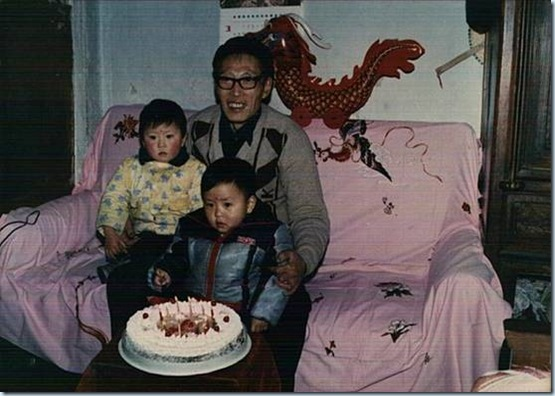
At 11:39 a.m. on April 1, 2022, a new life came squalling into the world. Yes, I have a daughter now~ I chose her name a few days earlier: Hu Tianyu.
Don’t worry, I’m not suddenly going to turn into a shameless kid-showoff. Writing in the public sphere will not become excessively intimate. On the one hand, this post is a special commemoration; on the other, it is also an excuse to talk about certain general topics through my daughter’s name.
Back in the day my grandfather gave me a name: “Tian Ding,” meaning roughly that my fate was decreed by Heaven. In the end, though, it was never used. My official name was chosen by my parents, who simply took the character ding as my childhood name. I very much like the name my parents gave me, but I also think the name my grandfather came up with is pretty good. Since I’ve already used the character ding, why not leave this unused “tian” character to my daughter, as if the grandfather up in Heaven had given his great-granddaughter half a name.
Tianyu and Tianding mean something roughly similar, with a sense of being bestowed by fate. Of course, in my view this is not some theistic superstition, but rather an ontological listening.
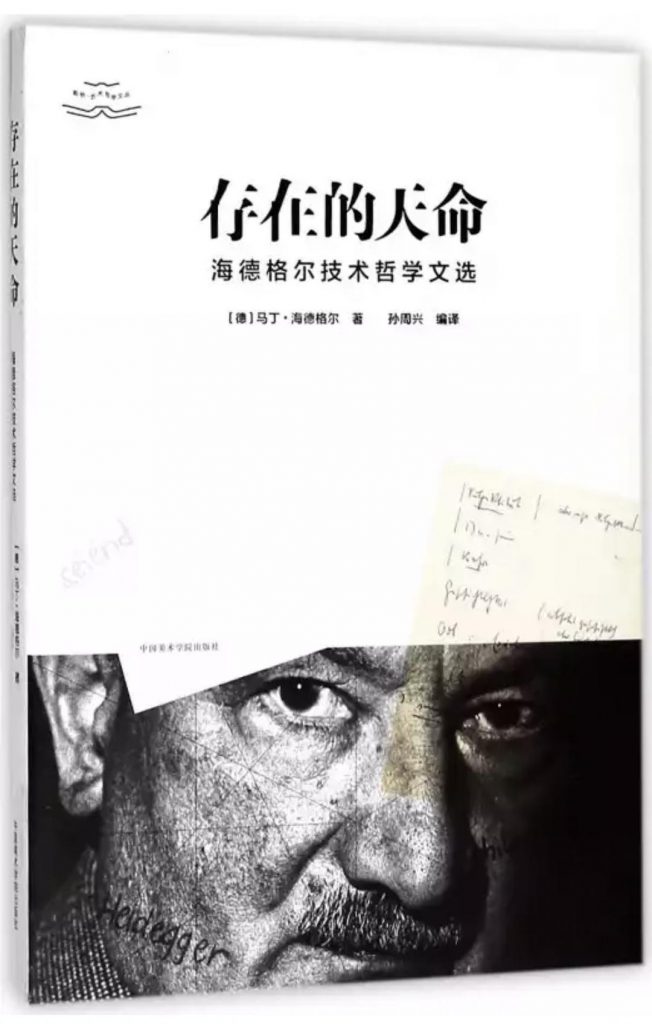
Coincidentally, this semester in my course “Selected Readings in the Original Works of Philosophy of Technology,” we are reading Heidegger’s “The Question Concerning Technology,” and the reader we are using is Sun Zhouxing’s edited translation The Destining of Being. Heidegger is always talking about destiny and destining, but what he expresses is not some theological faith or fatalistic determinism. In Heidegger’s view, recognizing destining is the precondition for attaining “freedom.”
What it means to be human is first and foremost to be limited. Human beings are not God; they cannot obtain an absolute freedom without boundaries, free to do whatever they please. Human existence is always confined within the limits of its historical epoch and material environment. This kind of unavoidable, non-optional destiny is precisely the precondition of freedom. For example, a swimming pool can allow people the freedom to swim, but it cannot allow them the freedom to run. A playground grants people the freedom to run and play ball, but is not suited to swimming or sleeping. The key is that the granting of freedom to swim and the limitation of freedom to run are an inseparable whole. Destiny as a whole is always manifested as various boundaries and restrictions, but precisely because there are restrictions, it can also grant people concrete freedom.
In our own age, we still have not broken free from the shackles of modernity; the net of destiny is inescapable. If we are unable to reflect on ourselves, unable to acknowledge our own finitude, and unable to recognize the existence of destiny, then we can only drift with the current and parrot what others say. Those who think they have stepped outside destiny are in fact the ones most powerfully governed by destiny.
The more a person seems able to rise above destiny at will, the more that person is bound by destiny. In this modern world governed by Gestell, people can use technological power to transform heaven and earth, but according to what do they transform the world? Calculability and efficiency supremacism are the highest principles.
What destiny bestows, the gift of Heaven, has almost nowhere to take root in the modern world. When I was talking about the He Jiankui事件, I said:
In the modern world, the very last refuge for the idea of “gifts from Heaven” may be the sphere of reproduction. Even the most “modern” parents are still willing to regard their children as “gifts from Heaven.” The birth and growth of children are always under parents’ “careful nurturing,” not “precise control.” Like ancient people who guarded forests or rivers, parents have hopes for their children and make demands, but they do not expect total, preemptive control. The accidents and unpredictability in a child can sometimes make parents fret, and sometimes bring them surprises.
I foresaw that, with the development of genetic technology, babies would sooner or later become a kind of “custom-made in advance” product. Having a child who is more intelligent or healthier will no longer be a matter of luck, but will become a consumer behavior—you buy the 2.0 version of the smart gene, so your child ought to be smarter than a 1.5 version child.
Once childbearing becomes an act of product customization, how we should understand the parent-child relationship and the meaning of life is, for the moment, still hard to imagine. In any case, perhaps luckily, perhaps unluckily, my daughter was born in this era before babies have been comprehensively customized. We can still regard her as a gift from Heaven; her future has not been prearranged by us.
Finally, one thing worth mentioning is that “yu” and “yu” in the sense of “to give” are interchangeable, though the latter is used more often. I chose the two characters “Tianyu” partly because they are relatively distinctive yet simple, and partly because of a definite source. If we search for “天与之” we can easily find that source. From the “Wan Zhang” chapter of the Mencius:
Wan Zhang said: “Did Yao give the world to Shun?”
Mencius said: “No. The Son of Heaven cannot give the world to another person.”
“Then who gave Shun the world?”
He said: “Heaven gave it to him.”
“When Heaven gives it to him, does it do so by solemnly commanding him?”
He said: “No. Heaven does not speak; it merely shows itself through deeds and affairs.”
He said: “How does it show itself through deeds and affairs?”
He said: “The Son of Heaven can recommend a person to Heaven, but cannot make Heaven give him the world; the feudal lords can recommend a person to the Son of Heaven, but cannot make the Son of Heaven give him a fief; the great ministers can recommend a person to the feudal lords, but cannot make the feudal lords give him office. In former times, Yao recommended Shun to Heaven, and Heaven accepted him; he was proclaimed among the people, and the people accepted him. Therefore it is said: Heaven does not speak; it merely shows itself through deeds and affairs.”
He said: “May I ask: when he is recommended to Heaven and Heaven accepts him, and when he is proclaimed among the people and the people accept him, how is this?”
He said: “To make him preside over the sacrifices and have the hundred spirits partake, that is Heaven accepting him; to make him preside over affairs and have affairs go well, with the people at peace, that is the people accepting him. Heaven gave it to him, and the people gave it to him; therefore it is said: the Son of Heaven cannot give the world to another person. Shun assisted Yao for twenty-eight years—this was not something that human beings could accomplish; it was Heaven. When Yao died, after the three-year mourning period ended, Shun avoided Yao’s son south of the Yellow River. The feudal lords of the world, when they came for audience, did not go to Yao’s son but to Shun; those who brought lawsuits did not go to Yao’s son but to Shun; those who sang songs did not sing of Yao’s son but of Shun. Therefore it is said: it was Heaven. Only then did he go to the Central States and ascend the position of Son of Heaven. But if he had occupied Yao’s palace and pressed close upon Yao’s son, that would have been usurpation, not Heaven’s gift. The “Great Oath” says: ‘Heaven sees as my people see; Heaven hears as my people hear.’ This is what it means.”
In fact, this source was what directly led me to the phrase “Tianyu.” The occasion was the recent Russia-Ukraine war, which reminded me of Mencius’ discussion of “the benevolent man has no enemy,” and also brought to mind this anecdote in which Mencius talks about democracy. Yes, I think that this passage of Mencius is indeed talking about democracy. “The world beneath Heaven” is not a thing, not something that anyone can possess or gift away; “Heaven” has a will, and that will is nothing other than the “will of the people.”
This is a commemorative essay, so I won’t go any further into political questions here. In short, I believe that the principle “Heaven sees as my people see” is not only relevant to politicians; for anyone who has achieved outstanding success in some field, it is necessary to understand this principle. In any case, one must remember to revere the will of the people and listen to the voices of the people.
Translated from the Chinese original with AI assistance. The original text is authoritative.