
Our reading group hasn’t read for several weeks now; apart from being put on hold, for the past two weeks it has turned into a gaming activity. If this goes on, the reading group is going to turn into a game group…
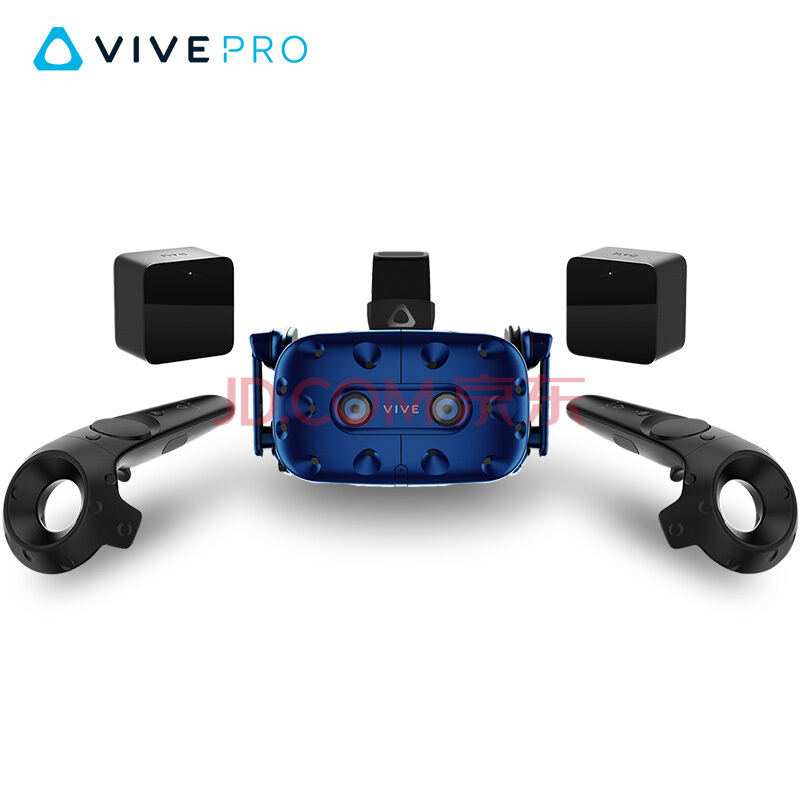
Last week I finally set up the VR, and since only three little comrades came to the reading group, it just happened to turn into a VR体验活动.
Of course, when we play games it’s not just for amusement or pastime; it is also a necessary practice for the history of science and the philosophy of technology. This is by no means a pretext or a joke. I can, with a clear conscience, apply for the purchase of VR equipment from my research funds for the history of science, and I will certainly produce relevant research texts as well. As for the meaning of games, I’m planning to write a series of articles to discuss it; as for the importance of VR, I’ll begin with an “(I)” for now. (By the way, how many “(I)”s have I already started? I’ve dug so many holes that I simply don’t even want to fill them anymore…)
“Moving” and “Not Moving”
At present, VR equipment falls into two major categories. One is the head-mounted display that must be used with a computer host or a dedicated game console (such as the PS4); the other is the portable VR headset or all-in-one unit that relies on a mobile phone or can be used independently. In an all-in-one unit, there is actually a mobile system similar to a smartphone Android system. The former has powerful performance, but it is expensive: a set of head-mounted gear costs 5,000 or 10,000 yuan, and a desktop computer capable of running VR also costs at least 5,000 yuan, with no upper limit (one top-end graphics card alone costs more than 30,000 yuan). By contrast, configuring a mobile VR setup, including the phone, for 5,000 yuan is already quite a lot.
At present, mobile games and applications are probably the hottest market. If it hadn’t been propped up by cryptocurrency mining in the past two years, the graphics-card business would probably have long since become sluggish. Intel has also been squeezing toothpaste on the CPU front for several years, and computer products represented by Apple have all been moving in the direction of thinness and convenience. It was not until the game “PlayerUnknown’s Battlegrounds” exploded in popularity that high-end computer manufacturers and internet café operators saw a glimmer of hope. When buying all kinds of computer hosts or computer components online, as long as they are high-end, they will directly use “chicken dinner” as their banner. But this wave of momentum seems hard to sustain. As the popularity of “chicken dinner” gradually ebbs, and with mobile versions of chicken-dinner-style games competing to appear, it seems that the replacement of computers by phones remains the general trend.
But what I bought was still the most money-burning kind of VR headset, driven by a newly purchased 16,000-yuan high-end computer. First, of course, because my finances allow it; second, because of my judgment: on the one hand, if we are trying out something new and experiencing it, then naturally we should look to the most cutting-edge technology for examination; on the other hand, I believe VR technology is an opportunity for the revival of the desktop computer host. If VR technology matures, it should be able to drive the home desktop computer market into a second spring.
My reasoning is actually very simple, because VR’s application scenarios are completely different from those of the mobile internet. The reason mobile games became popular is that they opened up people’s demand for amusement during fragmented time: between classes and at lunch break, on the way to work or school, when lazing in bed or after flopping down… In the gaps between busyness, or at moments when one can be distracted at any time, mobile apps and mobile games fill up our lives.
However, the typical application scenario of VR is precisely “not moving.” Even if you buy a lightweight all-in-one unit, you would not carry it onto a bus or use it at your desk at any moment; it is even less possible to put it on and glance at it during the interval while waiting for a red light to change (AR is another matter, so I won’t discuss it for the time being). The most typical application scenario is one’s own home, or a dedicated venue, including commercial VR体验馆 or VR classrooms in schools—similar to today’s internet cafés and school computer rooms. In other words, the usage scenario of VR basically overlaps with that of the desktop computer host from before, and is radically different from that of the smartphone.
Since VR equipment does not require “mobility,” configuring a high-performance host will not become a burden in terms of user experience; the only thing to consider is price.
At present, a high-end computer plus a VR headset is about ten times more expensive than a VR all-in-one unit, but that is not much of a problem. When home computers first became popular, they were also extremely expensive, but as long as the technology enters a virtuous cycle and is continuously upgraded, a natural price ladder will form. For example, HTC’s second-generation full set now costs 12,000 yuan, while the first generation has dropped to under 5,000. By the time the third generation comes out, the price of the first generation will be more or less affordable to ordinary people.
The price gap can be ignored, but the performance gap cannot be crossed. Although phone chips are already extremely powerful and can run many games with gorgeous special effects, and I have tried phone VR as well, the effect is indeed passable, it still cannot be compared with an enthusiast-grade computer host. This has to do with the design orientation of the chip: mobile chips emphasize energy efficiency, whereas desktop machines prioritize performance, and can also be equipped with a powerful cooling system—do not underestimate the issue of heat dissipation. According to the laws of thermodynamics, no matter how advanced science and technology become, and no matter how sophisticated the chip becomes, it cannot escape the problem of heat dissipation. So if the computing core is too close to a human head, its efficiency will always be constrained.
The Confrontation of Different Technical Biases
New media will encroach on the territory of old media in the lifeworld, but they often will not replace them wholesale. Television encroached on reading time, but it did not abolish the meaning of reading. Smartphones have carried forward fragmented entertainment, but immersive entertainment still has a place that is difficult to replace. To put it more optimistically, we can regard VR technology as a kind of “balance” to the fragmented age. Many people are already aware of the destructive power of phones on the lifeworld: looking at the phone while eating, looking at the phone while chatting, looking at the phone now and then while in class or at work, looking at the phone even in that half-asleep, half-awake state… People are becoming increasingly unable to concentrate on any one thing, and increasingly unable to find activities in which they can immerse themselves for long periods and even temporarily forget their phones.
How, then, does one struggle a little in the face of the phone? Many people place their hopes in those old-fashioned activities, such as going out for an outing in spring, such as reading books, or even educating the next generation through traditional rites and classics recitation, or simply forcing teenagers away from phones by command, even confiscation. But I have no hope for these strategies. Their fundamental weakness lies less in their outdated content than in their outdated form. It is precisely because new media such as the phone have brought about the complete collapse of traditional ways of life that trying to prop up these overthrown forces is unquestionably hopeless. It is like after an old dynasty has been overthrown: imperial orphans may briefly become hot commodities, and local warlords all come to support some orphan or another so as to have a legitimate pretext for rising up. But if you think the restoration of the old dynasty truly has hope, then you are being far too naïve.
I previously applied evolutionism to the history of science, and the same reasoning applies when used to understand the history of technology: outdated technologies and their ecologies (lifeworlds) should be placed in protected areas for preservation and continuation, but they are not to be used to confront the fashionable technologies head-on.
At the time of dynastic change, and at the time of changes of technological eras, what truly compete with one another are not new technologies and old technologies, but different new technologies, different faces of new technology competing with one another. The old dynasty collapses before the new force like dry weeds under a blazing fire, and this situation makes many people feel “pessimistic,” feeling that human power is slight and that the heavens cannot be reversed. But if one turns one’s gaze toward the future and does not pin hopes on defying fate and changing one’s destiny, but instead asks what characteristics this rising new dynasty actually has, then perhaps this is not a matter with no room for maneuver.
The new technological era may see several new forces rising simultaneously, and the relations of confrontation and balance among them have not been predetermined; there is still very large room for development.
Regarding the different biases of technology, Innis and McLuhan each proposed several dimensions of measurement, and these theoretical tools can also be used to analyze the confrontation of technologies in the new era. For example, Innis pointed out that media have two kinds of bias: toward “time” and toward “space.” For example, clay tablets are biased toward time (long-term preservation), while papyrus is biased toward space (rapid dissemination). Today, different information technologies also exhibit different biases; for example, blogs tend more toward time, whereas Weibo tends more toward space.
McLuhan offered several dimensions of distinction, such as the distinction between visual and auditory perception, and the distinction between cold media and hot media. By McLuhan’s account, cold media are cold in themselves, so participants need to be more active in getting involved, whereas hot media provide sufficient information on their own, so participants are often passively infused with information. For example, McLuhan considered film a hot medium and television a cold medium, because television has lower clarity.
McLuhan explained the difference between hot and cold media in terms of information density or clarity, and to me this line of thought is highly problematic. For instance, when television’s clarity keeps increasing, does it automatically become a hot medium? Moreover, using the dimension of hot and cold media to evaluate VR does not seem all that useful. Of course, I am also entirely unimpressed by interpreting VR through categories such as “sense ratios.”
Focused vs. Wandering
I tried to set aside the distinction between “cold” and “hot” and directly explore the distinction between “focused” and “wandering.” No matter how clear or unclear a medium may be, there is indeed such a scale in the way different media are participated in: some media require one’s whole being to pay attention, while others only require one to observe absentmindedly.
The difference between film and television lies precisely here. Film is a medium of focused involvement, whereas television, in more situations, is absentminded. Their difference is not completely determined by the so-called “clarity,” but depends on different application scenarios. In the movie theater, the surroundings are quiet and the lights are turned off; first, everything else is eliminated for you, so that you can focus on the one direction of the film. Television, however, is often set up in the home living room or bedroom, where the surrounding environment is always open, so when watching TV, conversation is not prohibited; on the contrary, one may talk at any time or simply become distracted and do other things. In many cases, the television at home even becomes a kind of background sound: people merely leave it on while doing other things, and do not pay attention to the specific program at all.
Books, especially printed books, are also media that require concentration. Their characteristic is that when you read, you need a quiet environment that excludes interference from anything other than the book. Oral communication, by contrast, is usually wandering. Even when you are chatting with someone you care about very much, it often still requires an open environment, such as eating together, walking together, looking at the moon and counting stars together, and so on. Even in face-to-face concentrated chatting such as meetings, people never focus only on speech itself; they always add all kinds of “small actions” at any moment, bringing vision and bodily movement into play. If you try to exclude all external interference as much as possible—for example, locking people in a little dark room and tying their hands up so that they can only chat orally—it will feel extremely oppressive.
These different biases are related to the physical characteristics of media technologies themselves, but what directly plays the decisive role is their application scenarios. For example, books and newspapers are both products of print, and film and television can also use similar imaging technologies (the distinction McLuhan emphasized as to whether light is refracted or reflected seems to me utterly meaningless), but the differences in application scenarios create different biases. Another judgment of McLuhan’s that I also agree with is that the biases demanded by these technologies are not confined within the scenarios in which they are used; they also affect other aspects of our lives. For example, print promoted the development of private space and the flourishing of visual centrism.
McLuhan believed that because television has low clarity, it cultivates a more focused, involved attitude, whereas Postman held the opposite view. In this respect I lean toward the latter. As Postman argued in *Amusing Ourselves to Death*, television powerfully cultivates the ability to “switch emotions rapidly”: one second you are feeling sad for the suffering of a group of African refugees, the next second you are immediately laughing at the embarrassment of an American celebrity, and the second after that you are once again worrying about next week’s weather… This is the everyday state of watching TV news: we are no longer able to calm ourselves down and focus on a single problem in order to dig deeply and reflect, but are instead pulled about at any time by fragmented emotions.
Smartphones seem to intensify this state of “inattentiveness,” and the switching of “focal points” becomes faster and faster, to the point where it is hard to concentrate. In activities that require concentration, such as reading and attending class, the new generation is increasingly losing the ability to be “fully absorbed.” This is precisely why many people regard the phone as a great scourge.
The Counterattack of the Otaku
But unfortunately, those who regard the phone as a great scourge often simultaneously harbor the same hostility toward all emerging electronic media. As a result, they take the wrong direction of confrontation and throw themselves in vain into the movement for the restoration of the old dynasty.
Because those who are hostile to video games are often hostile to all video games, indeed to all games, they fail to see the multiple possibilities contained in new technology. In fact, video games are not a monolithic category; in fact, perhaps the different types contained within video games already exceed all the types of traditional games. Of course, different types of games may contain the same bias, but exactly how this is so still requires serious game scholars to investigate in depth.
I also admit that a series of electronic media represented by smartphones are indeed very “dangerous,” but the way out is not resistance and rejection, but balance and complementarity; not retreating into tradition, but supporting new counterweights. So VR is a major force confronting smartphones: it pushes the “immersive” side of electronic media to the extreme.
VR technology is a blessing for the “otaku.” When we experienced VR, one homebody little comrade exclaimed that in the future there would increasingly be no need to go outside. Indeed, the “otaku” are a crucial force; it is precisely the non-moving, homebound tribe that will become the counterweight to the mobile internet.
Many people misunderstand otaku culture, either thinking that otaku are equivalent to “useless otaku,” merely social dropouts; or thinking that otaku are the universal state or final trend of the millennial generation. In my view, this is not the case. In fact, “otaku” actually represents the pole most biased toward “concentration” in electronic media. For example, in some specific usages, “technology otaku” and “military otaku” indicate a state of life in which one is especially proficient in a certain field, immersed in research, and so absorbed in it that one cannot extricate oneself. Technology otaku are similar to geeks, while military otaku, anime otaku, game otaku, and so on—these concepts of “otaku” can also be replaced by “fans” or “junkies.” Roughly speaking, anime otaku basically means anime fan, and so on. Of course, not “lost” as in “to lose,” but “addicted” as in “addiction.”
“Addiction” in itself is not a bad thing; many people merely approve of being addicted to useful things. For example, parents always hope that children will become addicted to studying and be unable to extricate themselves, but they do not want children to become addicted to television or addicted to games. But because of a priori prejudice against “useless” things, and because of a blanket resistance to electronic media, people overlook the deeper commonalities and differences in “addiction.” Being addicted to reading is certainly different from being addicted to online games, but being addicted to television and being addicted to games are also different, and even being addicted to different games has different effects—these differences often go unnoticed. On the other hand, whether one is addicted to reading, programming, anime, or games, these addictions nonetheless share formal commonalities, which are often ignored as well.
“Otaku” and “fan” both contain a tendency toward “concentration.” Whether science, technology, or games, the reason a certain field can make people addicted is that within that field a self-sufficient world of meaning has formed—studying the motion of planets is interesting in itself, not because this research can enrich tonight’s dinner; learning about the experiences and endings of the protagonist in a novel is interesting, not because such knowledge helps tomorrow’s date; controlling the game protagonist to defeat monsters is interesting, not because these experience points can improve my exam score.
The richer the structure of meaning contained within a certain field of activity, the more it can make people unable to extricate themselves once they go deep into it. In this respect, games are the same as any so-called meaningful activity, or rather, any such activity is in essence a kind of “game.”
But addictions such as being addicted to the phone or addicted to television are somewhat different, and perhaps closer to the sense of “lost.” The gap between being addicted to television and being addicted to chicken-dinner games may be greater than the gap between being addicted to chicken-dinner games and being addicted to astronomy. Because television or the phone, rather than luring people to sink deeper into immersion, seduces them into “not immersing,” causing them constantly to skim past and leave one meaning structure after another, encouraging superficial, improvisational participation rather than whole-hearted investment in a relatively stable field of meaning. The tendency toward fragmentation runs counter to the otaku spirit.
Of course, VR technology, like phones and television, is not monolithic either, and comparing them as wholes is rather crude. But at least in broad terms, “immersion” is unquestionably the keyword of VR. Yet unlike books, film, or even traditional immersive fields such as astronomy and physics, the immersive mode of VR does not exclude other senses in order to give sole supremacy to vision; rather, it tries to draw all of human sensory experience into a self-sufficient world of meaning. The unique significance of this medium still awaits our observation and revelation.
Translated from the Chinese original with AI assistance. The original text is authoritative.