
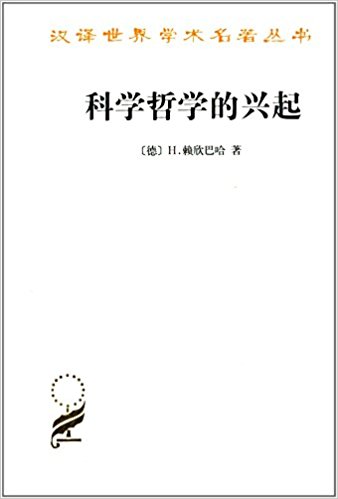
Note: This is the text record I asked the students to submit after class. The style and length of this post-class text are unrestricted: it can be a lightly revised version of the lecture notes, or a reorganized account. The purpose is first, to make it easy to review or commemorate at any time; second, to extend the classroom discussion. So I am posting it publicly on the blog, and all students and other friends can continue the discussion here in the comments (especially by using the page-side annotation function). The following text is all provided by student Zhuowu (I’m using nicknames here; everyone is free to comment using either their real name or a nickname). I myself will make some page-side annotations, so please keep an eye out~
Class Format and Reflection
A little reflection. Teacher Hu took on the role of bystander/commentator, while planning this course as the main lecturer. As the main lecturer, one really has to prepare much more; simply reading the book and sorting out its structure is not enough. Because the core of the class still lies in focusing on questions and discussing those questions in light of the text. The text is very important, but unlike a reading group, our questions emerge and are resolved continuously as we read. A philosophy of science class has to be read and advanced in relation to the shifting focal points of the problem-field across the academic world as a whole, and that is rather difficult for the person mainly preparing this book as the lecture material. So Teacher Hu is needed to provide supplementation and response. One possible difficulty is the tension between the main lecturer and Teacher Hu… I have a hard time following Teacher Hu’s lines, but Teacher Hu can follow mine… Perhaps later, turning the organization of the book’s structure into a discussion of specifically textual problems would be better.
The Structure of The Rise of Scientific Philosophy, the First Half: Critique and Questions
The book’s main purpose is to discard the old speculative philosophy and establish a new philosophy of science.
In the preface, Reichenbach first presents his overall view of philosophy and science (mainly philosophy). He then argues that in the past philosophy was in a non-scientific state, and this was not its own fault, but rather the result of the underdevelopment of logical tools at the time. Thus the way out for old philosophy is, under the guidance of science, to use logical tools and become a new philosophy of science. This is also the meaning of the title The Rise of Scientific Philosophy. “Philosophy has advanced from speculation to science.”
Reichenbach’s main enemy is old speculative philosophy. This kind of philosophy tries to obtain final answers to all questions through rational speculation, seeking fundamental principles. For this purpose, Plato’s theory of Ideas, modern philosophy’s rationalism, and Kant’s transcendental philosophy were all created for this end. But for Reichenbach, the new logical tools reveal to us the nature of truth: namely, truth is only analytic. Kant made all the problems clearer, so Reichenbach’s conclusion, in Kant’s conceptual system, is that there are no synthetic a priori propositions. Science, meanwhile, offers us another path. There, according to the scientific methods of experiment and mathematics, scientists establish a set of methods that do not guarantee truth, but are effective in guiding practical activity. Thus old philosophy has died away, and the new philosophy must be rebuilt on science’s terrain. The rise of scientific philosophy means shifting philosophy’s focus onto scientific achievements, doing reflective work for scientists on science.
Thus, in the first half, Reichenbach begins his critique of speculative philosophy. The main section under discussion is modern philosophy, especially the opposition between rationalism and empiricism. In this part of the text, we can see that Reichenbach’s critique of rationalist speculative philosophy is still concentrated on its excessive desire to find a road to truth. It also demands that this truth be all-encompassing and capable of guiding people’s lives. Reichenbach thinks the root of this idea is that they overstepped their own limits in order to answer these questions, and because conditions were insufficient they gave incorrect answers. Then Reichenbach also sought a psychological explanation for them, an explanation that in our view is not only very unhistorical, but also somewhat petty and malicious. In fact, he thinks that these philosophies were produced in an irrational state, so all sorts of errors occurred.
And corresponding to rationalism, empiricism is the philosophical tradition inherited by Reichenbach. Although modern empiricism also has its own shortcomings, Reichenbach is quite tolerant toward it. In particular, Hume’s discussion of inductive logic saw clearly the essence of logic. Inductive logic cannot bring truth into facts. But this should not become an obstacle to the progress of empiricists, just as scientists likewise cannot guarantee in an analytic sense that their doctrines are true, but at least they are good knowledge. On the one hand, they make reasonable observation and induction of past knowledge; on the other hand, they alter the epistemic expectations of future knowledge. The variability of future knowledge is a characteristic of future knowledge, that is, something forecast knowledge must take into account. Probability, then, is a reasonable explanation of future events. Probability cannot be derived from rationalist speculation; it can only rely on extensive observation of events and be obtained from frequency. No principle can yield a reliable probability; we can only approximate that probability indefinitely and obtain the best knowledge. For a question like whether a coin will land heads or tails, we likewise cannot obtain any answer a priori. One half is something derived from observation and induction, not from any law.
This is consistent with Reichenbach’s later construction of philosophical theory. New science is in fact built on the basis of observation and experiment, and a reflective philosophical construction for such new science must of course also follow scientific principles. Geometry, when used in geodesy or applied to the actual world, must also compare and choose repeatedly among multiple geometrical systems, selecting the one that corresponds to the real world. The same is true of other scientific disciplines: they are not only grounded in observation and experiment, but various forms of the inductive principle are also applied within them as methods.
Reichenbach’s Construction in the Second Half
The second half of the book discusses each science separately. Geometry has already been mentioned above, and there is also Poincaré’s conventionalism—that is, if two theories offer different views of the world but can be made commensurable and transformed into each other, then each theory is feasible; we merely choose one as our convention.
But although this kind of conventionalism can be applied to the choice of geometrical theory, and can also explain Berkeley’s agnosticism, it encounters anomalous causality and fails in the field of quantum mechanics of microscopic particles. After giving an account of modern quantum mechanics, Reichenbach’s conclusion is that the existence of microscopic particles can only be simply described by the scientific-language notion of wave-particle duality; our language is suited to the macroscopic, low-speed everyday world, while events in the microscopic world can only be explained in seemingly contradictory language. These abnormal phenomena can also only be understood after understanding science. “A micro-particle is both a wave and a particle.”
This example is actually very typical of a new case brought into view by philosophy of science: the explanation of modern physics can only proceed through this method, through interpreting scientific experiments and scientific discourse.
Reichenbach’s discussion of time compares evolutionism and Aristotle’s teleology. There were not many textual discussions of this sort, because in the second half Reichenbach talked about a great deal of history of science, but he did not do history of science well. The history in his mouth cannot really convince people, because the scientific view he himself holds is too strong. Although self-consistent, such a strong foundation makes it hard to debate him from the critical standpoint he is attacking. For the development of science does not mean that new science is completely superior to old science in rational terms, but Reichenbach only acknowledges the present science that has not yet been overturned. This means that from the text we can only understand how he thinks and why. His making some detailed errors from such a standpoint is not even worth discussing, because these are not important to him.
As for the chapter on modern logic, his sorting out of the logical tradition is not very clear either; this chapter simply gives a brief introduction to modern logic and cannot really be expanded into a textual discussion.
We are preparing to spend some effort discussing his ethics. Because in its final form, Reichenbach’s ethics is very strange: it wants both to preserve an individual’s freedom and to have a unified order, and it introduces the concept of the collective, making ethical rules relative. Reichenbach has his reasons for doing this: he carries through his resistance to synthetic a priori judgments, believing that ethics, as knowledge, cannot provide any more rules. Norms such as “one must not steal” cannot be derived; there is no such knowledge. Ethics can provide the actual state of people’s behavior. Through investigation and sampling, science can tell us how people actually behave. But knowledge cannot overstep its bounds; it cannot provide ought-knowledge and norms. So Reichenbach actually restricts his ethics. He does not believe people can derive ethical knowledge, so the ethics he gives is loose, based on actual processes. He describes some possible processes by which ethical collisions occur in actual society, and believes that moral norms will emerge within them. But whether things are good or bad, whether human beings will degenerate, he can only offer his best wishes. His ethics cannot manage those matters, nor is there any knowledge that can point human beings toward a more “moral” path.
Of course, from this angle we are already familiar with, as before, Reichenbach criticizes the entire ethics of the tradition descending from Socrates. Ethics is supposed to seek a criterion to guide people toward living a more moral life; Reichenbach, starting from his scientific view of science, discards this idea. This view of knowledge as aiming toward the best rather than the absolutely true seems to resonate with a certain relativist interpretation in Kuhn.
I didn’t use the lecture notes I wrote myself; instead I rewrote it once more with reflection in mind, so there may be some omissions…
Translated from the Chinese original with AI assistance. The original text is authoritative.