
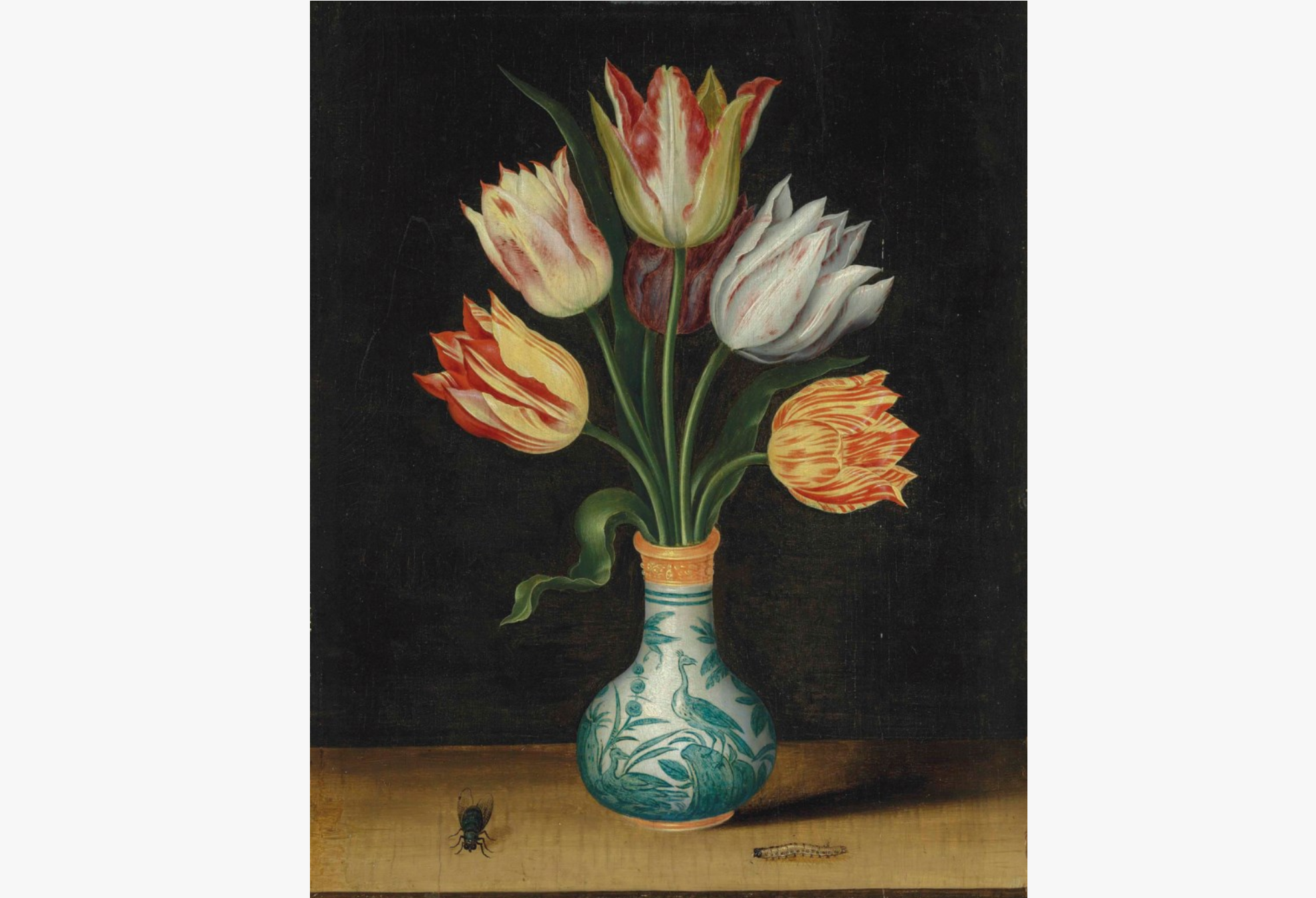
In the article From BTC to NFT: Wealth to Power I already confessed that my understanding of NFTs has clearly changed. Although in the article NFT and Tulip Mania I agreed with the importance of NFT technology, I still felt that “a pixel image worth tens of millions is, however you look at it, not a price that could possibly last long.” But I have now withdrawn that judgment; now I think that at least some historically significant NFTs are entirely capable of maintaining high prices over the long term. Of course, this judgment of mine does not constitute investment advice. On the one hand, most of the accompanying NFTs on the market will still become bubbles beneath the great wave; on the other hand, even the few NFTs with lasting value may not all be able to outperform the big pie.
Of course, it is easy to understand that NFTs have value. As for people who casually say this or that thing is “worthless,” there is no need even to talk to them. What I want to discuss here is why NFTs can be worth so much money, and the various ways NFT technology generates economic value.
Some time ago I already said that, broadly speaking, the tulip futures certificates of that era counted as a kind of “NFT.” What people were scrambling to buy were not “standard tulips,” but various novel and rare “striped tulips.” Tulips were already deeply loved by the Dutch, and a tulip that was both beautiful and rare selling for an astronomical price was simply perfectly normal.
“It’s just a flower (/a piece of paper/a vase/a string of numbers…), it can’t even be eaten, so why is it so valuable?” — you only need to drag the person who asks such a question to the flower shop door on Valentine’s Day and let them stand there for half a day. Luxury goods, decorative goods, gifts, collectibles… the most expensive things in the market are precisely those “ornamental but impractical” things; by contrast, those things that “can be eaten” are usually the cheapest. Otherwise, how could the Engel coefficient be used to measure prosperity?
Human beings are such strange animals: what they pursue is not just food and drink. Humans pursue “romance,” and “romance,” in many cases, is precisely ornamental, impractical, and unconcerned with “reality.” A boy giving a girl a rose on Valentine’s Day is expressing romance; if he were to give her a bundle of pig trotters instead, the vibe would be all wrong.
Human beings need pig trotters, and they also need roses. And within these two kinds of need there can be countless layers. For example, a poor person struggling to make ends meet would rather have bran bran buns; a big pig trotter, on the contrary, would be “ornamental but impractical.” And the wealthy also look down on pig trotters and chicken offal, preferring instead to buy expensive delicacies from mountains and seas. The hierarchy on the rose level is even greater: a university student spending 100 yuan to buy a bouquet of roses for his girlfriend may leave both of them very happy. But if a billionaire with assets of a trillion yuan were to use 100-yuan flowers to charm a lover, that probably would not go very successfully. Both poor people and rich people have “pig trotter needs” and “rose needs,” but the rich have higher demands; this is why the luxury market flourishes.
The striped tulips of those years precisely satisfied the conspicuous-consumption needs of the newly wealthy class in the Age of Sail. A single tulip on the living room table of an ordinary family would already be quite decent, but if a trade magnate’s home displayed only an ordinary tulip, that would not quite match his status. But if he wanted to display his financial power, should he put ten thousand tulips in the living room? That would probably be the so-called “tuhao” approach: it succeeds in flaunting the “hao” side of being grandly rich, but at the same time it also displays one’s “tu” side of being tacky.
So if there were a kind of tulip that looked more distinctive than an ordinary tulip, and in fact was also rarer and more expensive—a single stem worth ten thousand—then a rich man would only need to place one such rare tulip in his home to show off both his power to buy ten thousand tulips and his refined taste and aesthetic sensibility.
Striped tulips also came in different varieties; the most expensive was “Semper Augustus,” while the others each had their own characteristics. As a soon-emerged novelty, striped tulips quickly became popular as the “limited-edition rare NFT” of the time. Whoever could possess a few distinctive tulips was the social star of the day; there was not even any need to hand the flowers over—just saying “come to my house and look at the flowers” was probably enough to make honored guests or lovers rush over eagerly.
So how did the so-called tulip bubble burst? The reason is very simple: in fact, the rare varieties were not rare enough, because they could be mass cultivated. Striped tulips were caused by infection with a specific virus during growth, so traditional breeding techniques could not preserve the trait; tulips propagated normally were all solid-colored. But people at that time did not understand any of this science—concepts like microorganisms and viruses did not exist at all—so striped tulips, produced in mysterious ways, were regarded as rare and hard to come by. But breeders were not helpless; they accidentally discovered a method for cultivating variegated tulips through grafting techniques. As this cultivation method spread and matured, growing variegated tulips became more and more ordinary; however many you wanted could be grown, and the cost was not much higher than that of solid-colored ones. In this way, the high price naturally could not be sustained.
The tulip bubble burst, but the Dutch still loved tulips, and the Dutch economy and society were not harmed in the slightest. People would still keep searching for the next rare thing. The principle that “rarity makes value” is unassailable (if you argue disingenuously that even a doodle you casually scribble counts as rare, then please see the old article The Ontological Basis of “Rarity Makes Value” — Also on Why Bitcoin Is Valuable).
But in the past, it was difficult for people to ensure that rare things would not be “cracked.” Because generally speaking, what supports rarity is nothing more than the scarcity of materials or the difficulty of the manufacturing process, and both of these can at any time be eliminated by technological innovation. For example, grafting technology undermined the rarity of striped tulips; electrolytic aluminum technology eliminated the rarity of aluminum products (Napoleon even used an aluminum crown); aquaculture technology made pearls, caviar, and so on no longer rare; artificial diamond technology is now destroying the rarity of diamonds…
Another way of supporting rarity is to appeal to “history.” A broken clay pot is nothing special in terms of material or technique, but if it is an artifact from the Shang dynasty, then it becomes rare.
Aside from antiques, calligraphy and painting and other works also appeal to history. Such works, besides requiring the creator to have superb skill (and thus being rare), also at the same time embody the creator’s and collector’s historical status.
Of course, the rarity guaranteed by history also depends on the different ideas and tastes of people in different eras. For example, an artist who has been all the rage in these past few years may become ordinary twenty years later; an event that now seems utterly insignificant may, when looked back on decades later, be recognized as a milestone of history. The importance of history is also a bit like the competition of computing power in the blockchain — if a certain block gains recognition, later people will continue creating on the basis of that block; those affected by this block then attract more later people to keep writing onward. Once the chain of influence becomes long enough, the historical status of the original block becomes very hard to shake.
Aside from the issue of recognition, rare things supported by history inevitably also face problems of preservation and anti-counterfeiting; or rather, all rare things face the problem of “anti-counterfeiting.” And the methods of anti-counterfeiting are, in the end, only two: technology or history. Experts in cultural relics have all kinds of technical means for authentication, but any technology can also be cracked by other technologies, and experts in forgery may likewise have all kinds of techniques for making fakes. In addition, an orderly provenance is also an important basis for ensuring anti-counterfeiting. If the entire transaction history and collection history of a relic are open and transparent, then of course we can be much more certain of its history. That is why many ancient collectors liked to inscribe and stamp the calligraphy and paintings they collected; besides emperors like Qianlong, whose self-display was off the charts, this was also for the sake of marking provenance.
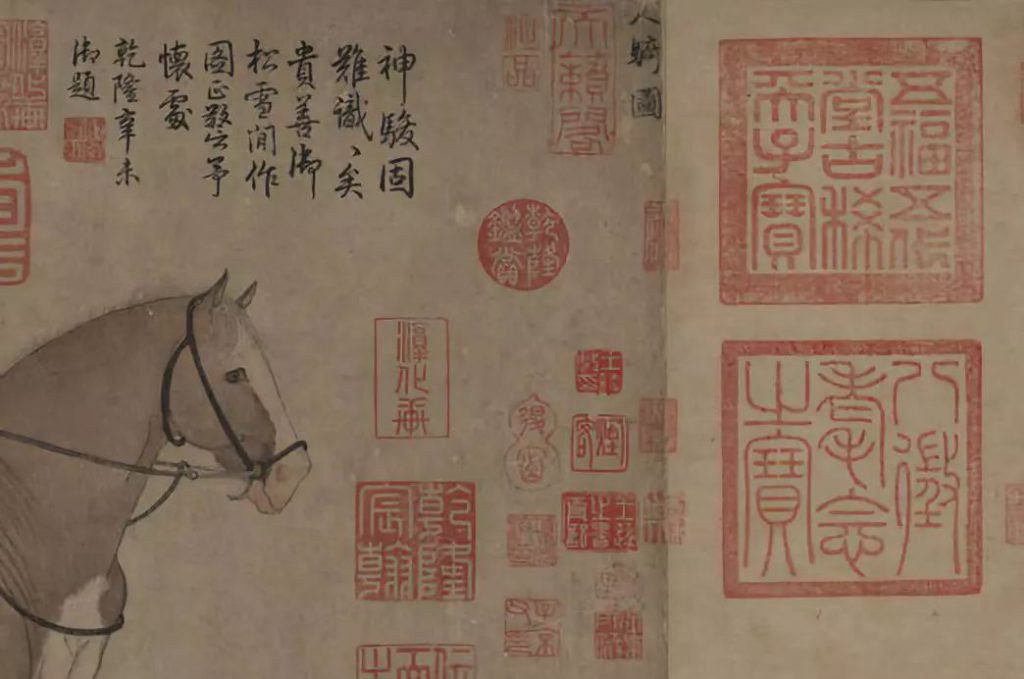
Ceramics, calligraphy, paintings, and other artifacts prove that rare things do not necessarily require scarce materials; this is a very simple truth. No matter what material something is made of, “history” can endow it with scarcity.
So here comes the question: if something’s “material” is “numbers,” then what? Can digital objects still be endowed with scarcity by history?
Many people’s first reaction is “of course not,” because the most obvious feature of digital technology is its reproducibility. Whether it is a jpg image or a doc document, in essence it is nothing more than a piece of code that can be copied infinitely. How could something so easy to copy possibly be scarce?
But in fact clay pots and paper are also very easy to copy. Reproducibility makes the “anti-counterfeiting” of historical relics more difficult, but it has never been a fatal obstacle to scarcity.
In fact, even before blockchain technology, rare digital objects were already popular—for example, the sky-high-priced equipment in the online game Legend, 5-digit QQ numbers, the Blue-Eyes White Dragon card in Yu-Gi-Oh! (although it is a physical card, in terms of the card itself it is also reproducible), and so on; all of these could sell for a great deal. There were also things ordinary people could easily come into contact with, such as the decorations in QQ Show and QQ Space back then, the prestigious gold diamonds and red diamonds as markers, spending dozens of 648-yuan packs in gacha games to draw a fully broken-limit costume… For our generation, the “rarity of digital objects” is already nothing rare.
But the rarity of these digital objects all requires a premise, namely trust in the issuer or the management center. For instance, a game company claims that a certain piece of equipment is issued in a limited run of 100, or that a certain card has a drop rate of no more than 0.01 percent, thereby guaranteeing their rarity. But if one day the issuer is short of money, suddenly holds a “reissue event,” or quietly adjusts the drop rate, or adds a few items out of thin air, that is entirely possible, and in fact such things often happen. In addition, even a conscientious company may eventually go bankrupt; the game becomes passé, service is shut down, and these historically meaningful pieces of equipment or cards can no longer be “taken out” of this closed game. Thus digital objects can indeed have rarity, but that rarity is always very limited.
By contrast, the NFT concept based on blockchain technology does not create an unprecedented scarcity of digital objects out of thin air; rather, it endows digital rarities with “decentralization.” Blockchain ensures that every collectible has an “orderly provenance”: every step from creation to circulation of each collectible is open and transparent, and as long as one searches the public blockchain records, anti-counterfeiting can be easily achieved. Moreover, even the creator has no right to tamper with the “provenance sequence” of all collectibles. Game companies of course can still issue the 101st replica item at any time in addition to the 100 items, but players will always be able to tell which piece is the “genuine article” and which one has been indiscriminately issued. And players may also take all the equipment in the game and, with their feet, vote with their feet, entering another game. Equipment can be bound to a certain game, but it can also be used elsewhere at any time, as long as a certain number of people participate.
In this sense, NFT is not something that suddenly emerged out of nowhere. The reason NFTs can be valuable shares exactly the same logic as the reason tulips, calligraphy and paintings, antiques, and other traditional collectibles can be valuable.
Translated from the Chinese original with AI assistance. The original text is authoritative.