
I was invited to write two annual recommended books for the China Science Daily. I had originally meant to recommend The Technology Trap, but since it came out too late to count as a 2021 title, I ended up choosing these two instead:
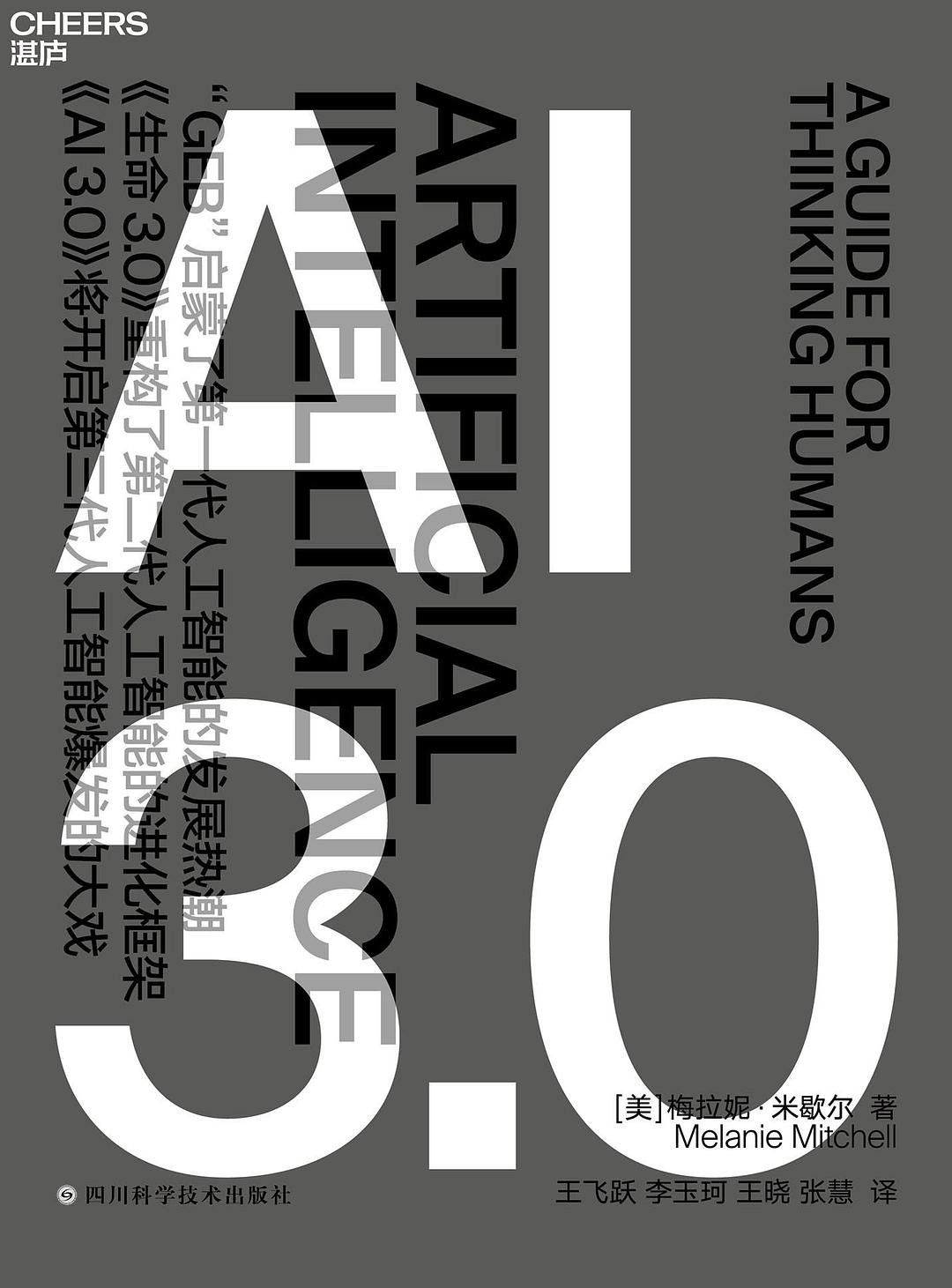
AI 3.0, by Melanie Mitchell; translated by Wang Feiyue, Li Yuke, Wang Xiao, and Zhang Hui; Sichuan Science and Technology Press, February 2021
Breaking the Code: The Amazing Power of Gene Editing, by Jennifer Doudna and Samuel Sternberg; translated by Fu He; Hunan Science and Technology Press, December 2020
The following is a repost of my recommendation written for China Science Daily (2022-01-28, page 3, Books).
First I recommend this book. Its author, Melanie Mitchell, is the writer of the popular science classic Complexity; she was also a student of Douglas Hofstadter, the American scholar and author of Gödel, Escher, Bach: An Eternal Golden Braid (hereafter GEB). The book opens with Hofstadter’s “panic.” When Hofstadter heard a computer program (EMI) composing classical music so convincing that it could almost be mistaken for the real thing, he said he was “frightened,” and felt “a threat to the humanity I most prize from artificial intelligence.”
Hofstadter is hardly a sentimental romantic with nothing better to do; in fact, he is an old pioneer in the field of artificial intelligence, and his writings inspired several generations of younger scholars to devote themselves to AI research. In GEB, the very first conjecture Hofstadter lists about the future is, “Will computers compose beautiful music?” His answer is: “Yes, but not for a long time.”
In other words, Hofstadter believed that artificial intelligence would eventually be able to compose music; it is just that this result arrived sooner than he had expected. Shouldn’t that make us happier? What is there to panic about?
There is a plotline in Demigods and Semidevils in which Jiumozhi goes to Shaolin Temple to challenge the masters, displaying the Seventy-Two Absolute Skills of Shaolin, and the old monks hang their heads in despair: “This old monk has studied hard for decades, but in the eyes of the Imperial Tutor, it is hardly worth a laugh. The old rules of Shaolin Temple surely need substantial revision.” Why were the old monks sad? Not because someone else had mastered the Seventy-Two Absolute Skills, but because he had mastered them far too easily, so that what they cherished and pursued had become cheap wholesale merchandise.
Hofstadter’s mood was probably similar. “Far too easily” is what is most heartbreaking. What he had hoped for was that through his efforts, and those of generation after generation of AI researchers, they would eventually create incomparably complex and exquisitely engineered intelligent machines; by then, hearing the music composed by such a machine, Hofstadter would surely feel deeply gratified. But the reality now is that the programs composing music are not at all complicated, do not require any special chips, and are astonishingly prolific.
What Melanie Mitchell is doing is something like what Xu Zhu did—he pointed out that Jiumozhi relied on the Minor Wuxiang Art to imitate the Seventy-Two Absolute Skills, rather than practicing a different internal energy for each skill. But he was not trying to deny the Minor Wuxiang Art; clearly, it is a fine martial art, and its imitation really is successful. Only when Jiumozhi was not satisfied with imitation, but “wanted to integrate and synthesize them” as well, did hidden injuries accumulate, and he ultimately went mad from deviation in cultivation.
Melanie Mitchell does not oppose artificial intelligence or its frontier achievements; in fact, this book is a popular science guide to those frontier achievements, introducing how AI has managed to do what it does. At the same time, she reminds readers that although the various “imitation” achievements so far have been successful, continuing along the existing “methods” and, “wanting to integrate and synthesize them” into a general strong AI may not be so easy. And this direction is difficult to succeed in on the one hand, while on the other it may also backfire: if people, buoyed by blind optimism about artificial intelligence, then turn around and seek to revise the “old rules” of the human world, that would be disastrous.
The original English title of this book is simply Artificial Intelligence; it does not have the “3.0” added by the Chinese translation. This so-called version 3.0 has not yet appeared, and cannot be achieved simply by integrating the existing successes of AI in various specialized scenarios. We still need to take seriously the various capacities human beings cherish, and soberly recognize that success in imitation cannot replace an understanding of humanity. We need not feel sorry for ourselves over the success of artificial intelligence, and still less should we be blindly optimistic about these successes.
The author ends by asking herself: “What exciting problems remain unsolved in artificial intelligence?” The answer is: “Almost all of them.”
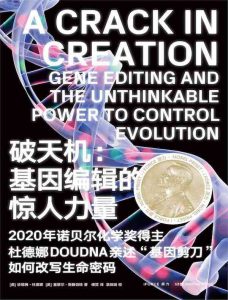
The first author of this book is Jennifer Doudna, who won the 2020 Nobel Prize in Chemistry for gene-editing technology.
Artificial intelligence and gene technology happen to be the two hottest frontier fields right now, and this book is also an excellent popular science work narrating the latest progress in gene technology. On the other hand, beyond popular science, Doudna’s strong humanistic concern is striking.
Like Hofstadter, as a pioneer of gene technology, Doudna is likewise alarmed by things moving “too fast” or “too easily.” She asks: “Are scientists rushing too quickly into new areas of research without pausing to think about whether these experiments make sense, and what their consequences might be?”
When technology develops too fast, the discussion and formulation of ethics and regulations related to it will always lag behind; when technology is too easy, both citizen scientists and terrorists may easily obtain the power to alter the human body or create biological weapons.
A runaway horse can gallop fast, but if human beings are trampled under the hooves of an out-of-control horse, what good does it do us that the horse runs faster and faster? The same goes for the development of science and technology: single-mindedly pursuing speed is dangerous, and it only makes sense on the premise that human beings can always keep a firm hold on the reins.
Translated from the Chinese original with AI assistance. The original text is authoritative.