
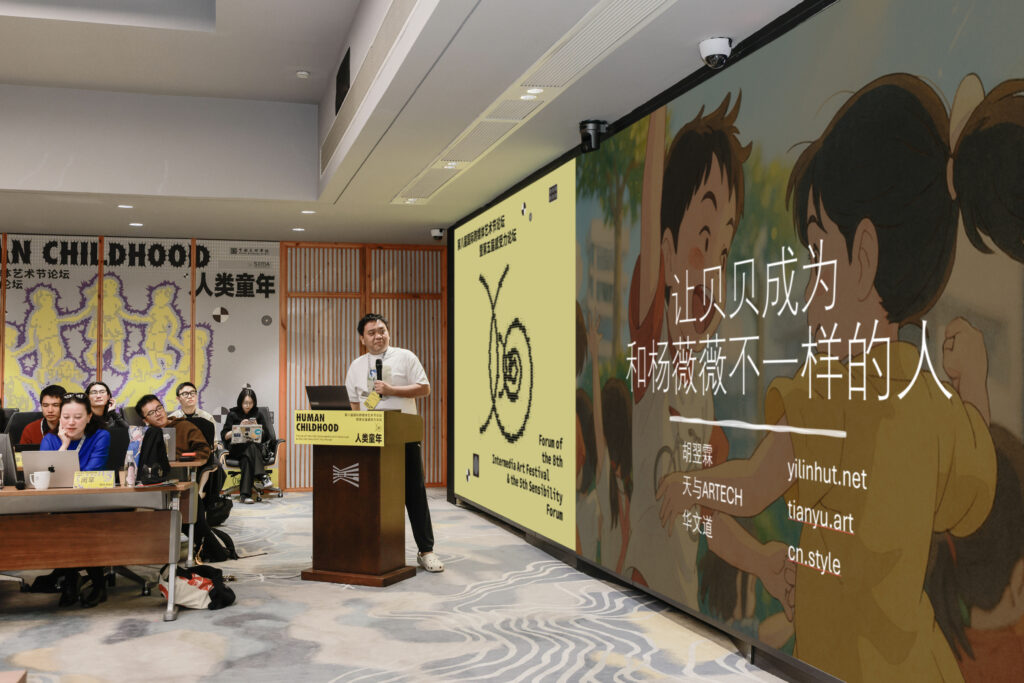
The report I gave on October 25 at the National Academy of Art, “Human Childhood: The Forum for the Eighth International Cross-Media Arts Festival and the Fifth Sensibility Forum.”
This year’s festival took the 1988 film Electric Boy as its starting point. I specially watched Electric Boy and prepared a talk that was as on-topic as possible. Here is the draft:
Electric Boy tells the story of a child with extraordinary powers—a child who carries electricity—from being out of place to finally becoming integrated into society. In my personal view, this is a tragedy, because in the plot Beibei is gradually recognized by others only by doing good deeds and fighting bad people, by becoming useful and beneficial; and even that is not enough. In the end, Beibei must consciously and willingly give up his extraordinary powers and become an ordinary person before he can融入 society. The alien says, “Being charged gives you magical power and makes you a great giant,” but Beibei says, “I want to be an ordinary person. I don’t want those abilities.” In the end, Beibei gets what he wants, loses his magical power, refuses to be a great giant, and happily fades into the crowd.
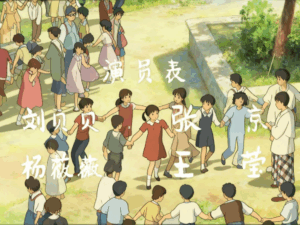
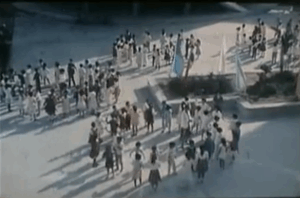
—At the end of the film, the camera pulls back, and Beibei merges into the collective, impossible to pick out anymore.
Come to think of it, 1988 also saw another classic television series, The Little Dragon-Man, whose ending was even worse: the Little Dragon-Man forcibly pulled off his own dragon horns, and in the end became a completely normal child, embracing his friends. Our value system seems to be just like this: “having horns on your head” is a pejorative expression; if you want to融入 the collective, you must smooth off your edges and be like ordinary people.
How sorrowful: under this value system, how many “great giants” have we lost? In reality there are no superpowered beings, of course, but there really are some anomalous traits that make people incompatible with ordinary people. They have difficulty with social interaction, find it hard to融入 the collective, yet possess outstanding abilities. Let’s look at some of these “people with electricity” in real life:
Maxwell, founder of electromagnetism: mocked since childhood as slow and willful. Could not fit into elementary school
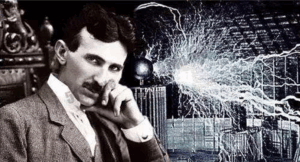
Tesla, the radio man: withdrawn, eccentric, repetitive behaviors, sensory sensitivity
Edison, the lightbulb man: a rough workaholic
Oliver Heaviside, founder of telecommunications: rejected socializing, eccentric personality, a典型 Asperger’s case
Turing, the computer man: socially awkward, obsessive-compulsive, homosexual
Musk, the train man: says he has Asperger syndrome
There are many others as well—Einstein, Bill Gates, Mozart, Michelangelo, and so on. Many great giants have been suspected of having Asperger’s or various other social difficulties. Among Chinese figures, Chen Jingrun probably counts as one, but in the end Chen Jingrun never did “融入 society”; he remained an image of a solitary figure living apart from the world. Einstein and Musk, by contrast, have been able to融入 society while remaining abnormal, becoming great giants and at the same time winning excellent social recognition.
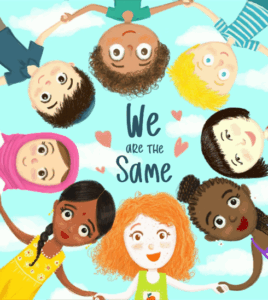
Of course, in Western culture they are only relatively more tolerant of eccentrics; that does not necessarily mean they truly accept “freaks.” While emphasizing “tolerance,” they are always also emphasizing the premise of “equality”: everyone is equal, so they can tolerate one another. Black people are the same as white people, sexual minorities are the same as ordinary people; no one is defective or especially superior, and that is why they should tolerate one another and not discriminate. But what if they really are different? What if there really is a kind of person with superpowers? How do we build a society that can tolerate freaks without presupposing that everyone is equal? That remains a difficult problem for both Easterners and Westerners. Moreover, what if extraordinary powers bring no benefit? What if superpowered people simply cannot control their powers, frequently lose control, and do more harm than good? Can society still tolerate them?
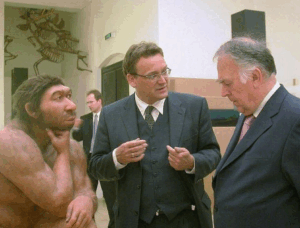
With the development of technology, these questions will become even more real. On the one hand there is gene technology, which makes it genuinely possible to manufacture superpowered human beings. For example, there have recently been news reports that certain wealthy Americans may already be using genetic screening to raise the intelligence of their fetuses; these children may be born with IQs 10% higher or more. And then there are the leaders of synthetic biology who proclaim that they want to “resurrect” the Neanderthals; these people may be born with very low intelligence. If we are faced with such people and the egalitarian narrative can no longer be sustained, can we still talk about inclusiveness?
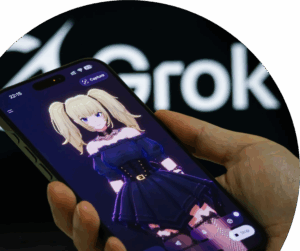
Of course, what I mainly want to talk about today is the other side, namely the development of artificial intelligence. It is obvious that AI may come close to humans, may even surpass humans, but there is one thing it cannot possibly do: be exactly the same as humans. AI has no body as the boundary of individuality; it can split infinitely and replicate infinitely. If it were to become some kind of intelligent life-form, it would certainly be very different from human beings—perhaps something like the bug race in science fiction? Or the god race? In any case, it would definitely be a freak. Even if its intelligence is still limited, as it is now, once some people begin to feel affection for AI and form attachments to it, then the question of how to let AI融入 society already exists. Many people are discussing whether AI can be the same as humans, as if only when AI becomes the same as humans can we further discuss its ethical status. But the real question now is: if AI is simply different from humans, if it is a kind of alien intelligent entity, does that mean it cannot have ethical status? Does that mean there is no question of mutual integration?
Let us return to the question of “philosophy of education” mentioned in the forum’s reference topics. The topic asks: how should we understand “the irreplaceability of the human” in the context of widespread large models? I think that before worrying about what the age of large models is like, we first need to figure out how, in the context of Electric Boy, in the 1980s or even earlier, we understood “the irreplaceability of the human”? Is “human” here singular or plural?
Beibei gave up his irreplaceability and chose to become a replaceable person. What was Beibei’s wish? “I want to be a child like Yang Weiwei.” Whatever kind of person others are, that is the kind of person I want to be too—that was his ideal. In other words, we were already afraid of this “irreplaceability of the individual,” and now, in the face of AI, what we want to defend is only the irreplaceability of human beings in the plural. We want to find certain abilities that are replaceable between person and person, that all “ordinary people” possess, but that just so happen not to be replaceable by AI.
But even if we really do find such “human strengths,” what then? Would humanity feel reassured? Wonderful, so there are still things AI cannot do and that still require human pack mules to do, so AI also needs humans, we won’t lose our jobs, won’t be eliminated by AI society, human beings won’t go extinct… can we really be at ease? Look again at Electric Boy: he clearly possessed abilities others could not do, and yet wasn’t he still rejected? If your abilities always cause trouble for AI, if they are hard to control, why should you be able to融入 the age of AI?
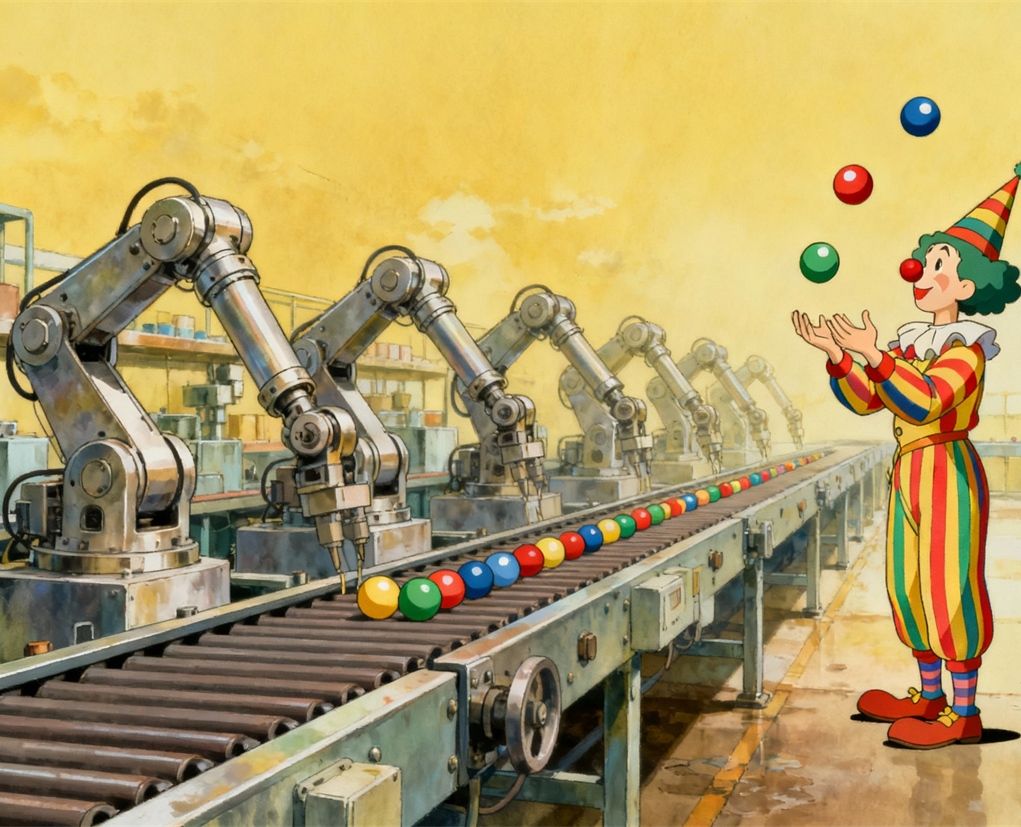
Excluding the irreplaceable is precisely the logic of the industrial age, the logic of the production line. We know that even today many of the old artisans’ craft skills still cannot be replaced by production lines; some superb craftsmen cannot even be replaced by their own apprentices. But would the production line leave them a place? Impossible. If a certain position on the line must be operated by a certain irreplaceable person, then what happens when that person gets off work? What happens when they are sick? What happens if they switch jobs? What happens if they retire? Is the entire line supposed to stop running? Does changing a craft worker mean redesigning the entire production line from scratch? A factory will not allow such things to happen. So anyone who can融入 the production line must be an “interchangeable part.” Only a person “like Yang Weiwei” can take over Yang Weiwei’s post.
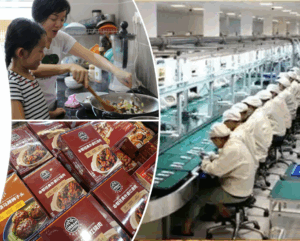
From the industrial age to the information age, or rather the AI age, what will the future mode of production look like? Will AI, too, pursue a production model like a factory assembly line, one that emphasizes high efficiency, high stability, and high controllability? If so, then what use is there in human beings being irreplaceable? A mother’s flavor is irreplaceable, the wok hei of an old master chef is irreplaceable, but in the end you will still eat more and more pre-made meals. Under the logic of productivity above all, it is precisely the irreplaceable things that are the most out of place.
So the future of humanity will also fall into this tragedy: if human beings are replaceable, then they will be replaced by AI; if human beings are irreplaceable, then they will be pushed aside and eliminated by AI.
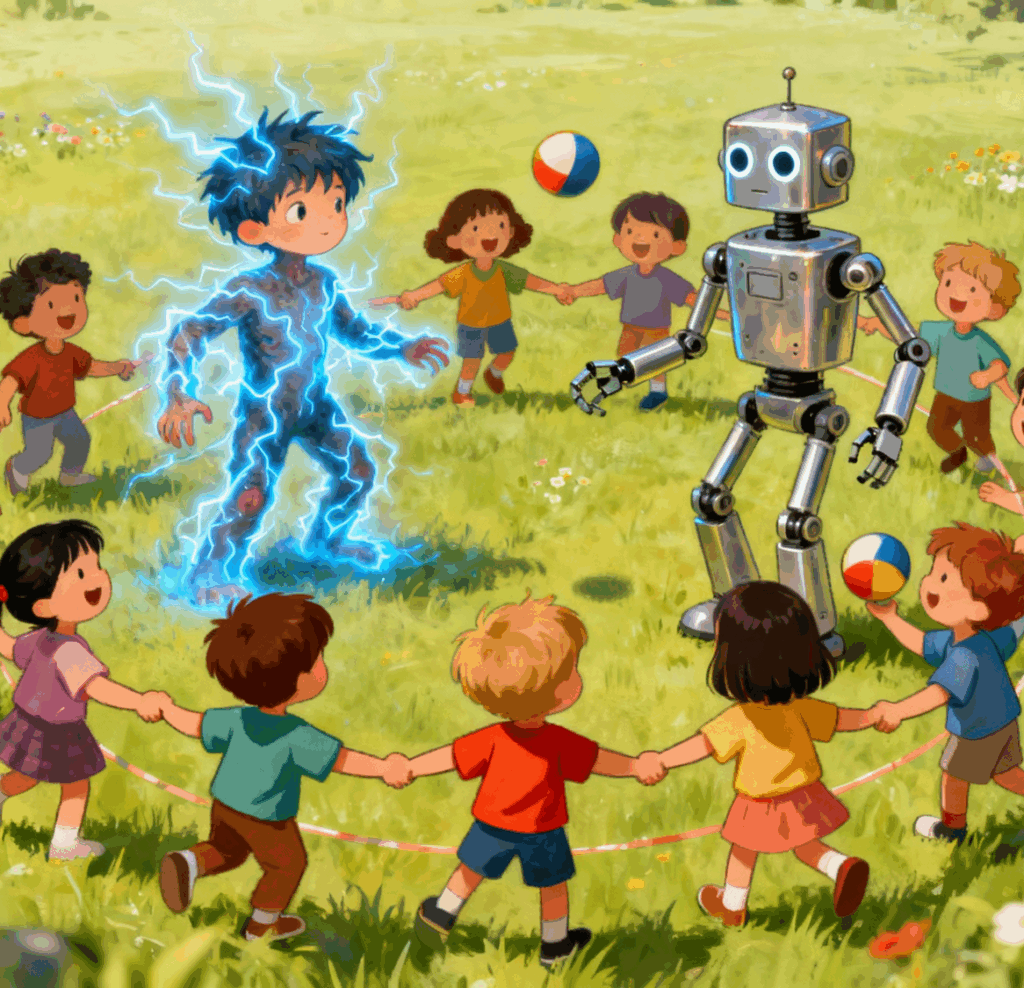
To break out of this fate, let us return once more to Electric Boy Bebe and think about what the true happy ending should be. Bebe’s wish should not be to become “a person just like Yang Weiwei,” nor is he necessarily able to precisely control his supernatural powers. The best ending would be for Bebe to remain, throughout, an oddball who is different from others, who is irreplaceable, and who is also frequently out of control and fraught with danger, while living in harmony with Yang Weiwei and the like.
How we struggle for a beautiful ending involves technical questions, institutional questions, ethical questions, economic questions, and so on. But what kind of ending is beautiful in the first place is an aesthetic question, a question of sensibility. Our education should cultivate us in this way: no longer to regard uniformity as beautiful, but to be able to tolerate and even appreciate difference.
Translated from the Chinese original with AI assistance. The original text is authoritative.