
Published in Jiemian Commentary: “From Soul Photography to Face-Swapping Apps: The History of Humanity’s Struggle with PS Technology”
A face-swapping app called ZAO went viral overnight, triggering heated debate. Many people are worried about the popularization of face-swapping technology.
Using AI to swap faces in videos is actually nothing new. In 2017, a user known as deepfakes began sharing pornographic videos that swapped the faces of the actors with those of film stars, drawing widespread attention. Later, the relevant program code was open-sourced and shared, the technology developed rapidly, and some derivative applications have long been easy for ordinary people to use.
Face-swapping technology certainly has some legitimate uses. For example, in the filming of some movies and television dramas, it allows stunt doubles to be used entirely even in scenes where the actor’s face is shown clearly. But most of its uses seem quite vile, or at least seem dangerous.
For example, spreading forged pornographic videos to discredit someone’s reputation, spreading fake declarations by political figures, using fabricated “borrow money” videos to defraud people of money and goods, and so on.
So, of course, we need to be vigilant about the spread of this new technology. But what should we do?
Some people think that this kind of technology is like nuclear weapons and should be tightly sealed away, not allowed to be promoted among the public.
But first, we should note that sealing off this technology is already more or less impossible. It is not like nuclear weapons, which require a massive engineering project and specific raw materials to make; it is not even like firearms, which require precision casting techniques. It only requires a computer—a most ordinary home computer that can run games—and open-source software, and face-swapping can be done. It is hard to ban, and hard to monitor.
Second, this technology is different from lethal weapons after all. It does not always produce a threat; its danger is not directed straight at the body, but first takes effect at the level of ideas. The harm it causes is related to people’s understanding of it.
If we look back at history, it is easy to notice that this kind of “crisis” is by no means appearing for the first time.
Before video face-swapping technology, image face-swapping technology had already matured—that is the familiar “PS” technology. It, too, can put the face of a film star or your dream lover onto a pornographic image, and it can also provide false evidence that anyone appeared anywhere.
So how did we respond to PS technology? Very simply: we no longer believe static images so readily. When people see a digital photo, they often do not draw conclusions lightly; at the very least, they need a video call or a complete surveillance video to increase credibility. And now, after photos, the authenticity of video also has to be greatly discounted.
But whether photos or videos, they too are products of technology; they are not things that have existed since ancient times or so-called “natural” things. Human beings did not from the very beginning take them for granted and believe in them.
Photography was invented in the first half of the nineteenth century, and in the early stages of its spread it was often misunderstood as a kind of witchcraft that would steal a person’s soul and shorten their life. Foreign photographers who entered China were fairly well received by the upper classes, but at the lower levels they were often attacked.
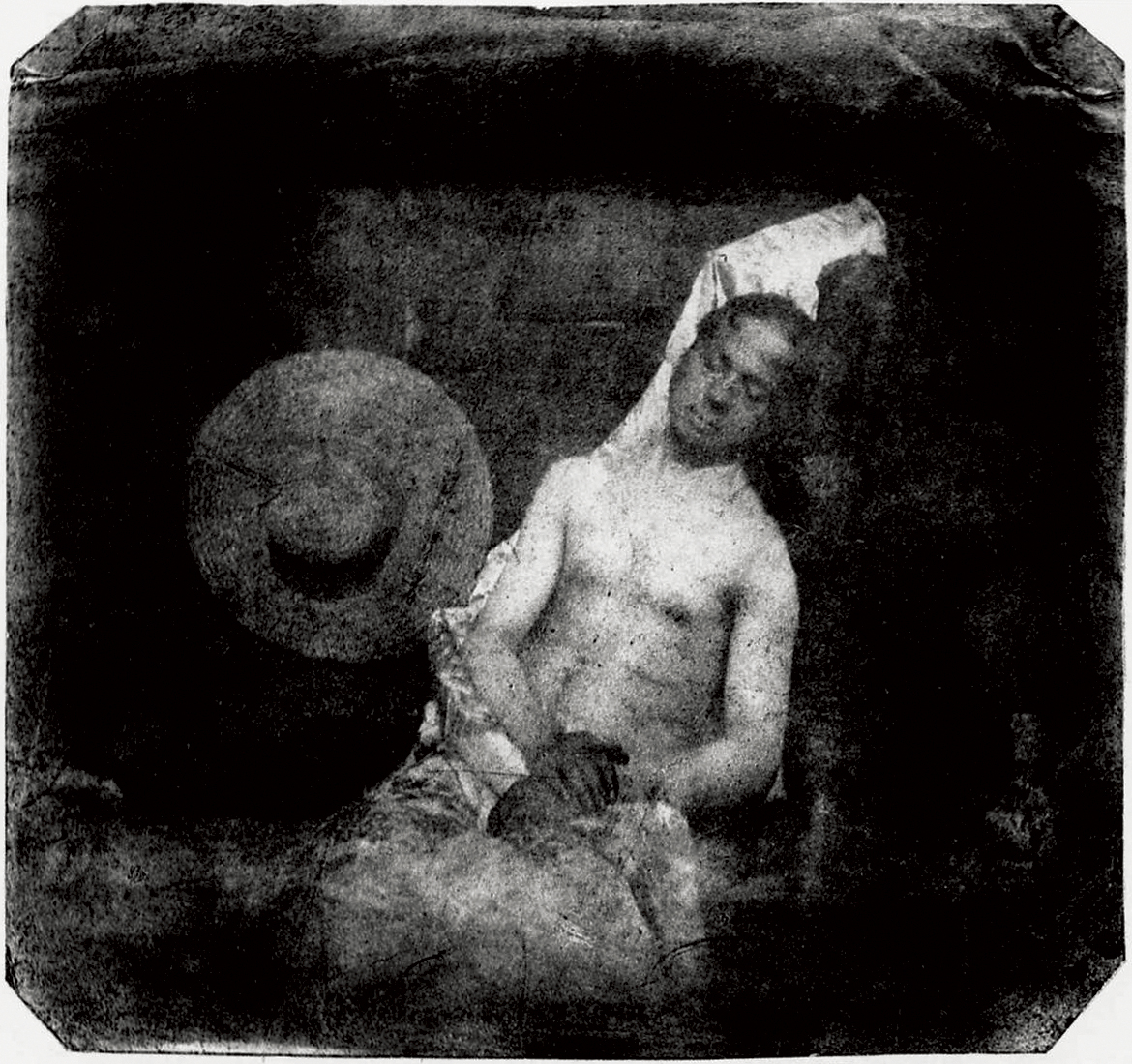
On the other hand, using photographs to falsify the truth appeared almost from the very beginning. In 1839, Daguerre’s photographic process was first publicly announced. The next year, another researcher of photography, Bayard, took a selfie and claimed that the person in the photo had invented photography earlier than Daguerre but had not been recognized, and had therefore already committed suicide by drowning, hoping to attract public attention.
In the 1860s, the American photographer William H. Mumler began marketing his “spirit photography,” claiming that he could photograph images of deceased loved ones. He brought Lincoln’s widow in and asked her to quietly think of Lincoln while the photo was being taken; the resulting picture appeared to contain an image resembling Lincoln, and this made him famous for a time. Of course, in reality he was using double exposure. Although he fooled ordinary people, photographers exposed him, and he became notorious in the industry. But spirit photography continued to be developed after Mumler, even convincing Conan Doyle, who then crossed the ocean to China and fooled a large crowd of people there.

So, in these kinds of frauds, who is easy to deceive, and who can expose the scam?
Obviously, the more one knows about photography-related knowledge and techniques, the less likely one is to be fooled.
At the time, some people accused Mumler’s spirit photography of fraud, but they could not produce direct evidence of how Mumler had falsified the photos. So the evidence they offered was: “I can do it too.” One accuser hired a photographer and had a spirit photo taken of himself as well, and the result was about the same as Mumler’s, proving that this was how he did it.
To be fair, the fact that a certain effect can be achieved through deception does not prove that achieving that effect necessarily requires deception. Therefore, the judge ultimately delivered a verdict of not guilty. But the fact that something “can be faked” does indeed help expose fakery, or at least make people more cautious when faced with so-called evidence.
Thus, photographers who can casually produce “spirit photographs” are very hard to fool with “spirit photographs.”
Similarly, when you and I can casually PS photos ourselves, we become much less likely to be fooled by PS’d photos.
By the same logic, as it becomes easier and easier for people to do video face-swapping, the deceptive power of face-swapping videos may also weaken.
These situations are completely different from those “materialist” weapons. Knowing how an atomic bomb is made does not help you resist an atomic bomb; knowing how a handgun injures people does not help you dodge bullets. But in the technologies discussed above, the spread of knowledge may help reduce their harm.
If only 1 out of 100 people knows about double exposure, then the other 99 may all become victims of the scam. When the number of those in the know expands from 1 to 3, the ratio of potential fraudsters to potential victims becomes 3:97.
Three people cheating 97 people means the possibility of crime is probably much greater than one person cheating 99. But to conclude from this that the spread of technical knowledge intensifies crime is not accurate enough. For when the technology has spread widely enough—say, 97 people all know the relevant knowledge, and only 3 people remain easy to fool—the actual crime rate will instead shrink greatly. Moreover, those 97 people will also supervise one another and expose one another.
So rather than saying that new technology promotes deception, it is better to say that the imbalance in the process of technological diffusion promotes deception. Those who master new technology first are always able to seize the initiative. For example, European navigators could use cheap glass beads to exchange for gold from Africans; and if Africans could “do it too,” then the exorbitant profits from glass beads would vanish.
I am not saying that we should stand by indifferently and allow new technology to spread at will, and I am certainly not trying to endorse any particular app. What I want to say is that, when it comes to the dangers brought by new technology, we cannot focus only on prohibition and control. Especially when control is difficult, we should instead consider in what ways we can guide and promote its spread.
While new technologies arrive one after another before we can even catch our breath, the lag of the general public’s related knowledge, culture, ethics, and law has become a serious social problem. And as we move into an era of rapid technological change, this lag has become the norm. Researchers and legislators, in addition to evaluating the principles and functions of the ever-emerging new technologies themselves, need even more to pay attention to the processes by which technology and the knowledge related to it spread and circulate.
Translated from the Chinese original with AI assistance. The original text is authoritative.