
At the request of China Science Daily, this was published in the January 28, 2019, issue of China Science Daily, page 1.
Recently, two things within the education system have stirred up heated discussion: one is the “mind-boggling exam paper” from Beihai College of Art in Guangxi, and the other is Sun Nan and his wife sending their child to attend a “Guoxue class.”
These incidents are by no means accidental isolated cases. Some commentators have already linked them to “Quan Jian,” seeing in them all the spread of a certain “anti-intellectualism,” or, to put it another way, a lack of public scientific literacy.
The college that produced the mind-boggling exam paper, on the one hand, champions “female virtue”; on the other hand, it believes that wifi causes cerebral hemorrhage. Various Guoxue classes likewise stress female virtue on the one hand, while on the other hand looking down on science education in mathematics, physics, and chemistry. Merchants such as Quan Jian, on the one hand, wave the banner of reviving traditional medicine, while on the other hand resisting the scientific achievements of modern medicine.
We can see that promoting Guoxue always seems to go together with opposing science. If that is the case, then people who revere science must surely oppose Guoxue.
But this very opposition between Guoxue and science may, from beginning to end, be a kind of misalignment. What is called “Guoxue” ought to become a supplement to “science” within the education system, but thanks to the efforts of a bunch of pig teammates, traditional culture has instead been made notorious.
In my view, the share of traditional cultural education within China’s educational system is not too large, but rather far too small! And it is precisely this lack in the educational dimension that has led to a lack of scientific literacy.
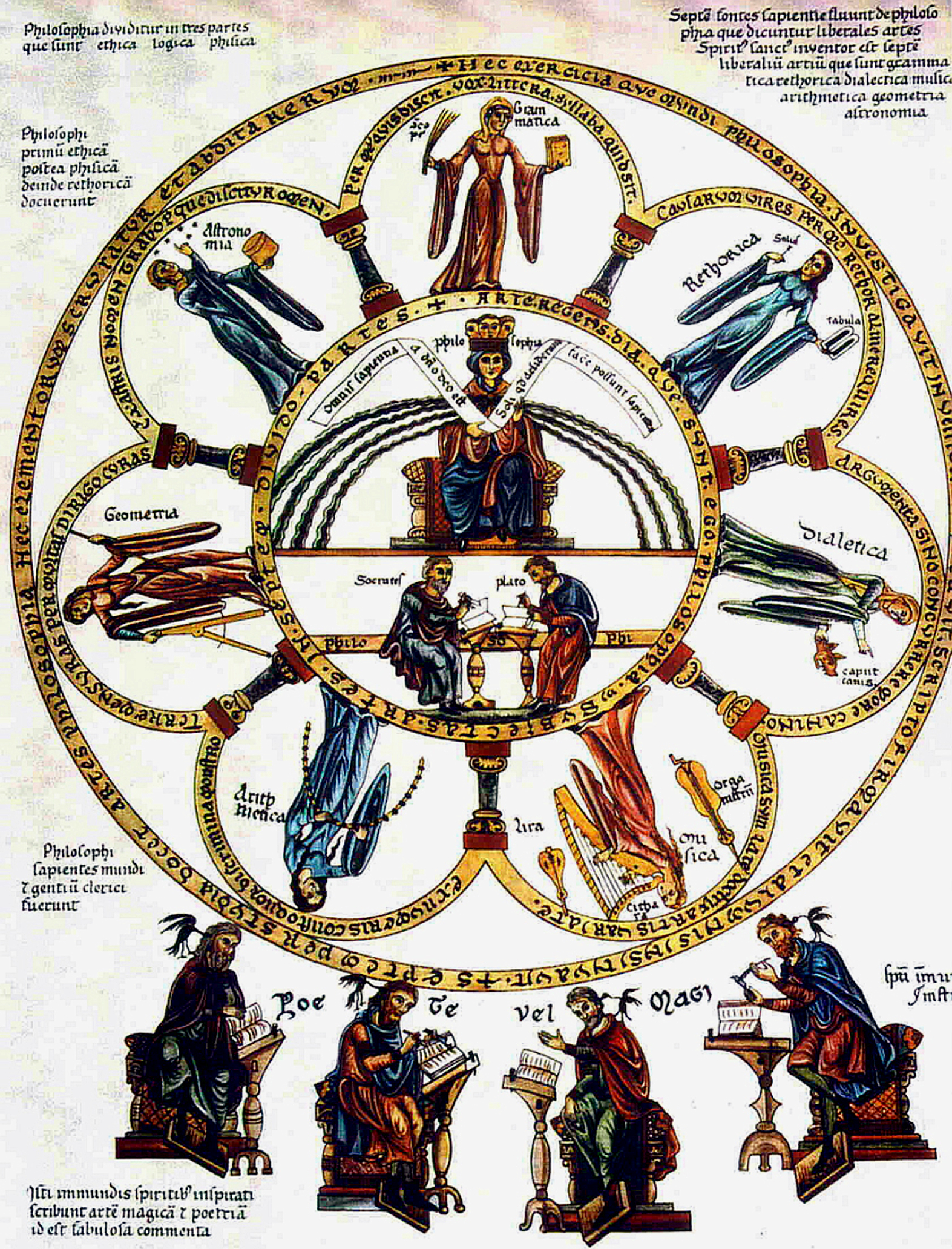
The educational dimension I am talking about is called “liberal education” in the West, and in China it is translated as “boya education” or “general education,” but its literal meaning is actually “free education.” “Free education” stands in opposition to “professional education,” and teaches things that do not directly point toward a career or practical utility. Subjects such as Western classical literature, ancient history, and the philosophical tradition are all important components of “free education.”
“Free education” can be said to be the Western equivalent of “Guoxue”; it has a long history, traceable back to the educational system of ancient Greece, declined for a time during the Enlightenment, and then revived again in the 19th and 20th centuries.
Why do the classics of thousands of years ago—Homer, Plato, Cicero, and the like—still deserve to be studied by students in the 21st century? And how can this kind of education avoid conflicting with modern science? We must begin by talking about the positioning of “free education.” The American Association for the Advancement of Science has offered this description: “The ideal of liberal education is that it promotes open-mindedness and helps prevent parochialism, dogmatism, prejudice, and superstition; it promotes awareness of one’s own opinions and judgments, reflection on one’s actions, and recognition of one’s place in nature and society.” In short, as the name suggests, the point of “free education” is “freedom,” aiming to cultivate the ability to think and act independently and critically.
By contrast, “professional education” teaches objective, useful things. A person who has received a good professional education may be able to perform his job competently in a particular post, and if he follows arrangements and works hard without complaint, then he can achieve very good results. But the problem is that relying only on professional education, relying only on the teaching of objective scientific knowledge and practical technical ability, can only produce qualified “screws and bolts”; it does nothing to foster an independent personality. And precisely here lies the mission of “free education.”
So, naturally, the reason “free education” still teaches traditional classics from thousands of years ago is not that these classics are still providing objective, useful things, nor because Plato is wiser than Einstein, and thus we are worth reading Plato. Quite the contrary: the positioning of “free education” is “useless” education, intended to help people transcend the instrumental rationalism that pursues profit and efficiency above all else, and reflect on their own position from a different dimension—where do I come from, and where am I going?
From the standpoint of practicality, traditional classics are indeed long obsolete; each bears the limitations of its own era. Yet it is precisely these historical limitations that give them their significance—because through dialogue across time and space, we can enter their era and step outside our own; it is between the collisions of eras, between clashes of thought, that we can more properly locate our position in the long river of history. In short, reading the classics is not about denying progress, but about understanding progress—we are not content to be mere screws and bolts, helplessly swept forward by the tide of history, and so we need a more detached perspective and a broader mind. Thus, alongside professional education, access to ancient classics through free education becomes an indispensable and important part of the educational system.
And free education, understood in this way, naturally cannot conflict with modern science either, because people do not at the outset deny the practicality and effectiveness of science and technology; rather, they are saying that it is precisely because modern technology is “too effective” that utilitarianism overwhelms everything, leaving people satisfied with instrumental rationality and abandoning reflection and critique. People devote themselves to continually improving efficiency, yet forget to examine their original intentions and purposes. For example, consider the problems exposed in fields such as genetic technology: Chinese people are by no means behind in continuously improving technical capability, but when it comes to the humanistic concern of why, exactly, this technology should be developed, there is a lack of reflection.
At this point, we immediately see that many people’s understanding of “Guoxue” is exactly the opposite—studying traditional culture is not intended to cultivate “freedom,” but always to cultivate “obedience”; and resisting modern science is not because they are “opposed to efficiency supremacism” either. On the contrary, they always think their own products are even more “effective” than modern science.
We urgently need to develop “free education,” and the “free education” of the Chinese, of course, cannot consist only in reading Plato and Cicero. If a Chinese person wants to locate “where we come from,” and wants to find their position in history and in the world, they naturally also need to understand their own traditional culture and read the classical learning of China. But the purpose of such education is freedom, not obedience; in this sense, the revival of “Guoxue” has not even begun.
Translated from the Chinese original with AI assistance. The original text is authoritative.