
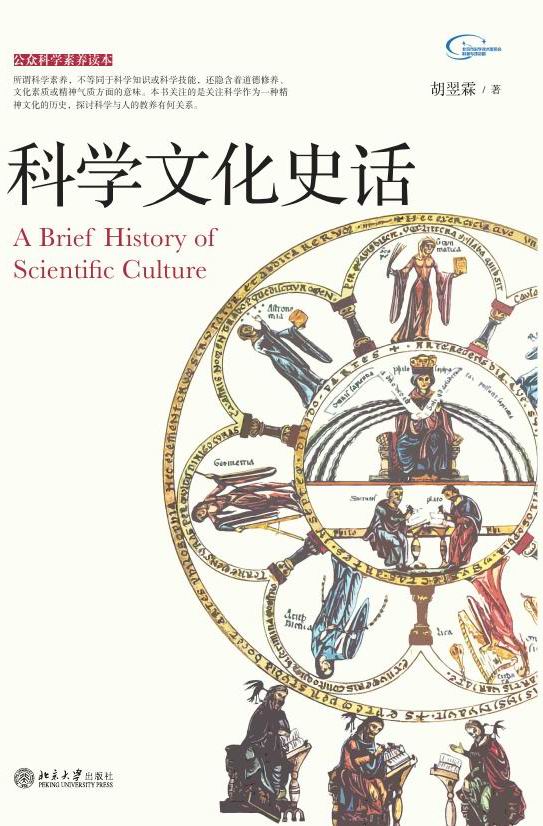
My first “monograph” has finally been published. This book is mainly a compilation of some articles already on the blog, with a bit of revision and stitching-together added to make a small book.
Preparation for it began in September 2012, and by the end of that year the manuscript was basically finished. With Wu Laoshi’s help, it was published by Peking University Press as a public-literacy reader. Originally, I had hoped it would give me one more line on my record when I graduated and went job hunting for my doctorate, but after the slow publishing process, it finally came off the press at such an awkward time. By then it was of no use for my own job search after graduation, and it could hardly count as an achievement from my postdoctoral period either; had I known, I might as well have had it come out even later.
Since it is mainly based on already existing articles, some of which I wrote back in my undergraduate days, the book as a whole is rather immature. Because in the past two years my main focus was still my dissertation and Bitcoin, I did not devote enough energy to this book. Of course, I believe some of my perspectives and lines of thought are still fairly fresh, so the book is not altogether shameful to show people, either.
The book’s original title was Scientific-Learnable? — A History of Science and Culture, but in the end the editor removed that grandiose main title. Of course, “Scientific-Learnable?” still appears as the title of the introduction, and it remains the main thread running through this somewhat loose collection of essays. In fact, around this thread, the little book is far from complete; that is something I will supplement in the future as well. (That will probably have to wait until I become a lecturer and have taught courses such as General History of Science or History of Science and Culture, after which I can gradually continue writing it.)
Though not much to brag about, it is after all my first book, and one worth commemorating, so I am still going to shamelessly take it around and give it away to people. Friends to whom I previously promised a copy—if I forgot, please remind me again…
As a Bitcoin enthusiast, I am also very willing to accept Bitcoin payment for purchases, though I am rather lazy and don’t want to make myself too busy, so the price might as well be set a bit higher. Under recent market conditions, let’s sell it for 0.01B a copy (postage included)~ The book is priced at 30 yuan (which is really rather a rip-off). Friends who want to buy it, please contact me by email (hyl510@gmail.com), QQ (160467), or Weibo (@胡翌霖); you can request a custom dedication (writing something like “XXX惠存,” etc.—though my handwriting is terrible, it still has some commemorative value, I suppose…). Shipping takes about a week (I need to buy copies from the publisher first).
(Students who do not need a dedication can buy it on Amazon)
Below I attach the table of contents and all the illustrations of the book. (By the way, the images in the book often do not reproduce very well; in general, they are all a bit too small.) All the illustrations were found on Wikipedia, and are basically either public domain or CC-licensed. CC licensing requires that the source be indicated and the author’s information retained. I proposed to the publisher that an image index be added to the book, noting the source of each image, but the publisher did not agree and instead followed the Chinese convention of using images without citing their sources. As a mere student, with little voice, I could only compromise and go along with the custom. In fact, I am not especially strict about copyright issues either, but I do hope to observe the basic ethics of citation and source attribution. Although the book could not include them, I have still preserved the citation links for each picture here.
Table of Contents
Introduction: Can Science Be Learned?
I. Greek Culture — The Origins of the Scientific Spirit
- The Discovery of Nature: The Opening of the Tradition of Inquiry
- Practical Knowledge: The Opposition Between Science and Technology
- From Gymnasium to Academy: Science Becomes Humanistic
- From Plato to Ptolemy: Mathematics Moves Toward Practical Use
- Afterword: Aristotle’s Haptic World
II. Christian Culture — The Soil of the Scientific Revolution
- Universities and Scholastic Disputation: The Medieval Scientific Tradition
- God as Absolute Exteriority: Creationism and the Mechanical World Picture
- God and Natural Law: The Legitimacy of Empirical Research
- The Eye of God: The Objective View from Above
- Afterword: Science’s Religious Complex
III. Printing — The Medium of the Scientific Revolution
- Everything Is Ready, Only the East Wind Is Missing
- Induction: Historiography Becomes a Scientific Method
- From the Original Edition to the Book of Nature: The Science of Editing Texts
- Science on the Page: Knowledge Becomes Black and White on Paper
- Afterword: Reconsidering the Scientific Tradition of Ancient China
IV. Newtonian Mechanics — The Completion of the Mechanical World
- Mechanics: Why Not “Empirics”?
- Efficient Cause: What Is the Relation Between Cause and Force?
- The Law of All Things: Everything Returns to Nature
- Interaction: The World Has Come to a Halt
- Afterword: The Expansion of “Matter”
V. The Science-View Debate — Humanistic Education in the Scientific Age
- Enlightenment: The Pursuit of Modernization
- The Question of Education: Locating the Science-View Debate
- Enlightenment Education: The Cultivation of Freedom
- The Soil of Tradition: Modernization in a Chinese Key
- Afterword: Western Learning as Substance, Chinese Learning as Application
Conclusion
Summary of Illustrations and Captions
Figure 0.1 The Japanese translator Nishi Amane
Nishi Amane (1829–1897), a Japanese enlightenment thinker and translator. He creatively combined ancient Chinese classical terms or commonly used Chinese characters to coin new words, translating a large number of Western concepts, such as philosophy, science, technology, reason, sensibility, art, induction, deduction, and so on. Hundreds of these words have taken root in the everyday usage of modern Japanese and Chinese.

Figure 0.2 The sophist Protagoras
Democritus (center) and Protagoras (right), painted by Salvator Rosa (1615–1673).
Protagoras was a representative figure among the sophists of ancient Greece in the fifth to fourth centuries BCE. In that period, “sophist” mainly referred to professional teachers who instructed young students—primarily in rhetoric and disputation—for a fee. The doctrines of the sophists tended mostly toward relativism or skepticism; for example, Protagoras’s famous saying, “Man is the measure of all things.” However, their writings have long since been lost, and we can mainly understand their thought only through Plato’s and Aristotle’s critiques of them.

Figure 1.1.1 Classical Greece
The Greek world in the mid-sixth century BCE
What we call ancient Greek civilization mainly refers to the classical period of Greece (roughly 500 BCE–323 BCE) and the slightly earlier Archaic period (roughly from 750 BCE onward). Apart from the vast empire later established by Alexander, the entire Greek cultural sphere had no unified political authority or clear borders; the city-states and colonies were relatively independent. In addition to the modern Greek region in the southern Balkan Peninsula, the reach of ancient Greek culture also included the Mediterranean coast, especially Asia Minor (present-day Turkey) and southern Italy. The earliest natural philosophers, the Milesian school, came from Asia Minor, while the Pythagorean school came from southern Italy.

Figure 1.1.2 Thales
Thales of Miletus (c. 624 BCE – c. 546 BCE)
Thales of Miletus was the first philosopher in Western history whose name was recorded in the historical sources, one of the Seven Sages of Greece. It is said that he studied in Egypt and predicted the famous solar eclipse that occurred in 585 BCE (though this is not credible). According to Aristotle’s citation, Thales proposed the thesis that “all things come from water,” which is regarded as the beginning of natural philosophy. From then on, philosophers tried to search for the natural causes of the growth and change of all things—that is to say, the principles of change lie within things themselves, rather than in forces external to them such as divine will. Later, Anaximander and Anaximenes of the Milesian school proposed respectively that the original substance of all things was the “indefinite” and “air,” while Pythagoras, who was born on the island of Samos near Asia Minor, maintained that “all things are number.”

Figure 1.1.3 Ancient Greek Philosophers
Raphael’s famous work The School of Athens. In the center of the image, Plato (c. 427 BCE – 347 BCE) points to the sky, while the book in his other hand is his cosmological work the Timaeus; Aristotle (384 BCE – 322 BCE), by contrast, points forward, and the book in his left hand is the Nicomachean Ethics. The oil painting expresses the differing philosophical concerns of the teacher and the student.
Plato studied under Socrates (c. 469 BCE – c. 399 BCE), and wrote most of his philosophical works in dialogue form with Socrates as the chief speaker. Aristotle studied at Plato’s Academy, and after Plato’s death left the Academy and founded the Lyceum. These three teacher-student figures are recognized as the founders of Western philosophy; the questions they raised and debated have influenced the entire history of Western thought. Even the twentieth-century philosopher Whitehead claimed that the whole history of Western philosophy is but a footnote to Plato.

Figure 1.1.4 The Timaeus
Shown here is a sixteenth-century Latin manuscript of the Timaeus.
The Timaeus is a late work of Plato’s, in which Socrates is no longer the central speaker. The book mainly records a cosmogonic story told by a Pythagorean: a master craftsman (demiurge) created the cosmos by imprinting forms upon matter. The book proposes that the four basic elements are each constituted by four regular solids: earth is the cube, water the icosahedron, air the octahedron, and fire the tetrahedron, while the fifth element (aether) corresponds to the dodecahedron. In addition, the famous legend of the continent of Atlantis also comes from this book. Throughout medieval Europe, people understood Plato’s doctrines almost exclusively through this one book; even during the Renaissance and the Scientific Revolution, this work remained deeply influential.

Figure 1.2.1 Knowledge
A personification of Knowledge (Episteme), from the Celsus Library in Ephesus, Turkey.
Epi-steme, etymologically speaking, means “over-stand” (overstand) in Greek, and its orientation seems similar to the English word understand—in which under in Old English meant “in the middle”: to stand among things, conveying meanings such as being familiar with, understanding, mastering, and so on. In modern English, the word “epistemology” continues this ancient Greek term.

Fig. 1.2.2 The Square in the Meno
The image is a diagram from the Meno showing Socrates guiding the slave boy to discover the conclusion that “a square drawn on the diagonal of a square is twice the original square.”
_drawing_29.gif)
Fig. 1.3.1 The Academy of Plato
The Academy of Plato (a mosaic wall painting from ancient Pompeii).

Fig. 1.3.2 Map of Athens and Its Vicinity
The Academy, where Plato’s school was located, lay in the north of the city, while the Lycaeum (Lycaum) was in the east.

Fig. 1.3.3 The Greek Gymnasium
The image shows the remains of the gymnasium in ancient Pompeii.
The word gymnasium (gymnasium/gym) comes from the Greek gymnós, whose original meaning is “naked”; athletic training and competitions in ancient Greece were all carried out in the nude.

Fig. 1.3.4 The Olympics
This papyrus records the lists of champions from the 75th to 78th and 81st to 83rd Olympic Games, including thirteen events such as running, wrestling, boxing, horse riding, and so on.
Just like the modern Olympics, ancient Greece already had professional athletes, and also professional coaches and sports “agents.” The Olympic Games themselves offered no prize money, but the winning athletes could receive generous rewards from their city-states or their patrons. In addition to athletic contests, speeches, poetry, and drama competitions were often held during the Games as well.

Fig. 1.3.5 The Seven Liberal Arts
“The Seven Liberal Arts” in a 12th-century illustration

Fig. 1.4.1 The Celestial Spheres
A schematic diagram of the celestial spheres in the Renaissance period. Beyond the Earth are the seven planetary spheres: the lunar sphere, the sphere of Mercury, the sphere of Venus, the sphere of the Sun, the sphere of Mars, the sphere of Jupiter, and the sphere of Saturn. The fixed stars are all set into the eighth sphere (or the ninth if the Earth is counted), and beyond that are the crystalline heaven and the primum mobile added by Christianity, the dwelling place of God and the source of the cosmic motive force.

Fig. 1.4.2 Miscellaneous Divinations of Astronomy and Meteorology
The silk manuscript Tianwen qixiang zazhan, unearthed from the Mawangdui Han tombs, in which various forms of comets are depicted and explained. In China, the recording and prediction of celestial phenomena has always been closely tied to divination practices, whereas in the West, although astrology also has a long tradition, and astronomers such as Ptolemy also left astrological writings, it has been relatively independent as an academic tradition.

Fig. 1.4.3 The Water-Powered Astronomical Clock Tower
The water-powered astronomical clock tower that the Southern Song scholar Su Song rebuilt in 1090, with functions including astronomical observation, demonstration of celestial phenomena, and automatic timekeeping.
Because astronomical anomalies concerned the fate of the state, astronomers had long been part of the official establishment. Beyond recording and predicting celestial phenomena, they were also required to advise the emperor on the proper timing of various rites of prayer and appeasement. For example, during a solar eclipse, the emperor had to carry out self-criticism; hence the accurate prediction of solar eclipses became an urgent necessity. This is also why Western missionaries such as Tang Ruowang were able to enter imperial institutions. By the way, although this was after the Copernican Revolution, what Tang Ruowang and others brought was still the durable Ptolemaic system; on the other hand, when the Ming dynasty established the Huihui Sitianjian, it introduced astronomical techniques from the Arab world, which in essence were also the Ptolemaic system, only fully arithmetized in China. Chinese native astronomers of the Qing dynasty lost to Tang Ruowang simply because they were not as technically competent (since Chinese astronomical officials were allowed to inherit their posts in the imperial family but not to engage in private study, they were very likely to become complacent and refuse to move forward), rather than because there was some enormous gap in scientific theory.

Fig. 1.4.4 The System of Epicycles and Deferents
A diagram of the Ptolemaic model in a book published in 1550.
_Ex_Libris_rare_-_Mario_Taddei_.JPG)
Fig. 1.4.5 The Ptolemaic System
A diagram of the epicycle-deferent system, the eccentric circle, and the equant point: the Earth is offset from the center of the deferent, the planets move around the epicycle, and the center of the epicycle moves around the deferent; but the motion is not uniform. It appears to be uniform only from the “equant point” (a point different from both the Earth and the center of the deferent), that is, the epicycle rotates around the equant point at a constant angular velocity.

Fig. 1.4.6 Planetary Orbits in the Ptolemaic System
A diagram of the orbits of the planets in the Ptolemaic system

Fig. 1.4.7 The Copernican System
The cosmic system provided by Copernicus’s On the Revolutions of the Heavenly Spheres: the Sun is at the center, and the Moon revolves around the Earth. Copernicus still retained the Greek “crystalline spheres,” that is, the idea that the planets are embedded in and rotate with the celestial spheres. At the same time, Copernicus only eliminated Ptolemy’s “equant point,” while still retaining the eccentric circle and epicycle-deferent model, so his astronomical system remained rather cumbersome.

Figure 1.4.8 Antikythera mechanism
Figure 1.4.9 Antikythera mechanism (reconstruction)
Antikythera mechanism.
The image shows the marvelous mechanism from the Hellenistic period (around 100 BCE) discovered in 1900 in an ancient Roman shipwreck near Antikythera Island; researchers finally fully deciphered it in 2006 (the lower image is a reconstructed model). It could predict solar and lunar eclipses and the positions of the sun and moon in the zodiac on any given day, and could calculate the cycles of various solar and lunar calendars. One can see at a glance just how advanced Hellenistic mechanical technology and astronomy were.


Figure 1.5.1 Aristotle
Portrait of Aristotle — painted by the Italian painter Francesco Hayez (1791–1882)

Figure 1.5.2 Four elements
Aristotle’s “four elements”: air is moist and hot; water moist and cold; earth dry and cold; fire dry and hot.

Figure 1.5.3 Democritus
Portrait of Democritus, painted by Hendrick ter Brugghen (1588–1629).
Democritus and his teacher Leucippus were representative figures of ancient Greek atomism. Atomists held that the world is composed of atoms and void; the void is not matter, but rather a pure space. The movement and collisions of eternally existing, indivisible atoms of various forms in space give rise to the various phenomena of experience. This view of space and matter was quite advanced, but it was by no means mainstream in ancient Greece; in particular, the concept of the void was heavily criticized because of the logical difficulties it posed.

Figure 2.1.1 Arab science
The image shows an Arab library depicted in a 13th-century manuscript.
After Europe entered the Dark Ages, the Islamic world took up the torch of science. In the 9th century, al-Mamun, the son of Harun al-Rashid, established the “House of Wisdom” in Baghdad, brought in large numbers of Greek books and translators, and, drawing on the tradition of Alexandria, carried out many scientific observations and debates. In addition to translating and annotating the Greek classics, Islamic scholars also made many creative contributions; in particular, their work in medicine, alchemy, optics, algebra, and other fields left later Europeans a rich legacy. By the 13th and 14th centuries, as the Arab empire fell apart under internal and external pressures and conservative religious forces rose, Islamic science ultimately declined.

Figure 2.1.2 Ichthys
Ichthys (ΙΧΘΥΣ) was a secret sign used in the spread of early Christianity. The Greek word for “fish” is made up of the initial letters of the five words “Jesus Christ God’s Son Savior.” In the early days, when Christians met, one side would first draw an arc; if the other side was also Christian, he would draw another arc to complete the fish shape. Until 313 CE, when Constantine the Great issued the Edict of Milan and legalized Christianity, Christianity had been spreading and developing slowly underground.

Figure 2.1.3 University
A university classroom depicted in the mid-14th century

Figure 2.1.4 Scholastic disputation
This image shows a disputation scene at the University of Paris depicted in a medieval manuscript. A student seeking a doctoral degree had to preside over a disputation in person, responding to arguments from both the pro and con sides and rendering a judgment.

Figure 2.2.1 Mechanical clock
This 14th-century image depicts the abbot of St Albans pointing to a mechanical clock, which he had built for the monastery. In Europe, mechanical clocks first became popular in monasteries, because monastic life required a rigid regularity. As clocks became widespread, the monastic rhythm of life gradually spread to society as a whole; thus the American scholar Mumford believed that the key machine of the Industrial Revolution was the clock rather than the steam engine. Before industrial life driven by steam engines became possible, the necessary ideas of organized life, punctuality, efficiency, and so on had already been disseminated through the mechanical clock. In addition, the metaphor of God as clockmaker was very popular during the Scientific Revolution; people imagined the universe as a self-running mechanical clock, and this too was inseparable from the popularity of clocks in the Middle Ages.

Figure 2.2.2 Creation
Depiction of God creating the world in the 1493 edition of the Nuremberg Chronicle

Figure 2.3.1 The Ten Commandments
The Ten Commandments (17th-century painting).
In the Bible, the Ten Commandments are described as laws written by God himself for Moses and promulgated to the Israelites. They had a major influence on Jewish life. Christianity, while placing greater emphasis on the Lord’s grace than on commandments, still regards the Pentateuch (also called the Book of the Law) and the concept of covenant as vitally important.

Figure 2.3.2 God the Geometer
A mid-13th-century image in which God, as a geometer, creates the world with a pair of compasses

Figure 2.3.3 God the Architect
An engraving by Dürer (1471–1528), depicting God the Architect creating the world; in God’s hand is still the compass.

Figure 2.3.4 Kepler
Kepler (1571–1630) proposed the three laws of planetary motion and discovered that the planets move in elliptical orbits. In his early years Kepler had a bold idea: there were five major planets in the universe, and the number of regular polyhedra was also exactly five. Kepler nested the five regular polyhedra one inside another, and the spheres that were inscribed in and circumscribed around them happened to correspond to the orbits of the planets. Although this model was wrong, Tycho saw in it Kepler’s remarkable mathematical talent and took him on as a disciple. After studying under Tycho, however, and confronting the rich observational records Tycho had left behind, Kepler immediately abandoned this beautiful idea and turned instead to designing various mathematical models to fit the data; the best set of models was off from Tycho’s observations by only 8 arcminutes, but Kepler still did not accept it. He kept probing further and eventually discovered elliptical orbits.

Figure 2.3.5 Religion and Scientific Study
An early-15th-century French illustration depicting a group of clerics studying astronomy and geometry.

Figure 2.4.1 The Seven Deadly Sins
Diagram of the seven deadly sins: counterclockwise from the top, peacock = pride, goat = lust, pig = gluttony, snail = sloth, lion = wrath, snake = envy, toad = greed. The seven deadly sins were proposed by Pope Gregory I at the end of the 6th century; pride was placed first, though later theologians held differing views about the order.

Figure 2.4.2 Newton in Single Vision
This image of Newton, drawn by the English Romantic poet and painter William Blake (1757–1827), expresses the “single-vision” of modern science that he opposed.

Figure 2.5.1 Planck
Planck (1858–1947), German physicist, one of the founders of quantum mechanics.

Figure 2.5.2 Einstein
Einstein (1879–1955).

Figure 3.1.1 Automobile
A Benz automobile from 1894, still retaining the appearance of a horse-drawn carriage.

Figure 3.1.2 Print Room
A scene from a 16th-century German print room

Figure 3.1.3 The Gutenberg Bible
The Gutenberg Bible, published in 1454. Many of the embellishments on the pages still relied on hand painting by craftsmen.

Figure 3.2.1 Bacon
Francis Bacon (1561–1626) was a pathbreaker of modern science. Although he himself made no direct scientific contributions and lacked the discernment to distinguish among the scientific advances of his own time, he actively championed the scientific spirit in graceful prose, proposed an inductive-experimental method of inquiry, and exerted a profound influence on the subsequent development of science, while also becoming a representative figure of empiricism. Bacon devoted his life to advancing the collection of natural knowledge; he believed that once enough facts had been gathered, we would be able to explain any natural phenomenon. In the end, however, Bacon was studying the effects of freezing on preservation when he slaughtered a chicken, stuffed it with snow, caught a chill, and died of pneumonia a few days later.
.jpg)
Figure 3.2.2 Novum Organum
The cover of Bacon’s 1620 Novum Organum: a sailing ship is passing through the Pillars of Hercules—the westernmost point of the journey of the hero Hercules (Heracles) in Greek mythology. Novum Organum aims to surpass the Greeks and enter a new free realm.

Figure 3.2.3 Sylva Sylvarum
Bacon’s posthumously published work of 1627, Sylva Sylvarum, is also known as “Ten Centuries of Natural History.” At the top of the cover, the sun contains the Hebrew symbol for God; in the middle is the line from Genesis, “And God saw that the light was good”; below, on the earth, are the words “the world of wisdom.” The book is divided into ten chapters, and each chapter includes 100 records of “experiments.”
A clear version: http://www.library.usyd.edu.au/libraries/rare/medicine/baconsylva.html
Figure 3.2.4 “Natural History”
A mid-12th-century manuscript of Pliny the Elder (23–79 CE), Natural History. Pliny the Elder’s Natural History is the most famous encyclopedic work of antiquity in the West, recording more than twenty thousand kinds of things, spanning many fields including astronomy, geography, animals, plants, crafts, and the arts. Much of its content was compiled from other books, and it contains many unverified strange tales and marvels; nevertheless, its aim was “to investigate the nature of things.” Bacon took this book as his model and hoped to write a new natural history on a far grander scale than Pliny’s.

Figure 3.2.5 Almagest
A Latin annotated translation of Ptolemy’s Almagest (“Great Treatise”) (late 15th century).
The left page depicts a model of Mercury’s motion; the right page provides data related to Mercury, as well as the beginning of the section on Venus.

Figure 3.2.6 Scribe
A scribe (15th century).

Figure 3.2.7 Philosophical Transactions
The first issue of the British Philosophical Transactions of the Royal Society, published in 1665, was one of the earliest scientific journals, intended to convey the latest scientific advances to scholars and the public. Philosophical Transactions inaugurated the form of peer review; thereafter, journals of various regions and disciplines sprang up one after another, and academic journals became an important medium through which scholars understood and recognized one another.

Figure 3.3.1 Hedgehog in Historia animalium
Gesner’s (1516–1565) Historia animalium. The book also includes many legendary animals.

Figure 3.3.2 Unicorn in Historia animalium

Figure 3.3.3 Historia plantarum
A 1644 printed edition of Theophrastus’s (ca. 371–ca. 287 BCE) Historia plantarum. Theophrastus is regarded as the father of Western botany. He studied at Plato’s Academy, and after Plato’s death followed Aristotle to the Lyceum, where he became Aristotle’s successor; under his leadership, Aristotle’s “Peripatetic school” flourished. With the advance of printing, people’s interest in these ancient authors was also rekindled.

Figure 3.3.4 The Hammer of the Witches
The image is the cover of the 1520 edition of The Hammer of the Witches. The book was first published in Germany in 1487 and sold out immediately; between 1487 and 1520 it was reprinted 12 times, and between 1574 and 1669 it was reprinted another 16 times, exerting enormous influence throughout the Renaissance.
Although papal bulls for witch trials had already been issued in the early 14th century, the climax of witch hunting still had to wait until the Renaissance after the publication of The Hammer of the Witches. This book explains in detail how to identify and torture witches. Authorities “discovered” witches through rumors and denunciations; after inhuman and dignity-crushing continuous torture, suspects often confessed to being witches, and finally underwent public humiliation in the pillory and execution in public.

Figure 3.3.5 Witch Hunt
An illustration from 1577 depicting the torture of a witch.

Figure 3.3.6 Muse Scales
The frontispiece of Riccioli’s 1651 New Almagest, in which the Copernican system and the Tychonic system are weighed on scales (the Tychonic system is heavier), while the Ptolemaic system is thrown underground.
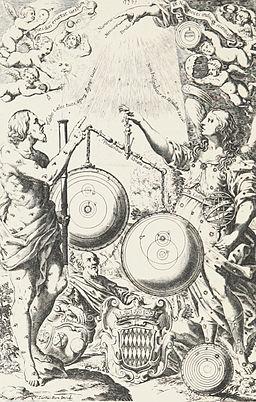
Figure 3.3.7 Tycho
Tycho’s star map printed in 1573, reporting the position of a newly discovered supernova. New discoveries could be published very quickly through printing houses, and they caused a response among scholars of the same era.

Figure 3.4.1 Telescope
A Dutch telescope depicted in a book published in 1624. It is generally believed that the telescope was invented by a Dutch spectacle maker in 1608, though other inventors also applied for patents. In any case, news of the telescope spread quickly through Europe; the following year Galileo immediately made one based on hearsay, and for the first time pointed a telescope toward the sky.

Figure 3.4.2 Tartaglia
Tartaglia lost his father at an early age and grew up in poverty, acquiring his superb mathematical abilities mainly through self-study (which was undoubtedly something only possible in the age of printing). Mathematicians at the time often took part in all kinds of spontaneous or prize-based competitions, posing problems to one another in contests of skill. Tartaglia became famous for his ability to solve cubic equations, but he was unwilling to make his method public until Cardano, in exchange for a promise of secrecy, obtained it in the form of a solution written in coded verse. Cardano and his students eventually deciphered the method and generalized it to arbitrary cubic and quartic equations; after keeping it secret for several years, they finally published it, provoking Tartaglia’s strong dissatisfaction. Today, the solution of the cubic equation is called Cardano’s formula (Kaedang formula).

Figure 3.4.3 “Discourse on Method”
Descartes’s *Discourse on Method*, published in 1637. Descartes is hailed as the father of modern philosophy, and modern philosophy is regarded as a turn from ancient philosophy, which emphasized ontology, toward epistemology. Descartes’s *Discourse on Method* and Bacon’s *Novum Organum*, though quite different in spirit, both mark this awakening of methodology.

Figure 3.5.1 Chinese printing
The Diamond Sutra excavated at Dunhuang, dating to the Tang dynasty in the year 868, is one of the earliest extant printed works. Although China independently invented movable-type printing, until modern times the main form of publication remained block printing. Until the 18th century, China maintained the world’s highest volume of publishing, even exceeding the total of all other countries combined.

Figure 3.5.2 *Ceyuan haijing*
Li Ye completed the book *Ceyuan haijing* in 1248, in which he systematically set forth a method for solving geometric problems using the “tianyuan technique” (the idea of equations with an unknown). Its achievement was far ahead of the West at the same time, but regrettably it was also far ahead of Li’s successors in China. By the Ming dynasty, the tianyuan technique had nearly been lost; when Gu Yingxiang of the Ming wrote *Ceyuan haijing fenlei shishu*, he no longer understood the meaning of the tianyuan technique, and therefore deleted all the content on setting up equations with tianyuan. It was not until Western learning spread eastward that Qing scholars, inspired by Western mathematics, rediscovered the value of the tianyuan technique.

Figure 4.1.1 Newton
Isaac Newton (1642–1727)
.jpg)
Figure 4.1.2 Empedocles
Empedocles (c. 490–430 BCE), 17th-century engraving.
The ancient Greek philosopher Empedocles was born in Sicily. Like Pythagoras, he was a legendary figure who combined thinker and religious leader in one person. According to legend, he eventually leaped into the crater of Mount Etna to proclaim to his followers that he had become an immortal god.

Figure 4.1.3 Mechanics
“Simple machines” listed in a 1728 encyclopedia. In the Western tradition, “mechanics” defined six simple machines: lever, wheel and axle, pulley, inclined plane, wedge, and screw. Complex machines could be reduced to combinations of simple machines; for example, gear = wheel and axle + wedge. Before modern times, mechanics and the natural philosophy that studied “force” belonged to different academic lineages.

Figure 4.2.1 *The Constitution of the Athenians*
Aristotle’s *The Constitution of the Athenians*, a papyrus manuscript, was lost for a thousand years before coming to light again at the end of the 19th century. The book records Athens’s political system, especially customs such as deliberative assemblies and laws. Ancient Greece had a deep legal tradition, and litigation was an important part of political life. Many students trained by the sophists, who were professional teachers, also went on to make a living as lawyers, such as Euthylus, the protagonist of the famous “half-fee lawsuit” in legend. Socrates, too, died under the judgment of democracy.
.jpg)
Figure 4.2.2 Kuhn
Thomas Kuhn (1922–1996), one of the most important historians of science of the 20th century. Kuhn originally aspired to become a theoretical physicist, but one experience changed the course of his academic life: while he was pursuing a PhD in physics, he was once asked to give a report on the history of the development of physics. To do so, he read Aristotle’s works and found Aristotle’s views on physics to look extremely stupid. But Kuhn did not simply dismiss them with a snort; instead, he thought further: why was it that Aristotle, a thinker who possessed the most outstanding insight in his own time, happened to look so stupid in physics? In the end Kuhn discovered that the reason Aristotle’s theory seemed utterly incomprehensible to modern people was not that Aristotle himself was too dull, but that the historical context in which he lived had its own distinctive framework of thought. Kuhn called this the scientific “paradigm” — a way of thinking that can make perfect sense within one paradigm may become incomprehensible within another. Different paradigms differ not only in their claims about specific conclusions; they also diverge on more basic matters such as how scientific objects are defined, how scientific questions are posed, and the criteria by which answers are judged, and so on. This creates the “incommensurability” between two paradigms. Kuhn proposed the stages of scientific revolution and normal science: the period of scientific revolution is one in which different paradigms compete, and at that time there is no higher standard by which to objectively judge their relative merits; the winner often prevails by virtue of more social and cultural factors. Only in the stage of normal science can the scientific community find some commonly accepted norms by which to measure scientific progress.
Note: Kuhn’s image is one of the few copyrighted pictures on Wikipedia. The version I originally provided to the publisher did not catch this in time, but after discovering it I communicated with the publisher and asked to replace the image, hoping they could help find another one. In the end, however, the publisher did not listen to me and still used this original image.


Figure 4.2.3 Galileo
Galileo (1564–1642), who can be called the father of modern science. Aside from his important discoveries in astronomy and physics, the mathematical-experimental method he carried through is even more emblematic in significance. However, Galileo’s experiments were mainly thought experiments; the legendary experiment of dropping iron balls from the Leaning Tower of Pisa was not actually performed by Galileo. Moreover, Galileo is often described as a victim of the conflict between science and religion, but his trial and house arrest were, to some extent, the result not only of his scientific claims but also of his bad temper and political struggle. Incidentally, another figure often described as a martyr for science, Bruno, was actually punished for his heretical religious activities; his support for the Copernican doctrine was only one of the countless charges listed against him.
During his house arrest, Galileo continued his research and wrote *Dialogue Concerning Two New Sciences*, in which he systematically defined the concepts of velocity, acceleration, and inertia.

Figure 4.3.1 Hobbes
The English philosopher Hobbes (1588–1679). Hobbes did not encounter Euclid’s Elements until he was 41, and was immediately captivated by it. From then on he resolved to build his entire philosophical system starting from geometry and mechanics, trying to explain human behavior and the origins of the state in terms of mechanical motion. He was one of the most important political philosophers of the modern era. His materialist natural philosophy also exerted a huge influence.

Figure 4.3.2 The Cartesian system
Descartes’ vortex cosmological model tried to explain the action-at-a-distance transmission of gravity through the mechanical motion of particles. In the Cartesian system there is only extension and motion: all matter is composed of tiny particles, and these particles have only spatial shape and size (extension), with no intrinsic qualities or powers whatsoever. Newton’s system, however, departed from Cartesian mechanism: matter acquired certain intrinsic capacities (mass, inertia, and so on), and these powers also produced mysterious action at a distance in the form of non-mechanical collisions. In modern physics, “string theory” is in a sense a continuation of the Cartesian approach: it tries to explain everything through extension and motion. Will this seemingly grand approach, too, end in failure like the Cartesian system?

Figure 4.3.3 Mathematical Principles of Natural Philosophy
Published in 1688, the Mathematical Principles of Natural Philosophy is unquestionably the most important work in the history of science (perhaps without equal). The image here shows the third edition of 1726, the year before Newton’s death. At this time the French Enlightenment thinker Voltaire was in exile in England. Voltaire and Newton never met, but Voltaire attended his funeral and was deeply shaken. Thereafter Voltaire promoted the spread of Newtonian science in France and deified Newton as a hero of the Enlightenment—Newton’s side as a religious believer and alchemist was concealed, while legends such as his epiphany under the apple tree became popular. Like many scientists of later generations, Newton was fashioned into the perfect model of rational spirit. It was not until 1936 that Newton’s alchemical and theological manuscripts, sealed away for more than 200 years, were publicly auctioned at Sotheby’s in England; Keynes and others acquired and deciphered them, and only then did a fuller image of Newton gradually emerge. Of course, as Keynes said, telling the flesh-and-blood, contradictory life of Newton after he has descended from the altar will not diminish his greatness in the slightest.

Figure 4.4.1 Koyré
Alexandre Koyré (1892–1964), a Russian-French philosopher. He studied phenomenology under Husserl in Göttingen, Germany, and studied mathematics and physics with Hilbert and others; later he went to France to study philosophy with Bergson and others. His work in history of science was the most influential, and he is regarded as the founding master of the “history of scientific ideas” tradition. What is called the history of scientific ideas, or the history of scientific concepts, does not aim to list the chronology of scientific discoveries and the deeds of scientists who were diligent and eager to learn; rather, it seeks to regard science as a unified spiritual undertaking of humanity as a whole and to investigate the internal logic of the evolution of its thought. The history of scientific ideas does not, from the viewpoint of people today, tally up each and every contribution made by our predecessors; instead, it attempts to return to the spiritual world of the ancients and to feel the tensions within thought itself. In his works, Koyré restored for us one developmental stage after another in the history of scientific thought, revealing the richly and intricately interwoven world of thought of ancient thinkers. Koyré’s historical method influenced several generations of historians of science, including Kuhn. Although it was challenged in the late twentieth century by new historiographical programs such as the social history of science, its significance is unshakable.

Figure 4.5.1 Force field
The image shows the “magnetic field lines” drawn by Descartes. Descartes tried to explain magnetic phenomena through the motion of material particles, but remained at the level of imagination and never mathematized it. It was only Maxwel, the successor to Faraday, who completed the scientific formalization of electromagnetism with his outstanding mathematical talent.

Figure 5.1.1 Reverence for science
Louis XIV visiting the Academy of Sciences (1671). From the seventeenth century onward, the power of science became manifest, gradually becoming a fashionable thing among the upper classes, indeed something worshiped by the entire age.

Figure 5.1.2 The Enlightenment
An engraving from the Encyclopedia, with the goddess of Truth blazing forth in the center of the image—enlighten in its original sense means to bring light. To the right of Truth are “philosophy” and “reason,” which are tearing away Truth’s veil.
Enlightenment thinkers revered the power of knowledge like believers, and spread knowledge with the zeal of missionaries. The compilation and publication of the Encyclopedia, edited by Diderot and involving more than a hundred Enlightenment thinkers such as d’Alembert, Voltaire, Montesquieu, and Rousseau, was the hallmark of the entire Enlightenment era.

Figure 5.1.3 Illustrated Treatise on the Maritime Countries
The Illustrated Treatise on the Maritime Countries, published in 1843, put forward the slogan “learn the superior techniques of the barbarians in order to control the barbarians” — the barbarians’ superior techniques were three: first, warships; second, firearms; third, methods of training and drilling soldiers. This shows that the efforts of the early missionaries did not successfully arouse among Chinese literati any spontaneous enthusiasm for scientific learning. When Chinese people began to learn actively from the West, what they first paid attention to was only the material level of sturdy ships and powerful guns.

Figure 5.2.1 Zhang Junmai
Zhang Junmai (1887–1969). One of the representative figures of New Confucianism, he studied law and political science at Waseda University in Japan and became acquainted with Liang Qichao. In 1913 he went to Berlin University in Germany to pursue a doctorate in political science; in 1918 he again traveled through Europe with Liang Qichao, Ding Wenjiang, and others, and studied philosophy in Germany. Zhang Junmai was also very active in politics. He once founded the National Socialist Party, advocating “National Socialism,” “absolute patriotism,” “gradual socialism,” and “revised democratic politics.” He represented China at meetings of the United Nations international organizations, served as a committee member of the UN Charter Conference, and signed the United Nations Charter on behalf of China. He also presided over the drafting of the Constitution of the Republic of China; later he was dissatisfied with Chiang Kai-shek’s violation of the constitution, but he also did not support communism. In his later years he traveled through various overseas countries, delivering lectures on Confucian thought, and died of illness in San Francisco in 1969.

Figure 5.2.2 Spengler
Spengler (1880–1936), a German philosopher and historian. His famous work The Decline of the West was published in 1918, just as World War I was ending. Reflection on and anxiety about Western culture were growing day by day, so much so that this very large and highly speculative work unexpectedly became a bestseller for a time, exerting a lasting influence on European scholars and on Chinese Enlightenment thought. Spengler regarded “civilization” as living organisms, and each civilization has its own stages of growth—birth, old age, illness, and death—and Western civilization is now at the stage of decline.
Zhang Junmai’s attitude toward this book was rather subtle. On the one hand, he attached great importance to it, and was also inspired by it in his ideas about civilization and history; but on the other hand, he believed that the book might bring adverse effects to Chinese intellectual circles, and therefore advised others not to translate it — he thought that once the book was translated, it would certainly encourage a sense of arrogance and self-importance, weaken the eagerness of Chinese people to humbly learn from European science and social culture, and thus delay the revival of Chinese civilization.

Figure 5.3.1 Jiang Menglin
Jiang Menglin (1886–1964) was a famous modern Chinese educator. He studied philosophy and pedagogy under Dewey, and from 1919 taught in the Department of Education at Peking University. When Cai Yuanpei was president, he often handled administrative affairs on his behalf, and twice acted as president in his place. From 1930 to 1945 he formally held the office of president, making him the longest-serving president in Peking University’s history. He joked that he was “Peking University’s meritorious dog.” Jiang Menglin once served as Minister of Education of the Republic of China, and after 1949 went to Taiwan, so his status in the history of Peking University and in the history of modern Chinese education was long neglected.

Figure 5.3.2 New Youth
The magazine New Youth was founded by Chen Duxiu in Shanghai in 1915, originally under the title Youth Magazine. It put forward the slogan of enlightenment: “If the people of our country wish to escape from the age of ignorance and are ashamed to be a shallow and uncultivated people, then they must rouse themselves and catch up; science and human rights should be given equal weight.” In 1916, with its second volume, it was renamed New Youth.

Figure 5.5.1 The eastward spread of Buddhism
A mural from the 9th century near Turpan in Xinjiang, depicting Central Asian monks (the blue-eyed figure on the left) preaching to East Asian monks.
From the Han dynasty on, Buddhism gradually entered China, and from the Northern and Southern Dynasties onward Buddhist studies flourished. By the Sui and Tang periods, China’s active learning from the Western Regions and translation of Buddhist scriptures had reached a climax, and indigenous schools such as Tiantai, Huayan, and Chan had taken shape. From then on, Buddhism became an integral part of Chinese thought, culture, and art, interacting with and influencing traditional currents such as Confucianism and Daoism.

Translated from the Chinese original with AI assistance. The original text is authoritative.