

Postscript
My second book is about to be published, Outdated Wisdom—Fifteen Lectures on the General History of Science. This book was written by revising the lecture notes from the “General History of Science” course I taught at BNU.
The publication of this book had a certain amount of contingency. What was originally being prepared for Shanghai Education Press were actually two other books, The Extension of Man—An Introduction to the General History of Technology and Can Science Be Learned?—A History of Education in Science. At the time, the editor said it would be better to make a series, and hoped to add one more book. I happened to have ready-made course notes here, so I submitted this book as well. Now the other two books still have no destination, while the first one to come out is this bonus item.
It was formed after only one round of the course, and the classroom results were not even all that good, yet it became a book. That is indeed somewhat hasty; naturally it cannot be the product of repeated tempering and meticulous polishing. There are inevitably all kinds of faults, large and small, and the overall structure and line of thought are also unavoidably rough.
But I am still willing to publish a book like this, because its positioning is obviously not that of a classic work, but merely a transitional work, transitional in every sense.
First, as far as my personal academic career is concerned, I am currently in the postdoctoral stage, which is precisely a transitional stage from student to teacher; now I am in the awkward position of being both student and teacher, or neither.
Second, as for the positioning of this book, it lies in transition between academic writing and popular reading material. On the one hand, it is published in the form of a popular book; on the other hand, it also contains some ideas that can be brought out for debate with fellow specialists in the history of science. By the way, compared with my previous, indeed first, book Stories from the History of Science and Culture, I feel that this one is quite a bit more readable and its contents are much more complete, though some topics have not been fully covered.
Then, as for the function of this book, I think it is a secondary ferrying of foreign works in the history of science, or one might say a kind of “rumination.” The first ferrying was of course done by fellow senior student Bo Tian. My book is basically built on the large number of foreign works in the history of science that he translated and introduced; after I have digested them myself, what I spit back out is only some residue. This residue is more refined and easier to digest, but in essence, most of the “hard substance” comes from the work of foreign historians of science. Of course, in the current domestic academic environment, I believe this work of digestion and rumination still has great significance. Many researchers in the history of science in China have not yet been able to connect with the international community, let alone reach a generally adequate level in science popularization.
Finally, this book has managed to come out ahead of Teacher Wu’s General History of Science. Teacher Wu is currently writing a new, substantial General History of Science; in addition, Senior Brother Donglin and Jin Shixiang and others are also writing a textbook on the civilization history of world science. Teacher Wu’s new book, thickly accumulated and then powerfully released, is of course beyond my reach; Senior Brother Donglin and the others also have their own line of composition. Before the other excellent works from the Wu school appear on the scene, my book can only play the transitional role of a brick tossed out to attract jade.
Of course, even if the books they publish in the future are better and better, that does not mean my own book will lose its value. My line of thought and my choices always have their own distinctive features. Every general history of science should be written as something wholly different. On the one hand, this depends on the author’s position, viewpoint, and materials; on the other hand, it also depends on the era and readership to which it is suited.
This is also the basic view I worked into this general history of science—namely, that writing history is always viewpoint-laden, and there is no such thing as an absolutely objective history that completely sheds the author’s individuality. A finite history can only write about finite things; and why these things are given so much prominence, while other things are edited out and omitted, cannot be judged by some ready-made fixed standard. Rather, it is always selected according to the author’s position and strategy, as well as according to the materials and the audience.
Of course, the “relativity” of history that I emphasize here can by no means become an excuse: “In any case there is no standard, so history can be written however one likes.” On the contrary, “relativism” is always a concept utterly opposite to nihilism and arbitrariness; an awareness of “relativity” requires you to face up to, and as far as possible clarify, the position you occupy.
So it is not that history has no standards; rather, it is that you must establish your own standards. Of course, what is called a standard need not be a set of clear and explicit rules and items. Rather, it means that the choices and ordering in my writing of history at least all have some rationale of their own that can be pursued and examined.
Many of my considerations in making these choices are not clarified in the book. After all, this is a narrative history rather than a historical theory book; when I later write the Introduction to the General History of Technology, I will place more emphasis on historical theory than on narrative history. But here I may as well explain a little.
First, my basic line is still the most traditional route in intellectual history, namely, placing particular emphasis on the development of the mathematical sciences, with physics and astronomy as the main thread. For example, in the Scientific Revolution, the main line still runs from Copernicus to Newton. Of course, I broadened the horizon by considering the significance of printing, introducing the alchemical tradition, and so on, but the primary and secondary emphases are still beyond question. Although I added some of my own ideas, on the whole this general history did not adopt any particularly novel or distinctive perspective, nor did it employ any especially ingenious program of historiography. In my view, the traditional intellectual-history routine has never been obsolete. We can look at the history of science from some new angle—for example, from the standpoint of chemistry, Paracelsus may be more important than Galileo; from the standpoint of natural history, Gesner may be more important than Copernicus. If a general history of science were to spend 100 pages on Agricola and only half a page on Newton, would that be acceptable? Of course it would. Within a certain historiographical strategy, there is its own logic to writing it that way. But in any case, I do not believe that one day it could be said that giving Newton such prominence would be wrong.
As for how to write a general history of science, I myself am not without some unconventional ideas. On the contrary, I have many. For example, my third book planned for Shanghai Education Press, Can Science Be Learned?, is intended to open up a line of thought from an epistemological perspective, combined with my own philosophy of “learning.” This line will ultimately, through the concept of “learning,” slowly converge with “the general history of technology.” But after all, one should first learn to crawl before learning to walk; this transitional work should first honestly digest the old routines well, and only then slowly develop further, not too late.
What I mean by digestion is turning other people’s things into one’s own things. Even if most of what I discuss can be found in the works translated by Senior Brother Bo Tian, after I have swallowed and regurgitated it, once reorganized it all has my own rationale.
Below I will introduce the chapters one by one, which can also be taken as advertising my own book. In addition, originally I designed several discussion questions for each lecture, but in the end the publisher removed them all out of overall positioning considerations; I also feel that substituting questions for readers is not necessarily a good thing. Still, I will restore them here—these discussion questions can roughly reveal my style, though not all of their answers can be found in the main text, or more accurately, most of them cannot be found there in ready-made form. As for the questions I do answer in the text, readers should also have their own judgments.
Table of Contents
Lecture One The Way of Choice and Rejection: The Meaning of the History of Science
This lecture is an opening statement. Since in university courses a large part of the first class is often just chatting, this lecture is noticeably shorter than the following thirteen. It also does not enter the main topic, but instead makes clear the basic positioning of this course. Choosing this course or this book is a matter of freedom. Life is finite, and the things worth learning are infinite; the books worth reading are infinite too, so one must always make choices. History is the same: historians, facing infinite materials, must also make choices. And what to choose and what to leave aside depends on the different understandings of the history of science held by historians of science. And like the choices in life, there is no ready-made, fixed standard answer. This lecture should be relatively distinctive; it does not refer to other works, but follows my own path.
1. The Responsibility of Adults
2. What Is the Use of the History of Science?
3. The History of Science as an Independent Discipline
4. A Historiographical Perspective with a Bias
5. Whig History
6. The Historian of Science’s Free Pursuit
Discussion Questions
What is the use of the history of science? Generally speaking, what is the use of history?
What is distinctive about the history of science compared with general history?
What is Whig history? Is it possible to go beyond Whig historiography?
What are my expectations for this book/this course? What do I hope to learn from the history of science?
Lecture Two Prehistory of Science: From Primitive Humans to the Ancient Civilizations
This lecture ranges from the apes to the four ancient civilizations, and the title suggests that I regard this period as merely the groundwork before “science” formally appears onstage. The “science” we speak of of course still refers to Western natural science in the modern sense, but such “science,” tracing back to its roots, must be traced to ancient Greece; to go any further back would be to overreach. This is because, in my view, “science” is a distinct cultural form, not a neutral component that can be attached to any culture. However, placing this chapter in a general history of science still makes sense: on the one hand, it is necessary groundwork; on the other hand, it also prompts us to think about the universality and distinctiveness of science, as well as the relationship among science, technology, and knowledge in the general sense. In this lecture, I drew especially on some of Mumford’s insights, and also incorporated some of Bernard Stiegler’s philosophy of technology—for example, that human beings are animals of “defect.”
1. What Is Science?
2. Human Evolution
3. Defect and Technology
4. The Emergence of Language
5. Domestication and Settlement
6. The Rise of Cities and States
7. Mesopotamian and Egyptian Civilization
Discussion Questions
What is science? When should the history of science begin, and why?
What is human nature? What is it that makes human beings so unique?
What marks the division between the Paleolithic and Neolithic Ages?
What is the relationship among technology, knowledge, and science?
Lecture Three Discovering Nature: The Rise of Greek Science
Greek science is divided into two lectures. This lecture mainly discusses the rise of Greek natural philosophy. The “discovery of nature” is already a worn-out concept, and the culture of the city-state and athletic spirit are also things I covered in Stories from the History of Science and Culture; here they have simply been suitably rewritten, especially with the addition of the final section, “The Paradox of Freedom,” as a conclusion. Teacher Wu’s interpretation of Zeno’s paradox is deeply memorable, and I also placed it into the narrative thread. One cannot understand Greek philosophy’s emphasis on rational knowledge without understanding Zeno’s paradox. To understand Zeno’s paradox does not mean standing from the modern point of view and looking down on everything with contempt, saying, “It’s nothing more than that.” The key is that you must place yourself within the intellectual background of the Greeks, to understand how the problem was posed and to understand what they truly cared about.
1. The Ancient Greek Civilization
2. The Unique Culture of the City-State
3. The Combative Greeks
4. From Gymnasium to Academy
5. Useless Learning
6. The “Discovery” of “Nature”
7. The Paradox of Freedom
Discussion Questions
What were the distinctive features of Greek civilization? Why is it said that science originated in ancient Greece?
What does “nature” mean? Is the ancient Greek concept of nature related to the modern concept of nature? Did ancient China have a similar concept?
What is the significance of Zeno’s paradox? Has it been solved by calculus or modern science?
What exactly is knowledge? What is the relationship between teaching and knowledge?
Lecture Four Saving the Phenomena: The Development of Greek Astronomy
This lecture is devoted specifically to the Greeks’ unique astronomy, from Plato to Ptolemy. Every ancient civilization had astronomy, but the Greeks’ tradition of mathematical astronomy was always unique. Rather than mathematical astronomy, it would perhaps be more accurate to call it “astronomy as mathematics.” This kind of astronomy was neither for the calendar nor for astrology, but for “saving the phenomena.” I did not add all that much new material in this lecture, but I still think it managed, step by step, to cover what I consider important. Greek astronomy is not only the hallmark of Greek science as a whole, but also an important backdrop to the Scientific Revolution in later centuries. To understand the significance of the Scientific Revolution, one should understand in what sense Copernicus and Kepler were revivals of Plato, and in what sense they surpassed the Greeks.
1. The Rise of Mathematical Astronomy
2. The Two-Sphere Model of Cosmology
3. Plato and “Saving the Phenomena”
4. Aristotle and His Cosmology
5. The Museum of Alexandria
6. Ptolemaic Astronomy
7. Other Scientific Achievements of the Hellenistic Period
Discussion Questions
What is astronomy? What is the relationship between astronomy and cosmology?
Why were the Greeks concerned with the problem of the planets? What does “saving the phenomena” mean?
Could Ptolemaic astronomy meet Plato’s requirement of saving the phenomena?
What similarities and differences are there between Greek science and Hellenistic science?
Lecture Five Passing the Torch: Roman and Arab Science
I myself also feel that this lecture is somewhat dull; it is merely a rather standard introduction to this transitional period. Research on Arab science is still extremely weak in China, and almost no major monographs have been translated here—there is one, The Short History of Islamic Technology—and of course I did not have the time, in a field I am not good at, to survey foreign-language literature exhaustively. Thus the materials I used were all just scattered phrases and passages from general history works, so there was no way to elevate it very far. Only at the end of this lecture, in the discussion of why Arab science declined, did I add some comments, and they can hardly be called brilliant. Because Islam was mentioned, the editor actually put the most effort into reviewing this lecture. Islam has now become a major world issue, and yet domestic research on it remains so weak; and when speaking publicly, one must tread so carefully—how can that be acceptable? Historical research on Islam or Arab culture, including the history of science, ought to be strengthened with vigor. The more important the topic, the less reason there is to shun or avoid it.
1. Ancient Rome and Its Scholarly Condition
2. The Fall of the Roman Empire and the Decline of Classical Learning
3. The Rise of the Arabs
4. The Translation and Preservation of Classical Learning
5. The Arabs’ Contributions to Mathematics and Astronomy
6. Optics, Medicine, Alchemy, and So On
7. The Decline of Arab Science
Discussion Questions
Why did Greek science decline?
Greek civilization, flourishing in science, was ultimately swallowed up by the Roman Empire—why did the “advanced” side have to be beaten?
What contributions did the Arabs make to the history of science?
Why did modern science not arise in the Arab world?
Lecture Six Standing Alone: A Special Topic on the History of Chinese Science
Given that I regard science as a distinctive form of Western culture, the history of Chinese science is destined not to be the main content of this general history of science. As for whether there was science in ancient China, that is not a simple question; the key lies in in what sense ancient China had science, and in what sense it did not. Although at the beginning of this lecture I did offer my own thoughts on the Needham Question, I also did not want to delve too deeply into historiographical issues concerning ancient Chinese science in this book. So in the end I only, by the standards of Western science, discussed some achievements of ancient China that could be compared with Western science, mainly astronomy and mathematics. But if one really wanted to rewrite a general history of ancient Chinese science, then a more distinctive historiographical strategy would be needed. I also hinted at that in this lecture, namely, the tradition of “historiographic culture.” My emphasis on historiographic culture was something I added myself; as for the rest of this lecture, it mainly draws on the texts of Needham, as well as related research by Professor Jiang Xiaoyuan.
1. The Needham Question
2. A Distinctive Historiographic Culture
3. Imperial Astronomy
4. Algebraic Methods in Astronomical Calculation
5. Mathematics and Number Techniques
6. Calculation and Proof
7. Other Practical Sciences
Discussion Questions
What is the Needham Question? Is it a pseudo-question?
In what sense can we say that ancient China had “science,” and what similarities and differences are there between ancient Chinese science and Western science?
What were the characteristics of astronomy in ancient China?
If you were to write a History of Science in Ancient China, which aspects would be most worthy of emphasis?
Lecture Seven Everything in Place: The Middle Ages and Christian Science
This lecture basically continues the approach I used in Historical Notes on Science and Culture, emphasizing the rise of the university and the possibilities contained in Christian theology. Although the Middle Ages’ place in the history of science could in fact be discussed more deeply—for instance, the rise of nominalism is very important—I surprisingly did not mention nominalism even once. This is mainly because I myself lack the ability; I feel I could not really handle the causes and consequences of the nominalist movement. On the other hand, it was also a matter of audience: after all, the significance of the entire medieval Christian world for the history of science is rather unfamiliar to ordinary Chinese readers, and there is no need to get too deep too quickly. As for the rise of the “university,” the more emphasis the better. The greatness of a university lies neither in the greatness of its buildings nor in the greatness of its masters, but in the free association grounded in civil society.
1. The Significance of the History of Science in the Middle Ages
2. The Early Middle Ages
3. The Rise of the University
4. “Scholastic Disputation”
5. The Logical Preconditions of the Mechanical View of Nature
6. The Legitimacy of Empirical Research
7. The Quantification of Kinematics
Discussion Questions
What is a university? In what respects have modern universities continued the tradition of the medieval university, and in what respects have they innovated or departed from it?
Is scholastic disputation a good teaching method? What are its strengths and weaknesses?
If you were a medieval scholastic scholar, how would you refute certain claims of Aristotelian natural philosophy?
What are “laws of nature”? Can scientific research enable us to grasp the laws of nature?
Lecture Eight Just Short of the East Wind: Printing and the Scientific Revolution
This metaphor of “everything in place, just short of the east wind” was also given in Historical Notes on Science and Culture. But in this rewrite I did in fact remove the “east wind” metaphor from the main text. The general meaning still follows my earlier version. These two lectures are where I relied most heavily on Historical Notes on Science and Culture; if one were to be strict about it and accuse me of plagiarism, that would not be unfair. But I really did carefully rewrite them. Although I did not provide many new viewpoints or materials, the way they are organized has been rearranged, and the new version may flow more smoothly. But philosophical issues such as “practical knowledge” were omitted by me.
1. “The Medium Is the Message”
2. The Rise of Scientific Method
3. The Preservation of Empirical Records
4. The Publicization of Knowledge
5. From the Order of Texts to the Order of Nature
6. Seeking Standards among Texts
7. The Distance between Human Beings and Nature
Discussion Questions
Why did movable-type printing not have such a large impact in China? Is papermaking or printing related to the development of Chinese scholarship?
Besides printing, what other technological inventions have had a profound impact on the history of science?
What is the relationship among science, historiography, and philosophy? If there was a Scientific Revolution in early modern Western history, was there also a historiographical revolution?
What is knowledge? How did printing affect people’s understanding of knowledge?
Lecture Nine Reviving the Old to Open the New: The Copernican Revolution
In this lecture I first discussed the concept of the “Scientific Revolution” and introduced some of Kuhn’s ideas, because the later lectures all revolve around the “Scientific Revolution,” and what exactly this revolution means is something each reader can think about independently and arrive at his or her own understanding. The Copernican Revolution has to be discussed in every general history of science, and my account is not particularly novel. Of course, the old story of portraying Copernicus, Bruno, Galileo, and the others as heroes persecuted by religion has long since been corrected by me; the image of Copernicus as a reviver of Platonism is also brought out. More worth mentioning is that this new Platonism redefined the relationship between mathematics and the empirical world, echoing the related content of Lecture Seven.
1. What Is the Scientific Revolution?
2. A Comparison between the Scientific Revolution and the Political Revolution
3. The Publication of On the Revolutions of the Heavenly Spheres
4. Realism and Instrumentalism
5. Copernicus’s Limitations
6. Tycho and Kepler
7. Galileo’s Telescope
Discussion Questions
What is the Scientific Revolution? Is it accurate to use “Scientific Revolution” to describe the history of science in the 16th and 17th centuries?
Why is the publication of On the Revolutions of the Heavenly Spheres seen as the beginning of the Scientific Revolution? What role did On the Revolutions of the Heavenly Spheres play in the history of science?
What were Copernicus’s conservative and limiting aspects, and what were his innovations?
Why did Galileo suffer a religious trial? Does Galileo’s experience mean that religion and science were mutually hostile at the time?
Lecture Ten Replacing the Beam with a Post: The Mechanical Revolution
This lecture also follows the line of thought I have used since my essay “The Mechanization of Force,” namely that the “force” of Newtonian mechanics plays a sort of Trojan-horse role in the history of science: it disguises itself as an answer to the problem of “cause,” while in reality it uses static mathematics to dismantle traditional natural philosophy. The ideas related to this are my own original ones, but with more reading recently, I have found that scholars abroad have also discussed them quite deeply. In any case, I believe my perspective is still fairly distinctive. In this lecture, I begin with the problems left behind by Copernicus, interpret Galileo’s falling-body experiments, and also refer to Elder Brother Bu Tian’s paper on the history of mechanics, so that the whole narrative appears a bit more complete. But because the issues involved are rather profound, perhaps the readability is still not all that good? Even so, although one may not be able to grasp completely all the links involved in this topic, it is at least quite enlightening for the general reader. I have talked about the problem of “force” in some informal exchanges and small lectures, and the results felt pretty good.
1. The Problem Left by Copernicus
2. Galileo’s Falling-Body Experiments
3. Newton’s Integration
4. The Ascendancy of “Mechanics”
5. The Smuggling-in of “Force”
6. Between Immanence and Transcendence
7. The Disappearance of “Cause”
Questions for reflection
What is the significance of experiment? Why did Galileo say that experiment is unnecessary?
In the history of science, what are the differences and connections among the concepts of natural philosophy, physics, mechanics, kinematics, and so on?
Is translating mechanics as 力学 really the most appropriate choice? Is there a better option?
What exactly is “cause”? Has Aristotle’s discussion of cause become completely obsolete?
Lecture Eleven Abstraction as Abstraction: The Mathematical Revolution
This lecture was deeply influenced by Elder Brother Donglin (my explanation of Elder Brother Donglin’s influence only in a rather不起眼 footnote was, in fact, not very adequate), and even more by some of my impressions after reading Jacob Klein. But in fact the material I use is still taken from relatively traditional histories of mathematics; I simply point out some of the issues within them, no longer treating “mathematics” as a concept with a ready-made boundary and an absolute standard of measurement. My little section here is still a long way from what could be called a “Whiggish history of mathematics,” but it is at least a small probing attempt. Although this lecture can be viewed as a relatively independent topic, it also echoes the preceding content on Christianity, Copernicus, and Newton.
1. How Is a Non-Whiggish History of Mathematics Possible?
2. The Origins of Mathematics
3. The Distinction Between Number and Quantity
4. The Rise of Geometry
5. Three Mathematicians of the Hellenistic Period
6. The Development of Abbreviated Notation in Europe
7. Symbolic Algebra, or “Abstraction as Abstraction”
Questions for reflection
Does a “revolution” exist in the history of mathematics? What aspects suggest that the history of mathematics is not merely a process of accumulation, but one of overturning?
What is mathematics? What is the relationship between mathematics and science?
Why are “irrational numbers” called “irrational”?
What does “abstract” mean? How should we understand the relationship between mathematical symbols and real things?
Lecture Twelve Artificial Nature: Alchemy and the Scientific Revolution
As for the alchemy section, I also did not have much that was new to say; however, compared with the general standard of how alchemy is treated in popular science books in China, the whole lecture I devoted to alchemy is still fairly advanced, I suppose. The alchemical tradition is one branch line of the Scientific Revolution, and the history of science has never been a linear process of accumulation; more often, it presents the relationship of multiple threads competing with one another, with some lines breaking off and others merging. Alchemy was eventually incorporated into the history of chemistry, but its significance in the history of science certainly does not stop at merely giving rise to chemistry.
1. The Rise of Alchemy
2. Nature vs. Artificiality
3. The Rise of Hermeticism
4. The Influence of Hermeticism
5. Paracelsus and His Chemically Oriented Philosophy
6. van Helmont and His Willow Experiment
7. Boyle and Newton as Alchemists
Questions for reflection
What are the similarities and differences between the Western alchemical tradition and ancient Chinese alchemy?
What is the difference between natural things and artificial things? What role has the distinction between nature and artifice played in the development of the history of science?
Why did philosophy of chemistry lose to mechanical philosophy? What role did alchemists play in the Scientific Revolution?
How should Newton’s alchemical studies be evaluated?
Lecture Thirteen Popular Fashion: Science in the Enlightenment
Fortunately, The Cambridge History of Science (Volume 4: Science in the Eighteenth Century) has already been translated; otherwise, introductions to the history of eighteenth-century science in China would be quite scarce. In earlier historiographical perspectives that emphasized the specific “content” of science, the eighteenth century seemed rather flat. But viewed from a broader socio-cultural background, the eighteenth century can be called the century of scientific dissemination, an important period in which science completed its socialization and moved out of the ivory tower to become a public fashion. The formation of modern experimental science also crucially took shape during the eighteenth century.
1. The Enlightenment and Scientific Dissemination
2. The Rise of Academies and Journals, and University Reform
3. The Spread and Development of Newtonian Mechanics
4. Experimental Physics Eager for Performance
5. Fashionable Electricity
6. The Gradual Maturation of Quantitative Research
7. Lavoisier and the Rise of Chemistry
Questions for reflection
What is the Enlightenment? Can scientific education enable the public to use their own reason with confidence?
What role did women play in the history of science? Why are women seldom mentioned in many historical accounts of science?
What is quantitative research? How did the experimental method of modern science develop?
Who discovered oxygen? Why?
Lecture Fourteen Mutual Inspiration: Science and the Industrial Revolution
My general history still mainly follows the traditional line of the history of scientific thought; branches such as the history of medicine have been deliberately ignored by me, and I have even less attempted to annex fields such as the history of engineering and the history of technology. But after thinking it over, the Industrial Revolution still had to be discussed, because even from the perspective of the development of scientific theory, the contact between theory and reality, and the alliance between science and industry, are major events that cannot be ignored. Yet as for this chapter, I did not add much that was new; basically, I did not go beyond McClellan III on the Industrial Revolution either. In fact, as for science and the Industrial Revolution, I should have had deeper topics to discuss—for example, Heidegger’s account of the “enframing” essence of modern technology, why modern technology can be said to be the completed form of the Western metaphysical tradition, in what sense the alliance between science and industry is necessary, and so on. But these issues are too entangled; in this book, which deliberately ignores the history of technology, it is not suitable to include too much of them. In the end I decided to leave them to be carefully expanded later, when I write about the history of technology.
1. The Economic Background of the Industrial Revolution
2. The Invention of the Steam Engine
3. The Combination of Theory and Experiment
4. The Theorization of Baconian Science
5. Faraday: The Peak of the Experimental Tradition
6. The Alliance Between Science and Industry
7. Darwin and Evolution
Questions for reflection
What is the relationship between the Industrial Revolution and the Scientific Revolution?
What is “Baconian science”? What role did it play in the history of science?
Will science and theology inevitably come to a rupture?
What does the “natural” in “natural selection” mean?
Lecture Fifteen Relative Measurement: The Physics Revolution of the Twentieth Century
Represented by the “First Push Series,” I read many advanced popular science books about relativity and quantum mechanics already in high school; in fact, this was also one of the backgrounds that ultimately prompted me to switch from science into the philosophy department. But in the final lecture of this book, focusing on relativity and quantum mechanics was not only due to my personal interest, but even more because of the line of thought running through the whole book’s intellectual history: in my view, relativity and quantum mechanics are a renewed rebellion against Platonism, a certain revival of Aristotle. However, in the main text I did not display my viewpoint very overtly, nor did I point out the places in this lecture that echo earlier parts. Most of the content actually comes from general popular science books, such as The Einstein Biography translated by Elder Brother Bu Tian, but the final slogan I cried out—“abandon the God’s-eye view”—still hints at my philosophy of science.
This book begins with the historiographical “relativity,” and ends with the relativity of physics, forming an implicit echo. So-called opposition to Whiggish history is, in fact, asking historians to give up the “God’s-eye view.”
1. What Else Have We Not Covered?
2. “The Two Clouds”
3. The Michelson Experiment
4. Special Relativity
5. General Relativity
6. Quantum Mechanics
7. Abandoning the “God’s-Eye View”
Questions for reflection
What important links in the history of science do you think this book failed to cover?
What, exactly, is the “relative” thing that relativity is emphasizing?
What “counterintuitive” conclusions does quantum mechanics have, and is quantum mechanics incomprehensible?
What is objectivity? What is the relationship between objectivity and the God’s-eye view?
Images (Selected)
The illustrations for the whole book were still mostly found on Wikipedia this time. The publisher handled things better than last time, agreeing to print the sources of the images in the book, so I won’t list them one by one on the website anymore. However, since the book is in black and white and cannot reproduce color images, the effect of some pictures is somewhat discounted. So here I have selected a few more interesting images, ones that were also not used in History of Scientific Culture, and placed them here.

Figure 2.5.1 The Origin and Spread of Agriculture
Fig. 3.6.1 Genealogy chart of the Pre-Socratic philosophers

Fig. 4.7.2 A 10th-century manuscript of On the Sizes and Distances of the Sun and Moon

Fig. 5.5.4 Ibn al-Shatir’s model of Mercury

Fig. 6.3.1 An ancient Chinese astronomical observatory drawn by European scholars (1737)
 v
v
Fig. 6.7.1 The 1137 Yuji tu

Fig. 7.3.2 A set of German guild coats of arms

Fig. 7.3.3 University lecturing depicted in a 14th-century manuscript

Fig. 9.7.2 Galileo’s drawing of the Moon’s surface

Fig. 11.4.1 Fragment of Euclid’s Elements (around 100 CE)
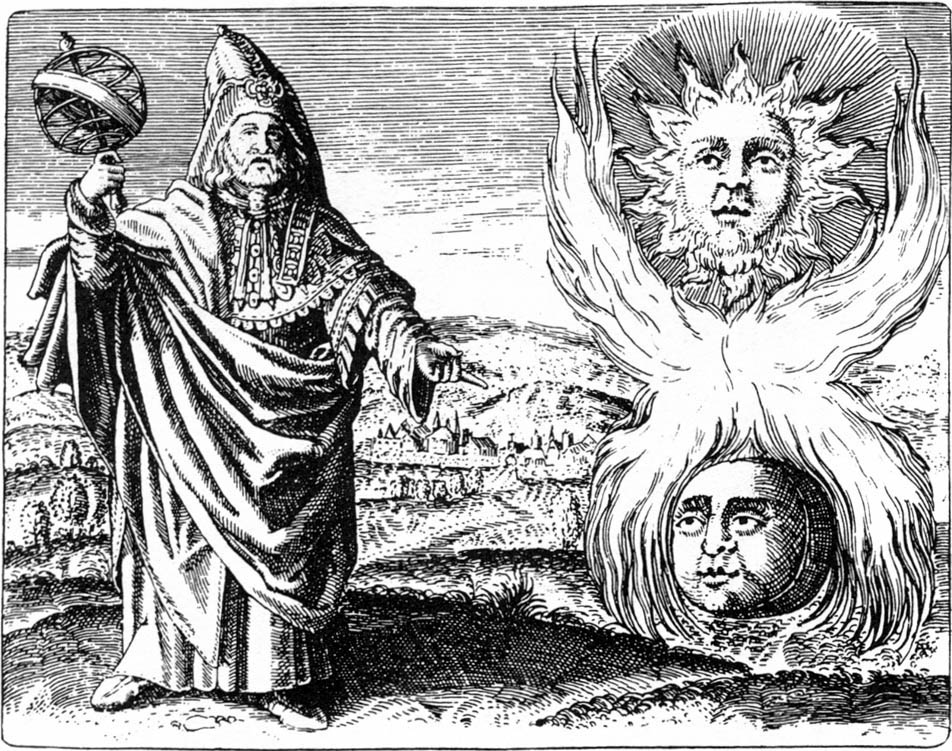
Fig. 12.3.1 Hermes the Thrice-Great, 1617 engraving

Fig. 13.4.1 A series of 18th-century astronomical demonstration instruments collected by King George III of England

Fig. 14.5.1 A satirical cartoon from 1802 depicting a “gas mechanics” lecture at the Royal Institution; the speaker is pinching a man’s nose and pumping gas into his mouth, while the man standing behind the speaker with a bellows and a gleeful grin is Davy.
PS
As usual, copies may be given free to acquaintances (please contact me to ask for one). Other readers can buy from me with bitcoin (signed + free shipping). The price of this book is 32 RMB, and the discount I can get from the publisher isn’t even enough to cover postage, so the bitcoin price will also be set at the original price of 32 RMB. At the current exchange rate (4370), that comes to a little under 0.008 coin, but considering that I should make a little profit too, please tip generously at no less than 0.008 coin~ (Please remit to the following address and email me with your shipping address and signing requests: hyl510@gmail.com)

bitcoin:14SuyPmDM3PHsXetcFFRnRmnHpdnhm7Jdy
Translated from the Chinese original with AI assistance. The original text is authoritative.