
“Cyberspace is not a lawless place; cyberspace also has sovereignty”—of course, I am not going to discuss this sentence itself; let us assume it is valid. If cyberspace also has sovereignty, then what lies between sovereignties, and beyond the borders of sovereignty?
In physical space, the border of sovereignty is the national border. Within a country’s boundaries, that country can legislate and enforce the law, can exercise jurisdiction and governance. Beyond the border, it may be another country exercising sovereignty.
But is there a territory that lies outside the sovereign boundaries of any country? Of course, excluding disputed and contested territories.
In ancient times, such territories certainly existed: they were the so-called “barbaric wilderness,” and there were many regions not covered by the order of any state. But by the Middle Ages and after, as state institutions matured and humanity’s capacity to open up and control grew, such ownerless lands became fewer and fewer.
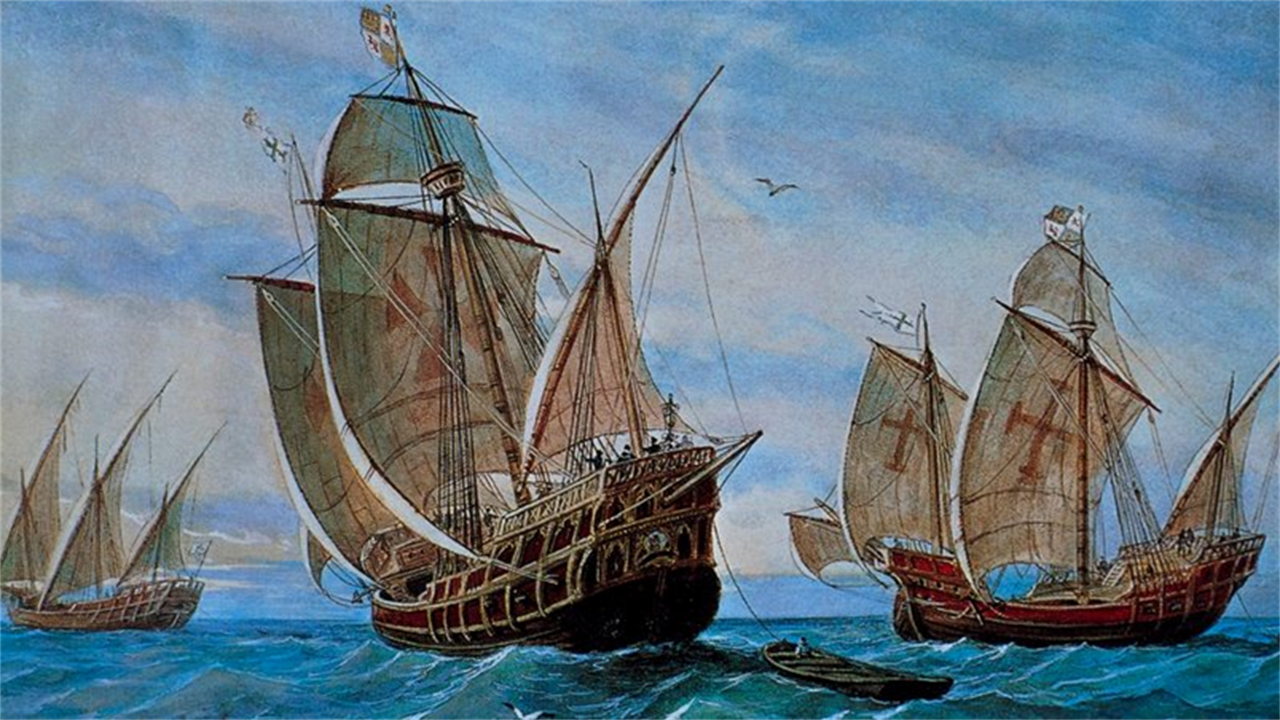
But then, in the Age of Exploration, Europeans suddenly discovered a vast ownerless land—that was the “New World.”
The process of opening up the New World was savage and chaotic. First came the navigators and adventurers, who brought back large quantities of gold and silver and treasure; then came the capitalists, who rushed into the New World to stake out claims, establish plantations, mines, and trading companies. Missionaries also found a stage on which to be active, and went there to spread the faith. Then, batch after batch of criminals and heretics were exiled to the New World to fend for themselves…
Of course, the suzerain state would also send governors to administer the colonies, but generally speaking, especially in the case of the United States, the pioneers who took the lead and dominated were always all sorts of private forces.
In the end, the New World gradually formed its own order, but it also gradually broke away from the rule of the mother country and established new states. These new states were also chaotic and wild at first. Even today, the countries of the American continent are probably still somewhat more “chaotic” than those of Europe proper.
So the question arises: when sovereign states face such a New World, how should they deal with it? Should the British first establish a complete governance framework and law enforcement system, and then let entrepreneurs and investors “enter in an orderly fashion” to develop the New World step by step and in good order? When the British discovered that control over the New World was somewhat beyond their reach, or found that too many immigrants were going there and administration could not keep up, should they promptly impose maritime prohibitions so that the people of the homeland could not travel back and forth freely to the New World? When some New World concept stocks (for example, the South Sea Company) skyrocketed and crashed, leaving investors with huge losses, should Britain sort out the investment market and prohibit its citizens from buying related financial products? Should the British, for the sake of security and control, set up a “federated island” on a controllable territory (say, Ireland), require adventurers and capitalists to develop this highly controllable space, and rename Ireland the New World so as to keep up with the fashion of the times?
…All these measures seem wise; in that case the British government would have held sovereignty and security firmly in its grasp. But such measures also seem foolish.
Let us then look again at cyberspace. In the Web1 era, the so-called “cyber sovereignty” was quite clear, because Web1 was page-centered: every webpage was built on a definite server, and that server always had a real spatial location; wherever that location was, that country was the one entitled to govern it. But by the Web2 era, the borders had already begun to blur. On the one hand, Web2 was social-centered, with people from countries all over the world coming into the same space to communicate; on the other hand, cloud technology made the relationship between webpages and servers less important, and a website might be supported simultaneously by many servers located in different countries. Of course, on the whole, Web2 did not produce an independent space beyond borders; it merely made the ownership relations of cyberspace more entangled and complex.
And what happened with Web3? Blockchain, the metaverse. Overnight, a new space was opened up. Web3 is identity-centered; by this I do not mean the internet user’s real-world identity in their own country, but rather the virtual avatar supported by blockchain in metaverse social life; or, to put it more plainly, Web3 is avatar-centered.
Why do I say that Web3, or the metaverse, has opened up a new space? This is determined by the forces of traditional governance. Suppose you discover a barren, uninhabited area in the deep mountains of Europe; in a certain sense, that piece of land is also “new,” but we would not regard it as a “New World,” because either it is too small to be worth governing, or it will be brought under jurisdiction at any moment. The “newness” of the New World is to some extent precisely because it was beyond the reach of old powers.
Web3, grounded in blockchain, has the same feature: first, it is detached from any binding to a real-world spatial location. For example, if my money is deposited in ICBC, then ICBC can control my money; if my money is deposited in Alipay, then Alibaba can control my money. But if my money is stored on the blockchain, then no company or country can control it, or at least, all countries have equal control over this sum of money. Of course, if I want to convert digital assets into traditional currency, then I will naturally be subject to regulation; this is like a navigator bringing treasure back home, where he can at any time fall under the jurisdiction of the homeland. What we are saying now is that, insofar as the new space is concerned, it really has broken free of the traditional scope of jurisdiction.
Second, it is producing a great deal of wealth, wealth that not only spills over into the old world, but crucially can circulate within the new world itself. And where it becomes connected to the old world, of course, it is easier to control; but the circulation of wealth within the new world is difficult to control.
Of course, the crucial difference cannot be ignored: when navigators came to the New World, in principle they could stay there for the rest of their lives, whereas at present we cannot fully live inside the metaverse. But this reality does not necessarily mean that the metaverse lacks freedom; in a certain sense, the illusory nature of the metaverse makes this space even more free and unrestrained. This space is like a spirit realm where the soul leaves the body: the very fact that the body cannot enter instead guarantees the liberation of the spirit body.
The exploration and opening up of this space has also gone through several similar stages. At first it was led by explorers and adventurers; most people did not even believe this New World existed, and only a tiny handful of people set out with some kind of ideal or conviction, sketching the contours of the New World. The second stage was the most chaotic: several forces participated in the opening-up at the same time, including capitalists chasing wealth; missionaries spreading belief (mainly anarchists); and all manner of outlaws (hackers, black-market traders, money launderers). The third stage is dominated by big companies and investors; at the same time, in fact, state power has also entered, but at least on the surface it is still private forces competing to open up trade routes. We are probably at the third stage now. If we follow the route of the colonial era, the fourth stage should be an imperial contest dominated by sovereign states, with the countries of the old world using the new trade routes and the capital earned in the New World to expand their power in rivalry and divide up the New World; the fifth stage would then be the independence revolution led by the New World, with the New World taking the lead from the backseat, seeking independence, and ultimately reshuffling the world order.
The word entrepreneur originally referred specifically to those expeditionaries who went overseas, and Western people’s enthusiasm for “discovery” and “innovation,” as the historian of science David Wootton puts it, also originated in geographic discovery.
Many people like to extol entrepreneurial spirit, innovation culture, and the spirit of exploration. But some people are often merely “like Lord Ye admiring dragons.” When they really face a broad expanse of brand-new opportunity and innovative space, what they feel is terror and resistance. Because only when imagined from far away does innovation seem beautiful; but when you move close to it, what rushes at you is not auspicious energy, but pressure and danger.
Schumpeter’s term “creative destruction” is indeed suggestive: creation and destruction are two sides of the same coin; innovation is nothing more than a certain kind of destruction. The result of this destruction may be beautiful, but the force of destruction may be even greater. The greater the innovation, the greater its destruction of the old order, old balance, and old stable structures.
Innovation and risk are two sides of the same coin; opportunities and speculation arise together. If the Netherlands in those days had banned securities trading because of tulip speculation, if Britain in those days had banned stock trading because of the South Sea Bubble, then the whole history of finance would probably have to be rewritten. If you do not accept risk and do not encourage adventure, then it is hard to enjoy the dividends of innovation, let alone open up a New World.
Translated from the Chinese original with AI assistance. The original text is authoritative.