
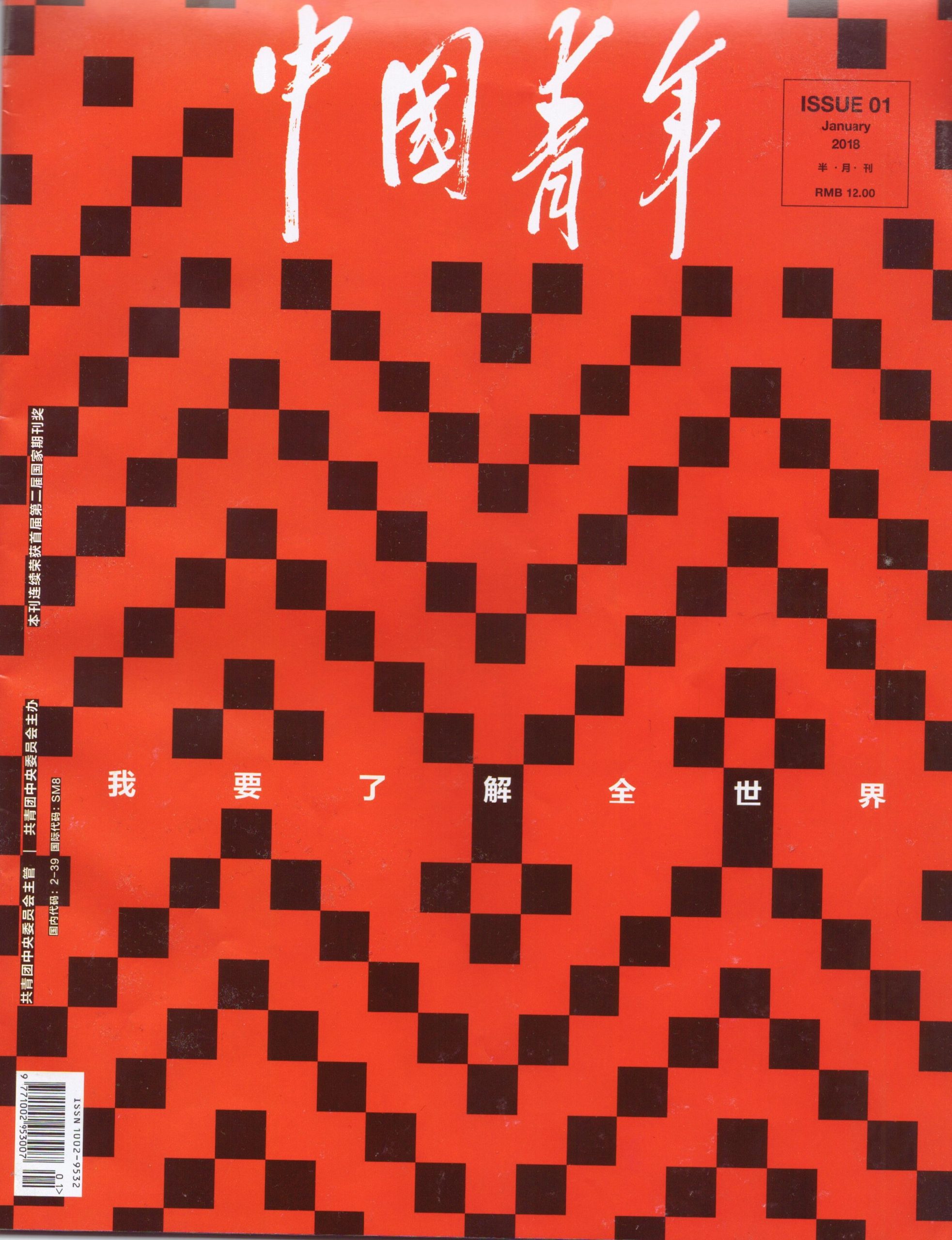
This is a written interview that was published in the first issue of China Youth magazine in 2018. When it was published, it seems several questions were deleted, but the answers that were used were scarcely edited at all (especially the last answer), though a few sentences were added for me in a couple of places. Here I am posting the original version.
1、By the end of June 2017, among the world’s top ten internet companies by market capitalization, five were Chinese, and among the world’s 221 emerging “unicorn” companies, Chinese firms accounted for nearly 30 percent. In contemporary China, technological力量 represented by the “new four great inventions” (high-speed rail, Alipay, shared bicycles, online shopping) has also penetrated every aspect of people’s daily lives. Looking from a longer historical perspective, at what stage would you say China’s current technological development is as a whole?
I don’t know what “stages” technological development can be divided into. Speaking only of the technological achievements represented by the so-called “new four great inventions,” I think there is still not much to be proud of. In some respects, the “new four great inventions” and the “old four great inventions” are similar. In ancient China, technological achievements were ahead of the world, but why were we able to be ahead? Mainly because the population was large and the economy was prosperous; once the population base was large, the naturally outstanding craftsmen would also be numerous. But it is also necessary to note that Chinese society and culture in ancient times did not show much respect for craftsmen, artisans, inventors, engineers, and scientific researchers and so on, so scattered outstanding achievements were not effectively aggregated and passed on. They did not form a sustained development trend, but instead often regressed and were lost. By contrast, the West has continued to rise since modern times and has plenty of momentum. It established all kinds of spontaneous trade associations and civil societies, with craftsmen and scholars forming an independent and self-reliant force, while governments protected innovators through ever-improving copyright and patent systems. More importantly, technological innovation, economic wealth, and social status were unified; the pursuit of fame, profit, and innovation all coincided. Once this social mechanism of protecting, respecting, and encouraging innovation became stable, it drove the West’s science and technology to continue developing since modern times.
As for today’s so-called “new four great inventions,” one advantage is the advantage of later development—for example, because credit cards are not widely used in China, that instead promoted the spread of Alipay; another advantage is the population advantage, since some new technologies can quickly achieve explosive growth. But at root, the cultural and institutional environment that respects craftsmen and respects innovation is still relatively backward. “Pursuing fame and profit” is still a pejorative phrase in China, and the protection of copyright and patent rights is also lagging far behind, perhaps even below the level of the West a hundred years ago. Copying and knockoffs are often utterly brazen; this is also one of the factors that has promoted the rapid spread of certain new technologies in China. But it is hard to be sure that such promotion can last. From a long-term perspective, China’s technological environment is still backward, far from a stage at which one can congratulate oneself.
2、At present, the integration between science and society is deepening day by day; society is becoming increasingly scientized, and the impact of technological products on social life is becoming more and more obvious. In your observation, do the cutting-edge technological developments in many fields today (for example, shared bicycles, artificial intelligence, big data, paid knowledge, virtual reality, etc.) exhibit some common trend or characteristic?
I’m not very clear what “society is becoming increasingly scientized” means. You seem to be conflating “science” and “technology,” but in things like “shared bicycles” and “paid knowledge,” where exactly is the “science”? Science is science, Technology is technology, Science & Technology is science and technology. But now it is fashionable to translate Technology as “科技,” a term with Chinese characteristics. I wouldn’t dare say that this translation is wrong, but it really does create confusion. For example, when we speak of “society becoming increasingly scientized,” does that mean Science-ization or Technology-ization? The meanings are very different.
Of course, this confusion itself can be said to be precisely a certain trend or characteristic: “science,” in the traditional sense, is increasingly moving backstage. Although theoretical scientific research, aimed at the pursuit of truth, is still flourishing, theoretical science’s alteration and reconstruction of social life is becoming more and more indirect, while technological improvements that pursue practical effectiveness and profit are changing the world more directly.
The relationship among “science—technology—society” was separate in antiquity and entered into linkage beginning in the nineteenth century, and this was more a top-down impetus: science pushed technology, and technology transformed society. But the trend today seems reversed, becoming more of a bottom-up impetus. Compared with researchers and inventors, consumers and operators seem to be playing a more important role. The frontier technologies you mention also have this characteristic; they are not very closely related to the frontier development of basic science.
3、People want to control technology, and technology always has the danger of slipping out of control. Technological innovation certainly brings tremendous convenience to daily life, but it also always seems accompanied by certain risks and drawbacks, such as the impact of social networks on real-world social life, and the credit risks brought by scan-to-pay. So, is the dual nature of technology inevitable?
The “two-sidedness” of anything is inevitable. Water can carry a boat, and water can also capsize it; water can quench thirst, and water can also choke someone to death; bread can fill the stomach, and bread can also kill by overstuffing… Anything that “slips out of control” will be dangerous. The key question is not whether “two-sidedness” is inevitable, but whether its “negative” aspects are bound to emerge. My view is that yes, they are. But this is precisely because, with technology, the positive and negative often do not have clear boundaries.
The fuzziness of the boundary lies first in the fact that people often cannot accurately grasp the consequences of technology. For example, DDT can kill insects, which is a good thing, but its negative ecological consequences were not clearly revealed at the outset. The direct function provided by a technology itself and the impact it brings to society once it becomes widespread are often not the same thing. And because human cognitive capacity is necessarily limited, it is impossible, before actually applying a technology, to exhaust all its future effects. Thus the emergence of negative effects cannot be avoided.
Second, or more importantly, human values are not monolithic. What counts as a good thing or a bad thing differs across eras and among different groups of people. In particular, this transformation of values is greatly affected by changes in the technological environment. For example, the impact of social networks on real-world social life is seen by older people as a bad thing, but young people may see it as a good thing. Technologies of the past—writing, letters, telegraphs, telephones, and so on—also caused dramatic shocks to social life. The shape of “real-world social life” that older people now take for granted was itself formed by the new technologies of the past, and in earlier eras it might also have been regarded as heretical. And what is now considered a “negative” effect may in the future also be taken for granted.
4、Can we say that technology is entirely “neutral,” that science and technology may both “make life better” and bring disaster, all depending on people?
The previous question already mentioned that human values are not monolithic, but change along with transformations in the technological environment. Then what does it mean to “make life better”? There is no eternal, unchanging standard for that either. In a certain sense, technology is not something to be measured, but something by which measuring is done.
On the other hand, what does “depending on people” mean? What is “people”? Which people does it depend on? Does it mean it depends on Trump, or on Kim Jong-un? Does it depend on one group of people, or on all people? If it depends on a single person, how can that person’s will represent “people”? If it depends on countless people, then how are we to summarize the wills of those countless, wildly different people?
How to organize people, how to coordinate and realize human will—this itself is no easy matter, and it too requires technological conditions. For example, an electoral system needs media. An environment of communication dominated by newspapers, one dominated by television, and one dominated by Twitter will produce different kinds of American presidents. Dictators also need to rely on media technology to convey their will, and military technology to sustain their will.
To set aside technology and talk about so-called human will is an insubstantial thing; it would be better to talk about the will of God.
5、Every major technological breakthrough will bring certain adjustments to the existing social and economic order, such as the impact of internet e-commerce on the traditional实体 economy, the disruption of the taxi industry by ride-hailing, and the replacement of many industries by the rise of AI. While technological innovation breaks existing social patterns, it often also creates new opportunities and new situations. How do you view the relationship between technological innovation and social change?
The question has already supplied the answer: “Every major technological breakthrough will bring certain adjustments to the existing social and economic order… while technological innovation breaks existing social patterns, it often also creates new opportunities and new situations.” — I agree with this statement. What else is there to say? So-called economic foundation determines the superstructure; what Marx said makes a lot of sense.
6、Generally speaking, what factors constrain the updating and iteration of technology?
The question is a bit too broad; I don’t know where to begin. It is nothing more than natural factors and social factors. Natural factors include material possibilities—for example, however hard you try, you just cannot build a perpetual-motion machine; social factors include all sorts of environments such as culture, politics, and economics.
7、As nature and society are increasingly regulated by technology, people also have to live in accordance with technology’s demands. If this is an unavoidable trend, then in the age of “technologized living,” how should individuals respond?
Heidegger has a phrase, “releasement” (Gelassenheit), which means: follow the tide of destiny, but do not become overly swept up in it. For example, in life today, one cannot do without a smartphone, so don’t be stubborn; but the attitude of releasement is to remain calm while going along with the trend, to keep a clear head, and not to become addicted or sink too deeply into it. In simple terms, one should maintain philosophical reflection. Do not think that because something can be done without, it therefore does not matter; nor think that because something cannot be done without, it therefore is irrelevant. Rather, one should strive to understand the course and development of every link in the lifeworld, to investigate the necessity of how we “came to this,” so as to remain sensitive to the possibilities of how we “might still be otherwise.” Every person should, to a greater or lesser degree, come into contact with the history of science and the philosophy of technology, even if it is of no use to the final outcome. Human beings are just like this by nature: humans are destined to die, and the earth will eventually be destroyed; these too are unavoidable trends. But under the fate of mortality, human beings nevertheless keep thinking ceaselessly—that is the only precious thing about being human. Compared with the inevitability of technological trends and the mortality of natural law, it is utterly insignificant.
8、How do you view the “mass entrepreneurship and innovation” strongly advocated by the government in recent years?
I think the truly beneficial “mass entrepreneurship and innovation” does not mean that everyone should go invent things, nor does it mean that everyone should start a company and become a boss. Such a society would absolutely be pathological. But what is worth advocating is a social culture that as a whole respects the spirit of innovation and the spirit of entrepreneurship. Right now Chinese society generally lacks recognition of the craftsman spirit and the entrepreneurial spirit; it does not respect copyright and patent rights, and copying and knockoffs are utterly brazen. On the other hand, the masses also do not respect entrepreneurs, and look down on “the pursuit of fame and profit,” thinking that good people can only “care for none of their own interest and devote themselves entirely to benefiting others.” Successful entrepreneurs may be envied (because they have money), but they are not respected (also because they have money). These values urgently need to be reversed. So I think we should vigorously advocate “mass respect for innovation and mass respect for entrepreneurship.”
9、The sociologist Merton once regarded the rise of modern science as one of the latent functions of the Protestant ethic. This means that the development of science and technology in fact contains a humanistic dimension and requires guidance by humanistic values. Since reform and opening up, what the entire society has strongly advocated has always been that “science and technology are the primary productive forces,” while the support of the humanistic dimension seems to be absent. So in an era of great technological change, how should scientific values and humanistic ideals be balanced?
In fact, ever since Western learning began to spread eastward, countless predecessors have long understood this very clearly: Mr. De and Mr. Sai are in the same camp; science and democracy are a pair. The humanistic dimension of modern science is nothing more than freedom, democracy, and the rule of law. What needs to be “guided” are nothing more than these “humanistic values.”
These values have already been promoted in China for more than a hundred years. They were originally bundled together with science as a free bonus, but we insist on separating them, stubbornly trying to pair universal science with non-universal humanity, and that is how we ended up with the problem of being hard to balance.
Translated from the Chinese original with AI assistance. The original text is authoritative.