
This week’s Introduction to Philosophy of Technology class centered its discussion session on the “smart classroom.” Compared with last year, the discussion class was pushed back by a week, and before it we added one more lecture on Marcuse. That felt pretty good; many students were already able to think through the issue in terms of “critique of instrumental reason.”
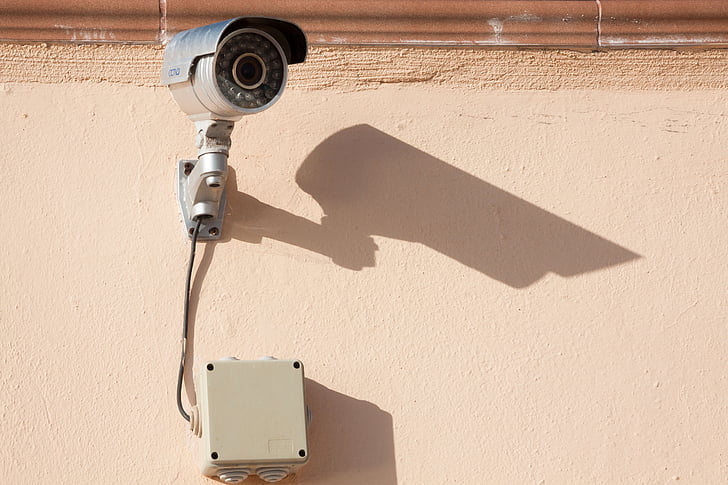
“Smart classroom” is a broad concept. In its most basic sense, it includes the application of technologies such as tablet computers, online platforms, and smart apps in classroom teaching, but it also includes the more alarming technologies of intelligent surveillance and sensing headbands. Broadly speaking, we usually would not oppose teaching methods keeping pace with the times and continuously adapting to and adopting new technologies. But we often do remain wary of panopticon-style intelligent surveillance technologies.
The “smart classroom” in these two senses is not unrelated. Whether “panoptic surveillance” is an inevitable result of big data technology is itself a question. How to maintain a certain proper measure in “introducing technology,” so that we can both keep pace with the times and avoid sliding into the abyss, is precisely the fundamental theme of the course “philosophy of technology.”
This course is a general-education course for students who are not philosophy majors. I believe that living in the age of technology, no matter what industry one enters in the future, one should maintain a reflective stance toward “technology” and a certain alertness. Going beyond the usual “instrumental reason,” no longer merely treating various technologies as neutral tools to be measured, but instead adding a further layer of thought when choosing or adopting various new technologies.
To use one case mentioned by a student in class: how should we think about the meaning of the train? We should not only calculate how long and how much it costs to take us to Shanghai or Beijing; we should also think about where Shanghai or Beijing will be carried by the train. The train enabled many people who previously had no opportunity to go to Shanghai to arrive in Shanghai, but at the same time, under the influence of the train and other modern transportation technologies, the city of Shanghai was already no longer the same city it had been before the railway arrived. When more people have the opportunity to “arrive in Shanghai,” the very meaning of “arriving in Shanghai” changes; the meaning of travel and relocation changes as well, and the locality of Shanghai as Shanghai also undergoes a transformation. Shanghai becomes a destination for “migrant labor in the city,” “the tourism industry,” and “business travel.” These activities are unprecedented, but people can no longer arrive in Shanghai the way Xu Xiake once did.
The same is true of the application of technology in teaching. Educational activity is not merely some neutral transmission process occurring between the two endpoints of teacher and student, as if media technology were only a neutral conduit, a conduit that transmits the teacher’s knowledge to the student and the student’s performance to the teacher, and whose evaluation lies solely in its efficiency and precision of transmission. Technology is not neutral. While technology builds a bridge between teacher and student, it is also changing teacher and student, changing the meaning and positioning of the entire teaching activity.
This kind of “a further layer of reflection” is not a matter of “operational calculation.” These reflections often do not yield precise conclusions, and may not even directly produce judgments of yes or no, good or bad. But this is indeed the “practical” way of philosophy.
“Study philosophy, use philosophy.” Such sayings often come from a misunderstanding of philosophy, as if philosophy could provide some kind of operational guide for practical work. But in fact philosophy does not pursue operability; on the contrary, studying philosophy often calls into question the rationality of many self-evident actions, and instead arouses a sense of estrangement and confusion, leaving one at a loss in certain familiar matters. But if we do not understand the concept of “practical” in a narrow sense, and instead understand “guiding practice” as an activity of “pointing, provoking, drawing out, illuminating,” then the claim that philosophy guides practice becomes meaningful. Or rather, sincere philosophy must “guide practice,” because what sincere philosophy ultimately reflects upon is bound to be “I.” Reflection on the self will of course ultimately affect the self’s positioning and choices.
We say that Heidegger’s way out in the face of modern technology lies in “meditation,” in “preparing oneself” through “meditation.” Why can meditation be a practical mode? The reason lies here as well. Through meditation, we expand our thinking space and prepare a richer range of dimensions of thought; thus, when faced with any new problem, we may discover more room to maneuver and negotiate with it.
“Cost-benefit” is one dimension from which to think about technology. Thinking along this dimension opens up a space for negotiation (whether to adopt it, how to adopt it). But if we study more philosophy of technology, we may open up more dimensions: aesthetics, politics, ethics, human nature, the environment, and so on. When our thinking has only a single dimension, it becomes very easy to standardize and quantify the problem, and to reach a definite conclusion through calculation and balancing according to certain rules. But the more dimensions there are in our thinking, the harder it becomes to arrive at a determinate conclusion. Modern people then reduce all dimensions ultimately to one dimension—efficiency. Questions of aesthetics or ethics are either reduced to certain numerical values for calculation, or, if they cannot be calculated, they are relegated to the so-called “sensory” level, or, in other words, to the “irrational.” The one-dimensional rationality that remains after this castration is what is called instrumental reason, whereas studying philosophy helps activate a sound capacity for rational thought—perhaps less efficient, more ambiguous, but fuller.
When teaching the course Introduction to Philosophy of Technology, I too am encountering reflection on and choices about teaching technologies.
Before this discussion session, there was already one technological choice before me. I asked the teaching assistant to record the discussion performance together with me so that we could assign final grades. The assistant suggested that we could use a voice recorder to keep a record: on the one hand, it would make checking easier; on the other hand, it could also avoid some unnecessary trouble. For example, if a student had not come or had not spoken much, but later raised objections to the grade, we would then have a basis.
On the surface this seemed like a good suggestion. A voice recorder would cost very little and would not create any hindrance to the class. If it ended up not being used, there would be no loss; if it were used, it could reduce a lot of trouble. But after some thought I still gave up this option. I replied at the time:
I don’t think it’s necessary; we can just record things on the spot. The two of us recording shouldn’t miss too much. We can also consider taking attendance before class ends to make sure the participating students are all recorded, and we don’t need to guard against so-called trouble as if guarding against thieves. The logic of recording is also to use technological surveillance to ensure safety, peace of mind, and strictness… This is the logic of the smart headband, the logic of the smart classroom: treating students as potential thieves. My view is that I would rather have a bit more trouble later if something comes up than use this kind of recording method as much as possible.
The “voice recorder” has been very popular lately. When that Huawei employee realized that his interests might be harmed, he carried a voice recorder with him at all times, and in the end it preserved crucial evidence for him and avoided a greater miscarriage of justice. We can see the positive role of the voice recorder, but at the same time we also see that when that employee started using the voice recorder, his relationship with others in the company had already changed; he was guarding against them as if they were bad people.
While the voice recorder objectively and neutrally records speech, it is also redefining the relationship between interlocutors. I find this “unbeautiful,” and so I chose not to use it. Of course, this layer of thought may not yield a definite answer; I could also choose to continue using a voice recorder with vigilance, and if so, I would not think that I had made any very serious principled mistake. But in any case, I really did think one layer further, and this is how I put my philosophy to use in actual life.
There is a similar choice in grading assignments as well. Now the school provides each instructor with free CNKI plagiarism-checking quotas, and each student can be checked twice. I could upload all assignments in a batch and check them all at once. But I did not do that. Nor do I completely forgo plagiarism-checking technology; rather, I only check for plagiarism when I notice a suspicious assignment. In terms of efficiency, uploading in batches and letting the system check automatically is not troublesome at all. One could even say that uploading more assignments contributes to “on-campus plagiarism checking.” If a student or that student’s friend takes the assignment from this course and uses it in another course, and if both teachers use plagiarism checks, then it becomes more likely that such a situation will be discovered. Some teachers even suggest embedding assignment plagiarism checks into the system of the online classroom, so that it need not go through the teacher at all; the system would automatically perform the check when students upload their assignments.
But I have always been wary of plagiarism-checking technology. I am willing to borrow this technology occasionally, but I firmly resist allowing the technology itself to become some kind of standard that replaces the teacher’s judgment. “Checking in advance” and “checking afterward” are very different; whether one checks first or later determines the way the check result exerts its influence on me. Heidegger pointed out that one essential characteristic of modern technology is “ordering” — “pre-control,” “pre-securing.” If one day every assignment is forcibly required to go through plagiarism checking, then I would still hope to read the students’ assignments first and only then look at the plagiarism results, rather than reviewing the assignments after learning the plagiarism results.
Applying plagiarism-checking technology would seem to reduce those who slip through the net and enhance fairness. But this is only in terms of the present, static situation. More importantly, as plagiarism-checking technology becomes popular, both student behavior and teacher attitudes will change accordingly. Students will do more patchwriting; teachers will rely on it more.
Fairness is of course a good thing, but the question is: for the fairness and precision of the present moment, what kinds of concessions and compromises can we make?
I also have my own understanding regarding assignment requirements. The assignment requirements in several of my courses are all “optional”: one may choose to write a “paper or reading notes,” and a 6,000-character paper may also be replaced by reading notes with a total length of more than 6,000 characters. In addition, this course also requires an extra 50 points of “discussion points,” but those discussion points include both in-class discussion and online discussion, and the specific proportion is not fixed; I will assign points according to each person’s performance as appropriate.
But whichever form of assignment one chooses, each student’s final score is still under a unified scale—nothing more than a number between 0 and 100. Obviously, the final grading contains a substantial degree of subjectivity.
If the school were to impose stricter requirements, for example insisting that we provide detailed grading rubrics and specific scoring details, then we might be forced to compromise, and in the end simply replace subjective and diverse assignment forms with objectively uniform examinations. Such a requirement is not impossible to issue; on the contrary, it is precisely a trend in recent years. This trend may also have something to do with digital management technologies. The technical means adopted when evaluating teachers and teaching processes in a unified way will in turn affect their standards of evaluation.
But the choices we ordinary teachers and students make also exert influence.
For example, I encourage students to use the discussion forum on the online classroom platform, but the students do not seem very enthusiastic and do not like to post. This is a kind of game. I might insist, or even intensify the penalties; or perhaps in the future I will encourage students to use other forms or other platforms for discussion. Within the small environment formed by me and my students, the direction of technology’s application remains unsettled and is always under negotiation. The same is true between the school and us teachers: each of our specific choices in actual teaching practice—whether proactive or passive, whether accepting or resisting—will ultimately have real effects.
Many technological pessimists are in fact thinking from a “God’s-eye view.” Feeling unable to find a global, comprehensive, all-purpose, one-and-done solution for modern society, they lose confidence and believe that philosophy of technology can only lament and is of no use. But if we take our gaze back from God and return it to our own actual circumstances, then we will discover that choices always matter, actions always have effects, and reflection always has use.
Translated from the Chinese original with AI assistance. The original text is authoritative.