
Still a submission for Jiemian, with the published title changed to “The Writing Robot Has Arrived: Smash It to Pieces, or Throw Up Your Hands and Surrender?”
Recently, the “writing robot” has burst onto the scene and sparked heated debate. Because it can imitate a child’s handwriting to finish copying textbook passages, copying new characters, and even hand-copying a class newspaper, some parents angrily smashed the machine to bits, while others welcomed it with open arms and wanted to buy one to help their children cope with “boring homework.”
The “writing robot” is a new thing, but the conflict it reflects is not new. In essence, it is the distance between teaching content and the technological environment, or, to put it another way, educational reforms in mindset often lag behind developments in the technological environment.
Everyone knows that teaching content must be reformed in step with the times, and one basic reason is that human knowledge is constantly accumulating and advancing. But what is more crucial is that new knowledge does not necessarily replace old knowledge because truth has defeated error or something of that sort. Old knowledge may still be correct and still useful, yet it still has to be eliminated in the teaching process.
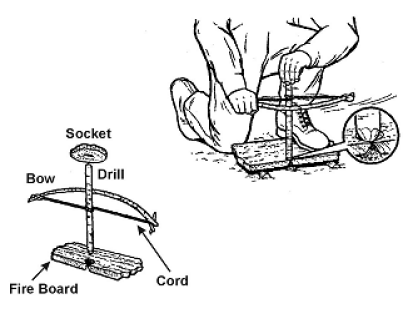
Take bow-drill fire-making, for instance. It is a skill that needs to be learned, and there is nothing wrong with the skill itself. But we cannot imagine that today a primary school teacher would take children into the wild to collect wood and practice making fire by drilling. Why not? Because we already have matches, lighters, gas stoves, and so on as new technologies for “making fire.”
In relation to the natural world, the knowledge of bow-drill fire-making is still useful; but in relation to the new technological environment, this knowledge давно has been useless.
This kind of “uselessness” is relative to the environment. If you dropped two people into a primeval jungle, then someone who had learned bow-drill fire-making would obviously be better able to survive than someone who knew how to use a gas stove. But fortunately, we do not need to live directly in the jungle. Our living environment is already saturated with technological objects such as gas stoves.
The examples above seem quite straightforward: if a teacher insisted that students must learn bow-drill fire-making, that would surely be laughable. But if this relative relationship is not as extreme as that between a primeval jungle and the modern world, and is instead viewed at specific turning points in technological change, then the problem is not so clear.
As for the conflict between old education and new technology, there is one most classic parable in the history of philosophy.
Plato’s Phaedrus records this story: it is said that Theuth invented writing and presented his achievement to Pharaoh Thamus, hoping the pharaoh would teach writing to the Egyptians so as to strengthen their memory. But the pharaoh was unimpressed. He thought Thamus had gotten the meaning of writing exactly backwards: writing, he believed, actually encourages forgetfulness, because when people rely on external signs, they become lax in exercising memory themselves.
So who was right, Theuth or Pharaoh Thamus? The answer is probably: both were right. The key is that they were making their assessments in different environments. Thamus hoped that people could rely on his invention; he was assessing the function of writing in a situation where people had already come to depend on it. When written materials can be consulted at any time, people can of course remember more things.
The pharaoh, however, did not see writing as an indispensable part of the living environment. He was evaluating the memory of literate people on the basis of an environment in which writing had not yet become widespread, and he found that once literate people were cut off from writing, their memory would inevitably decline.
Both of them were right; the divergence lies in whether writing, this new technology, is to be regarded as an external tool that may be lost at any moment, or as a basic element embedded in the living environment.
But according to the pharaoh’s logic, we could also say that weapons weaken people’s ability to fight hand to hand, clothing weakens people’s ability to withstand the cold, and so on, because whenever we make extensive use of some external technology, dependence inevitably forms. But was the pharaoh really opposing all technology? I suspect not. In fact, the pharaoh had a deeper standard of judgment.
In the pharaoh’s view, even those who rely on writing and always use writing are obtaining “fake” knowledge — they may seem to “understand everything by themselves” and yet “actually know nothing,” as the pharaoh says. What fills the human mind through writing is not wisdom, but a “counterfeit of wisdom.”
Socrates, as written by Plato, then completed this argument on the pharaoh’s behalf. He said that the characteristic of writing is that once it is written down, it remains fixed there, lifeless and immobile. No matter what kind of reader it meets, it can only go on repeating the same old lines, never responding to the reader’s feedback — whether questions, objections, or distortions.
So the point Pharaoh Thamus, or rather Plato, wanted to make is that in living conversation people can come into contact with living wisdom and not learn “dogma”; whereas those who rely on writing are more likely to understand knowledge as something rigid and fixed. Literate people will think that only things written in black and white, set in stone, count as knowledge, while things that are flexible and adaptable, things that are hard to pin down, are instead regarded as false or as the lowest form of knowledge.
The conflict between these two conceptions did not occur only at the birth of writing; it runs through the entire history of human civilization. For example, readers and scholars throughout the ages have often been subjected to all kinds of criticism: people who read too much often become inflexible bookworms, knowing only how to “talk about military strategy on paper,” but once they take the field in actual combat they are exposed as frauds; or else scholars are accused of being “unable to do physical labor, and unable to tell the difference between the five grains,” knowing only how to talk in the abstract, and if sent to work in the fields and villages their practical knowledge may not even match that of a cowherd boy.
These criticisms are not entirely wrong. People who depend on writing are indeed more likely to emphasize codified knowledge and neglect tacit knowledge. Of course, we must also notice that while writing on the one hand promotes the rigidification and fixation of knowledge, on the other hand it can also be said to promote the objectification and systematization of knowledge. It is hard to say that Plato’s own philosophical theories were not influenced by the emerging culture of writing. Greek philosophers were obsessed with seeking permanence in a changing world and seeking order in a chaotic world. This new way of thinking brought by writing can be said to be the soil in which scientific thinking took root.
This parable reminds us that the spread of new technology does not always bring an upgrade that is “backward compatible.” On the contrary, for traditional educators, new technology often appears in a destructive guise. Dependence on new technology is bound to weaken certain human abilities that were once cherished, and may even overturn the existing standards of evaluation. On the other hand, “conservatism” is itself an inherent tendency of educators: their mission is precisely to pass on those things that have been tested over time and accumulated. Therefore, between conservative education and innovative technology, conflict will always arise again and again. For example, after printing became widespread in Europe, traditional universities still stubbornly continued teaching primarily through commentaries on the classics, becoming a conservative force in the Scientific Revolution, while the emerging scientists relied more heavily on the support of publishers.
Coming back to today, the contest over the “writing robot” is in fact still a conflict between the old educational model and the new technological environment. What is all that copying for? On the one hand, handwriting has increasingly been replaced by typing on a keyboard. Training in writing well and writing quickly — these handwriting skills — have gradually become outdated. On the other hand, even if the goal is not to practice handwriting, but to deepen one’s impression through repeated copying in order to memorize textbook passages and formulas, that goal too has begun to look questionable. For example, in the information age, when a few taps on a phone can search out a mountain of materials, is the ability to memorize mechanically still that important?
Or take distraction and leapfrogging thought: in the traditional view, of course these are bad things, but in the information age are they necessarily negative? Teachers complain that, apart from class time, students’ lives are fragmented: a bit of WeChat here, a bit of Weibo there, “swiping” back and forth, rapidly switching among different contexts. So people accustomed to this fragmented rhythm of life find it hard to sit calmly in the classroom for an hour. But is that necessarily a bad thing? If our way of life is already fragmented, then are not those who are better at leaping between modes of thought — compared with those who are better at staying focused and still — more likely to thrive in the information world?
In fact, many educators, consciously or unconsciously, make the “bow-drill fire-making” mistake: that is, they use an already outdated historical environment as the backdrop for judging the meaning of a certain piece of knowledge or skill. It is like measuring whether the skill of bow-drill fire-making should be diligently practiced by starting from survival ability in the primeval jungle. Many people also have not noticed that in an age when writing robots are within easy reach, whether it is still worth painstakingly practicing copying must be reevaluated.
However, what I mean is not that educators should immediately lay down their arms and completely let new technology run riot. We should remember that both Theuth and Pharaoh Thamus were correct, and the pharaoh’s conservative thinking is not necessarily without merit. Writing promotes both dogmatization and rigidification, and also objectification and systematization. We cannot ignore only its negative aspect and resist it blindly, but neither can we see only its positive aspect and leave it completely unchecked. Parents and teachers always have the responsibility to examine and control the impact and disruption that new technologies such as smartphones or writing robots may bring to the teaching process. But before that, what needs to be examined even more is education itself.
Translated from the Chinese original with AI assistance. The original text is authoritative.